
-
Maharatha vs Atiratha: Timeless Warrior Ranks, Epic Valor, and Kshatra Dharma

This article clarifies the difference between Maharatha and Atiratha as presented in the Hindu epics, showing how these warrior ranks function as ethical and strategic categories rather than poetic embellishments. It explains Maharatha as disciplined excellence and Atiratha as transformative, dharma-aligned leadership on the battlefield. Readers gain a clear, historically grounded understanding rooted in the…
-
Bhagavad Gita Chapter 1: Duryodhana’s Restlessness, Dharma, and the Pursuit of Inner Peace

Bhagavad Gita Chapter 1 frames the Kurukshetra War as a field of dharma, revealing how inner states drive outer actions. Duryodhana’s poised yet anxious speech to Droṇa exposes a mind divided by adharma, offering a timeless psychological reading of leadership under pressure. The scene contrasts defensive agitation with Arjuna’s reflective sorrow, clarifying two paths that…
-
Padma, Sovereign of the Nagas: Mahabharata Lessons for Inner Harmony and Unity

Padma, the king of serpents in the Mahabharata, emerges as a model of sovereign wisdom anchored in dharma. Cited in Sabha Parva 9 and Shanti Parva 363–371, his presence signals ethical leadership founded on reflection, restraint, and care for the vulnerable. Serpent symbolism frames Padma as a guardian of life’s sources and a custodian of…
-
Essential Mahabharata Insight: How Time and Dharma Led Yudhishthira to Downfall

This analysis explores how Yudhishthira’s steadfast virtue in the Mahabharata faltered when separated from the demands of time (kāla). Readers discover why Dharma is subtle, how deśa–kāla–pātra governs right action, and where neglecting timing turns ideals into complicity with harm. The dice game, Vidura-niti, and the war’s moral dilemmas illustrate the need to pair principle…
-
The Complete Story of Takshaka and Parikshit: Essential Insights into Karma and Vengeance
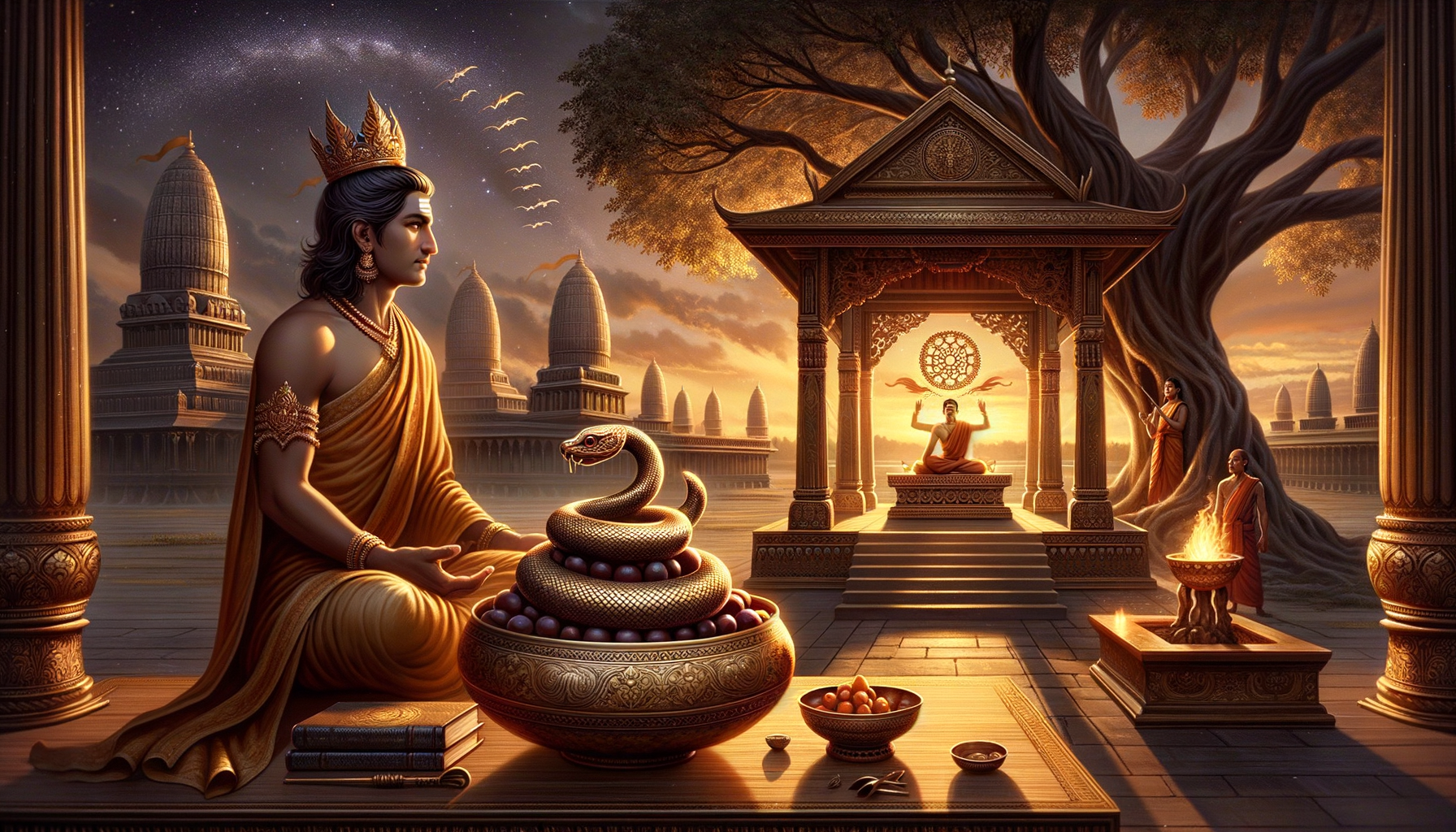
This article examines the complete story of Takshaka and King Parikshit through the lens of the Mahabharata, clarifying why the serpent king executed the curse and how older enmities shaped events. It traces the chain from Parikshit’s lapse with Sage Sameeka to Śṛṅgi’s curse, Takshaka’s calculated stratagem, and Janamejaya’s subsequent Sarpa Satra. Readers gain a…
-
Master Anxiety with a Dharmic Breakthrough: Krishna’s Essential Lesson on Fear and Focus

This Mahabharata-inspired teaching presents Sri Krishna guiding Arjuna and Satyaki through an encounter that reveals how attention fuels anxiety and how disciplined focus dissolves it. The narrative shows a trivial stimulus expanding into a monstrous apparition when fed by fear, then vanishing when attention is steadied and withdrawn. Readers gain a clear, actionable understanding of…
-
Master Decisive Action: Krishna’s Essential Gita Lessons for Ethical, Fearless Living

This article examines Krishna’s guidance on Kurukshetra to demonstrate why the Bhagavad Gita privileges ethical clarity and decisive action over passive expectations of divine intervention. It explains nishkāma karma and the discipline of equanimityacting without attachment to outcomesas a practical method for leadership, relationships, and civic life. The analysis highlights convergence across Hinduism, Buddhism, Jainism,…
-
Essential Dharma Breakthrough: How Silent Goodness Enables Eviland How to Transform It

Indraprastha’s Rajasuya yajna offers an enduring lesson: when courtesy lacks boundaries, adharma grows. The Mahabharata shows how excessive toleranceat the Rajasuya and later in the dice hallcan legitimize injustice, as seen in the silence during Draupadi’s humiliation. Dharma demands proportionate, principled action after patient dialogue, a sequence Sri Krishna models in the Udyoga Parva. This…
-
Essential Lessons from the Yadavas’ Fall: Discover the Proven Dharma of Unity and Restraint

The Yadavas’ fall in the Mahabharata’s Mausala Parva offers a precise and enduring lesson: communities collapse from within when unity, restraint, and ethical speech are neglected. This post clarifies the narrative’s symbolismthe iron club, the reeds, and intoxicationand links it to practical conflict prevention. It highlights convergent values across Hinduism, Buddhism, Jainism, and Sikhism, showing…
-
Episodes from the Udyoga Parva as Profound Guides to the Contemporary Hindu Society

Delve into the Udyoga Parva, a pivotal section of the Mahabharata, and explore its significance as a guide to statecraft, diplomacy, ethics, and values. This blog post draws parallels between the Udyoga Parva and the Sundara Kanda in the Ramayana, highlighting how both serve as preludes to battles defending Dharma against Adharma. Contrasting Sri Rama’s…