-
Kumbhakarna and Vikarna: Tragic Brothers of Conscience, Loyalty, and Dharma in the Epics

Kumbhakarna (Ramayana) and Vikarna (Mahabharata) embody the epic dilemma between loyalty to kin and loyalty to dharma. This rigorous, text-grounded comparison explains how each man speaks the truth, anticipates disaster, and yet dies fighting for causes he judged unjust. Readers gain a practical framework—kṣātra-dharma, bandhu-dharma, rāṣṭra-dharma, and ātma-dharma—to evaluate conflicts of duty. The analysis connects…
-
Purochana in the Mahabharata: Lac Palace Conspiracy, Fatal Loyalty, and Dharmic Lessons

This analysis unpacks Purochana’s role in the Mahabharata’s Lakshagraha conspiracy as a study in ruthless loyalty, covert statecraft, and ethical failure. It situates the plot in the Adi Parva and explains how a luxurious lac palace was engineered as a flammable death trap through lākṣā, ghṛta, and taila. Vidura’s quiet counter-intelligence and tunnel strategy illustrate…
-
Why Dushasana’s Savage End in the Mahabharata Became Dharma’s and Karma’s Verdict

Dushasana’s death in the Mahabharata is not gratuitous violence but a juridical and karmic reckoning anchored in dharma. The Sabha Parva’s humiliation of Draupadi creates an ethical debt that battlefield dharma later settles when institutions fail. Bhima’s vow and its fulfillment on the sixteenth day fit the epic’s vow-driven architecture of justice, illustrating apad-dharma under…
-
Drupada of Panchala in the Kurukshetra War: Dharma, Betrayal, Destiny, and Fatal Valor

Drupada of Panchala stands at the crossroads of Dharma, strategy, and tragic inevitability in the Mahabharata’s Kurukshetra War. His youthful friendship with Drona, later ruptured by humiliation, set in motion a cycle of vows, rituals, and alliances that reshaped the subcontinent’s political map. The births of Dhrishtadyumna and Draupadi through yajña translated personal injury into…
-
Vikarna’s Tragic Fall at Kurukshetra: Bhima’s Uncommon Reverence and the Paradox of Dharma

Vikarna’s death at Kurukshetra, and Bhima’s rare public respect for him, reveal the Mahabharata’s refusal to reduce war to simple binaries. The episode traces Vikarna’s lonely protest during Draupadi’s humiliation, his later loyalty under kṣātra-dharma, and Bhima’s empathetic yet resolute response in battle. Read through the lens of Dharma-Yuddha, it becomes a case study in…
-
Duryodhana in Lake Dwaipayana: Decoding Jala Stambhana and the Psychology of Rage

On the final day of the Kurukshetra war, Duryodhana’s concealment in Lake Dwaipayana—linked in tradition to Jala Stambhana vidya—becomes a profound study of mind, emotion, and dharma. This article decodes the water symbolism in the Mahabharata, showing how immersion allegorizes the cooling of rage and the stilling of mental turbulence. It situates the episode within…
-
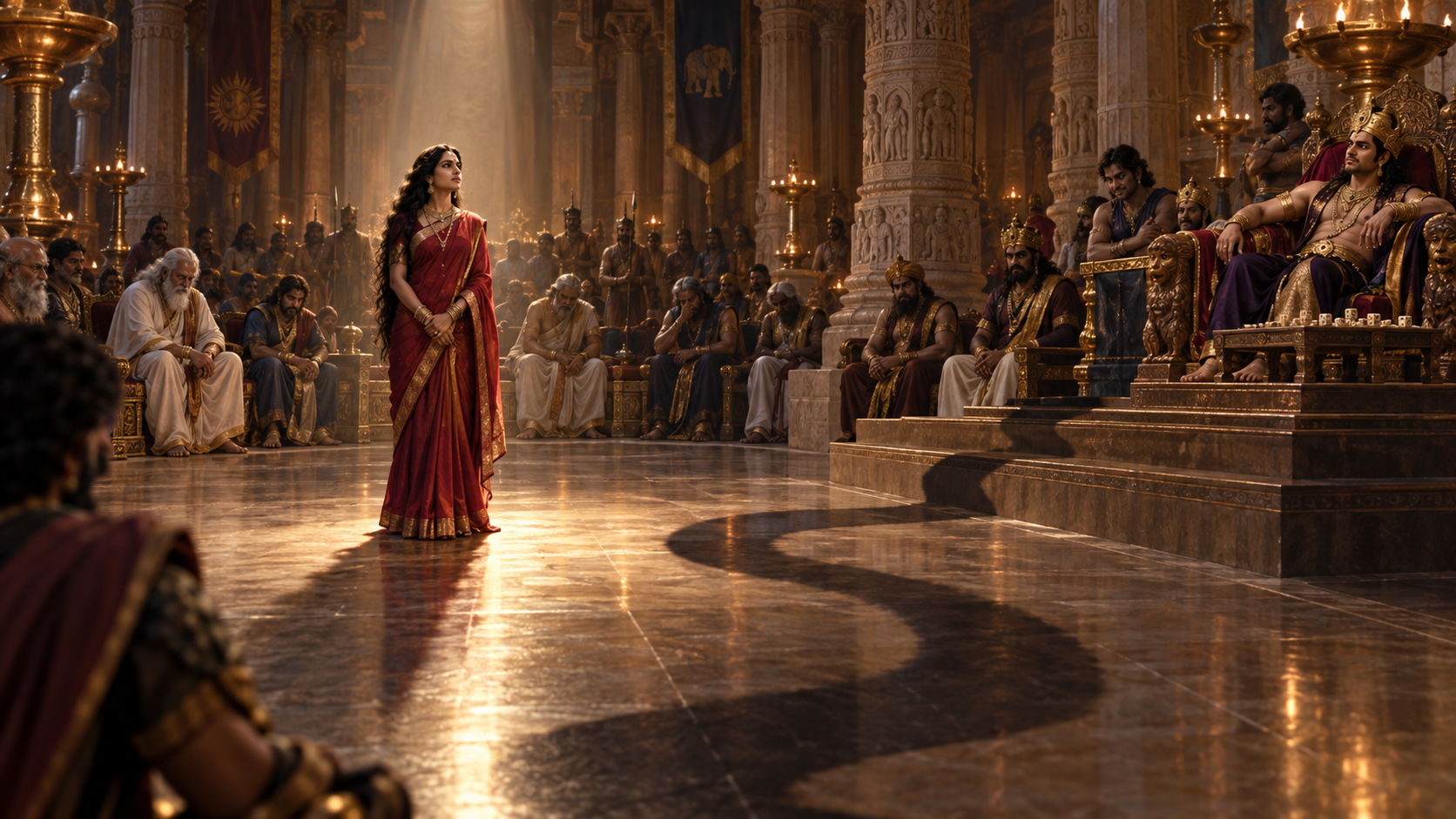
Draupadi’s Two Boons and a Refusal: Dharma’s Quiet Triumph over the Kuru Court in the Mahabharata

The Dyuta Sabha in the Mahabharata showcases Draupadi’s precise ethical reasoning and strategic restraint: she accepts two boons from Dhritarashtra to restore the Pandavas’ freedom and dignity, then refuses a third to avoid greed. This analysis clarifies the legal-dharmic core of her challenge to the Kuru court—capacity and consent—while situating the episode in Sabha Parva…
-
How Abhimanyu’s Unjust Death Became Kurukshetra’s Moral Pivot and the Kauravas’ Downfall

The thirteenth day of the Mahabharata’s Kurukshetra War became a moral and strategic turning point when Abhimanyu, isolated inside the Chakravyuha, was killed in manifest violation of Dharma-Yuddha. The Kauravas’ many-on-one assault, disarming of a youth, and final mace blow against an unarmed warrior gained a tactical kill but forfeited legitimacy. Arjuna’s vow to slay…
-
Duryodhana’s Poison Plot, Bhima’s Naglok Descent, and King Aryak’s Divine Empowerment

This long-form analysis explores the Mahabharata’s Naglok episode, where Duryodhana’s poison plot leads unexpectedly to Bhima’s empowerment under Naga King Aryak. It traces how treachery is transformed into destiny through kinship recognition, rasāyana-like rejuvenation, and Dharmic ethics. The essay situates Aryak within pan-Dharmic serpent symbolism—paralleling motifs in Hindu, Buddhist, and Jain traditions—highlighting unity through shared…
-
Mahabharata Made Clear: A Comprehensive, Soul-Stirring Summary of Dharma, War, and Wisdom

This academically grounded summary presents the Mahabharata’s eighteen parvas with clarity, linking narrative, statecraft, and spirituality into a single, coherent guide. Readers gain a concise understanding of the Kuru lineage, the Kurukshetra War, and the Bhagavad Gita’s integrated path of action, knowledge, and devotion. The overview highlights Vidura-niti and Bhishma’s lectures on just governance, ethical…
-
Mahabharata’s Karna Reclaimed: Evidence-Based Truths on Dharma, Loyalty, and Fate

This article offers an evidence-based, text-anchored reappraisal of Karna from the Mahabharata, clarifying his birth, training, alliances, battlefield record, and moral complexity. It distinguishes core episodes from later accretions, helping readers separate popular myths from the Critical Edition’s throughlines. By analyzing the Duryodhana–Karna bond through ethical and psychological lenses, it shows how unmet needs for…
-
Bhishma’s Five Golden Arrows: How Suspicion Altered Destiny in the Kurukshetra War

This analysis revisits the Mahabharata episode of Bhishma’s five golden arrows to illuminate how suspicion can derail strategy and reshape destiny. It explains why Duryodhana’s mistrust led him to hold the arrows, how Krishna’s foresight and Arjuna’s claim of a prior boon transformed the outcome, and why Bhishma framed the reversal through the balance of…
-
Vikarna, the Lone Kaurava of Conscience: A Stirring Lesson in Dharma and Courage

Vikarna stands out in the Mahabharata as a Kaurava who chose conscience over convenience, challenging the humiliation of Draupadi with clear, dharmic reasoning. His solitary dissent in the dice hall reveals how ethical courage can persist amid overwhelming pressure. Yet his later decision to fight for the Kauravas highlights the epic’s deeper paradox of duty…
-
Duryodhana’s Lake Dwaipayana Refuge: A Powerful Mahabharata Lesson on Adharma Unmasked

On the war’s final day, Duryodhana’s retreat into Lake Dwaipayana becomes a powerful allegory for how adharma seeks concealment when confronted by truth. The episode’s symbolism reframes water—from purification to evasion—while the subsequent mace duel with Bhima exposes the tension between rule-bound procedure and restorative justice. Read through a dharmic lens, the moment highlights karma’s…
-
Mahabharat Stories: 10 Iconic Moments That Shaped Dharma, Destiny, and the Kurukshetra War

This academically grounded overview presents ten iconic moments from the Mahabharata that continue to shape ethical thought, leadership, and social harmony. It explores Dyutakrida and the dignity of justice, Bhishma’s vow and the cost of rigid duty, and Krishna’s Udyoga Parva diplomacy as a model of principled peace. The Bhagavad Gita reframes action through svadharma…
-
See the World Anew: Krishna’s Test of Duryodhana and Yudhishthira on Perception and Dharma

A classic teaching from the Mahabharata tradition, guided by Sri Krishna’s wisdom, shows how perception shapes reality. In the story, Duryodhana sees faults everywhere while Yudhisthira discerns redeeming qualities in all, revealing the inner lens each brings to the world. Read alongside the Bhagavad Gita’s discipline of equanimity (samatva), the lesson becomes a method for…
-
Why Duryodhana Lost: The Mahabharata’s Powerful Lesson on Strength, Dharma, and Destiny

Duryodhana’s defeat in the Mahabharata, despite commanding Bhishma, Drona, and Karna, reveals a timeless truth: strength without dharma is brittle. The Kaurava cause, rooted in adharma, undermined cohesion, judgment, and morale, while the Pandavas’ moral legitimacy and disciplined strategy produced resilience. Sri Krishna’s counsel fostered clarity and adaptability, contrasting with Duryodhana’s pride and short-term cunning.…
-
Bhagavad Gita Chapter 1: Duryodhana’s Restlessness, Dharma, and the Pursuit of Inner Peace

Bhagavad Gita Chapter 1 frames the Kurukshetra War as a field of dharma, revealing how inner states drive outer actions. Duryodhana’s poised yet anxious speech to Droṇa exposes a mind divided by adharma, offering a timeless psychological reading of leadership under pressure. The scene contrasts defensive agitation with Arjuna’s reflective sorrow, clarifying two paths that…
-
Episodes from the Udyoga Parva as Profound Guides to the Contemporary Hindu Society

Delve into the Udyoga Parva, a pivotal section of the Mahabharata, and explore its significance as a guide to statecraft, diplomacy, ethics, and values. This blog post draws parallels between the Udyoga Parva and the Sundara Kanda in the Ramayana, highlighting how both serve as preludes to battles defending Dharma against Adharma. Contrasting Sri Rama’s…