
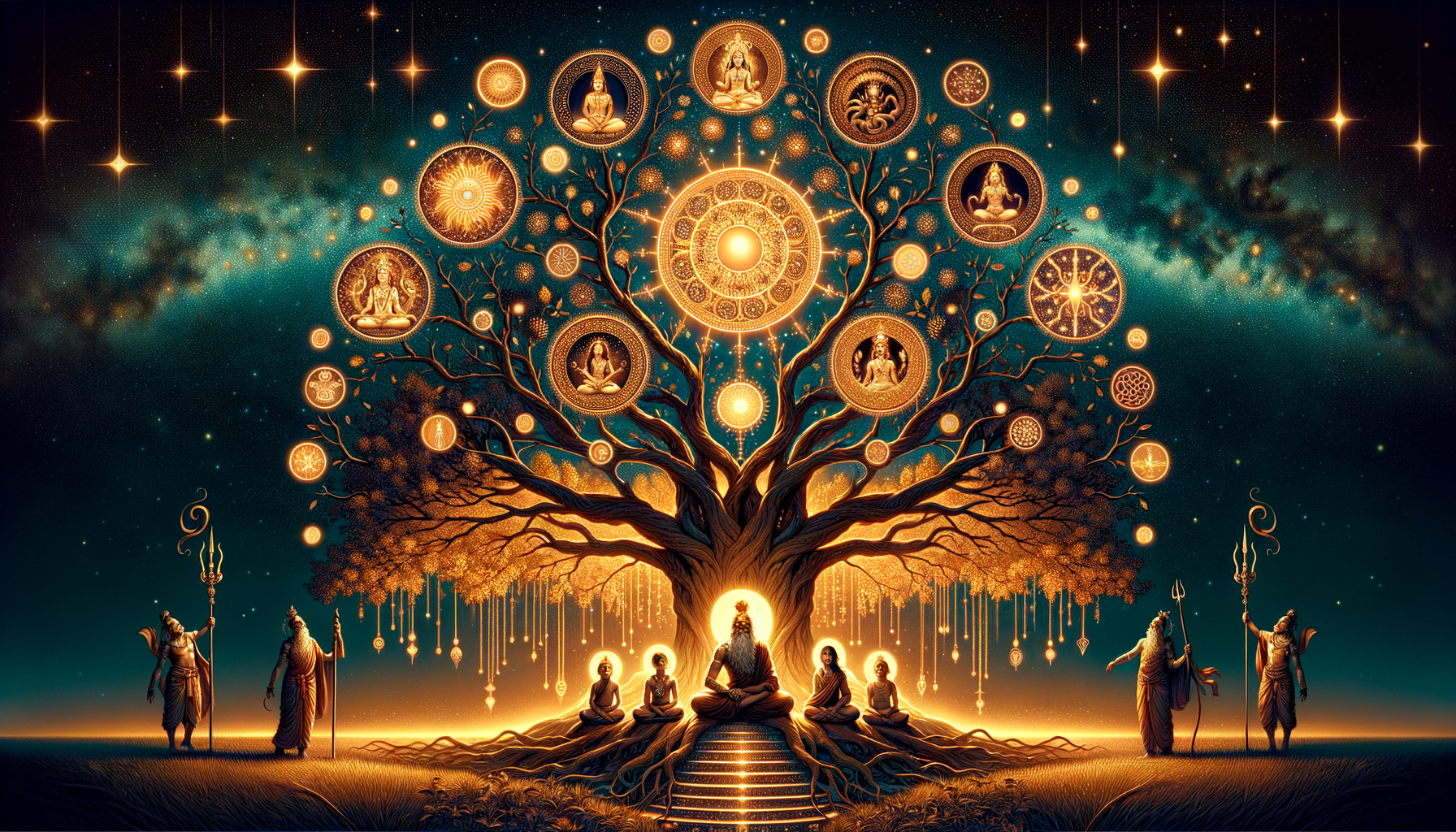
In the Brahma Purana and related Puranic traditions, the genealogy of Daksha Prajapati forms a pivotal thread that explains how cosmic beings emerged and how moral inquiry shapes destiny. The narrative begins with Daksha’s consort Asikni (often rendered “Asikli” in some retellings), whose offspring and alliances structure the very fabric of the universe in Hindu mythology, including the origins of the Devas and Asuras.
Asikni first gave birth to five thousand sons, known as the Haryashvas. Destined, as the tradition notes, to rule the world, they encountered the sage Narada, who posed a challenging reflection: how could rulers govern a realm they had not truly understood? He urged them to explore creation before assuming authority. The Haryashvas departed in search of wisdom and did not return, a detail that the Puranas treat as a profound reminder that inquiry can redirect ambition into contemplation.
Undeterred, Daksha begot another thousand sons, the Shabalashvas (variant spellings appear across sources). Narada imparted the same counsel to them, and they too chose the path of exploration and did not come back. Daksha, grieved and angered by this repeated outcome, is said to have cursed Narada. Even so, the episode functions as a philosophical motif: governance without knowledge risks hubris, while knowledge pursued for its own sake transforms the seeker and the society alike.
The tradition then shifts the focus from sons to daughters, whose marriages and lineages generate the principal categories of beings in the cosmos. Asikni bore sixty daughters for Daksha. Through their unions, the universe’s diversity unfolds. A significant portion are given in marriage to Rishi Kashyapa, while others marry Dharma, Soma, and Arishtanemi, among others. These alliances produce a carefully structured cosmology rather than a random proliferation of life.
In the Kashyapa lineage, Aditi becomes the mother of the Adityasthe Devas (gods), while Diti gives birth to the Daityas, and Danu to the Danavascollectively remembered as Asuras (demons) in many texts. Other daughters such as Vinata and Kadru give rise to Garuda and the Nagas, respectively. In this way, the Puranas present a systematic account of how gods, demons, birds, serpents, and other beings entered the cosmic stage. The question “How were the gods and demons born?” thus finds a clear answer in Daksha’s household: through the ordered marriages of his daughters, guided by rishis and cosmic principles.
Read across the broader dharmic landscape, this narrative resonates with enduring values shared by Hinduism, Buddhism, Jainism, and Sikhism: the ethical imperative of self-knowledge before action, the discipline of restraint, service grounded in responsibility, and reverence for a universe knit together by dharma. Narada’s catalytic questioning mirrors a pan-dharmic esteem for inquiry; Daksha’s grief and resolve reflect the tension between duty and discernment that all traditions navigate with care.
For many readers, this story becomes more than mythic genealogy; it is an invitation to reflect on leadership, learning, and the responsibilities that accompany power. The Haryashvas and Shabalashvas embody the turn from mere ambition to understanding, while the daughters’ lineages articulate a cosmos where order and meaning arise through thoughtful relationships. In that light, Daksha’s lineage is not only a cosmic family tree; it is a living reflection on the primacy of knowledge, ethics, and unity in diversity at the heart of the Puranas.
Inspired by this post on Hindu Pad.
