
-
In Kali Yuga’s Shadow, Karuṇā Shines: The Dharma of Empathy for Collective Survival

Kali Yuga accentuates speed, scarcity, and social fragmentation, making empathy not just virtuous but vital. Drawing on Hinduism, Buddhism, Jainism, and Sikhism, this essay frames karuṇā as strategic dharmaethically right and instrumentally wise. It grounds empathy in the Bhagavad Gita, Anekantavada, Brahmavihāra practice, and Sikh seva, aligning with the civilizational ideal of Vasudhaiva Kutumbakam. Contemporary…
-
Decoding King Shibi’s Paradox: When Compassion Transcends Nature and Defines Dharma

The Shibi episode from the Mahabharatamirrored in the Śibi Jātakalooks paradoxical if read as ecology, but it is rigorous when read as Dharma. The dove’s refuge and the eagle’s hunger dramatize a conflict between necessity and obligation, which King Shibi resolves by internalizing the cost of compassion. Hindu, Buddhist, Jain, and Sikh frameworks converge hererājadharma…
-
Cheating Death by Hours: Missing the Indian Ocean Tsunami Rewired Purpose, Service, and Faith

A narrowly averted tragedy during a Sri Lanka eco-tourleaving a beachfront hotel hours before the Indian Ocean tsunamireorganized priorities without fanfare. This research-grounded reflection explains how near-miss events recalibrate risk perception and catalyze post-traumatic growth, moving focus from pleasure to purpose. It traces a gradual shift toward seva, karuṇā/dayā, and dāna, expressed through sustained community…
-
How Mindful Communication Rewired Her Life: A Dharmic, Research‑Backed Relationship Guide

This article traces how mindful communication, guided by dharmic principles shared across Buddhism, Hinduism, Jainism, and Sikhism, transformed a life previously marked by passive-aggression and anxiety. It shows how grief catalyzed a disciplined search, leading to meditation, right speech, and an intentional practice of honesty, kindness, and clarity. A practical Pause-to-Right-Speech protocol is introducedpause, ground,…
-
Mastering the Big Four C’s: Commitment, Connectivity, Compassion, Creativity for Dharmic Unity

The Big Four C’sCommitment, Connectivity, Compassion, and Creativityform a rigorous, Dharma-aligned framework for building capable, caring, and future-ready communities. By assuming good intent while clarifying agreements, commitment becomes reliable and humane. Through layered Satsang and Sangha-inspired networks, connectivity reduces silos and elevates collaboration across Hindu, Buddhist, Jain, and Sikh traditions. Compassion is operationalized through Nonviolent…
-
Compassion as Sadhana: Tamil Nayanars’ Timeless Blueprint for Charity, Seva, and Welfare

The Tamil Nayanars placed charity (dāna) and seva at the core of spiritual life and public welfare, as preserved in the Tevaram hymns and the Periyapuranam. Their blueprint prioritizes Ahara (Food) through Annadāna, honoring the principle that nutritious, dignified meals stabilize lives and cultivate devotion. Exemplars such as Ilayankudi Maranar (food charity), Amarneethi Nayanar (clothing…
-
Kalithokai’s Elephant Parable: Timeless Sangam Wisdom on Selflessness and Dharma

Kalithokai, a jewel of Sangam literature, pairs the intimacy of akam poetry with a clear ethical imagination. A vivid elephant vignettewhere a tusker shields a female and calfembodies selflessness as the readiness to absorb risk for the vulnerable. The analysis situates this teaching within the anthology’s five tiṇai ecology, the kali metre’s craft, and the…
-
Forgiveness vs Trust: A Dharmic, Evidence-Based Guide to Boundaries, Healing, and Growth

Forgiveness becomes practical once separated from trust: the former is an inner virtue that releases resentment, while the latter is a behavior-based, conditional decision about future access. Drawing on convergences across Hinduism, Buddhism, Jainism, and Sikhism, this guide shows how compassion and accountability can reinforce one another. It introduces a two-track modelinner release and outer…
-
Bhai Kanhaiya, the Sikh Water Bearer: Radical Compassion That Saw No Enemy

This essay examines Bhai Kanhaiyathe Sikh “water bearer who saw no enemy”as a rigorous case study in applied ethics, humanitarian neutrality, and dharmic universality. Set against the sieges around Anandpur in the early 1700s, it analyzes how Guru Gobind Singh’s endorsement of impartial care for the wounded institutionalized seva as the ethical spine of the…
-
Bhai Kanhaiya Ji: Sevapanthi Saint Who Healed Friend and Foe, Inspiring Interfaith Unity
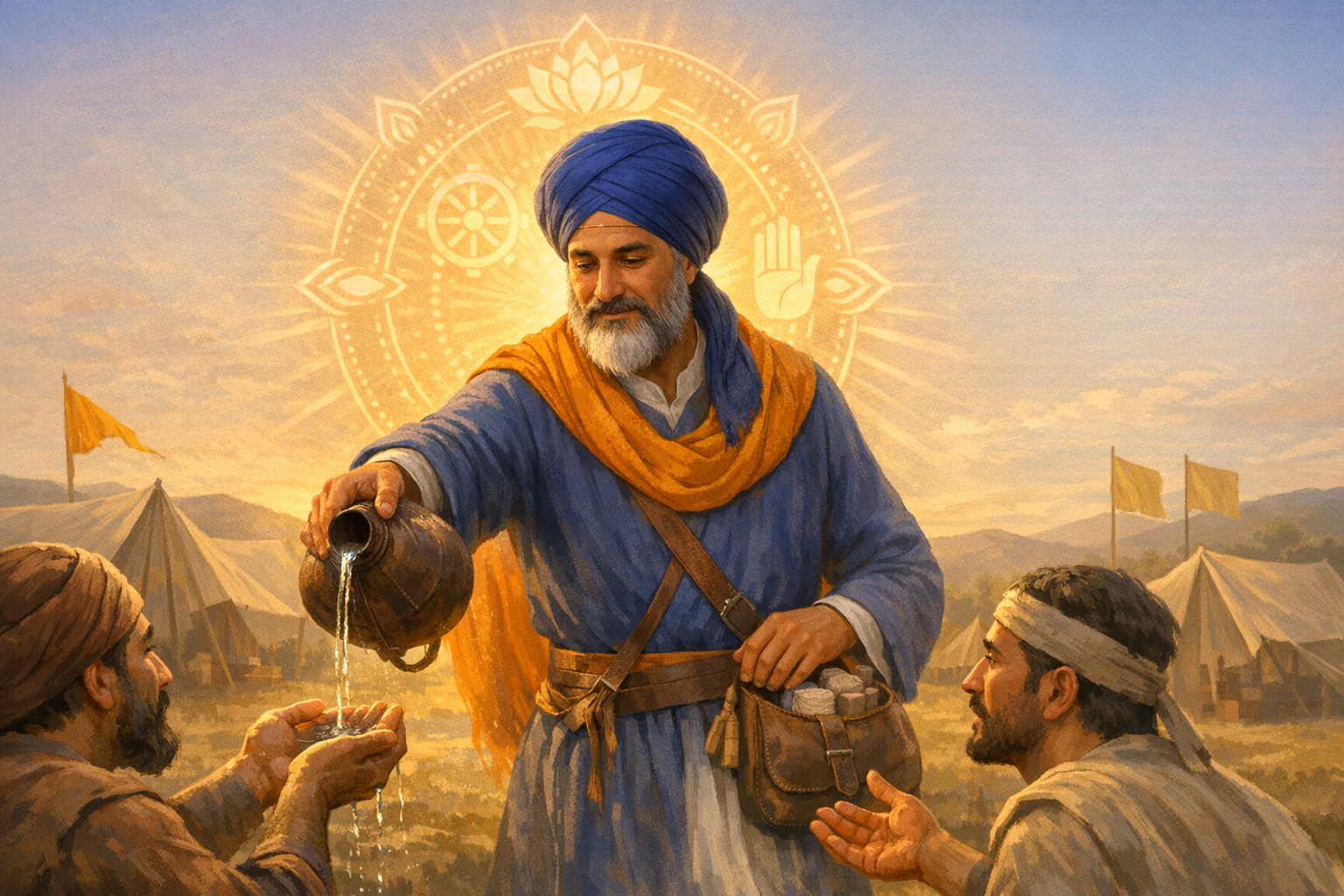
Bhai Kanhaiya Ji (1648–1718) is revered in Sikh history for serving water and aid to all the woundedfriend and foeduring the battles around Anandpur Sahib, earning explicit endorsement from Guru Gobind Singh. His example seeded the Sevapanthi tradition, which institutionalized non-sectarian seva through hospices, piyaus, and relief networks. This essay situates his life within the…
-
From Empath Burnout to Authentic Calm: Ending People-Pleasing with Nervous System Science

This research-informed guide reframes “empath burnout” as a trainable appeasing (fawn) response within the autonomic nervous system. It explains why avoidance strategies rarely work in close relationships and shows how awareness, interoception, and bottom-up somatic tools restore agency. A step-by-step orienting practice teaches the body real-time safety, while boundary scripts and a deliberate pause prevent…
-
Where Is Humanity Today? A Dharmic Blueprint for Compassion, Ahimsa, and Unity

This essay reframes “Where is humanity?” through a dharmic lens that treats compassion, ahimsa, and service as trainable capacities and civic responsibilities. It explains how Hinduism, Buddhism, Jainism, and Sikhism converge on a shared blueprint grounded in Dharma, dayā, karuṇā, aparigraha, mettā, and seva. Readers gain a research-informed view of how breathwork, meditation, and loving-kindness…
-
The Quiet Architecture of Grief: Evidence-Based Ways Small Rituals and Memories Sustain Love

Grief seldom ends; it changes form. Using a clear case of companion‑animal loss, this piece explains how routine, memory, and community support help sustain love after bereavement without minimizing sorrow. Readers will learn key frameworks from contemporary bereavement scienceContinuing Bonds Theory, the Dual Process Model, disenfranchised grief, and post‑traumatic growthand how these map onto everyday…
-
Backbiting and Dharma: Psychological, Social, and Karmic CostsPlus Practical Remedies

Backbiting may appear trivial, yet dharmic ethics and modern psychology converge on its real costs: eroded trust, increased anxiety, fragmented communities, and deepened karmic imprints. Hinduism (Bhagavad Gita 17.15), Buddhism (Right Speech), Jainism (ahimsa and satya), and Sikhism (rejection of ninda) all prescribe compassionate, truthful, and beneficial speech. Research likewise shows that malicious gossip undermines…
-
Beyond Moving On: Evidence-Based Strategies for Trauma Integration and Nervous System Healing

Many people “move on” from painful relationships yet remain vulnerable to old triggers because the nervous system retains unintegrated memories. This evidence-based guide explains why familiar dysregulation can feel like “home,” how naming patterns such as gaslighting and trauma bonding restores clarity, and why daily regulation practices matter. Drawing on neuroscience and dharmic wisdom (yoga,…
-
Why Simple Presence Transforms Lives: The Science of Attention, Friendship, and Calm Under Pressure

A late chance at a youth basketball tryout became the seed of a rare friendship and a lesson in the quiet power of attention. When a coach called from a waiting room minutes before a high-stakes interview, an ordinary conversation provided the calm he needed. Research in social baseline theory, polyvagal theory, psychological safety, and…
-
People Over Power: HG Amogh Lila Prabhu’s Dharmic, Research-Backed Guide to Healing Relationships

This analysis distills HG Amogh Lila Prabhu’s core messagepeople are the true strength of any company, organization, or familyand translates it into a research-aligned, dharmic framework for sustaining healthy relationships. It integrates insights from Hindu Dharma, Buddhism, Jainism, and Sikhism with concepts such as psychological safety and self-determination theory. Readers gain practical methods for dignified…
-
Agnidev Das (ACBSP) in Critical Condition: Stroke Realities, Compassionate Care, and Dharmic Unity

Agnidev Das (ACBSP), a senior disciple of Srila Prabhupada, is in critical condition following a severe brain stroke; clinicians report unresponsiveness and a transition to comfort-focused care. This analysis explains the clinical landscape of strokeischemic and hemorrhagic types, time-sensitive interventions, and why treatment sometimes shifts from curative to palliative. It clarifies that palliative medicine is…
-
When a Village Dog Joined the Kirtan: Compassion and Dharma on ISKCON Maharashtra Padayatra

During an ISKCON Maharashtra Padayatra, a village dog quietly joined the evening nagar sankirtan, offering a vivid case study in compassion expressed through public devotion. The incident illustrates how bhakti practice, sound, rhythm, and calm human posture can create a sense of safety recognizable even to animals. A cross-dharmic lensdrawing on Hindu daya and ahimsa,…
-
Beyond Gossip: Choosing Compassionate Speech to Heal Shame, Build Trust, and Find Peace

Gossip can feel like relief when shame and insecurity spike, yet it often intensifies guilt and erodes trust. This reflection traces a turning point after job loss and the shock of being casually discussed, revealing how gossip masquerades as narrative control when life feels uncontrollable. Drawing on research and dharmic ethics of Right Speech, it…