
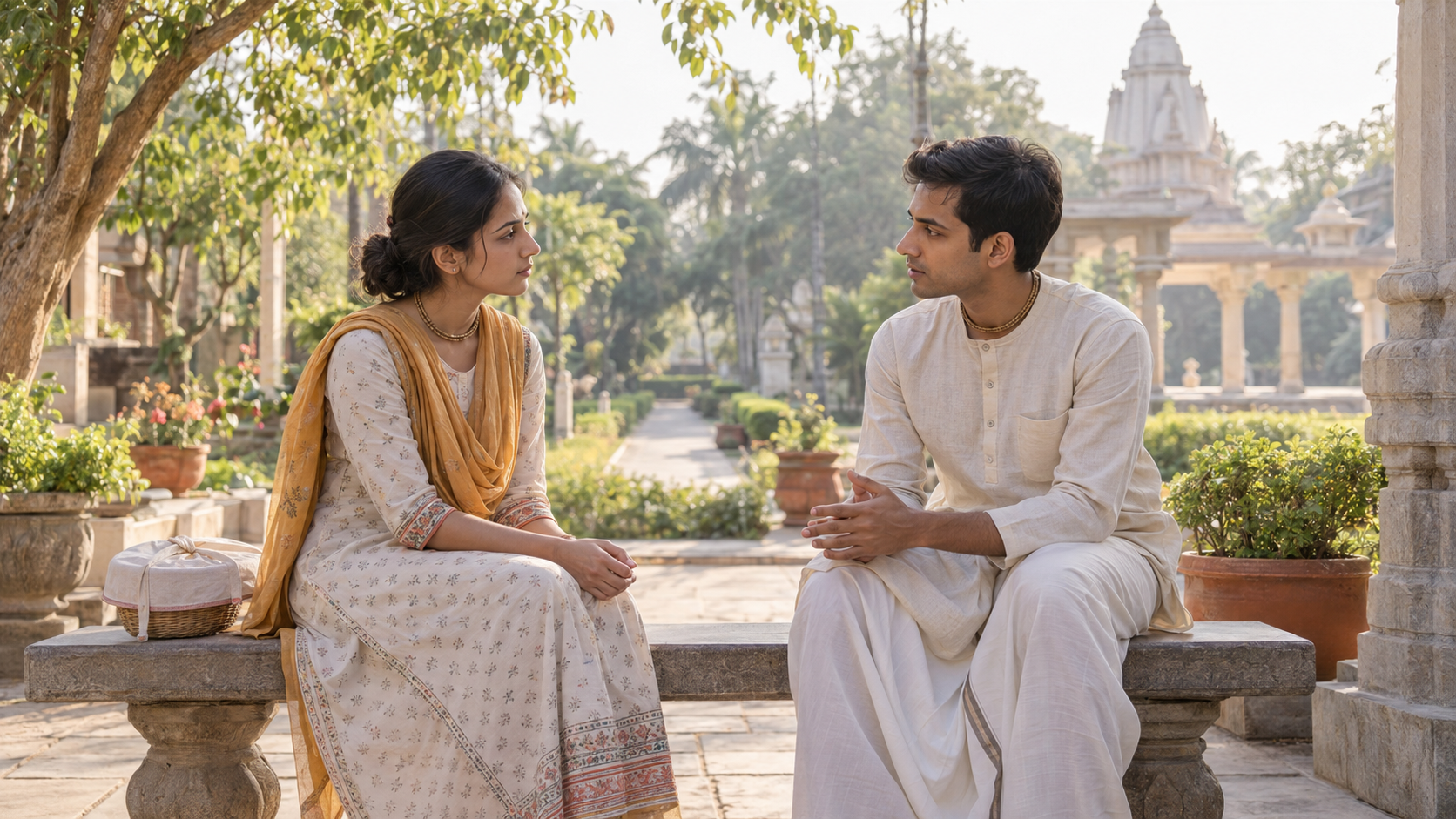
If you are deciding whether a Vaishnava marriage proposal is suitable, shared faith can make the match appear settled before the essential questions have been asked. Two people may chant, honour prasada and respect the same tradition yet expect very different marriages.
Your task is not to predict a life without friction. It is to discover whether you can build a life of seva, affection and honest cooperation with this particular person when both strengths and limitations are visible.
Choose a peer, not a devotional project

Srimad-Bhagavatam 3.21.15 and 9.18.23 are invoked in Vaishnava marital teaching to connect a happy marriage with similar disposition and equal footing. That does not require identical personalities. A reflective person may marry someone more outgoing; one spouse may be methodical while the other is spontaneous. Complementary temperaments can work well when there is mutual respect.
Equal footing means that each person is treated as a responsible adult whose conscience, duties and voice matter. Do not reduce it to family prestige, education, income or polished devotional presentation. Those things may affect household life, but they cannot tell you whether one person will be heard or whether the other is expected to become a permanent subordinate, rescuer or reform project.
Ask each prospective spouse to answer the following areas in their own words. Parents and matchmakers may clarify facts, but they should not answer for the two people who will live the marriage.
- Devotional life: What practice is already steady? What place will daily sadhana, temple participation, pilgrimage, hospitality and service have in the household? Distinguish an existing discipline from an aspiration.
- Spiritual authority: How does each person relate to guru, lineage, temple leadership and family tradition? What will happen if respected elders give conflicting advice?
- Household responsibility: Who expects to earn, manage money, cook, clean or provide care? Is either person assuming that these duties follow automatically from gender without discussion?
- Family relationships: Will the couple live with or near parents? What support is expected, and who decides when relatives become involved in a disagreement?
- Children: Do both want children? What expectations do they hold about upbringing, education and religious practice?
- Money: What debts, obligations, spending habits and charitable commitments already exist? What requires joint consent?
- Privacy and community: How much social life, personal time and community involvement does each person need?
- Decision-making: When sincere convictions differ, will the couple seek consensus, divide responsibility by area or consult someone they both trust?
A difference is not automatically a rejection. An unspoken difference is more dangerous because it enters the marriage disguised as agreement. Compare actual expectations, not labels such as “traditional,” “modern,” “simple living” or “service-minded.” Each label can conceal several incompatible meanings.
Assess the faults that will enter the marriage
Early meetings naturally favour guarded, considerate behaviour. Marriage eventually brings each person’s weaknesses into daily view. The useful question is therefore not only, “What do I admire?” It is also, “What happens when this person is tired, disappointed, corrected or unable to get their way?”
Replace vague claims of being “easygoing” or “understanding” with concrete reflection:
- Ask what close family members would identify as the person’s most difficult recurring habit.
- Discuss a recent conflict. What did the person do, what part did they own, and how was the relationship repaired?
- Ask which weakness the person is actively trying to address and what action, if any, has followed that recognition.
- Name a behaviour in the other person that could become resentment if it remained unchanged. Discuss it now, without promising a transformation merely to preserve the proposal.
Then sort the differences honestly. Some can be accepted without requiring change. Some need a negotiated arrangement. Some justify postponing or declining the match. A harmless difference in taste is not the same as contempt, repeated deception, coercive control or chronic refusal to carry responsibility.
Acceptance means that you can live peacefully with a real limitation, not that you expect marriage to cure it. Negotiation means that both people can name a workable arrangement and revisit it without retaliation. Postponement means that an unresolved pattern is serious enough to require evidence of change before vows are made.
Mandodari’s extraordinary endurance beside Ravana should not be turned into an ordinary premarital standard. Forbearance after a vow is not a command to ignore danger before one. Violence, threats, sexual coercion, intimidation or control over access to money and family are safety problems, not spiritual tests of tolerance. Step back from the proposal and seek qualified local help if any of these are present.
Use disagreement to test repair, not sameness
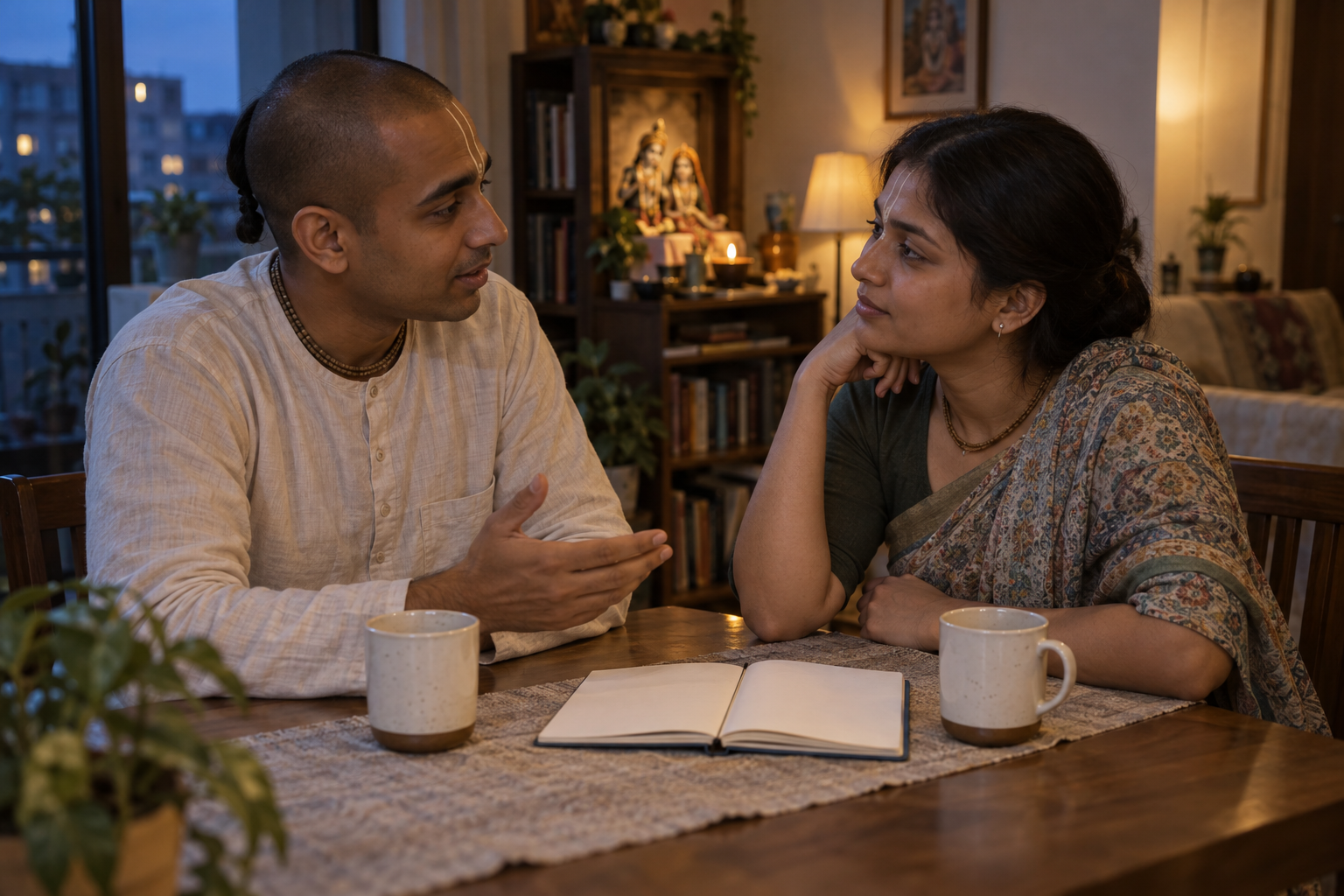
A sound decision does not require perfect compatibility. Some differences can be enjoyed, some managed, some negotiated, some accepted and some discovered to be complementary. The practical test is whether the couple can remain respectful while deciding which kind of difference they are facing.
Before agreeing to marriage, discuss a real matter on which you do not already agree. It might concern residence, support for parents, household finances, daily practice or the amount of time given to community service. Do not manufacture a test or provoke the other person. Use an existing difference and notice the process.
- Can each person state the other’s position fairly before answering it?
- Can either person say no without being mocked, punished, threatened or subjected to spiritual guilt?
- Can someone admit, “I was wrong,” without immediately shifting blame?
- If emotions rise, can the conversation pause and resume rather than disappear into silence?
- Can the couple identify what must be decided jointly and when outside counsel would be appropriate?
Bhakti should gradually loosen the grip of irritation and self-importance. It should not be used to silence a legitimate concern. Telling a prospective spouse to become “more advanced” whenever they object is not evidence of spiritual maturity; it avoids the substance of the objection.
Do not ask whether you will ever disagree. Ask whether truth, dignity and goodwill survive the disagreement. A marriage needs a way back to closeness after strain, because drawing close, pulling apart and drawing close again is part of long companionship.
Plan for a marriage supported by community
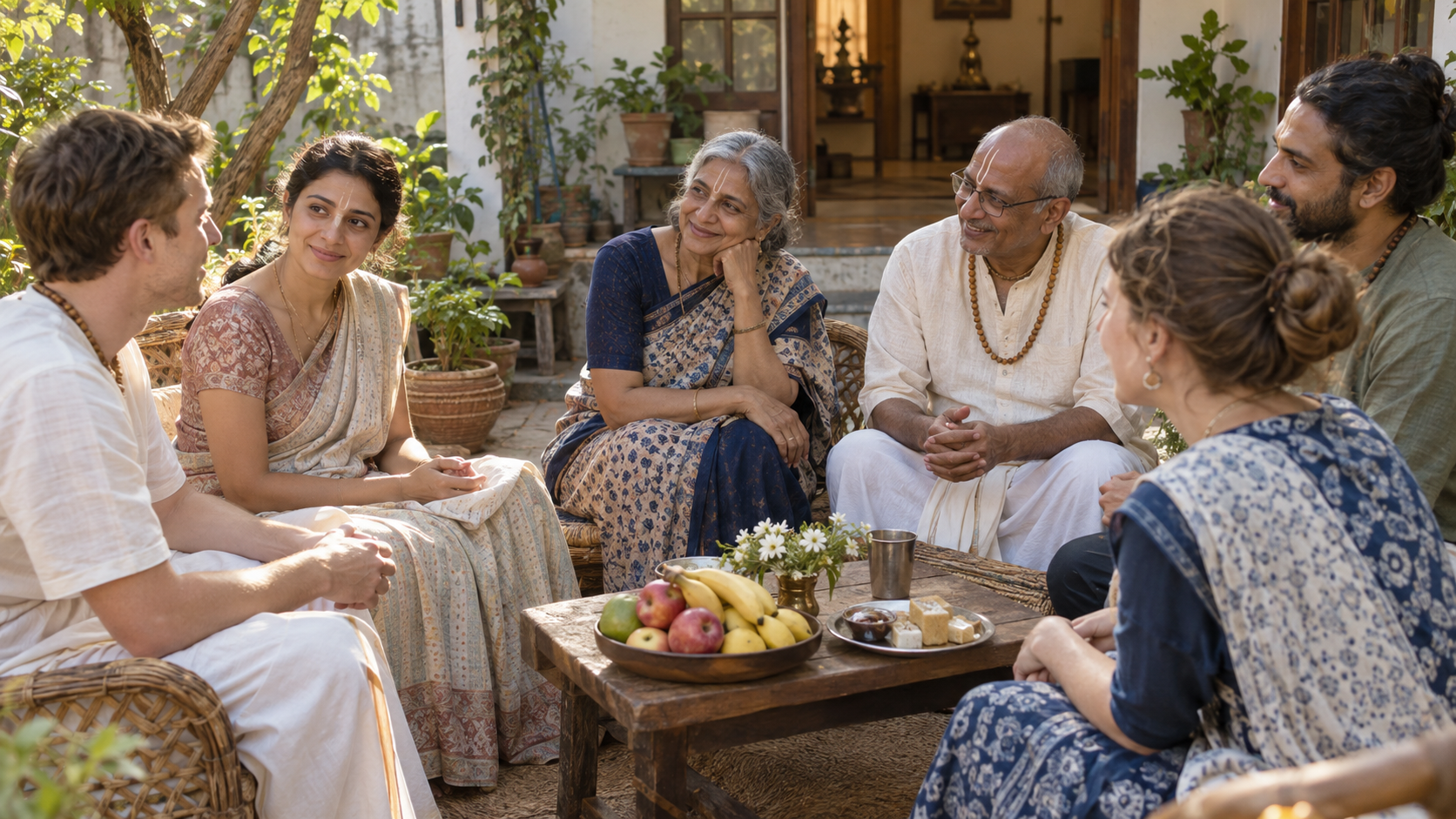
Your spouse should be a primary companion, but should not be required to become your only confidant, teacher, adviser and emotional outlet. Traditional Vaishnava counsel includes like-minded male friends for the husband and like-minded female friends for the wife. Trustworthy friendships can relieve pressure on the marriage and provide perspective when the couple becomes stuck.
The quality of those relationships matters more than the size of the social circle. Before marriage, ask whom the person approaches when confused, angry or ashamed. Notice what those advisers encourage. A useful friend protects confidences, resists gossip and helps the person act with greater honesty. A useful elder understands dharma without treating one spouse’s dignity as expendable. A qualified marriage counsellor can teach practical communication and repair skills when informal support is not enough.
Friends should support direct communication, not replace it. If every disagreement is carried to relatives before the spouse hears it, the marriage becomes crowded with alliances. Agree on what may be shared, with whom and for what purpose. Seeking wisdom is healthy; recruiting a faction is not.
Community compatibility deserves attention during matchmaking. A person may appear personally agreeable while remaining embedded in a circle that mocks the prospective spouse, rewards secrecy or interferes in every decision. You are not marrying an individual in isolation. You are also deciding how two networks of loyalty, friendship and service will meet.
Questions to settle before you agree

Is a shared Vaishnava identity enough?
No. It provides a precious common orientation, but it does not settle expectations about authority, money, family, children, work, affection or conflict. Shared vocabulary can even hide differences when both people use the same devotional terms but attach different duties to them. Ask what those terms would mean on an ordinary weekday.
How much incompatibility is acceptable?
Accept a difference when you can live with its present form without secretly demanding that the person change. Negotiate it when both people can make and keep a clear arrangement. Treat it as a barrier when marriage would require either person to surrender safety, dignity, conscience or a basic direction for life. Compatibility is not the absence of difference; it is the capacity to carry the differences that will remain.
What if the families approve but you remain uncertain?
Turn unease into a precise question. Identify the behaviour, unanswered fact or conflicting expectation beneath it. Ask directly, verify what can be verified and observe whether the response brings clarity or pressure. Waiting and praying may be appropriate when clarity has not arrived, but prayer should accompany honest inquiry rather than replace it. Family approval cannot supply the free and informed consent of the two people entering the marriage.
Before your next meeting, choose the areas where your answers remain assumed rather than spoken. Write your own answers first, exchange them, and discuss the largest gaps. Do not try to prove that the proposal can work. Discover the life it would actually create, then give your yes only when that life can be entered with truth, respect and steady purpose.
References

Leave a Reply
You must be logged in to post a comment.