

Your japa, puja or sacred reading may be sincere, yet the rest of the day can still feel spiritually empty. By breakfast, the phone is demanding attention. By afternoon, work has set the emotional tone. Evening worship then feels like a return from somewhere very far away.
You may not need a longer ritual. You may need a devotional rhythm that follows you beyond the altar. The examples below come from Vaishnava bhakti; if you belong to another Dharmic sampradaya, keep the same structure of remembrance while using the prayers, texts and disciplines received in your own tradition.
Measure devotion by return, not by atmosphere
Devotional immersion does not mean sustaining an elevated emotion all day. Emotion changes with sleep, pressure, health, conflict and countless other conditions. If you make a particular feeling the test of sincerity, you may abandon a sound practice precisely when it is most needed.
Use a more practical measure: How often did you return to Bhagavan, and what did that return change in your next action? Remembrance before an impatient reply matters. So does remembering the Divine while completing an ordinary responsibility carefully. These returns connect worship with character.
Bhakti can remain an outward routine when its inner meaning is never drawn out. It then struggles to compete with the immediate stimulation offered by apps, films and other distractions. That does not necessarily show a lack of devotion. It may show that you are performing the form of the practice without reflecting, applying or praying through it.
At the end of the day, write brief answers to these questions:
- Where did remembrance arise naturally?
- Where did I forget, and what was happening at that moment?
- Did remembrance alter my speech, attention or conduct?
This is not a spiritual scorecard. It helps you find the places where your day already supports devotion and the places that need a simple cue.
Give the day a devotional spine

A practice becomes easier to carry when it is attached to events that already happen. Build the day around a morning consecration, a repeated transition cue and an evening return. These anchors do not fill every moment with ritual. They prevent the hours between rituals from becoming spiritually unrelated territory.
Consecrate the morning before competing inputs arrive
Prepare your place the night before. Leave the sacred text, mala or prayer book ready rather than buried beneath ordinary objects. If your household responsibilities begin immediately on waking, do not create an ideal routine that your actual life cannot support. Use the first undisturbed interval available to you.
- Offer pranam and acknowledge whose day this is.
- Chant or sing the Name and prayers given in your tradition.
- Read a small passage slowly enough to retain it.
- Offer the most demanding duty ahead as seva, naming it specifically.
A screen can support this anchor when used deliberately. A mangala arati darshan from Sri Sri Krishna Balaram Mandir in Vrindavan, for example, can give the morning a clear devotional form. Open it intentionally, attend to the darshan, and close it when the observance ends. Do not let a sacred video become the entrance to an hour of unrelated recommendations.
Use transitions as bells of remembrance
Choose an event that already repeats: opening a door, fastening a seatbelt, beginning a meal, sitting at your desk or returning home. At that cue, pause briefly, repeat the Divine Name or a short prayer, and identify the duty that follows as an offering.
The cue must be simple enough to survive a crowded day. You do not need to manufacture a special mood before saying the Name. You are training yourself to return under the conditions in which you actually live. If you are driving or operating equipment, keep your full attention on safety; never close your eyes or handle a device for the sake of the practice.
Close the day instead of merely stopping
Before sleep, recall one moment of forgetfulness and one moment of return. Offer both. Ask forgiveness where your conduct fell short, express gratitude for whatever remembrance came, and place tomorrow’s first devotional object where you will see it. This keeps an imperfect day inside the relationship rather than treating imperfection as evidence that the relationship has failed.
Read until the sacred text becomes conduct
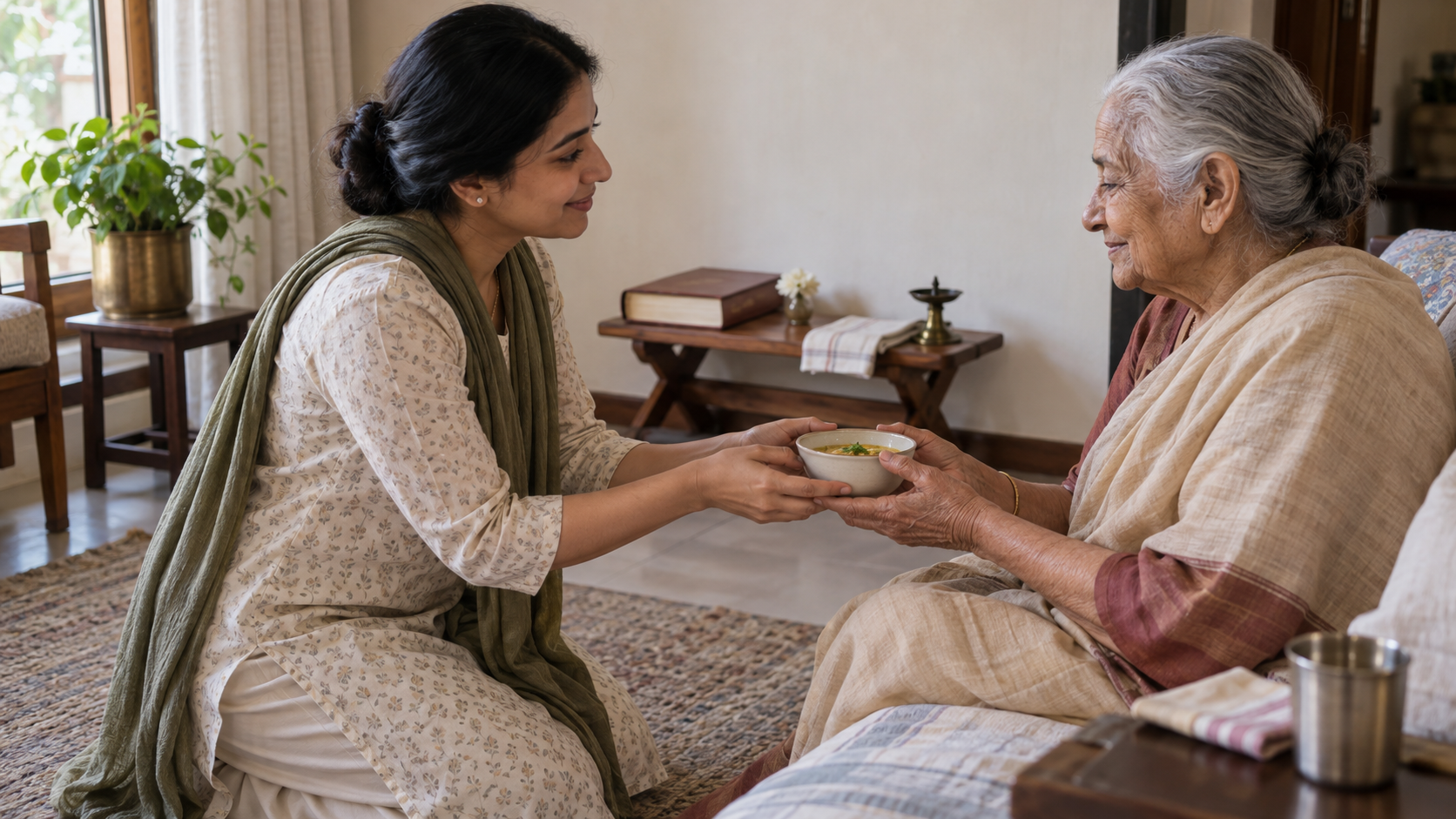
Many people collect spiritual information without allowing it to enter their decisions. The remedy is a complete movement through Sravanam, mananam, nididhyasan and vandanam: receive the teaching, reflect on it, bring it into life, and pray for realization.
- Sravanam: Read or hear attentively. Before consulting another explanation, state in your own words what the passage actually says.
- Mananam: Reflect on what struck you. Ask why that phrase caught your attention, where you have encountered the same principle, and which assumption it challenges.
- Nididhyasan: Turn the teaching into an observable action. If the passage concerns humility, you might let another person finish speaking before you answer. If it concerns disciplined speech, refrain from sending the sharp reply already forming in your mind.
- Vandanam: Pray for the understanding and strength needed to live what you have read. Use plain words if a formal prayer does not express the exact need.
Keep a compact record with these fields: passage, striking phrase, meaning, next action and prayer. The next action is the crucial field. If you cannot name one, remain with the passage instead of rushing to gather more material.
Information saturation is a real obstacle in spiritual life. You can hear so much that afterward you remember only that the subject was broadly related to Krishna. When that happens, adding another discourse does not solve the lack of assimilation. Stop collecting for the day. Return to the sentence that stayed with you, reflect on it, and decide how it will meet your life.
This method also corrects a common misunderstanding about devotional dryness. The text may not be barren; you may simply have brought it to the mind without allowing the mind to chew, absorb and act. Read less if necessary, but complete the movement from hearing to conduct.
Let ordinary places participate in your sadhana
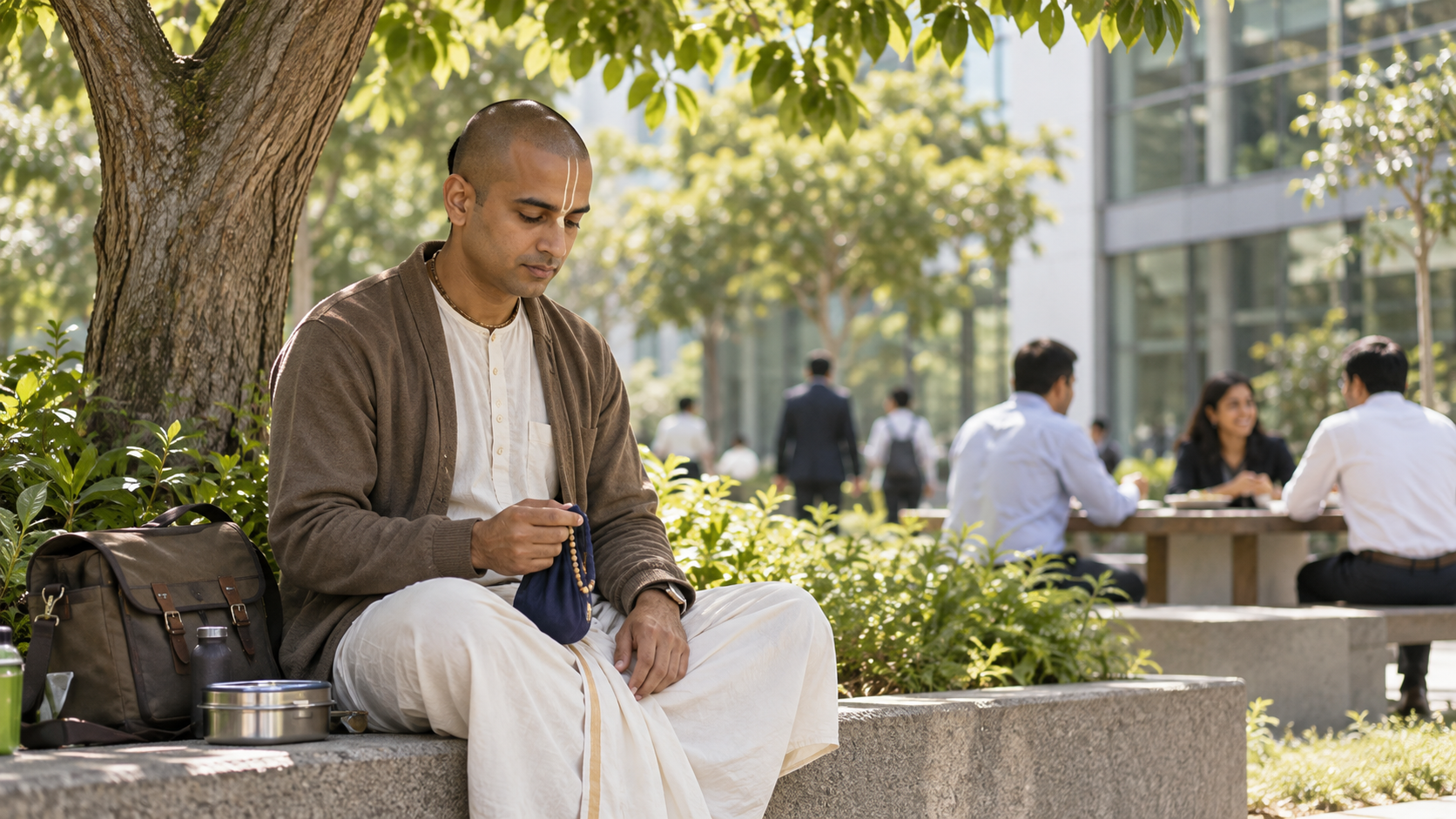
Your life does not have to pause before devotion can begin. A pre-dawn commute can carry sung prayer. A supermarket aisle can become a place for a quiet Hari offered for the well-being of someone you pass. Trees, plants and other living beings can be met with the same prayerful goodwill. The location has changed, but the orientation toward seva and remembrance has not.
- During travel, stay with one prayer or kirtan rather than constantly searching for new devotional media. Let repetition deepen attention.
- Before a household chore, dedicate the result. Then clean, cook or repair with care. Offering a duty does not excuse careless execution.
- At work, repeat the Name inwardly at natural pauses. When a task requires concentration, give it concentration; the honest completion of duty can itself carry the offering.
- When meeting someone difficult, make an inward pranam before speaking. This does not require agreement or passivity. It means refusing to let contempt govern the encounter.
- When you notice another person’s suffering, offer a quiet prayer without imagining that you know their whole life or possess the power to rescue them.
Discretion matters. The people around you are not an audience for your piety, and they owe you no response. Chant aloud where it is appropriate; remember silently where sound would intrude. Offer the prayer and release the outcome.
Humility is the guardrail of devotional immersion. When every sacred act becomes evidence of your superiority, false ego has occupied the practice. The correction is concrete: seek no recognition, keep no account of who appeared receptive, and examine whether your devotion is making you more truthful, patient and ready to serve.
A contemplative image associated with hearing A.C. Bhaktivedanta Swami Prabhupada sing can sharpen this attention: approach the Holy Name as the Deity and your singing as an act of bathing the Name in devotion. If that image helps you, do not treat chanting as background noise. Listen to the syllables you are offering.
Repair the point where your practice actually breaks

When devotion feels dry, adding more content is often the least useful first move. Identify the precise break in the rhythm and make the corresponding adjustment.
- If you reach for the phone before remembering your intention, charge it outside the devotional space and leave the text or mala where your hand normally goes.
- If you finish a reading but cannot say what it means for today, shorten the passage and use the four-part reading process before opening anything else.
- If chanting has become mechanical, slow down enough to hear the Name. Spoken and sung forms may be alternated, but novelty should not replace attention.
- If missing the morning causes you to abandon the whole day, use the next transition cue. A broken sequence is repaired by the next sincere return, not by waiting for an ideal tomorrow.
- If public devotion is feeding self-importance, make the practice quieter and increase unadvertised service.
- If no devotional feeling appears, do not manufacture one. Offer the absence honestly, continue the received discipline, and judge the day by faithful return and conduct rather than emotional intensity.
Key takeaways
- Build the day around morning consecration, transition cues and an evening return.
- Measure immersion by repeated remembrance and changed conduct, not by continuous emotion.
- Move sacred reading through hearing, reflection, application and prayer.
- Carry the Divine Name into travel, work, chores and encounters without neglecting safety, duty or other people’s boundaries.
- When practice becomes dry, reduce excess input and restore attention to the act already before you.
Prepare one devotional object tonight. In the morning, read one passage deeply enough to choose an action. At the next ordinary transition, return to the Name. Before sleep, ask what that remembrance changed. That is enough to begin turning a divided day into a life of devotion.
References
- Dandavats — A Taste for Reading
- Dandavats — Making all the world my temple
- Dandavats — Today’s Featured Video: His Holiness Indradyumna Swami Maharaj (SB-11.05.17) (16-10-2026)

Leave a Reply
You must be logged in to post a comment.