
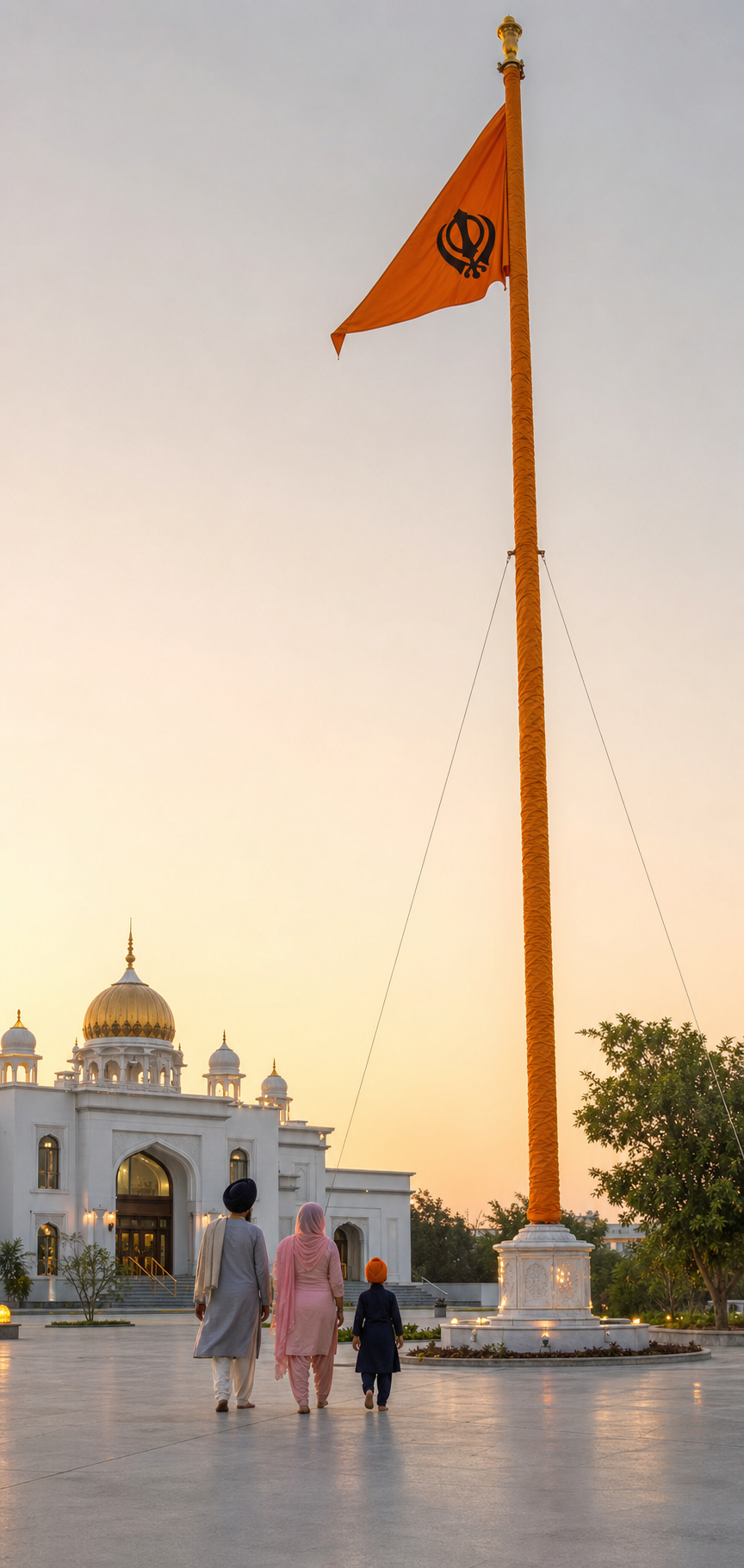
You may be approaching a gurdwara for the first time, bringing children to take part in seva, or wondering what to do after noticing a frayed flag. In each case, the safest starting point is the same: show respect, pay attention, and do not improvise with the Nishan Sahib or its pole.
Good care joins devotion to practical responsibility. The cloth must be handled with dignity, but the pole, foundation, lighting, and surrounding ground must also be kept safe. Knowing which task belongs to you – and when to call a designated sevadar – is part of the etiquette.
Let the meaning of the Nishan Sahib shape your conduct
The Nishan Sahib marks a gurdwara as a place of welcome, protection, sangat, and langar. It is not merely a sign identifying the building. Its presence expresses a public commitment to seva, equality, courage, and the spiritual sovereignty of the Sikh community.
In its familiar kesri form, the deep saffron colour signifies courage and sacrifice. The Khanda brings together the double-edged sword, the chakkar, and two kirpans associated with miri-piri: spiritual responsibility joined to responsibility in the temporal world. The pole is ordinarily covered with a clean chola, while the base is maintained as a dignified part of the approach to the gurdwara. These elements explain why cleanliness and careful maintenance are forms of seva, not decorative housekeeping.
If you come from another Dharmic tradition, the idea of a dharma-dhwaja or sacred banner may offer a useful point of recognition. It should not lead you to assume that the customs of a mandir, Buddhist vihara, or Jain derasar automatically transfer to a gurdwara. Shared Dharmic values can deepen mutual respect, but Sikh maryada determines how the Nishan Sahib is approached and maintained.
- Cover your head when entering the reverential precinct or joining seva, following the directions of the gurdwara.
- Keep your manner composed. A mindful pause or respectful bow is appropriate when consistent with local practice; an elaborate display is unnecessary.
- Do not lean against the pole, hang bags or clothing from it, or use it as support while waiting or taking photographs.
- Never attach posters, notices, decorations, cables, or temporary signs to the pole unless the responsible gurdwara team has specifically approved and arranged them.
- Keep the base clear. Litter, stored supplies, shoes, equipment, and unrelated displays can turn a dignified threshold into a cluttered utility area.
- If you want to help, ask for a defined task. Sweeping the forecourt, supporting an organised cleaning effort, or assisting with water and supplies can turn reverence into useful seva.
Children learn the etiquette best when they are given the reason as well as the rule. Explain that people keep the area clean because the Nishan Sahib represents a standing promise of service. Then give them a safe, supervised task at ground level. That teaches stewardship more effectively than telling them only what they must not touch.
Care for the cloth, pole, and surroundings as one system
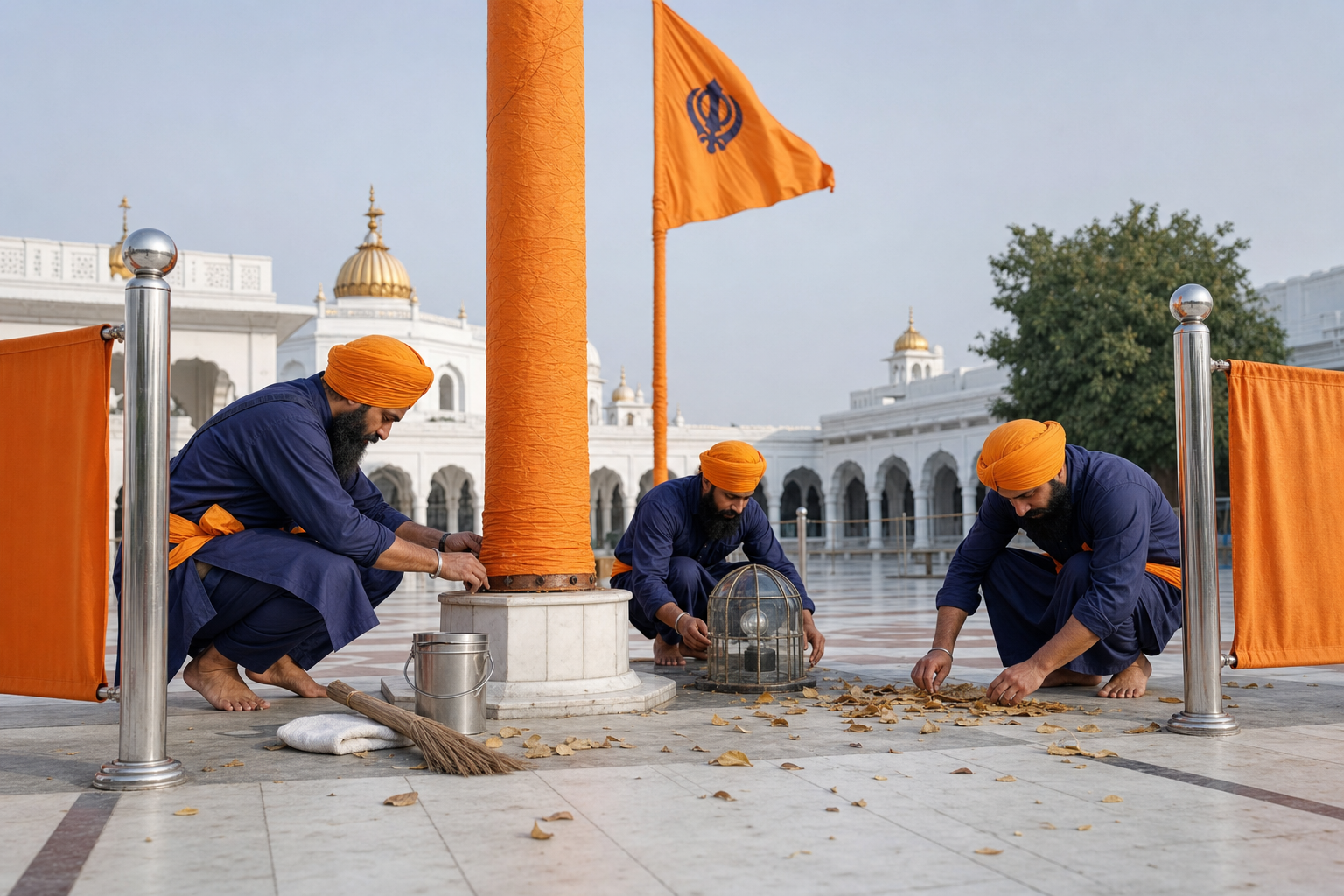
A bright flag can distract attention from a loose fitting or an unstable base. Conversely, a sound pole does not make a torn flag acceptable. A useful inspection therefore looks at three connected layers: the sacred cloth and chola, the supporting structure, and the setting around them.
| Area to observe | What to notice | Appropriate response |
|---|---|---|
| Flag and chola | Fraying, tears, opened stitching, loose wrapping, or cloth becoming badly twisted | Tell the designated sevadar. Let the responsible team decide whether immediate lowering, repair, or replacement is needed. |
| Pole, fittings, and foundation | Unexpected movement, leaning, loosened hardware, corrosion, damaged guying, or visible change around the base | Keep people away from the possible fall area and request a competent structural inspection. Do not climb the pole to investigate. |
| Lighting and lightning protection | Loose equipment, damaged cables, exposed electrical parts, or fittings affected by weather | Restrict access and use a qualified technician. Do not handle electrical equipment as an informal seva task. |
| Surrounding ground | Litter, unauthorised notices, stored objects, standing water, or a trip hazard near the base | Remove ordinary debris safely. Report drainage, electrical, or structural concerns rather than concealing them during cleaning. |
Routine care should have more than a ceremonial date on the calendar. Use three triggers: frequent visual checks from the ground, an additional check after severe weather, and a fuller examination whenever the Nishan Sahib is lowered for renewal. A simple maintenance record can note the condition observed, work completed, the date of a flag or chola change, and any structural issue referred to a professional. That record helps the next group of sevadars distinguish a new defect from a known one.
Weather-resistant cloth, reinforced stitching, secure foundations or guying, responsible lighting, and lightning protection can reduce damage. None of them eliminates the need for inspection. Lightning protection also does not make it safe to work on the pole during an approaching storm. Outdoor work should stop when weather makes access unsafe.
Cleaning must not become an excuse for unplanned repairs. Ask which materials and methods the gurdwara permits before washing or polishing the pole. If access requires climbing, lifting equipment, electrical isolation, or structural work, the task has moved beyond ordinary volunteer cleaning. Reverence does not require a sevadar to accept an avoidable fall, electrical, or equipment hazard.
Approach Nishan Sahib Sewa as renewal, not a flag-changing shortcut
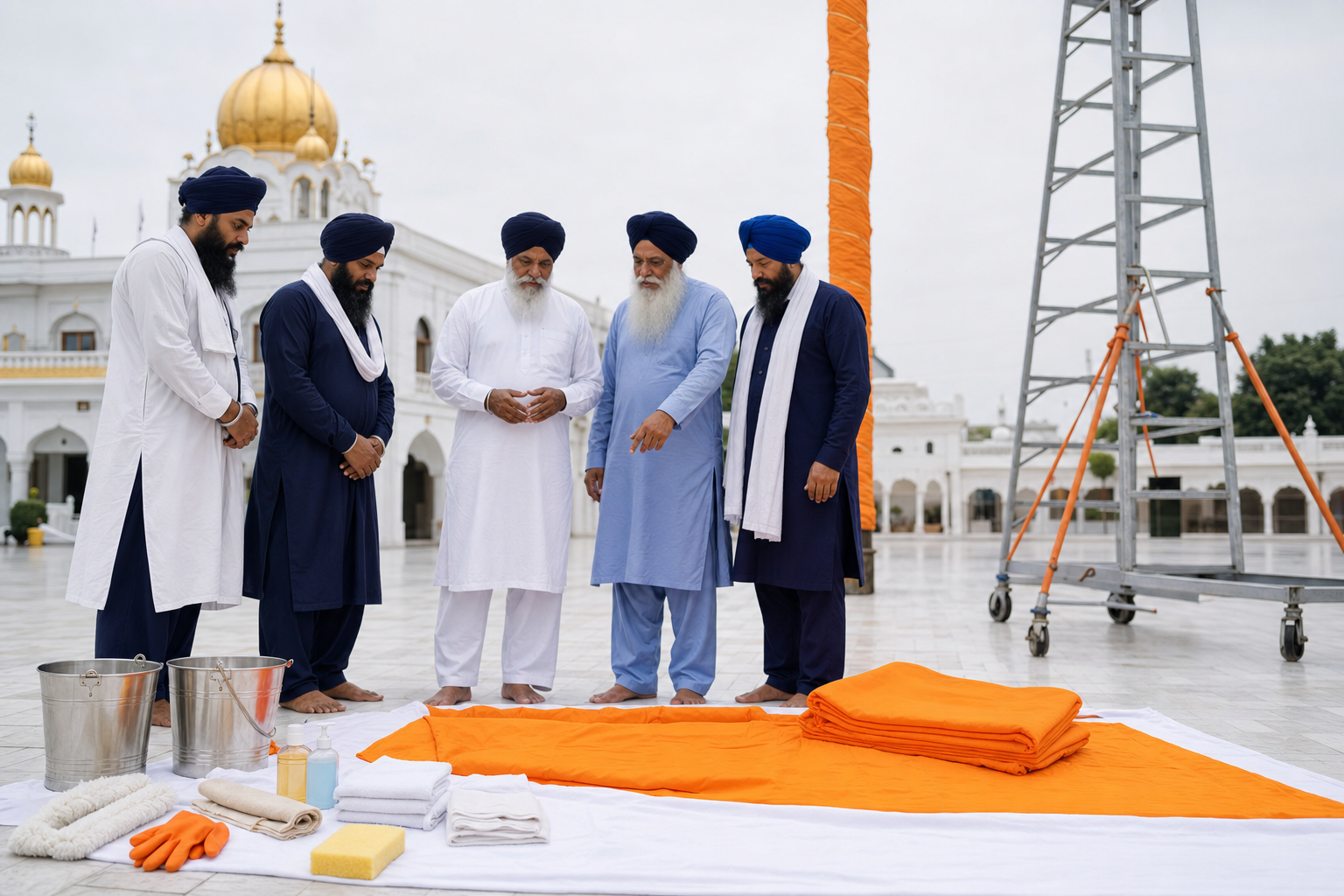
Periodic renewal is often arranged near Vaisakhi or a Gurpurab, when the sangat can gather and younger members can learn through participation. Those occasions are common opportunities, not a reason to leave badly worn cloth in place until the next festival. Condition should prompt attention whenever deterioration becomes apparent.
The exact choreography belongs to the local gurdwara and its maryada. A responsible sequence normally keeps the spiritual, practical, and safety dimensions together:
- Identify the lead sevadar or committee member before work starts. Confirm who will direct the lowering, handling, cleaning, inspection, and hoisting.
- Prepare the new flag and chola, suitable handling space, required equipment, and a safe boundary around the work area. Do not begin and then search for missing supplies while cloth or hardware is unsecured.
- Begin with Ardas and the locally observed programme, which may include simran or kirtan. The devotional setting reminds everyone that this is collective seva rather than routine building work.
- Lower the flag under clear direction. Use enough prepared hands to keep the cloth controlled and prevent it from touching the ground.
- Clean the pole as permitted and inspect its fittings, foundation, guying, lighting, and protective equipment while access is available. A fault discovered here should be assessed before the flag is hoisted again.
- Wrap the fresh chola carefully, attach the new flag securely, and hoist it without allowing the cloth to drag or become entangled.
- Transfer the retired cloth to the person responsible for its dignified storage or disposal. Do not place it in ordinary rubbish or take it away as a souvenir.
If the cloth accidentally touches the ground, do not hide the incident, argue over it, or invent a corrective ritual. Lift and secure it respectfully, tell the lead sevadar, and follow the gurdwara’s procedure. Calm accountability preserves both maryada and the cooperative spirit of the seva.
Retired cloth deserves particular care because local arrangements can differ. Some gurdwaras store it before dignified disposal; others have an established process managed by designated sevadars. The dependable rule is narrow but important: hand it to the responsible authority and never discard it casually.
Young participants can observe the full sequence while helping with safe ground-level tasks. They should not be placed beneath raised equipment, asked to control heavy or tensioned components, or allowed to climb. The educational value lies in seeing Ardas, cooperation, careful handling, and practical inspection treated as parts of the same duty.
Respond to storms, damage, and vandalism without creating a second hazard
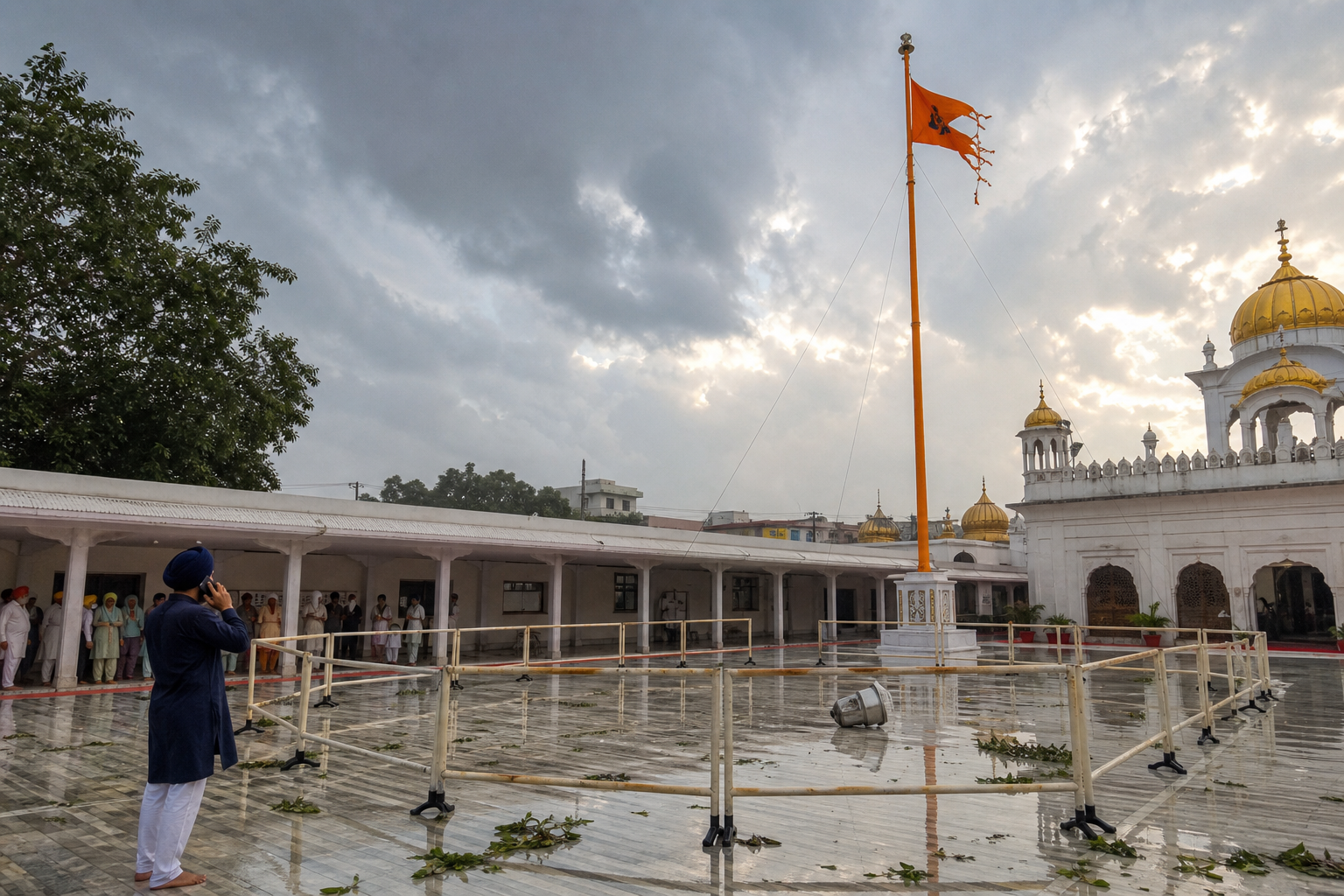
A damaged Nishan Sahib understandably creates urgency. Urgency must not send someone up an unstable pole or into damaged electrical equipment. Restoration begins by protecting people, then establishing what has actually failed.
- Clear the immediate area if the pole is leaning, hardware is loose, fabric is whipping near equipment, or electrical parts appear damaged.
- Notify the gurdwara’s responsible sevadar or committee. One person should coordinate the response so that several well-meaning volunteers do not pull, cut, climb, or disconnect different components at once.
- Observe and document the condition from a safe position. If vandalism may have occurred, avoid disturbing more than safety requires and let the gurdwara leadership decide how the incident should be documented and reported.
- Have the structure, foundation, guying, lighting, and lightning protection checked by people competent for those systems. Cloth replacement should not conceal damage to the supporting installation.
- Restore the Nishan Sahib respectfully, incorporating Ardas and the local procedure once the site and equipment are safe.
For diaspora gurdwaras, structural care also includes civic compliance. Height limits, wind-load requirements, foundations, guying, lighting, and signage may be governed by local rules. Confirm the applicable requirements before installing, materially altering, or replacing structural components. Compliance is not separate from seva when it protects the sangat, neighbours, and the long-term presence of the gurdwara.
If neighbours ask about the Nishan Sahib, a clear explanation can prevent misunderstanding: it identifies a gurdwara and signals welcome, service, and access to langar. That conversation can turn a planning or maintenance question into practical community trust without diluting the distinct Sikh meaning of the symbol.
Frequently asked questions about Nishan Sahib etiquette
Do I have to bow to the Nishan Sahib?
A respectful bow or mindful pause is a fitting expression of reverence, but visitors should follow the practice of the local gurdwara rather than perform a gesture they do not understand. Covering your head, maintaining decorum, and avoiding misuse of the pole are concrete forms of respect.
May I touch the pole or help with the flag?
Do not handle the pole, chola, or flag casually. Touching them as part of organised seva is different from leaning, playing, or attaching personal items. If you have not been assigned a task, ask a sevadar before entering the work area or handling anything.
When should the flag and chola be replaced?
Many communities arrange renewal around Vaisakhi or Gurpurabs, but there is no useful substitute for checking the actual condition. Fraying, tearing, failed stitching, or a badly loosened covering should be reported when noticed. The responsible gurdwara team can decide whether renewal should occur immediately or be scheduled through an organised seva.
Is the Nishan Sahib lowered to half-mast during mourning?
Traditional Sikh practice does not fly the Nishan Sahib at half-mast. The community can express grief and solidarity through Ardas, seva, and collective reflection while the Nishan Sahib continues to bear its message of resilience and hope.
The next time you pass the Nishan Sahib, ask three practical questions: Is the cloth dignified, is the structure safe, and is the surrounding space clean? If something is wrong, do not improvise or walk past it. Tell a responsible sevadar and offer the kind of help the gurdwara actually needs.
References
