
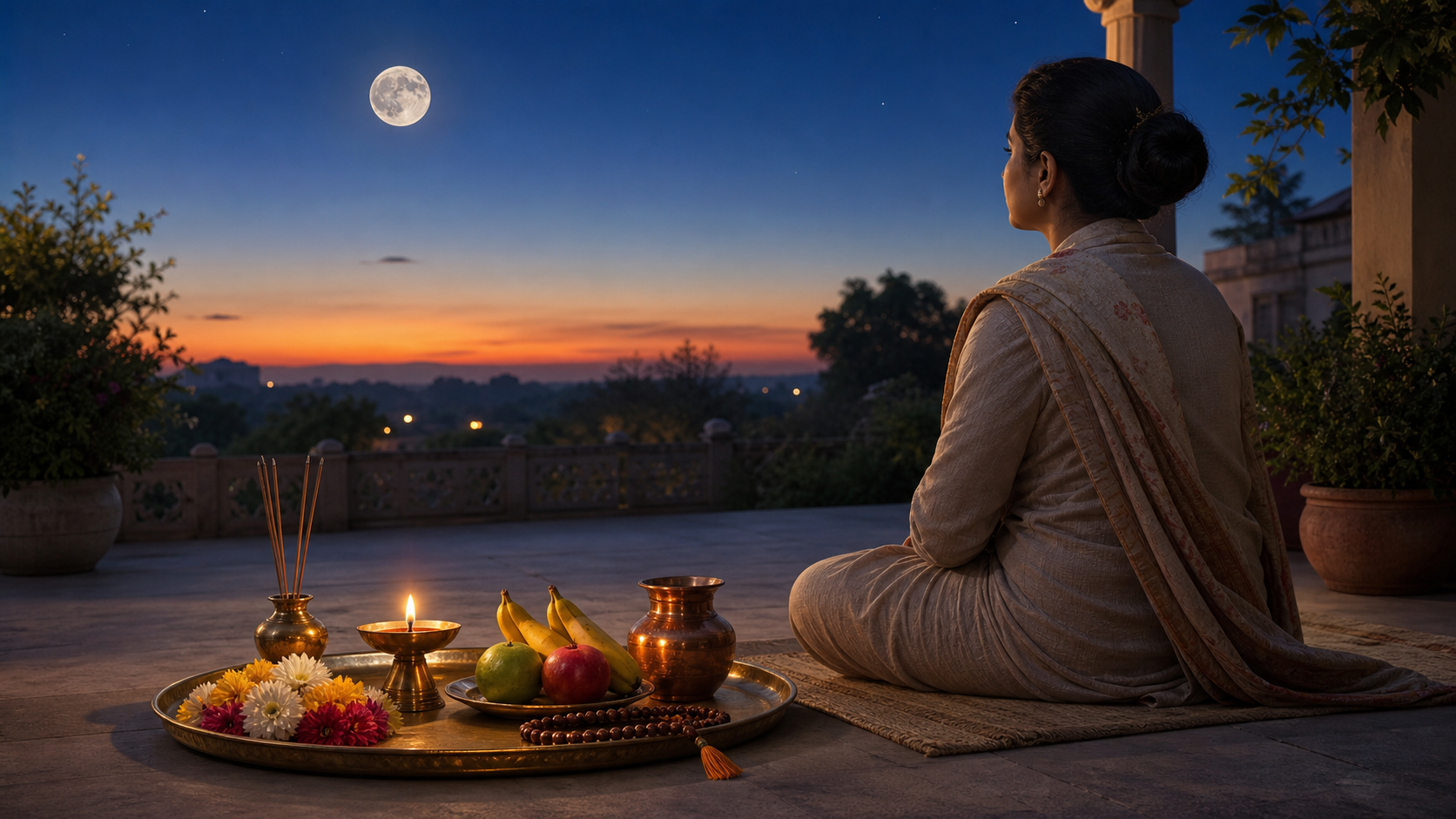
If you have ever looked at a panchanga and wondered whether a vrata belongs to the printed date, sunset, or moonrise, your confusion is understandable. Lunar fasts are governed by a sequence, not by one clock: the tithi identifies the sacred day, while a local sky event may determine when the central worship or completion occurs.
Once you separate those functions, planning becomes much easier. You can choose a fasting level your body can sustain, reserve the correct ritual window, and keep the observance focused on devotion rather than hunger or clock-watching.
Start with the event that governs the vrata
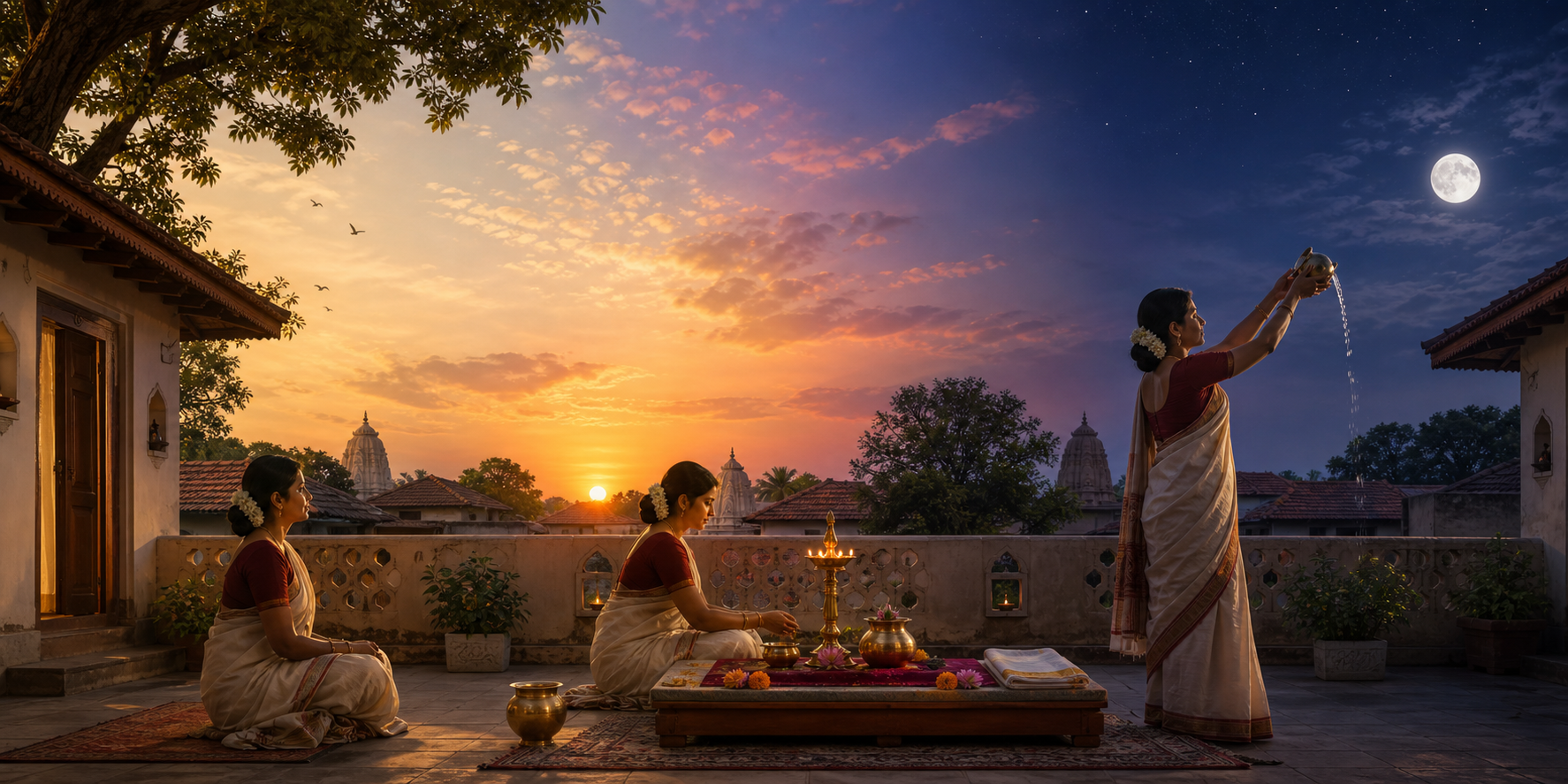
Use three questions in order: Which tithi governs the vrata? Which local event governs its main ritual? Which family, temple, or sampradaya convention governs the fast itself? The civil-calendar date helps you plan, but it does not always contain the entire ritual rule.
Pradosha occurs on Trayodashi in both the waxing and waning fortnights, with worship centered on an approximately one-and-a-half-hour period before and after local sunset. When that Trayodashi falls on Tuesday, it is called Kuja Pradosham. The tithi selects the observance; sunset locates its defining worship period.
Karva Chauth falls on Krishna Paksha Chaturthi of Kartik in many regional reckonings. Its day-long discipline leads toward evening puja and katha, followed by arghya to Chandra at local moonrise and the breaking of the fast. Here, the tithi chooses the day, but moonrise governs completion.
| Planning question | Pradosha | Karva Chauth |
|---|---|---|
| What selects the observance? | Trayodashi of either fortnight | Krishna Paksha Chaturthi of Kartik in many regional calendars |
| What determines the central ritual time? | Pradosha Kala around local sunset | Local moonrise after the evening puja |
| What is the central devotional action? | Worship of Shiva and Parvati, often with a lamp, abhisheka, bilva, and mantra | Evening puja and katha, followed by arghya to Chandra |
| When is the fast completed? | According to the family’s or temple’s Pradosha convention | After the moonrise offering, according to family custom |
Do not copy a time from someone living in another city. Sunset and moonrise are local. Check a reliable local panchanga or temple schedule, and confirm whether your household follows a regional calendar convention that affects the date. Record the tithi, ritual window, and completion rule separately.
Choose a fast that supports worship rather than undermining it
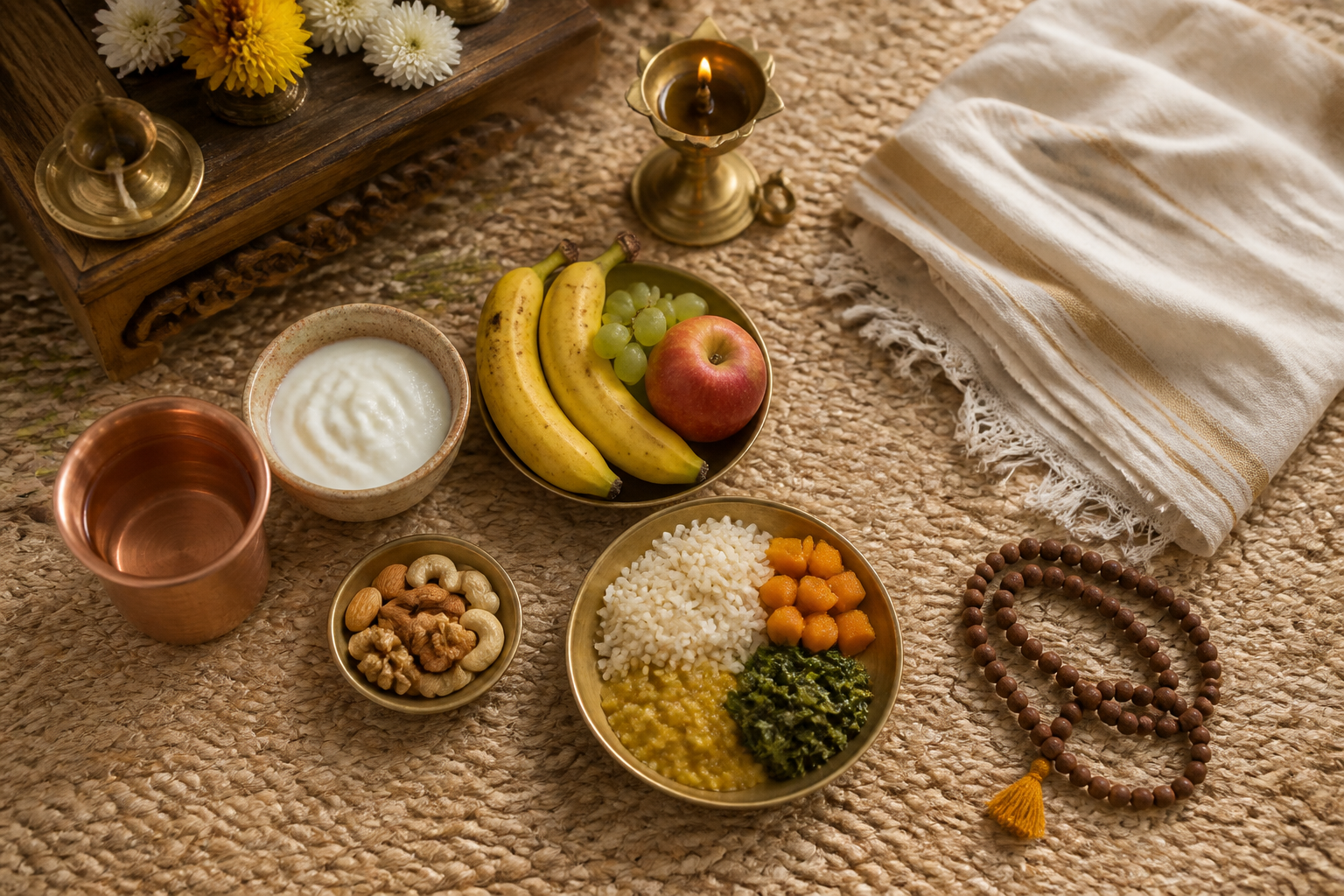
A vrata is a chosen discipline, not a contest in deprivation. Its intensity should support attention, prayer, and ethical restraint. If the physical rule leaves you unable to worship safely or turns the day into irritation toward everyone around you, the means have displaced the purpose.
- Nirjala is the most demanding form because it excludes water as well as food. Keep it only when it is an established, safe practice for you.
- Phalahara provides a lighter option where your tradition permits fruit or similarly limited food.
- A simple sattvika diet can preserve restraint when a stricter fast is unsuitable or is not required by your household convention.
- Mantra-japa, meditation, dana, and service to elders can carry the discipline when a food fast is not safe or possible.
These are not interchangeable rules in every sampradaya. Pradosha practice accommodates forms ranging from nirjala to phalahara or a simple sattvika diet, while contemporary Karva Chauth observance may use moderated fasting and complementary disciplines when a full fast cannot be maintained. Ask an elder, priest, or knowledgeable practitioner which adaptation preserves the vrata in your lineage.
Do not begin a waterless fast merely because other people are doing it. If fasting conflicts with your health needs, medical advice, or ability to perform essential duties safely, use a permitted lighter form and seek guidance from a qualified clinician where necessary. If continuing becomes unsafe, break the fast. Avoidable harm is not proof of tapas, and a vrata is not a substitute for medical care.
Make the decision before the vrata begins. State it plainly in your sankalpa: the observance you are undertaking, the form of restraint you will keep, and the quality of conduct you intend to cultivate. A clear commitment prevents both impulsive overreach and casual abandonment later in the day.
Build the day backward from twilight or moonrise
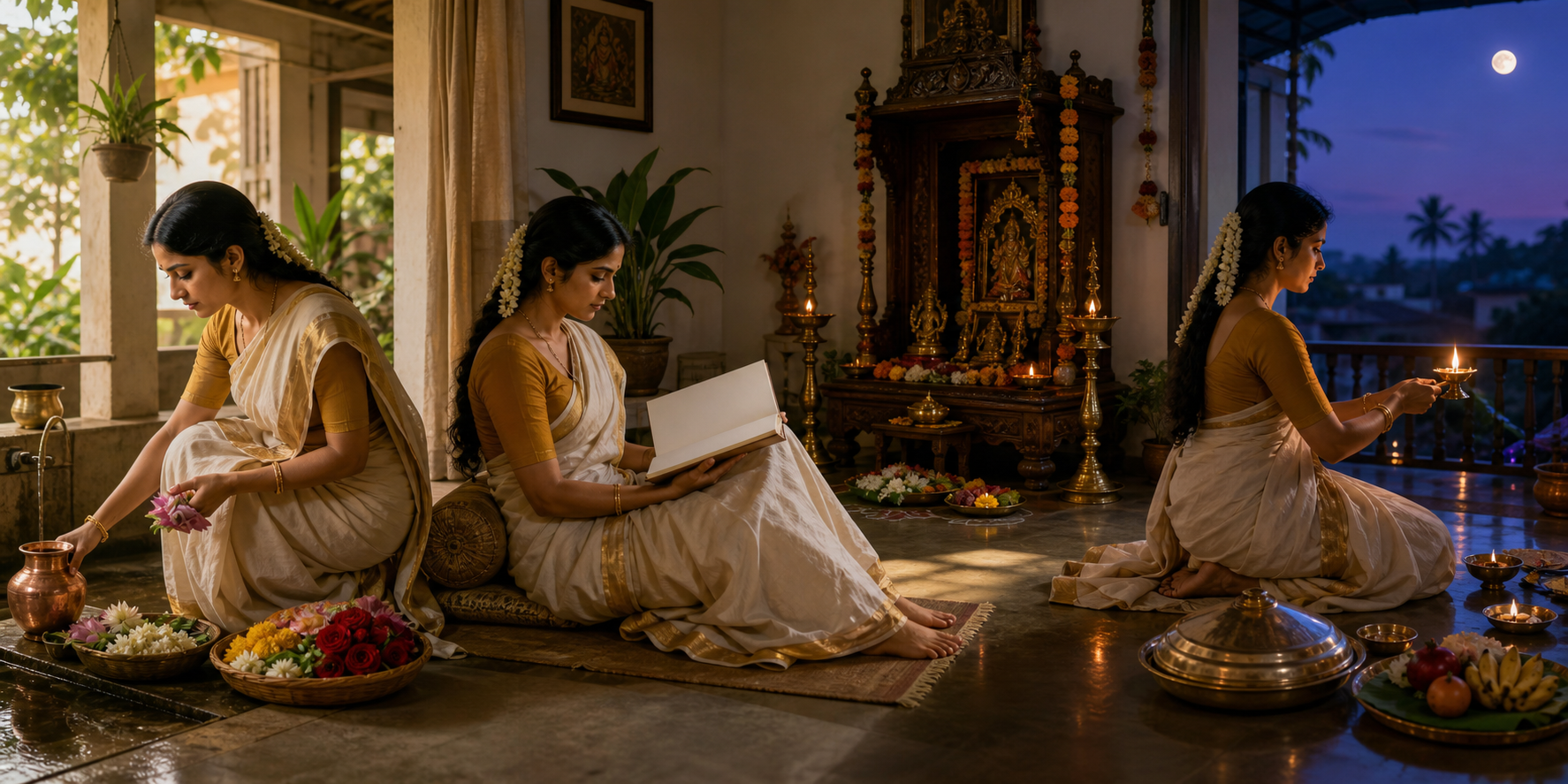
The easiest way to miss a time-bound vrata is to treat its main ritual as one more evening task. Begin with the decisive sky event and plan backward. The following sequence works as a practical framework, while leaving room for the mantras, offerings, and customs of your own tradition.
- On the previous day, confirm the local tithi, sunset, Pradosha window, or moonrise as applicable. Also check the temple schedule if you plan to attend.
- Choose the fasting level in advance. If you are observing Karva Chauth according to a custom that includes sargi, prepare the pre-dawn meal rather than improvising while tired.
- Gather the few items you will actually use: a clean lamp, water for offering, the required vessel, and any customary leaves, flowers, food, or puja materials.
- Begin with a short sankalpa. Name the vrata and its purpose without turning it into a bargain for guaranteed worldly results.
- During the day, support the fast with japa, sacred reading, quiet reflection, charity, or service. Restrain harsh speech and impulsive action as deliberately as you restrain food.
- Prepare the worship space before the ritual window opens. Washing, arranging offerings, and silencing distractions beforehand lets you enter twilight or moonrise without haste.
- Complete the observance according to its governing event and your family convention. For Karva Chauth, make the moonrise offering before breaking the fast. For Pradosha, follow the completion rule taught by your household or temple.
For Pradosha at home, a simple observance may include lighting a dipa, offering water or milk in abhisheka, placing bilva leaves, and repeating “Om Namah Shivaya” or the Maha Mrityunjaya Mantra. A temple visit during Pradosha Kala is meaningful, but lack of access to a temple need not cancel the vrata. A clean space, an attentive mind, and a sincere offering are sufficient foundations for home worship.
For Karva Chauth, keep the sequence intact even when the household adapts its scale: the day’s discipline, evening puja and katha, preparation of the karva, arghya at moonrise, blessings, and a shared meal. If clouds obscure the moon or a local circumstance complicates the sighting, follow the convention of your family or temple rather than inventing a rule at the last minute.
Let the celestial timing change your conduct
The deeper test of a vrata is what happens between its ritual moments. If you spend the day counting hours while anger, gossip, resentment, or coercion go unexamined, the fast has remained external. Tie the observance to one visible change in conduct.
Kuja Pradosham is traditionally associated with challenges attributed to Mars, including anger, haste, conflict, disputes, debts, and property or legal concerns. Do not treat worship as a magical transaction that excuses the same habits afterward. Pair it with disciplined action: pause before sending a reactive message, refuse needless escalation, and complete one duty you have been avoiding. The devotional aim is courage under control, not suppressed anger waiting to return.
Karva Chauth directs restraint toward marital wellbeing and household harmony. That purpose is weakened when the fast becomes compulsory, competitive, or a test imposed on one spouse. Some contemporary couples fast together; others support the observant spouse through practical care or allied devotional acts. Choose the form that makes mutual responsibility visible in your household.
The rites remain distinctly Hindu, but their ethical disciplines are legible across the wider dharmic family: mindful restraint, compassion, seva, gratitude, and reverence for sacred time. Shared values do not make Hindu, Buddhist, Jain, and Sikh practices identical. They provide a vocabulary through which different traditions can recognize disciplined care without erasing their particular forms.
Small material choices can reinforce the same discipline. Reuse lamps and vessels, choose natural mehendi where appropriate, and avoid unnecessary packaging. A vrata concerned with restraint should not generate careless excess around the ritual itself.
Key takeaways
- Use the tithi to identify the vrata, then use local sunset or moonrise to locate its defining ritual.
- Confirm regional and household conventions instead of relying on a date or time copied from another location.
- Choose nirjala, phalahara, a sattvika diet, or a non-food discipline according to safety and permitted tradition.
- Prepare offerings before the ritual window so twilight or moonrise is spent in worship rather than setup.
- Attach the fast to one ethical restraint, such as patient speech, non-escalation, service, or mutual care.
Before your next vrata, write down three things on one line: the governing tithi, the local ritual window, and the fasting form you will keep. Add one conduct vow beneath them. That small act of preparation turns a complicated calendar observance into a clear discipline you can actually complete.
References
- DharmaRenaissance Blog – Karva Chauth 2025: Discover the Complete Guide to Karaka Chaturthi Date, Rituals, and Meaning
- DharmaRenaissance Blog – Kuja Pradosham Explained: The Complete Tuesday Vrat to Transform Challenges with Shiva’s Grace
