
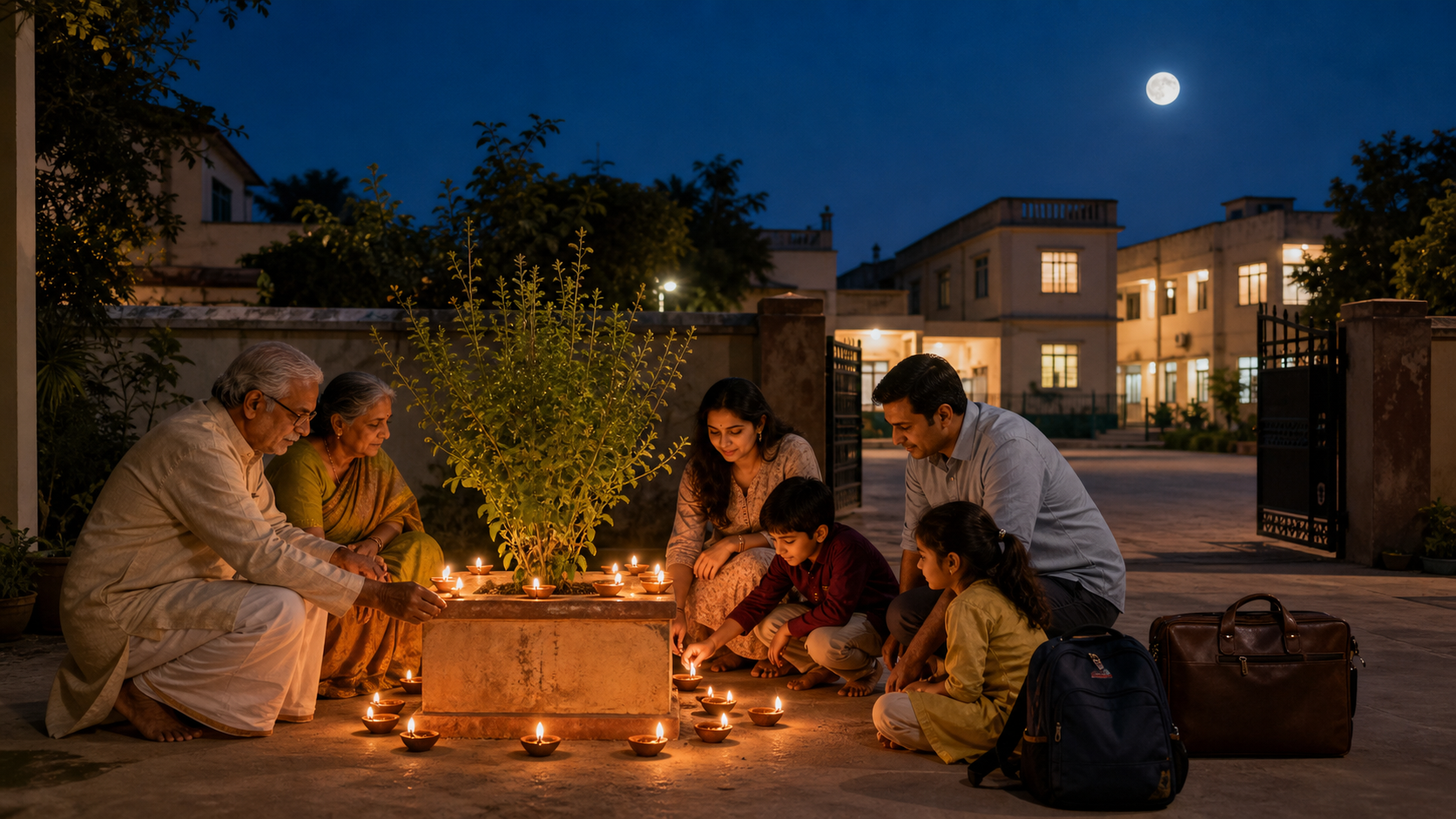
If you are trying to keep Kartik faithfully at home while explaining Diwali to a school, employer, temple committee, or local council, the hardest part is not finding a slogan. It is preventing a rich season from being compressed into one decorative evening.
You need two plans that support each other: a religious calendar that protects the rhythm of observance, and a public calendar that makes room for families to live it. Done well, Diwali recognition becomes more than lamps in a lobby. It gives people usable time, accurate language, and a way to share Dharmic values without erasing the differences among Hindu, Jain, Sikh, and Buddhist traditions.
Start with the calendar your community actually follows
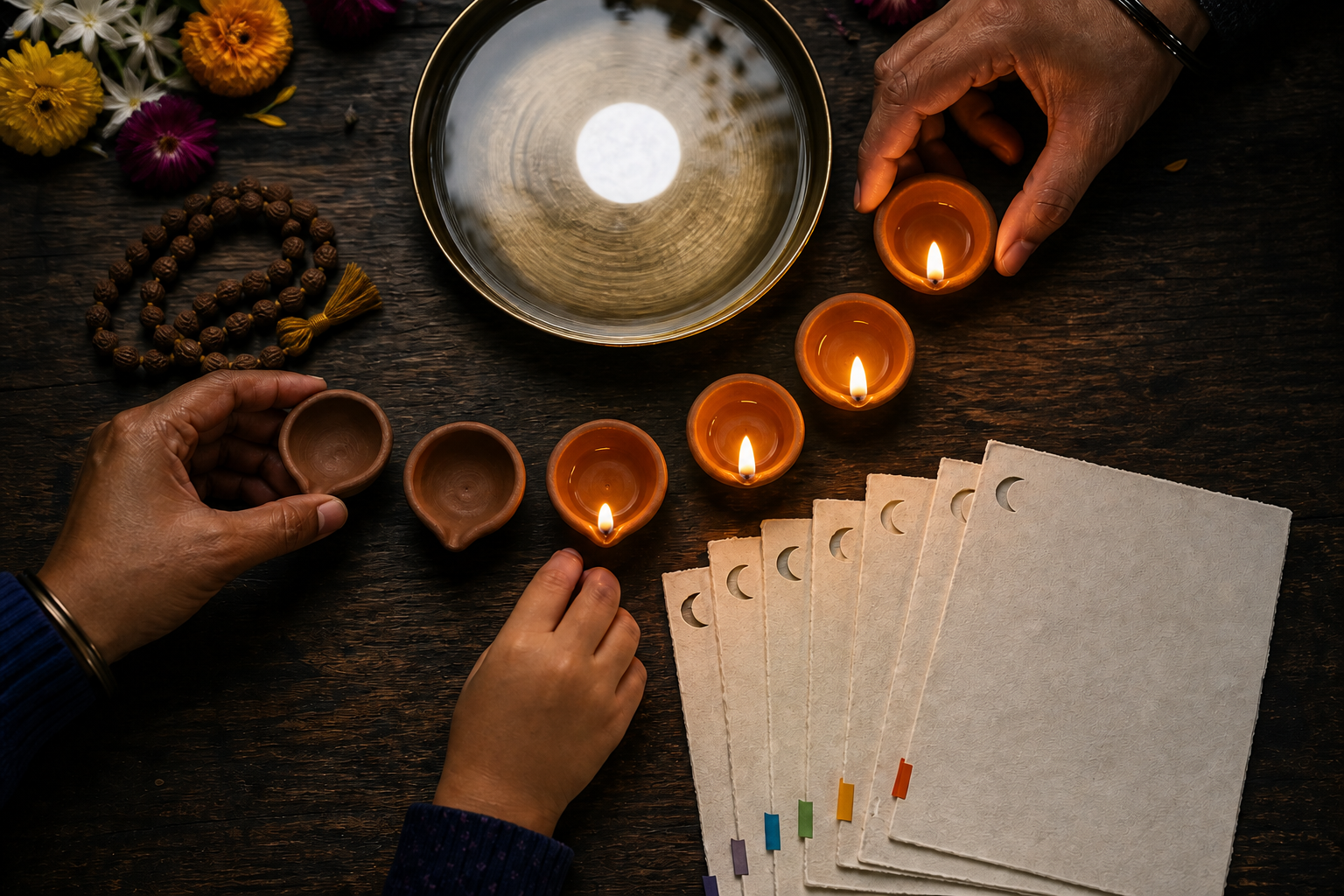
Kartik does not occupy one fixed block of the Gregorian calendar across every region. The month, its opening, and its principal observances are determined through regional lunar calendars and institutional traditions. During the same seasonal period, communities may speak of Kartik or Karthika Masam, Aippasi Masam, Thulam Month, Bengali Kartik, or Nepali Kartik. The different names do not indicate that one community has calculated the season correctly and another has not. They reflect the calendrical diversity of Bharat.
Chandra Darshan offers a useful example. It is the first sighting of the thin waxing crescent after Amavasya, normally sought low in the western sky shortly after sunset. For communities that use it as a Kartik marker, the observation joins celestial timing to a practical religious decision: when to begin or renew a vrata, lamp offering, study discipline, or act of dana. Cloud cover may prevent an actual sighting, so ritual planning still requires the local panchang, panjika, or temple calendar rather than a weather-dependent guess.
- Choose your authority before announcing dates. A family may follow its inherited regional panjika, while a temple follows the calendar of its sampradaya or governing institution. Write down which one governs the observance.
- Record both the tithi and the civil date. Include the local timezone when coordinating people in different cities. A forwarded poster from another region is not enough.
- Separate the major markers. Note the beginning of your Kartik discipline, the locally observed Diwali or Deepavali date, and Kartik Purnima. Add Chandra Darshan, Kali Puja, Bandi Chhor Divas, Gurpurab, or another observance only where it belongs to the participating community.
- Recheck Amavasya and Purnima before printing invitations. Festival dates can vary slightly with locality, lunar calculation, and the panjika used by an institution. Reusing last year’s civil date is an avoidable mistake.
- Publish parallel names when families follow different systems. A community notice can identify both the regional month-name and the Gregorian date without forcing everyone into one vocabulary.
Bengal shows why this local check matters. Kartik Mash also carries the seasonal character of Hemonto and may include Kali Puja and Diwali, Bhoot Chaturdashi, Jagaddhatri Puja, Raas Utsav, Kartik Brata, and Kartik Snan. Not every Bengali household performs every observance. A regional festival ecology is not a compulsory checklist.
The practical rule is simple: settle the calendar at the level where the ritual will actually happen. Use the family calendar for the home, the temple calendar for temple worship, and a clearly identified civil date for public programming. When these differ, explain the difference instead of concealing it.
Build a Kartik practice that can survive an ordinary weekday
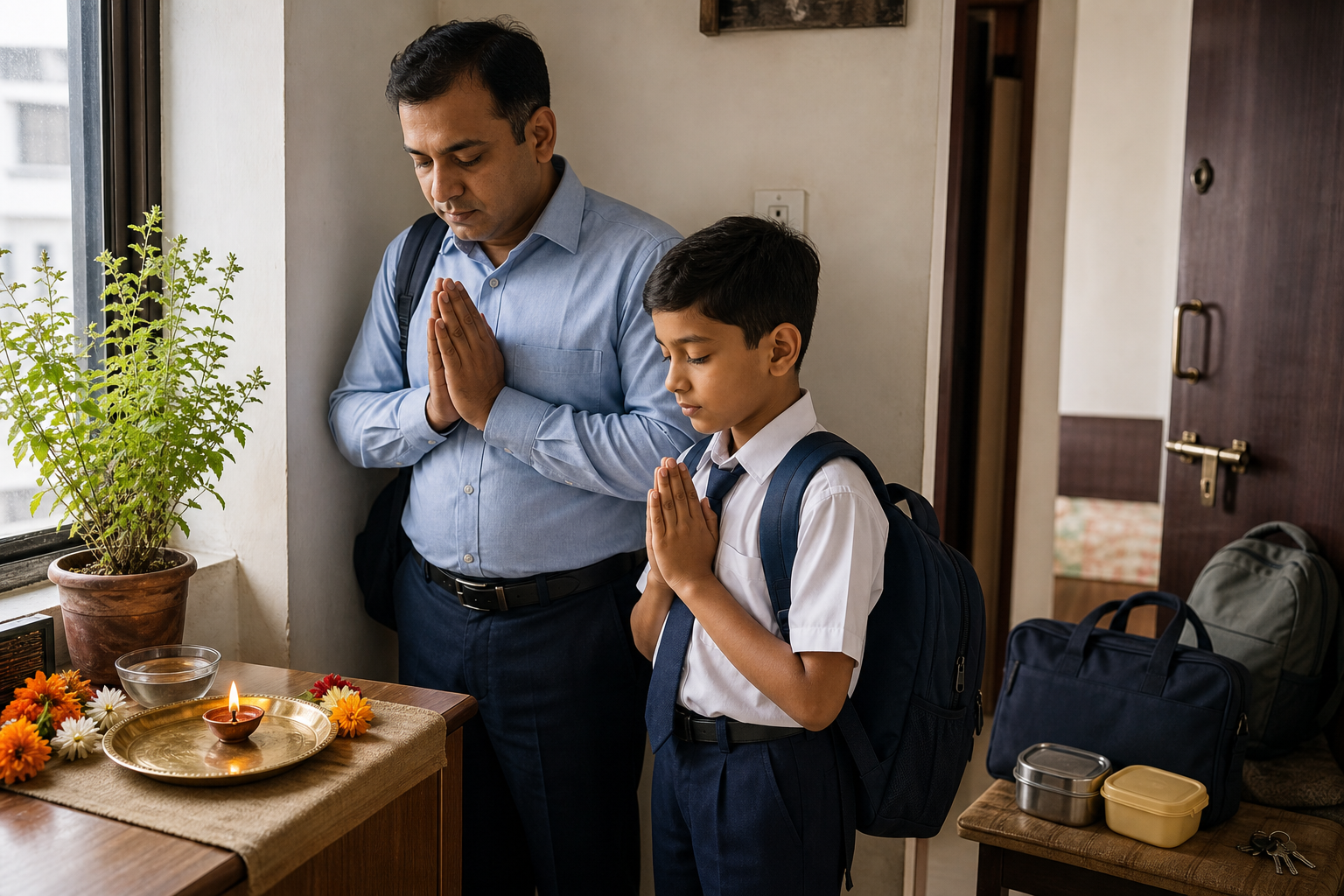
A large Diwali display can be beautiful, but it cannot substitute for the cadence of Kartik. The daily offering of a lamp at sandhya gives the month its repeatable structure. Traditional practice commonly uses a cotton wick with ghee or sesame oil at a shrine, near Tulasi, or at a threshold or window. The precise arrangement may follow family custom, but regularity matters more than scale.
- Prepare one stable place. Clean the shrine or chosen area before twilight. Keep the surface uncluttered so that setting up does not become a daily obstacle.
- Use a lamp you can maintain safely. A reusable clay diya, a suitable holder, a cotton wick, and a modest quantity of ghee or natural oil are enough. You do not need a new decorative arrangement each evening.
- Light at sandhya with attention. Pause before the flame rather than lighting it while continuing another task. State a short intention for clarity, self-restraint, family well-being, or the welfare of all beings.
- Choose a prayer that belongs in your practice. Common options include Om Namah Shivaya, Om Namo Narayanaya, japa, or a familiar stotra. If your family follows a particular sampradaya or has guidance from a guru, that tradition should take precedence over a generic festival script.
- Keep a small discipline beside the lamp. This may be scriptural reading, silence, restraint from a harmful habit, or a vrata already known to your family. The lamp then marks an ethical commitment rather than functioning only as decoration.
- Give the observance an outward expression. Choose a concrete seva for the Kartik period, such as distributing meals, supporting education, or helping clean a shared space. Make the commitment specific enough that someone is responsible for completing it.
An open flame must remain attended. Place the diya on a heat-resistant, level surface, clear it from curtains and loose cloth, and keep it beyond the reach of children and animals. Do not place a burning lamp in a window, corridor, or public venue merely because the location is customary. Where flames are prohibited, use a flameless light for the public display and make the traditional offering in a permitted, supervised place.
The Padma Purana gives Kartik lamp-offering an emphatic place in the sacred language of purification. That language should deepen sincerity, not turn worship into a transaction in which more lamps supposedly purchase a larger result. On a crowded weekday, one safely offered lamp accompanied by focused prayer preserves the discipline better than an ambitious ritual that is soon abandoned.
Keep going after Diwali. In many Hindu settings, the daily rhythm continues through Kartik and culminates at Kartik Purnima, including the celebrated Dev Deepavali in Varanasi. Treat Diwali as a luminous focal point within the month, not as permission to end the practice the next morning.
Share a Dharmic umbrella without making every tradition identical
Public language often reduces everything to the phrase “festival of lights.” The phrase is useful as an entry point, but it is too thin to carry the whole meaning. Dharmic unity appears here through a shared moral vocabulary of light, knowledge, discipline, generosity, liberation, remembrance, and service. It does not require every community to tell the same sacred history or perform the same rite.
| Tradition or context | Name what is actually observed | How to present it responsibly |
|---|---|---|
| Hindu | Kartik deeparadhana, Diwali or Deepavali, Kali Puja in many Bengali contexts, and Kartik Purnima | Describe the regional or sampradaya practice being represented. Do not present one family’s account as the sole Hindu meaning. |
| Jain | Diwali as the nirvana of Mahavira, also expressed as Nirvana Kalyanak | Name Mahavira and the Jain understanding of liberation. Do not relabel the Jain observance as a version of Hindu worship. |
| Sikh | Bandi Chhor Divas during the same festival period, with Guru Nanak Jayanti or Gurpurab around Kartik Purnima | Use the Sikh names and let Sikh participants frame their meanings. Do not imply that Bandi Chhor Divas is merely another name for a Hindu festival. |
| Buddhist | Generosity and communal observances such as Kathina Dana in parts of the late rainy-season period | Describe the community that is actually participating. Present the timing as a seasonal Dharmic convergence, not as proof that all Buddhist traditions observe an identical Diwali. |
If you are designing a school assembly, temple open house, library display, or civic lighting, use three layers. Begin with the shared theme in one or two sentences. Give each participating tradition its own named segment and speaker. End with a common ethical action, such as dana or community service, that does not require anyone to merge rituals.
- Put the actual observance names on the program, not only “Diwali celebration.”
- Ask each community to review the paragraph describing its practice before publication.
- Do not ask one participant to speak for four traditions.
- Keep cultural performances, religious worship, historical explanation, and civic remarks clearly identified so guests know what they are joining.
- If a shared lamp-lighting is included, explain its common ethical symbolism while acknowledging that its theological meaning is not identical everywhere.
This approach makes unity more credible. People can stand together precisely because nobody has been asked to surrender the name or meaning of their own observance.
Turn Diwali recognition into something families can use
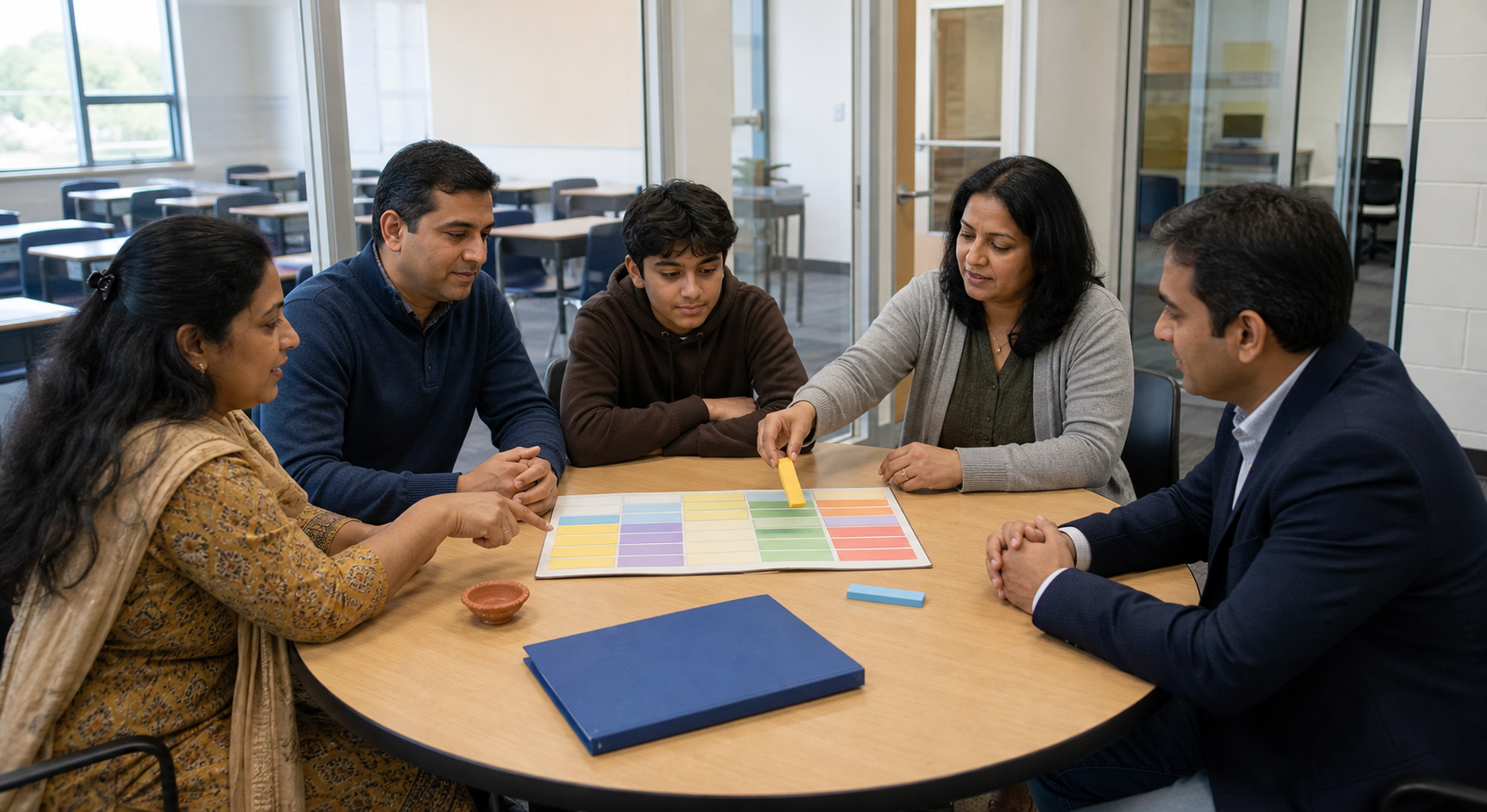
California’s 2025 designation of Diwali as an official state holiday shows why civic recognition matters. It places a Dharmic festival in an official calendar, acknowledges the public presence of the diaspora, and creates openings for cultural education. Yet a title on a calendar does not automatically produce accurate teaching, thoughtful scheduling, or meaningful participation. Those require implementation.
If you are seeking recognition
- Define the requested action exactly. A commemorative proclamation, an institutional observance, an official calendar entry, a closure, and a scheduling accommodation are different outcomes. State which one you are requesting and which office has the authority to provide it.
- Explain the practical need. Identify the worship, family gathering, community program, or service activity that conflicts with the existing schedule. Do not rely only on the claim that Diwali is important.
- Show how the date will be verified each year. Name the local temples, community bodies, or recognized calendar authorities that will be consulted. A recurring policy needs a recurring calendar process.
- Build a coalition without manufacturing sameness. Hindu, Jain, Sikh, and Buddhist participants may support public recognition for overlapping reasons while retaining distinct observances. Let each participating body endorse language it can actually stand behind.
- Use claims you can substantiate locally. If you do not have reliable participation figures for your school district, workplace, or municipality, do not borrow an impressive worldwide number. Describe the affected families and institutions without inventing scale.
- Pair recognition with an implementation proposal. Offer a reviewed description, suggested calendar wording, educational resources, a contact group, and a plan for annual date confirmation. This reduces the administrative uncertainty faced by the decision-maker.
Reusable public description: Diwali, or Deepavali, is observed across several Dharmic communities. Hindu, Jain, and Sikh communities, as well as some Buddhist contexts, retain distinct histories and practices, while themes of light, knowledge, ethical renewal, generosity, and service provide a basis for respectful civic participation. Dates and local forms of observance should be confirmed with participating communities.
Adapt that wording rather than pasting it blindly. If a Jain institution is the principal organizer, name Mahavira’s nirvana. If Sikh organizations are participating, name Bandi Chhor Divas. If the event is specifically a Hindu temple’s Kartik Deepotsava, say so. Accurate specificity is a sign of inclusion, not a barrier to it.
If recognition already exists
First, state what the designation actually changes. Do not advertise a “day off” when the adopted measure provides only a proclamation or ceremonial observance. Ask the responsible institution to explain the calendar effect, scheduling practice, and annual date-setting process in plain language.
- Protect participation: Where the institution has the authority, avoid placing major mandatory activities in the principal local observance window.
- Teach more than symbolism: Add age-appropriate material on South Asian history, Dharmic philosophies, cultural arts, and the distinct meanings carried by participating communities. Libraries, museums, schools, and councils can support lectures, exhibitions, and reviewed displays.
- Invite community authorship: Have local Hindu, Jain, Sikh, and relevant Buddhist organizations help shape descriptions rather than asking them to approve finished language at the last moment.
- Connect celebration to seva: A meal distribution, education initiative, or public-space cleanup gives the shared ethic a visible form. Participation in service should not be made conditional on joining a religious rite.
- Review the result annually: Check whether families received usable space, the date was accurate, the educational material respected distinctions, and the program continued beyond a photo opportunity.
A strong recognition policy passes three tests. Families can participate without a preventable institutional conflict. The public learns something more precise than “lights defeat darkness.” Each community can recognize its own voice in the explanation.
Key takeaways
- Use the local panchang, panjika, temple calendar, or community authority; do not assume one Gregorian date or month-name governs every Kartik observance.
- Make the twilight lamp simple enough to offer consistently, and pair it with prayer, discipline, and a concrete act of seva.
- Keep the practice going beyond Diwali where your tradition observes Kartik through Purnima.
- Present Hindu, Jain, Sikh, and Buddhist connections as unity with real distinctions, not as four interchangeable versions of one festival.
- Define public recognition precisely: name the requested calendar, scheduling, educational, or civic outcome and establish how dates will be confirmed each year.
Your next step is small and definite. Confirm the calendar authority your family or institution will follow, choose the place for the daily lamp, and write the exact public recognition outcome you want before issuing an invitation or approaching a decision-maker. When the ritual calendar and the civic calendar are planned together, Diwali recognition becomes room to practice rather than decoration alone.
References
- DharmaRenaissance Blog – Essential Guide to Karthika Deepotsava: Discover the Transformative Power of Deeparadhana
- DharmaRenaissance Blog – Complete Guide to Bengali Kartik Month 2025: Discover Dates, Festivals, and Cultural Significance
- DharmaRenaissance Blog – Chandra Darshan October 2025: The Complete Guide to Kartik Moon-Sighting Across Traditions
- Hindu Existence – California’s Ultimate Breakthrough: Newsom Signs Law Making Diwali a State Holiday
