
Your calendar may show a temple programme lasting 16 civil days while your Panchang shows a tithi ending in the middle of one morning. Those are not competing schedules. They answer different questions: when the organised observance takes place, which lunar condition prevails at your location, and what devotional practice you can realistically sustain.
For the late-2025 window, the main anchors are the Tirumala Sundarakanda programme from November 28 to December 13 and the Trayodashi-to-Chaturdashi transition on December 3. Separate those anchors before you make a sankalpa, arrange a pilgrimage, or promise a daily recitation.
Keep the programme, Panchang, and personal practice separate
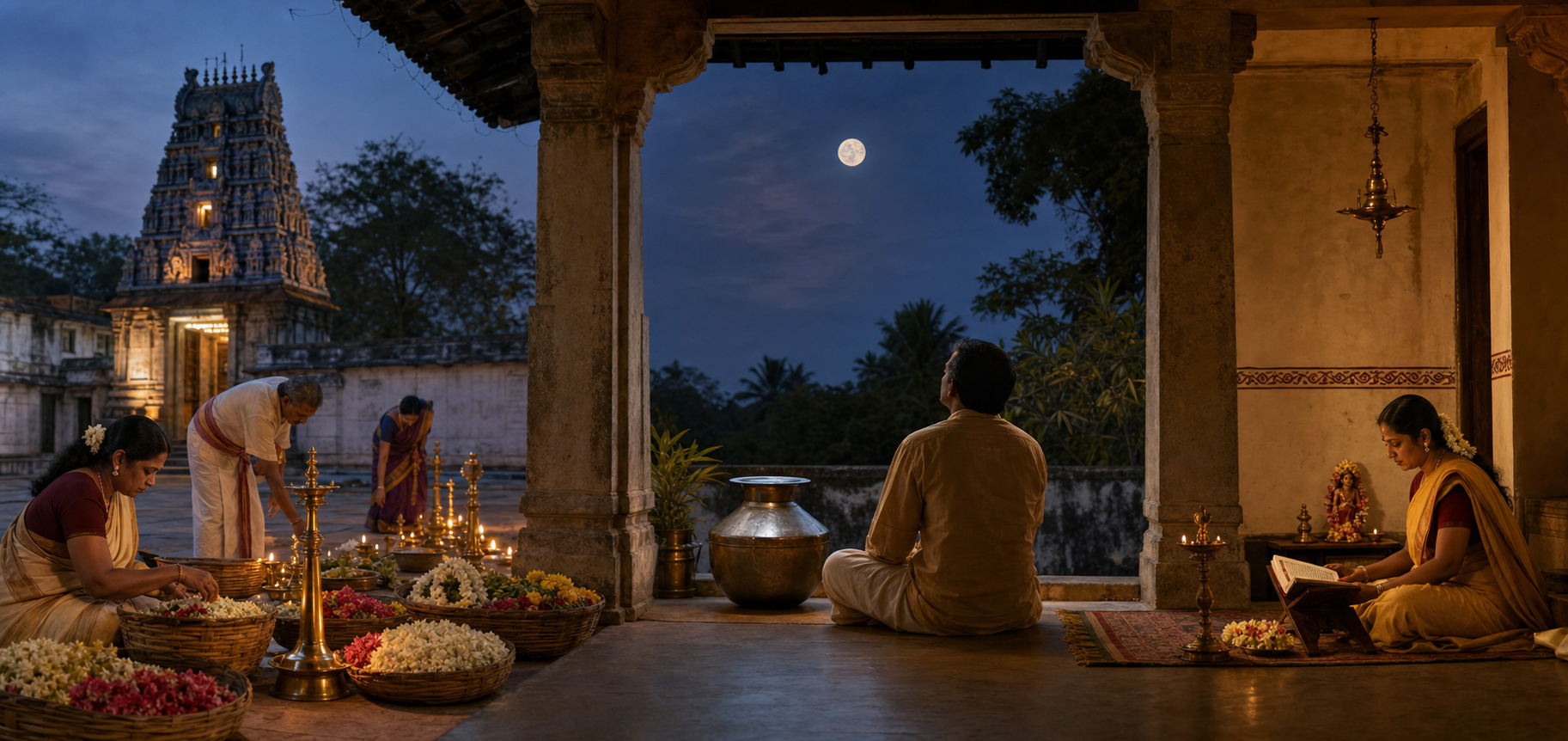
The first clock is the programme clock. TTD’s 16-day Sundarakanda Parayanam is scheduled at Vasantha Mandapam in Tirumala from November 28 through December 13, 2025. Its daily recitation is planned for the morning. These civil dates and the announced venue govern your travel, accommodation, and attendance.
The ceremonial opening has its own fixed appointment: Ankurarpanam is scheduled at Dharmagiri Veda Vignana Peetham on November 27 from 7 PM to 8 PM. If you intend to be present for it, November 27 is your arrival day, not merely the evening before the main programme. If you are observing from home, you do not need to reproduce that rite unless your family or sampradaya already has an authorised method for doing so.
The second clock is the local Panchang. On Wednesday, December 3, 2025, Shukla Paksha Trayodashi is the working reference until 10:01 AM, followed by Shukla Paksha Chaturdashi. A tithi is a lunar division, so it can change during a civil day rather than at midnight.
The third clock is your capacity. A 16-day observance succeeds through a repeatable practice, not an ambitious plan that collapses after two mornings. Decide in advance what you will do on a normal day, what you will do on a crowded day, and what would count as an honest interruption rather than a convenient excuse.
- Create one calendar entry for the November 27 Ankurarpanam if you plan to attend it.
- Create a separate recurring entry for the morning Parayanam period from November 28 through December 13.
- Create a December 3 reminder labelled with both tithis and the transition time supplied by your own regional Panchang.
- Record your personal daily commitment separately so that a change in temple logistics does not erase your home practice.
Build a 16-day observance you can actually complete
Sundarakanda places Hanuman’s devotion, courage, service, and steadiness before the devotee. Use those themes to define your intention, but do not turn recitation into a transaction in which a certain number of readings is expected to force a desired result. A sankalpa should clarify your discipline and direction.
- Write the sankalpa in one sentence. Name the quality you intend to cultivate or the duty you intend to meet. A simple intention such as steadiness in difficulty or service without fear is easier to remember than a long catalogue of requests.
- Choose your mode of participation. A Tirumala pilgrim follows the announced programme. A home practitioner follows a trusted family, temple, or sampradaya method. Someone unable to undertake a formal vrata may still keep a modest period of daily recitation and reflection without presenting it as an official 16-day ritual.
- Select the text and division before November 28. Use an edition you can read accurately. If your tradition prescribes a particular sequence, pronunciation, preliminary prayer, or conclusion, follow that instruction rather than inventing a procedure from a calendar entry.
- Set an ideal practice and a minimum practice. The ideal may be the full portion assigned for that day. The minimum should be a clearly defined passage or seated period that you can still complete when ordinary duties become heavy. Do not wait for the difficult morning to decide what the minimum means.
- Protect the ending. Keep December 13 available for the final scheduled day, and avoid adding an elaborate conclusion that you have neither learned nor prepared to perform. Completion should be orderly, not theatrical.
A missed day should be handled according to the discipline under which you made the vow. If no formal rule was established, acknowledge the interruption plainly, resume the practice, and avoid quietly rewriting the original commitment. The point is to train truthfulness and steadiness alongside recitation.
Use the December 3 transition without creating false precision
December 3 can serve as a natural two-part day. Trayodashi is commonly approached as a period of completion, refinement, and preparation, while Chaturdashi directs attention toward concentration and culmination before Purnima. These are devotional associations, not universal commands. A rule belonging to your vrata, temple, or sampradaya takes precedence over a general description of the tithi.
If your observance is informal, use the transition in a practical way:
- Before the locally verified transition, settle unfinished preparation: clean the worship space, place the text and required items, complete any pending portion, and restate the day’s intention.
- After the transition, give the more concentrated part of the day to recitation, japa, puja, contemplation, or seva appropriate to your tradition.
- If you are inside a managed temple recitation when the tithi changes, remain with the programme. Do not interrupt collective worship merely because a personal alarm has reached 10:01 AM.
Do not mistake a tithi transition for an all-purpose muhurat. A Panchang considers more than the tithi, and muhurat, Nakshatra, and Rashi details depend on local coordinates, sunrise, and the calculation tradition being used. The 10:01 AM reference helps you understand the structure of December 3, but it should not be copied blindly into a ritual that requires location-specific precision.
Before relying on any displayed time, verify four things:
- The city or coordinates for which the Panchang was calculated.
- The local date and sunrise used by that almanac.
- The stated ending time of Trayodashi and beginning of Chaturdashi.
- The actual rule governing your observance: tithi at sunrise, a particular part of the day, or another condition prescribed by the tradition.
If the rite depends on a precise muhurat, ask the priest, temple, or lineage authority responsible for that rite. A general online timing cannot settle a tradition-specific rule by itself.
Adapt the observance to your place without flattening the tradition
If you are going to Tirumala
Plan around the announced morning cadence, and check TTD’s official operational advisories before departure in case access or timings are refined. At the venue, arrive early, carry only essential items, keep your phone silent, maintain meditative quiet, and follow volunteer guidance. These small choices protect the collective recitation from avoidable disruption.
Your private Panchang practice should support the organised worship, not compete with it. Keep personal japa or reflection for a suitable interval unless the programme itself directs otherwise.
If you are observing at home
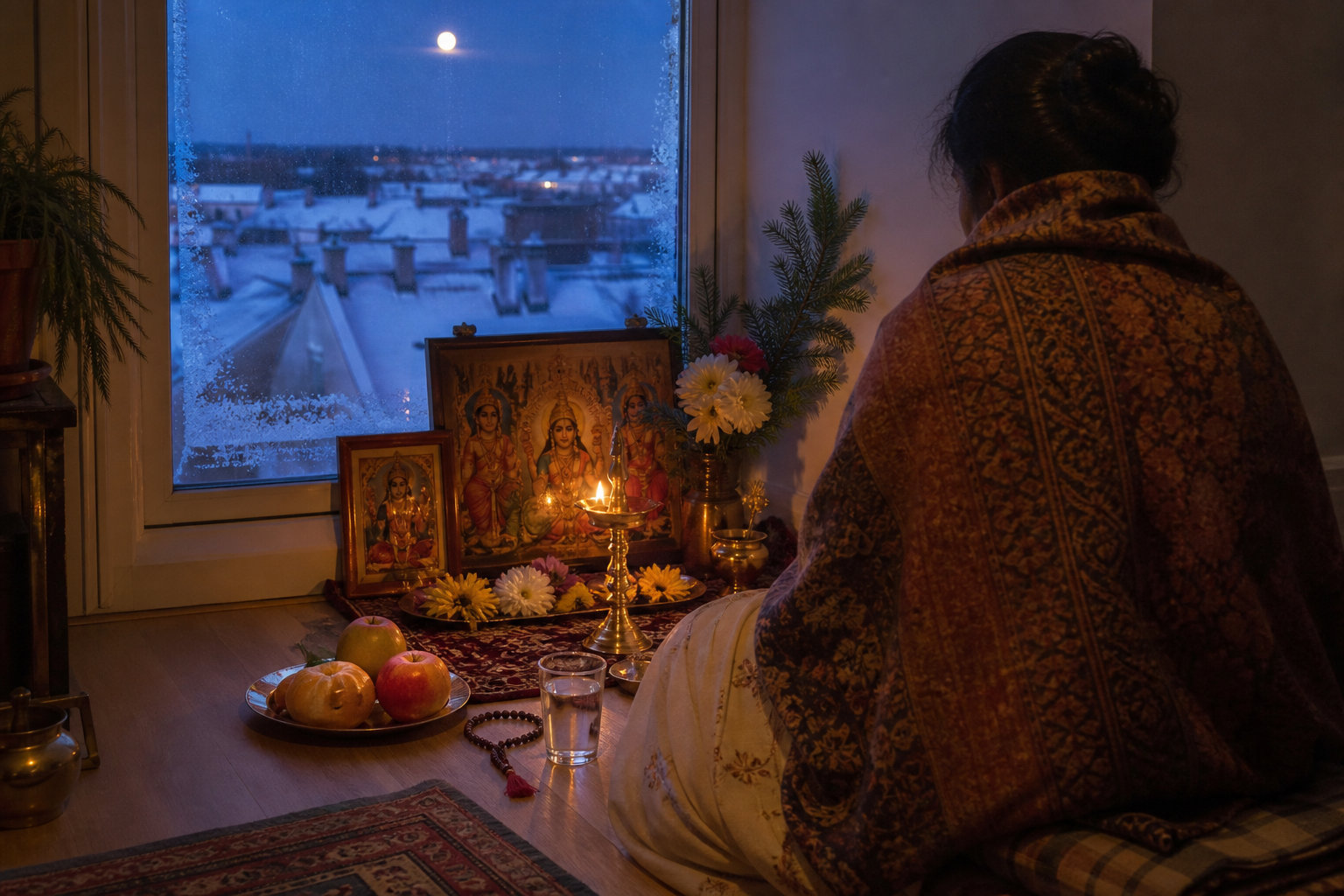
You may use November 28 through December 13 as the frame for a disciplined home observance, but describe it accurately. Following the same dates does not make a household reading an official TTD programme. What matters at home is a stable place, a trusted text, an agreed daily portion, and a time that does not repeatedly collide with your unavoidable duties.
A morning practice matches the cadence announced for Tirumala, but consistency matters more than imitation. If mornings are impossible, choose a dependable window allowed by your tradition. On December 3, consult a Panchang calculated for your location rather than transferring Tirumala’s or another city’s timing to your home.
Keep a simple record of completed days and interruptions. The record is not a scorecard. It prevents uncertainty about what you have actually done and makes the final day a real completion rather than an assumption.
If your household includes several dharmic traditions
Recitation, remembrance, compassion, self-discipline, and ethical conduct are recognisable across Hindu, Buddhist, Jain, and Sikh life, but their practices are not interchangeable. Sundarakanda Parayanam remains a Hindu observance centred on the Ramayana and Hanuman. There is no need to dilute it into generic spirituality to make the gathering hospitable.
Family members from another dharmic tradition can share respectful silence, service, or the ethical intention of the period while retaining their own authorised form of prayer or contemplation. Unity is stronger when difference is understood and honoured, not erased.
Key takeaways
- The Tirumala programme runs on fixed civil dates: November 28 through December 13, 2025, with Ankurarpanam on November 27 from 7 PM to 8 PM.
- December 3 has a midmorning tithi transition: Trayodashi until the 10:01 AM working reference, followed by Chaturdashi.
- Use a regional Panchang for the final local time; location, sunrise, and calculation method matter.
- A tithi transition is not automatically an auspicious muhurat for every action.
- At an organised Parayanam, follow the announced sequence and volunteer guidance rather than imposing a separate personal timetable.
- At home, define a sustainable daily minimum, use a trusted text, and state honestly what form of observance you are undertaking.
Before making your sankalpa, write down three lines: the programme or place you are following, the locally verified tithi time for December 3, and the smallest daily practice you can keep faithfully. That brief plan removes most calendar confusion and leaves your attention where it belongs: on disciplined devotion.
References
- DharmaRenaissance Blog – December 3, 2025 Panchang: Shukla Paksha Trayodashi to Chaturdashi Tithi, Muhurat, Rashi Guide
- DharmaRenaissance Blog – TTD’s 16-Day Sundarakanda Parayanam (Nov-Dec 2025): Key Rituals, Dates, and Pilgrim Insights
