
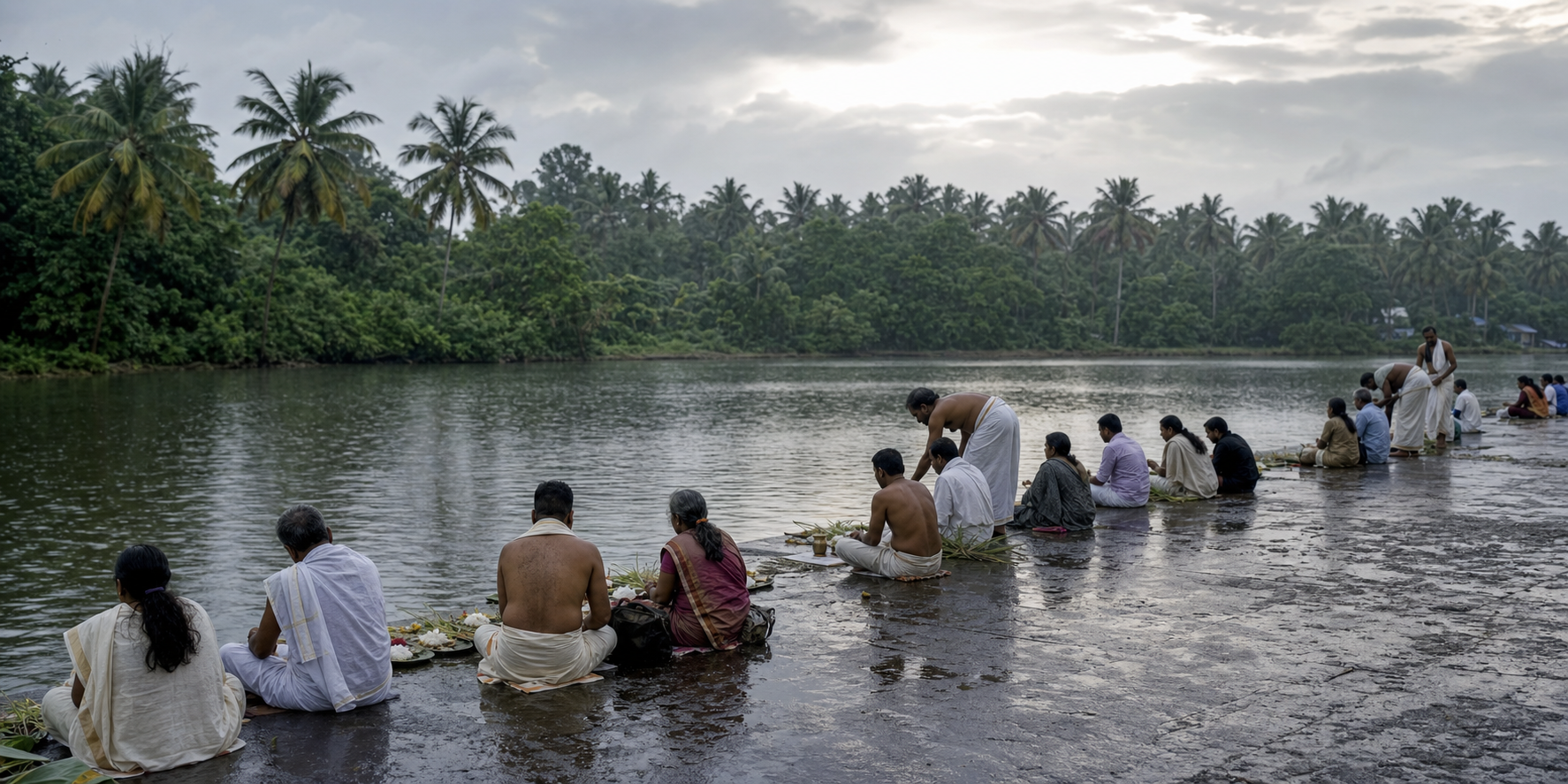
Karkidaka Vavu Bali brings together several dimensions of ancestor reverence: a new-moon observance, offerings made through water and food, remembrance of family lineage, and Kerala’s distinctive seasonal culture. Understanding the rite therefore requires more than a list of ritual materials; it requires attention to how calendar, place, grief and inherited duty reinforce one another.
The supplied DharmaRenaissance article presents the observance as both a Hindu ritual for departed ancestors and a disciplined expression of gratitude. Its account also shows why the tradition remains meaningful beyond its customary riverbanks and seashores: it gives families a structured way to turn memory into responsibility.
An offering that places the individual within a lineage
In the source’s explanation, Vavu denotes Amavasya, the new moon, while bali means a sacred offering in this context. The expression should not be read through the modern English meaning of “sacrifice.” Karkidaka Vavu Bali instead refers to offerings made for the peace and spiritual welfare of departed family members on the Amavasya of Karkidakam.
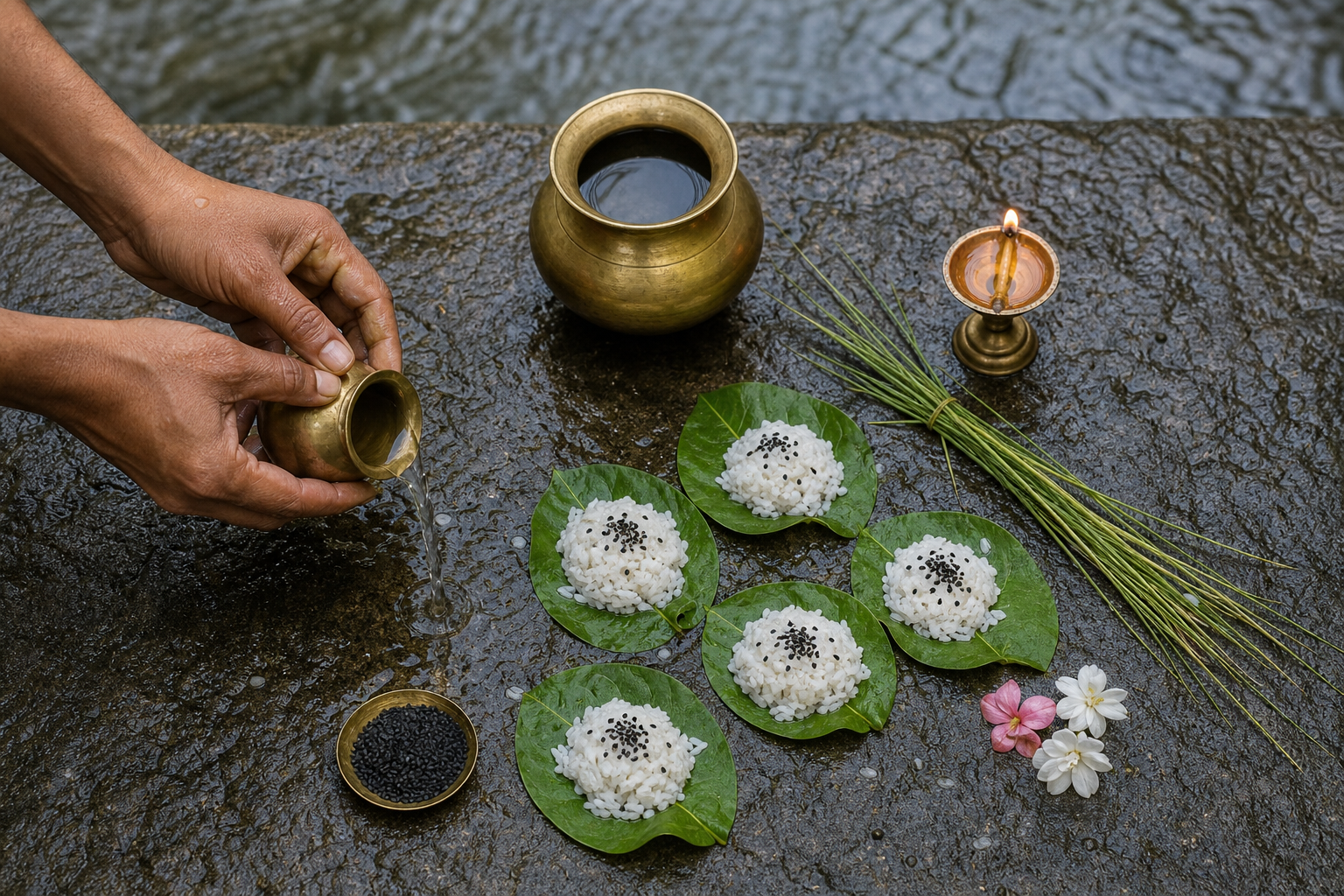
The observance is also described as Bali Tharpanam. The source associates it with water, rice, sesame and prayer, offered for forebears, parents, elders and other departed members of the family. These modest acts make a larger proposition visible: a human life does not begin as an independent achievement. It is received through bodies, relationships, language, care, customs and moral inheritance.
This proposition is expressed through Pitru Rina, the obligation owed to ancestors. The source does not frame that obligation merely as a burdensome debt. It presents it as recognition that personal freedom rests upon gifts and sacrifices that preceded the individual. Ancestor reverence consequently looks backward without becoming trapped in the past; it asks the living to carry inherited care forward.
Why Karkidakam gives the rite its particular character
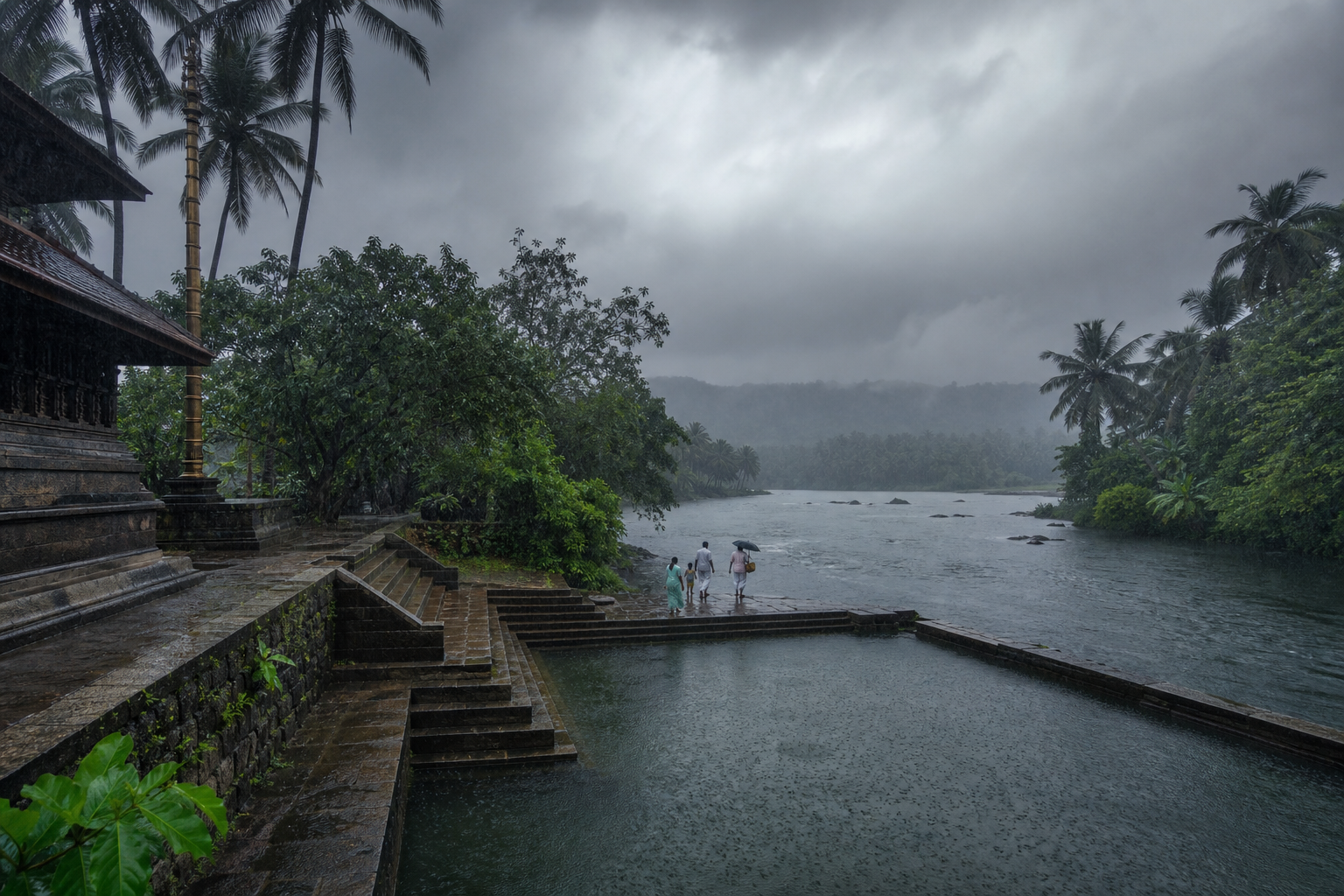
Karkidaka Vavu Bali is observed during the Malayalam month of Karkidakam, usually situated in the July-August season. The source reports August 12 as the date for the Kerala observance in 2026, while also cautioning that regional panchanga calculations and temple calendars can differ. Families planning a ceremony therefore need to confirm the applicable date and ritual timing with the calendar or tradition they follow.
The month contributes more than a date. The article places Karkidakam within Kerala’s monsoon season and associates it with physical vulnerability, agricultural uncertainty, simplicity and inward reflection. It is also widely observed as Ramayana Masam, when households may undertake Ramayana recitation and devotional discipline. Within this seasonal setting, the ancestor rite belongs to a broader rhythm of reflection, cleansing and renewal.
Amavasya links this seasonal rhythm to cosmic time, while remembrance links it to family time. Their meeting is one reason the rite can be at once public and intimate: many families may assemble at the same sacred waters, but each approaches them with particular names, relationships and memories.
How materials, water and guidance shape the observance
The source reports that the ceremony normally begins early in the morning. Participants commonly bathe beforehand, wear simple clothing and approach the observance with sobriety. Priests or knowledgeable elders may guide the sankalpa, mantras and order of offerings, especially when a family wishes to follow a particular inherited procedure. This guidance matters because the article describes common features rather than one universally interchangeable ritual script.
Reported materials include cooked rice or rice balls, black sesame seeds, darbha grass, water, flowers, banana leaves and, in some settings, coconut. The source interprets water as continuity and purification, rice as nourishment, sesame as connected with ancestral rites and purification, and darbha as a marker of ritual sanctity and discipline. Their simplicity is significant: remembrance is expressed through elemental substances rather than display.
Place further shapes the rite. The article identifies rivers, seashores, temple tanks and established bali ghats as customary settings, with Papanasam Beach at Varkala singled out as especially well known. Kerala’s rivers, ponds, backwaters and Arabian Sea coastline give water a strong presence in the region’s cultural geography. At heavily attended sites, the source says that authorities may arrange crowd movement, access to materials and safety near the water.
The source also characterizes the customary materials as natural and biodegradable. That feature supports an ecological reading of the observance, but it does not remove the need for care. Reverence for ancestors and respect for the water receiving the offerings belong to the same ethical frame.
From metaphysical hope to family memory
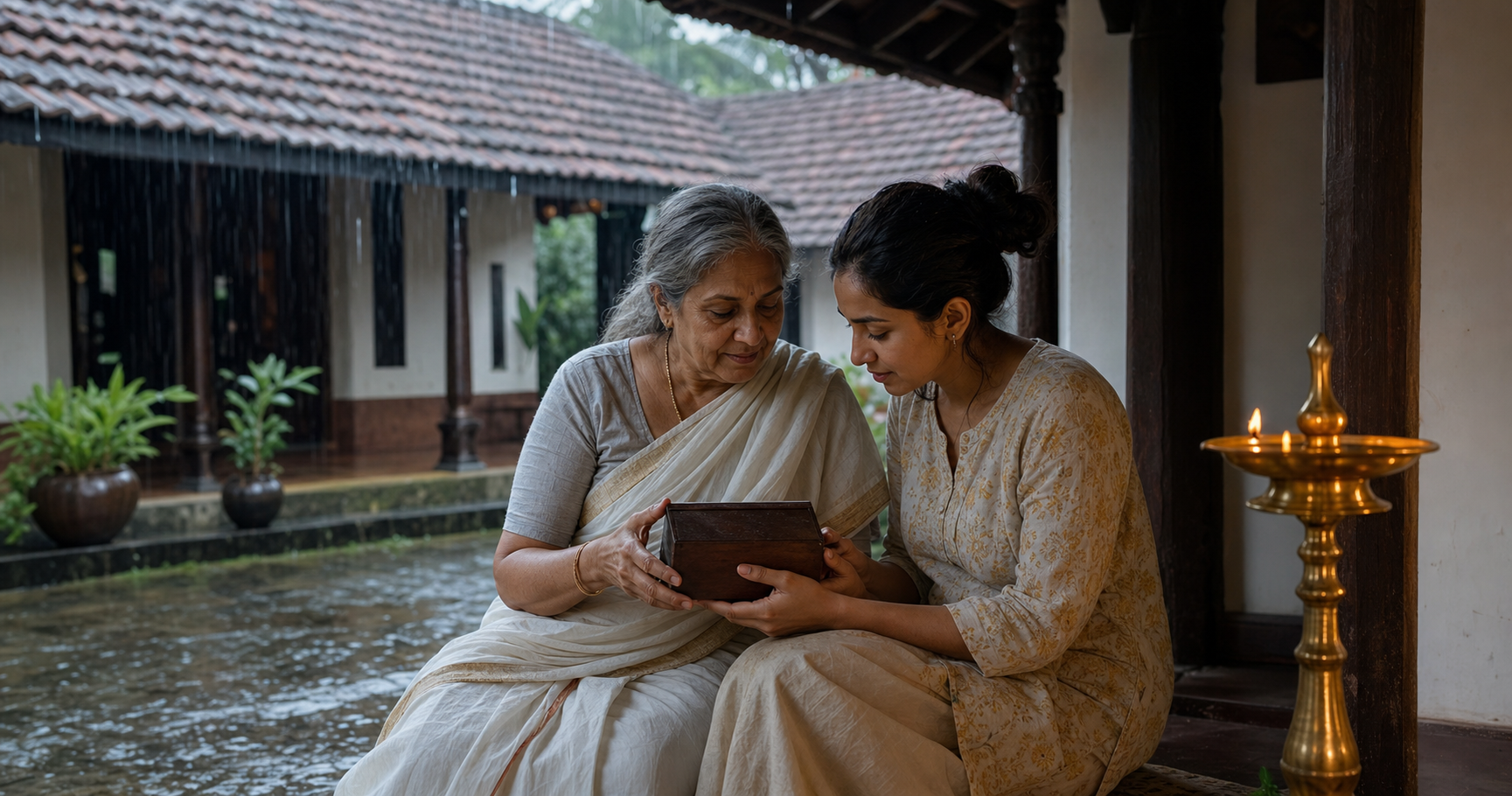
Devotees may understand Karkidaka Vavu Bali as supporting the peaceful onward journey of departed souls and inviting blessings and spiritual stability for the family, according to the source. The rite also performs a social and psychological function without being reducible to either. It provides an accepted setting in which grief can be acknowledged, shared and joined to gratitude.
This structure is particularly important because remembrance can otherwise become private and unarticulated. A repeated rite gives families a vocabulary of action: gathering, naming, offering, praying and transmitting stories. Younger generations encounter ancestry not as a remote genealogy but through duties, places and gestures practiced by people around them.
The source situates Kerala’s observance within a wider Hindu pattern that includes Pitru Tharpanam, Shraddha, Mahalaya and Pitru Paksha. It draws the closest regional comparison with Aadi Amavasai in Tamil traditions: Karkidakam and Aadi occupy the same July-August seasonal span, and their Amavasya observances share a focus on ancestors even where vocabulary, temples and liturgical details differ. The comparison reveals unity of purpose without erasing regional form.
Mobility tests how such forms are maintained. The article reports that families outside Kerala may seek local temples, community centers, riverbanks or priest-led arrangements. When customary locations are inaccessible, some consult family elders or priests about a simplified observance. Adaptation, in this account, is not permission to improvise indiscriminately; it is a way of preserving intent through informed guidance.
Key takeaways
- Karkidaka Vavu Bali is an Amavasya observance centered on offerings and prayers for departed ancestors.
- The supplied source reports August 12 for the 2026 Kerala observance, but local panchangas and temple calendars should be consulted because calculations may differ.
- Water, rice, sesame and darbha connect remembrance with continuity, nourishment, purification and ritual discipline.
- The rite gives grief a communal structure while expressing Pitru Rina, the recognition of life and culture received through lineage.
- Aadi Amavasai offers a close Tamil parallel, sharing the purpose of ancestor reverence while retaining its own regional practices.
As families become more geographically dispersed, the tradition’s future will depend on careful transmission: preserving its gratitude and restraint, consulting legitimate ritual guidance, and treating sacred waters with the same respect extended to the ancestors being remembered.