
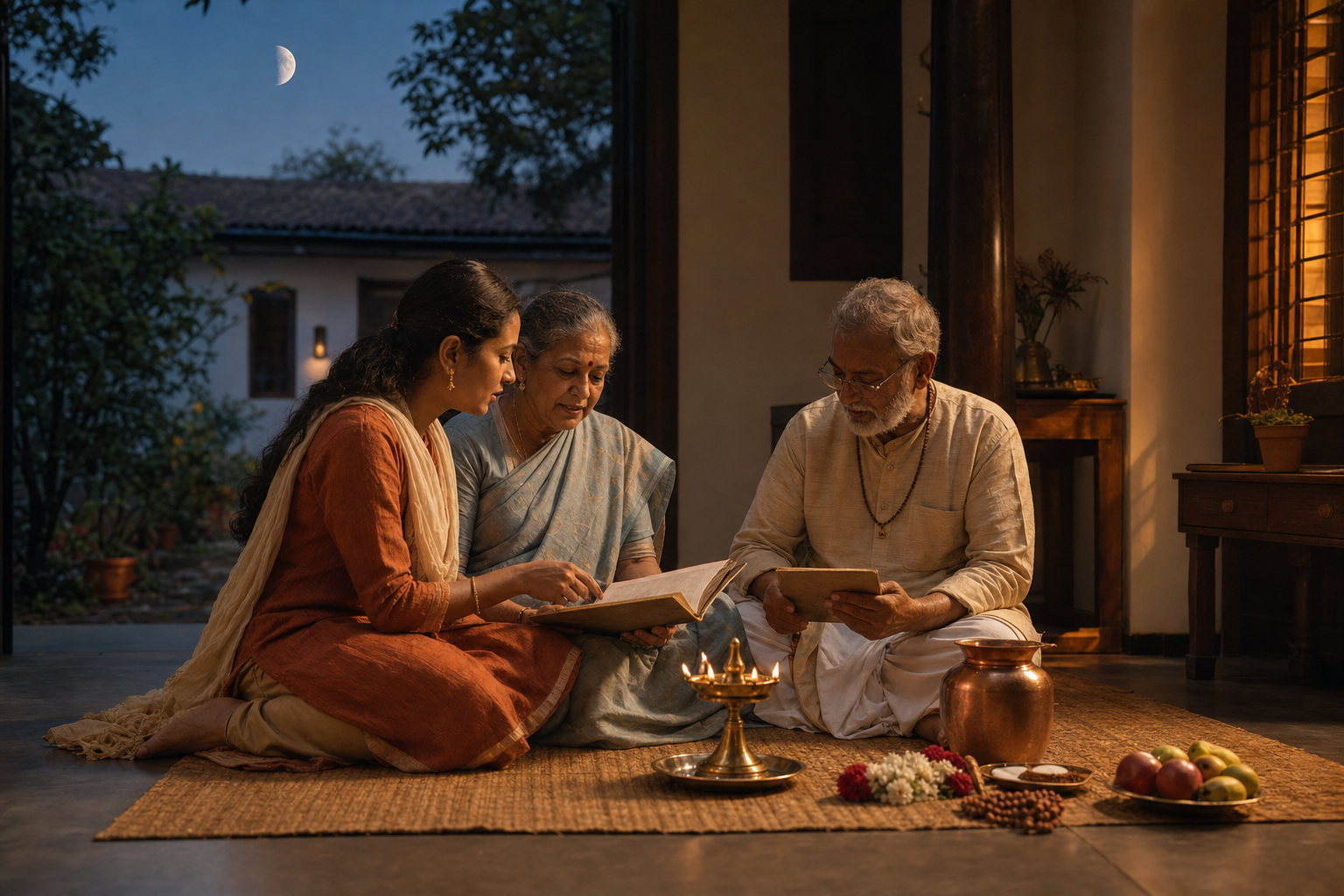
You find an unfamiliar vrata in a family notebook or panchanga, but its date seems to change from one calendar to another. One name may also carry several regional meanings. The real question is not simply when the vrata occurs. You need to know which tithi governs it, which part of the day matters, and which practices belong to its core.
You can resolve most of that uncertainty without assembling an elaborate puja. Start with the vrata’s purpose, identify its calendrical rule, confirm the local ritual window, and then keep a modest discipline that your health and household can sustain.
Key takeaways
- Tithi, not the printed civil date, is the primary calendar anchor for a vrata.
- Daytime observances commonly use the tithi prevailing at local sunrise; night vratas may follow the tithi during their prescribed evening or night window.
- Preserve the sankalpa, intended deity, ethical restraint, and completion of the vow before adding regional details.
- Use a panchanga calculated for your location, then check family or temple practice when two valid conventions differ.
- Fasting must fit your health. Prayer, dietary restraint, japa, and dana can carry the vow when a strict fast would be unsafe.
Decode the vrata before you mark the date
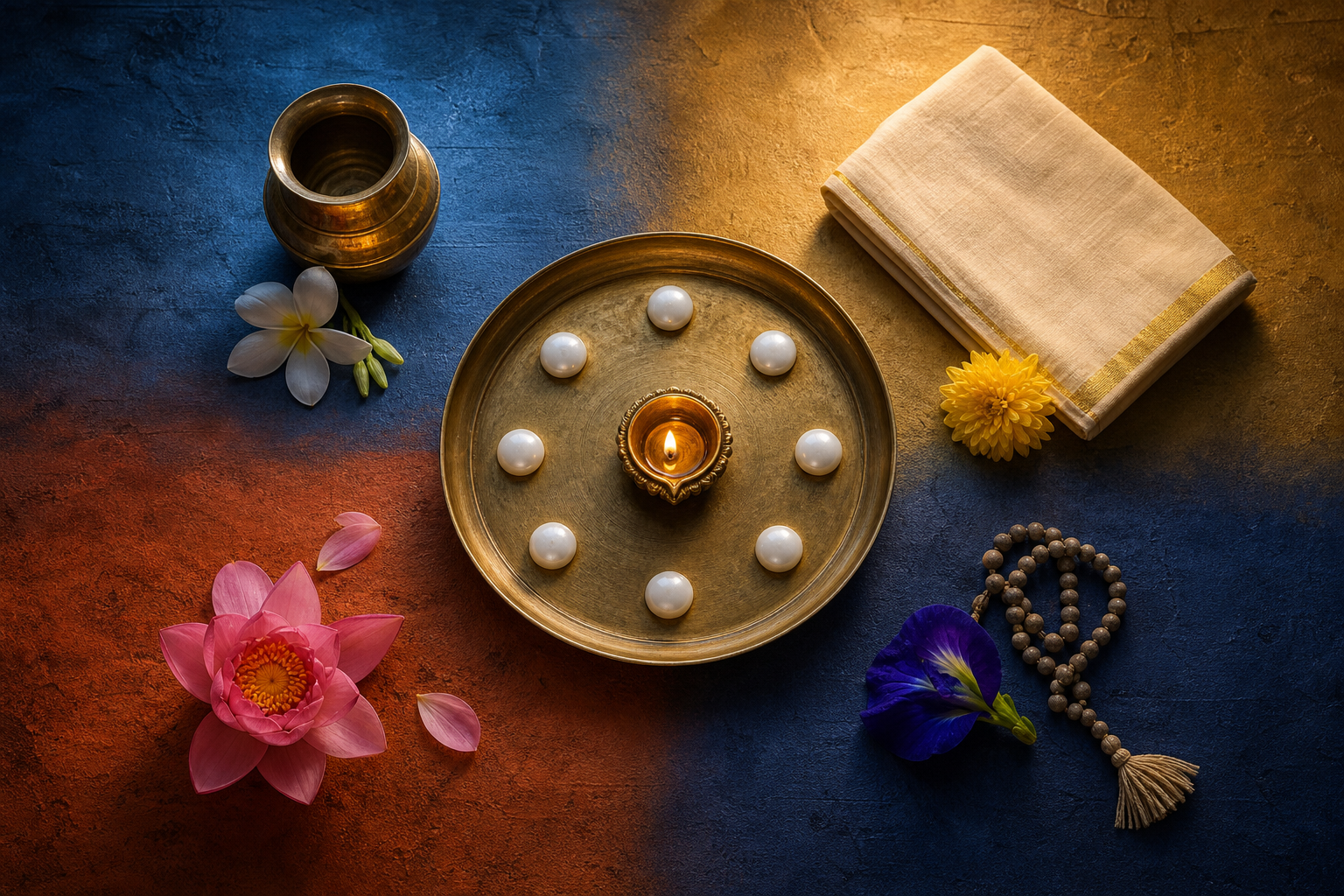
A lesser-known vrata becomes easier to understand when you separate four questions that are often compressed into one festival name.
| Question | What you need to record | Why it matters |
|---|---|---|
| What is the sankalpa? | The person, need, or dharmic quality toward which the vow is directed | Ananta Phala Saptami centers family and lineage well-being, while Dashtoddharana Panchami directs remembrance toward someone who died from snakebite. |
| What is the calendar anchor? | Lunar month, paksha, tithi, and whether one or several nights are required | A label such as Saptami or Pratipada is incomplete unless you also know the month and bright or dark fortnight. |
| Which ritual clock applies? | Sunrise, daytime, pradosha, night, or a sequence extending across several tithis | Ashoka Triratri Vrata is governed by three consecutive nights, so a sunrise-only reading can misplace its worship. |
| What is the devotional center? | The deity, mantra, offering, and ethical discipline essential to the vow | Bhadrakali Vrata is a Shakti observance of protection and auspicious renewal, not a generic fast for the first day of a fortnight. |
A tithi is a lunar division, so it does not begin neatly at midnight. It can start or end during a civil day, and the same tithi can touch two calendar dates. Your city also matters because sunrise and ritual windows are local. Amanta and Purnimanta month systems can label the surrounding month differently even when practitioners agree about the operative tithi.
Use the civil date as the result of your calculation, not its starting point:
- Find the lunar month, paksha, and tithi named for the vrata.
- Check the tithi’s start and end times in a panchanga calculated for your location.
- Apply the right clock. For a usual daytime vrata, first check the tithi at sunrise. For an evening or night vow, inspect the prescribed worship window instead.
- Check whether your family, sampradaya, or temple follows an additional rule. When conventions differ, follow one coherent parampara rather than combining fragments from several calendars.
- Write the final civil date and worship window beside your sankalpa so everyone in the household follows the same decision.
Four vratas that reveal four different calendar logics

Ananta Phala Saptami: a sunrise-centered family vow
Ananta Phala Saptami falls on Bhadrapada Shukla Saptami and is also known as Santan Saptami. In Odisha, Muktabharana Saptami reflects a regional Jagannath setting. These names emphasize different facets of the day, but they do not require every household to reproduce every local custom.
The practical anchor is the Saptami prevailing at sunrise. A concise observance can include a bath, a sankalpa for santan-kshema or family well-being, Surya arghya at dawn, and worship of Surya or Santana Gopala. Parents may pray for the protection of existing children; the vow is not limited to couples seeking conception. Fruit, milk, or a light sattvic diet can replace a severe fast, and dana gives the prayer a social expression. This Bhadrapada observance should not be confused with Ratha Saptami in Magha.
Dashtoddharana Panchami: a purpose-specific memorial rite
Dashtoddharana Panchami is directed toward the spiritual upliftment of someone who suffered an untimely death by snakebite. Many traditions place it on a Shukla Panchami, often Sravana Shukla Panchami alongside Naga Panchami, but local placement can vary. That variation makes a regional panchanga and family priest especially important.
A household observance may name the departed person and gotra in the sankalpa, worship the Naga Devatas symbolically, recite the Mahamrityunjaya mantra, and offer water with black sesame in tarpan according to family custom. If no particular person is named, the intention may include all beings who died in this way. More specialized rites such as Narayanabali or prescribed sraddha require qualified guidance; this Panchami vow does not automatically replace them.
Keep the worship compassionate toward living snakes. Use an image or consecrated symbol rather than handling wildlife or pouring milk into a habitat. A suspected snakebite is a medical emergency: seek emergency care immediately. Ritual remembrance is not first aid or a substitute for medical evaluation.
Ashoka Triratri: a vow defined by three nights
Ashoka Triratri begins on Shukla Trayodashi and continues through Chaturdashi into Purnima. Its aim is movement from shoka, or sorrow, toward steadiness through worship of Brahma, Vishnu, and Shiva. Because the vrata is nocturnal, the relevant tithi is the one governing the prescribed night worship, especially the pradosha-to-night interval, rather than merely the tithi seen at sunrise.
The order of Vishnu and Shiva can differ by lineage, while Brahma commonly begins the triadic movement. Choose the sequence before the first sankalpa and keep it for all three nights. A manageable home form is one focused puja each night, one principal mantra or stotra, a period of quiet contemplation, and a steady lamp while you remain present. Partial jagarana is meaningful when a full vigil would undermine health or the next day’s duties.
Bhadrakali Vrata: renewal on the first waxing tithi
Bhadrakali Vrata is observed on Kartik Shukla Pratipada, the first tithi after Amavasya. The transition into the waxing fortnight supports its focus on protection, courage, clarity, and auspicious beginnings. The common daytime rule is to select the Pratipada prevailing at local sunrise unless your lineage gives another instruction.
The same day can coincide with Annakut or Govardhan Puja in Vaishnava households. A crowded ritual calendar does not force you to erase one tradition in favor of another. Keep distinct sankalpas and devotional centers, and arrange the schedule so each worship retains its integrity. A simple Bhadrakali observance may use a red cloth, lamp, flowers, sattvic naivedya, and japa of Om Bhadrakalyai Namah, followed by arati and an act of service.
Build a home observance you can actually complete

A rare vrata is not made more authentic by multiplying materials. When a complete lineage procedure is unavailable, keep a small structure and perform it attentively.
- Confirm the window. Record the local date, tithi, and required part of the day before buying samagri.
- State one clear intention. In your own language, name the vrata and say whether you seek family well-being, remembrance, release from grief, protection, or another traditional purpose.
- Prepare a clean center. Use the deity’s murti or picture, or an accepted symbol such as a kalasha when the preferred image is unavailable.
- Keep one ritual core. This might be Surya arghya at sunrise, Naga and pitri remembrance, one Trimurti puja on each appointed night, or focused Devi japa.
- Choose a sustainable restraint. Upavasa can mean a strict fast, phalahara, one sattvic meal, restraint from a habitual indulgence, silence, or additional japa and seva. Decide before the vow begins.
- Close deliberately. Offer naivedya, perform arati or a brief closing prayer, ask forgiveness for omissions, and distribute prasada. For a multi-night vow, do not perform the final completion after the first night.
- Convert devotion into dana. Food, useful goods, support for community care, or service connected to the intention prevents the vow from becoming purely private.
Do not stop prescribed medicines to keep a fast. If food or fluid restriction could affect a medical condition, pregnancy, nursing, or recovery from illness, ask your clinician what is safe and select a non-food discipline when necessary. A vow intended to cultivate dharma should not become an act of self-harm.
Know what to preserve and what you may adapt
Preserve the vrata’s identity
Keep the named tithi and ritual window, the stated purpose, the proper devotional center, and any multi-day sequence. Preserve basic niyamas such as ahimsa, truthfulness, clean conduct, and restraint. Complete the vow with gratitude, prasada, and dana where prescribed. If the observance concerns a particular death or a complex expiatory rite, preserve the role of a qualified acharya rather than improvising technical procedures.
Adapt the load, not the meaning
You may usually adjust the number of offerings, length of recitation, form of fasting, extent of a night vigil, and locally available flowers or foods. A five-offering puja performed steadily is better than an abandoned elaborate arrangement. Regional customs can deepen a vrata when they belong to your community, but they should not be presented as mandatory everywhere.
Choose one vrata whose traditional purpose genuinely meets your situation. Confirm its local window, write a one-sentence sankalpa, and gather only what the essential worship requires. That small act of calendrical care is how an unfamiliar name becomes a living discipline rather than another entry you scroll past.
References
- DharmaRenaissance Blog – Ananta Phala Saptami: Auspicious Puranic vrata for Santan blessings and Puri’s Muktabharana
- DharmaRenaissance Blog – Dashtoddharana Panchami: Vedic rites for snakebite salvationkey dates, mantras, healing method
- DharmaRenaissance Blog – Ashoka Triratri Vrata: Three-Night Trimurti Worship, Timings, Puja Vidhi, Significance, and Benefits
- DharmaRenaissance Blog – Bhadrakali Vrata on Kartik Shukla Pratipada: Rituals, Meanings, and Protective Blessings