
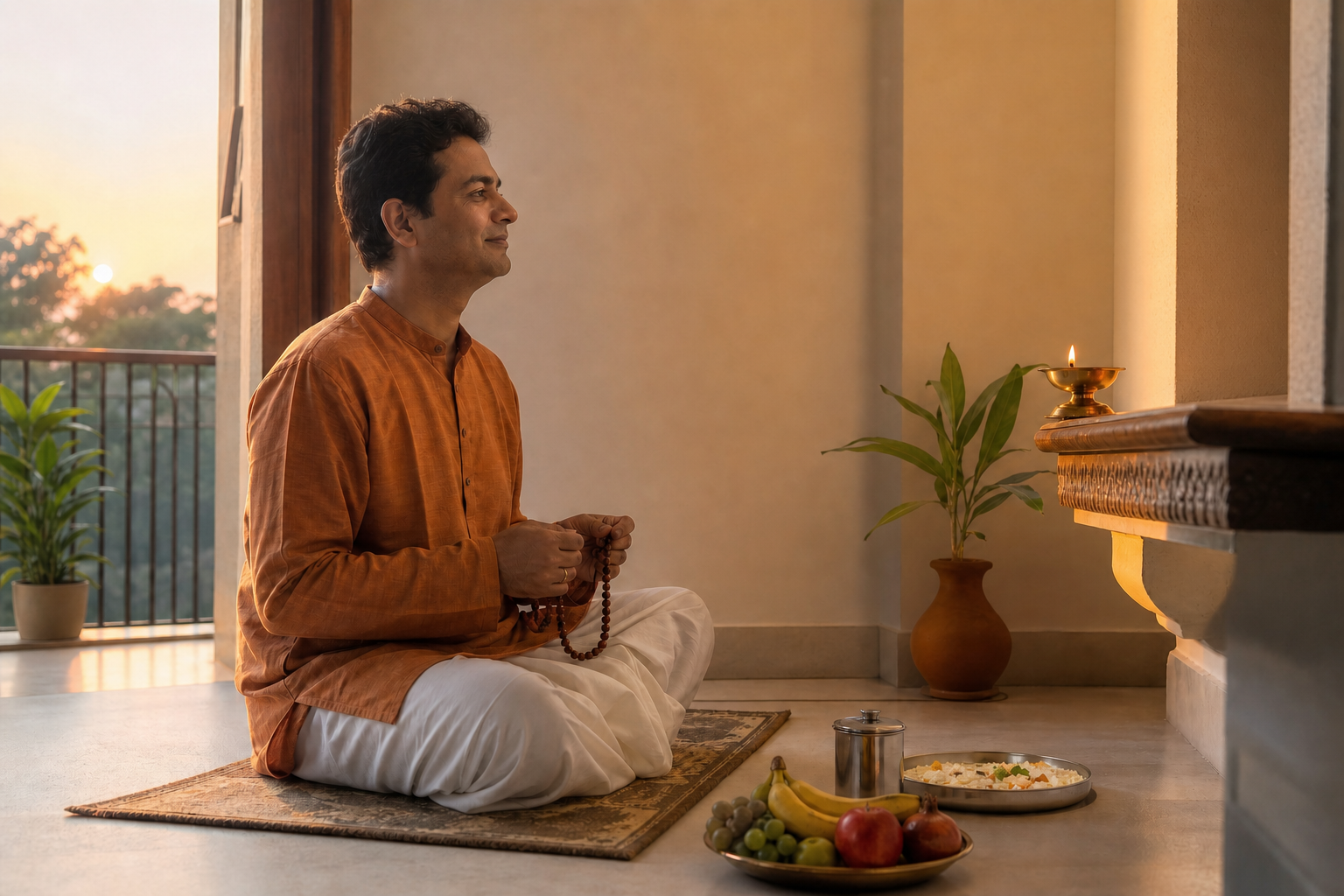
You want your next vrata to deepen devotion, not leave you dehydrated, irritable, or too weak to pray. The right fast is not necessarily the strictest one. It is the form that matches your sankalpa, current health, digestion, season, and responsibilities.
Use this framework to choose an appropriate level of restraint, arrange the day around sadhana, recognize when to stop, and break the fast without shocking your system. If you have a medical condition or take medicines whose timing depends on food, speak with a qualified clinician before changing your meals.
A vrata is a promise, not a food challenge
Begin with one primary purpose. You may be fasting to worship a deity, lighten a burdened routine, examine a craving, support ethical consumption, or make more time for japa and seva. Trying to pursue every possible benefit at once makes the vow harder to understand and easier to misuse.
Write your sankalpa before deciding what to eat. A workable version is: For this period, I will observe this form of restraint with devotion and care for all beings. I will use the time it creates for prayer, reflection, and service, and I will modify the vow if continuing would cause harm. Name the duration, permitted foods and fluids, devotional practice, and stopping conditions.
The calendar can support that intention. Ekadashi, Purnima, Amavasya, and deity festivals are common occasions for a vrata. For a Surya-centered health observance, some lineages select Shukla Saptami in Bhadrapada or Ashwin, although Arogya Saptami is most closely associated with Magha. Check a regional panchang because Amanta and Purnimanta calendars can place observances differently.
Different dharmic traditions do not treat fasting identically. Hindu vrata, Jain fasting during Paryushana, Buddhist Uposatha restraint, and the Sikh emphasis on disciplined living and seva retain their own theological settings. Their shared lesson is still useful: restraint should cultivate awareness, compassion, and responsibility rather than pride in deprivation.
Choose the least restrictive form that serves the vow
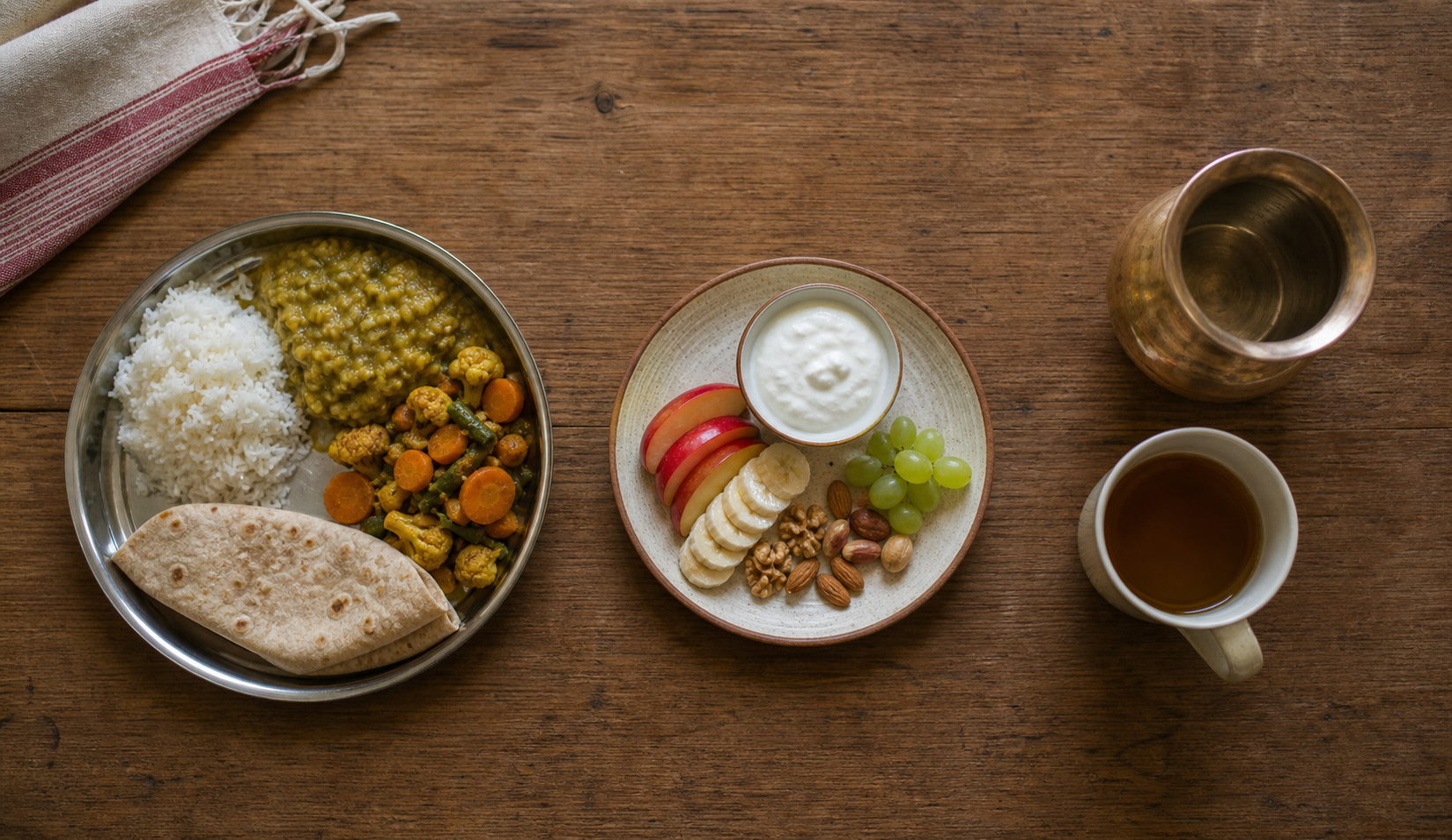
Upavasa can mean much more than eating nothing. A moderate form often gives a householder more steadiness for worship than an absolute fast. Choose from the following patterns by asking what you can sustain without neglecting health, dependants, or essential work.
| Form | What it permits | When it may fit | Main caution |
|---|---|---|---|
| Dairy-abstinence vrata | Balanced sattvic meals without milk, curd, ghee, butter, or paneer | Ethical concern about milk, poor dairy tolerance, or relinquishing a comfort food | Replace dietary variety with grains, pulses, vegetables, fruit, nuts, seeds, sesame, ragi, and greens rather than simply eating less |
| Ekabhukta | One main meal | A workday or devotional date when a complete fast would be disruptive | Do not turn the single meal into an oversized feast |
| Laghu upavasa | Thin gruel, mung soup, vegetable broth, and suitable fluids | Variable digestion or a sensitive seasonal transition | Keep the observance brief and watch energy and hydration |
| Phalahara | Fruit and light liquids | A familiar family or festival practice for a healthy adult | It is not automatically suitable for diabetes, digestive illness, or medication schedules |
| Sunrise-to-sunset fast | Food is withheld for the stated period; fluid rules are fixed in advance | A calendar-based devotional observance | Do not assume a dry fast is required; dehydration is not a measure of bhakti |
| Milk-only vrata | Warm, diluted milk in small servings, with water | A short and familiar lineage practice for a healthy adult who tolerates milk | It is restrictive, low in total energy, and unsuitable for many people |
A milk-only vrata deserves particular caution. For a brief observance, traditional practical guidance limits most householders to one to three days, using roughly 600-1200 ml of warm, diluted milk daily, divided into servings of about 150-250 ml three to five times a day. One litre of whole milk supplies only about 600-700 kcal, despite providing roughly 32 g protein, 45-65 g fat, and 45-50 g lactose. Those figures explain why this should remain a short observance rather than a general purification programme.
Milk should be properly boiled, taken warm, and sourced with ahimsa in mind. If ethical sourcing is uncertain, dairy abstinence may express the vow more honestly. If milk causes digestive discomfort or congestion, narrowing your diet to milk alone is a poor experiment to conduct during a sacred observance.
Do not undertake a restrictive fast without medical clearance if you have diabetes or another metabolic disorder, kidney or liver concerns, a peptic ulcer, an eating disorder, significant underweight, or a complex medication regimen. Pregnancy, breastfeeding, advanced age, lactose intolerance, and casein sensitivity also require modification or avoidance, depending on the fast. Minors should not undertake restrictive fasting.
Let Ayurveda change the menu with the season
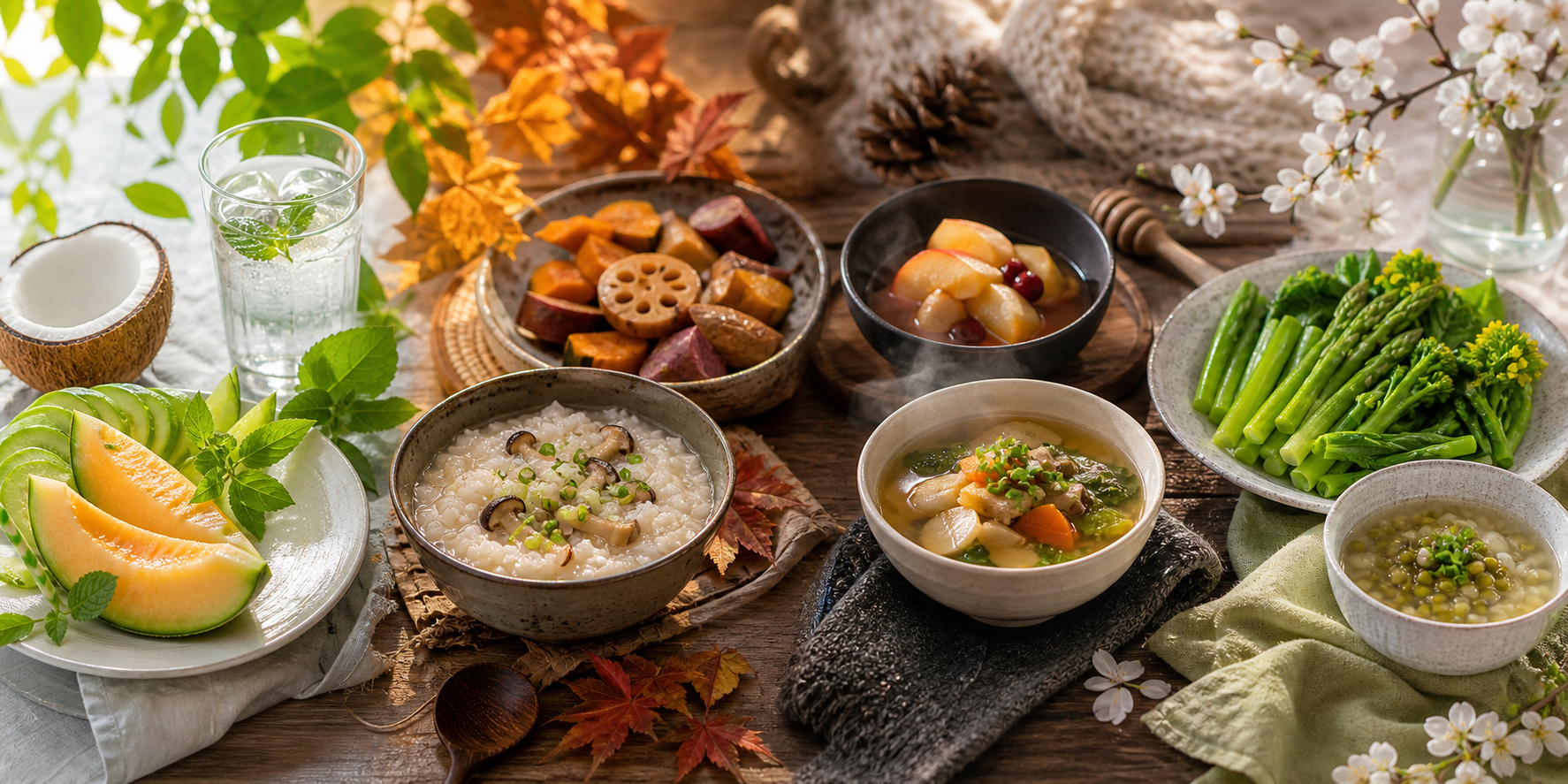
Ayurveda does not treat the same fast as equally suitable for every person or month. Agni, current symptoms, climate, and recent nourishment matter. Use constitution as a guide to observation, not as permission to ignore weakness or force the body through distress.
During late Varsha Ritu in Bhadrapada, digestive fire may be unsettled. A gentler fast can rely on warm, cooked, digestible food: old rice, barley or wheat; thin peya; and mudga yusha, a light mung preparation. Dry ginger, cumin, and a little black pepper can support simplicity. Raw salads, leftovers, heavy fried dishes, and curd at night add unnecessary burden during this period. Warm or boiled water is usually more compatible with this approach.
In Ashwin, the transition into Sharad brings greater concern about aggravated Pitta. A light meal can use rice, cooked mung, lauki, pumpkin, ridge gourd, coriander, fennel, and cumin, with ghee in moderation. Excess chilli, sour pickles, deep-fried food, alcohol, and prolonged exposure to strong sun work against the intended cooling rhythm. This seasonal shift from late rains to post-monsoon heat is why one fixed fasting menu cannot serve the whole year.
Dairy also needs individual judgment. Warm milk can be nourishing when it is well tolerated, while cold or heavy dairy may aggravate kapha for some people. Temporary dairy abstinence may therefore suit one practitioner, while a small amount of warm milk may suit another. Neither choice is spiritually superior.
Build the day around worship, then close it gently

A food rule becomes devotional when it changes how you use attention. Plan the whole observance, including the days around it, instead of improvising once hunger arrives.
- Three days beforehand, reduce stimulants and heavy foods rather than stopping them abruptly on the vrata morning. Decide what food, water, herbal infusions, and prescribed medicines the day will include.
- At sunrise, bathe and begin with your normal puja. For Surya-upasana, offer clean water as arghya and use a simple mantra such as Om Suryaya Namah. Recitation of Aditya Hridayam and time in gentle early-morning light can give the day a clear devotional rhythm.
- Assign the time saved from cooking and eating. Set a realistic count or duration for japa, read a short passage of scripture, sit for dhyana, or perform a manageable act of seva.
- Observe the body without bargaining with it. Weakness, dizziness, gastric distress, or headache are reasons to stop or modify the fast. Seek urgent medical care if you faint, become confused, cannot keep fluids down, or have severe or persistent symptoms.
- Break a restrictive fast with warm water, followed by a small portion of peya, kanji, mudga yusha, thin khichdi, or stewed fruit. Do not make the first meal a reward feast.
- Return gradually to normal sattvic meals. After dairy abstinence, reintroduce dairy deliberately, if you choose to do so, and notice digestion, congestion, energy, and comfort instead of automatically restoring every old habit.
Closing early because of symptoms is not a failed vrata. Offer a short prayer, eat what is needed, and record what happened. Ahimsa applies to your own body as well as to other beings. Udyapana, the mindful completion of a vow, protects that principle.
Key takeaways
- Write the purpose, duration, permitted intake, devotional practice, and stopping conditions before the fast begins.
- Choose the gentlest form that still creates meaningful restraint; strictness is not a measure of devotion.
- Adjust food to season and digestion: warm, light preparations suit late Varsha, while Sharad calls for a more Pitta-conscious menu.
- A milk-only vrata is a short, restrictive option, not a default health fast, and it requires good milk tolerance and careful screening.
- Stop for weakness, dizziness, gastric distress, or headache, and break the fast with a small, easily digested meal.
Before your next observance, write four lines on paper: why you are fasting, what you will consume, which symptoms will end the fast, and what your first meal will be. Share the plan with someone in your household. Then give the time and attention you save to the deity, the teaching, or the act of service named in your sankalpa.
References
- DharmaRenaissance Blog – Dugdha Vrata Demystified: Milk-Only Purification vs Dairy Abstinence with Vedic Guidance
- DharmaRenaissance Blog – Arogya Vrata in Bhadrapada & Ashwin: Powerful Ayurvedic Fasts for Immunity and Vitality