

You can complete every visible part of a pilgrimage – take the dip, carry the offering, climb the steps, receive prasadam – and still leave the central work untouched. The usual problem is not lack of sincerity. It is treating purification as a moment that happens to you rather than a discipline in which you participate.
If you are preparing for a sacred bath or Tirtha-Yatra, ask a more useful question than whether the rite will make you pure: what must you simplify, offer, protect, and continue after you return? That question turns ritual from a religious transaction into a deliberate movement toward dharma.
Purification begins before you reach the sacred place
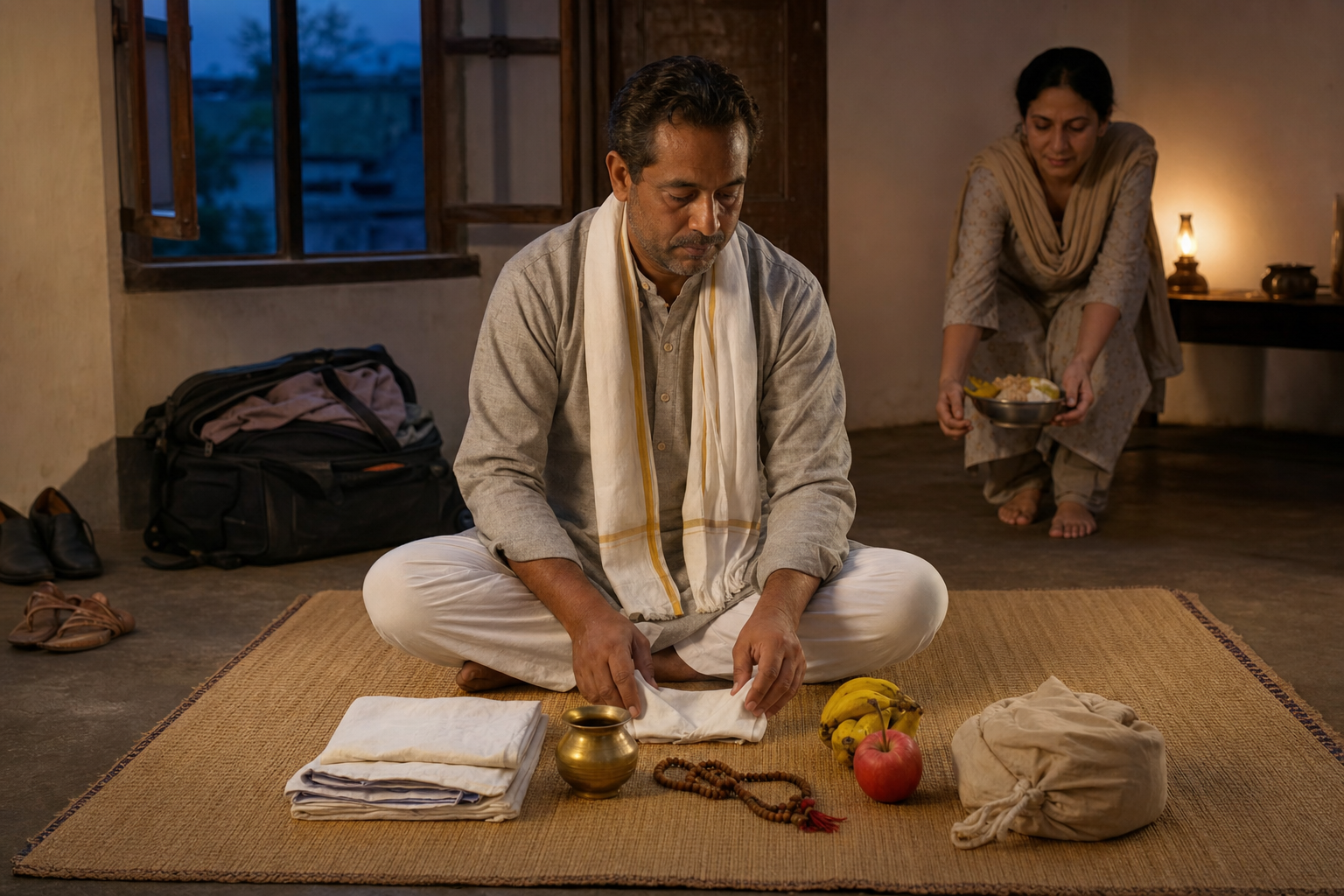
Sacred purification joins an outer action to an inner direction. Water, pilgrimage clothing, offerings, mantra, fasting, japa, and bodily effort give form to the intention. Restraint and ethical conduct keep that form from becoming empty. Neither side should be discarded.
This is why preparation matters. During Ayyappa Deeksha, for example, observances frequently include simple black or blue clothing, celibacy, sattvic food, and daily japa. These are not decorative additions to a visit. They train attention and restrain the senses before the pilgrim reaches Sabarimala. A sacred river bath similarly begins with sankalpa, not with the first immersion.
Your preparation should answer five practical questions:
- Which tradition am I actually observing? Learn the local form from the temple, ghat custodians, a Guru Swami, a priest, or experienced practitioners. Do not combine several rites merely because all of them involve water or offerings.
- What is my sankalpa? Put it in one clear sentence. Name the quality or duty you intend to strengthen, such as steadiness in japa, simplicity in consumption, service to family, or care for a sacred place. A sankalpa is a direction for conduct, not a shopping list of desired rewards.
- What restraint supports that intention? Choose the discipline proper to the pilgrimage. Do not copy a demanding vrata from another tradition without guidance, and do not quietly abandon the observance when it becomes inconvenient.
- What must I carry? Take the required ritual materials and modest personal essentials. Extra possessions create extra distraction, while unsuitable offerings can burden the very place you came to honor.
- What will continue after I return? Decide this before departure. A rite has a better chance of changing daily conduct when its continuation is specific rather than sentimental.
Preparation should also make you humbler, not more judgmental. Your vrata gives you responsibility for your own conduct. It does not give you authority to rank the devotion of pilgrims whose age, health, duties, or lineage require a different observance.
At a sacred river, let the sequence slow you down
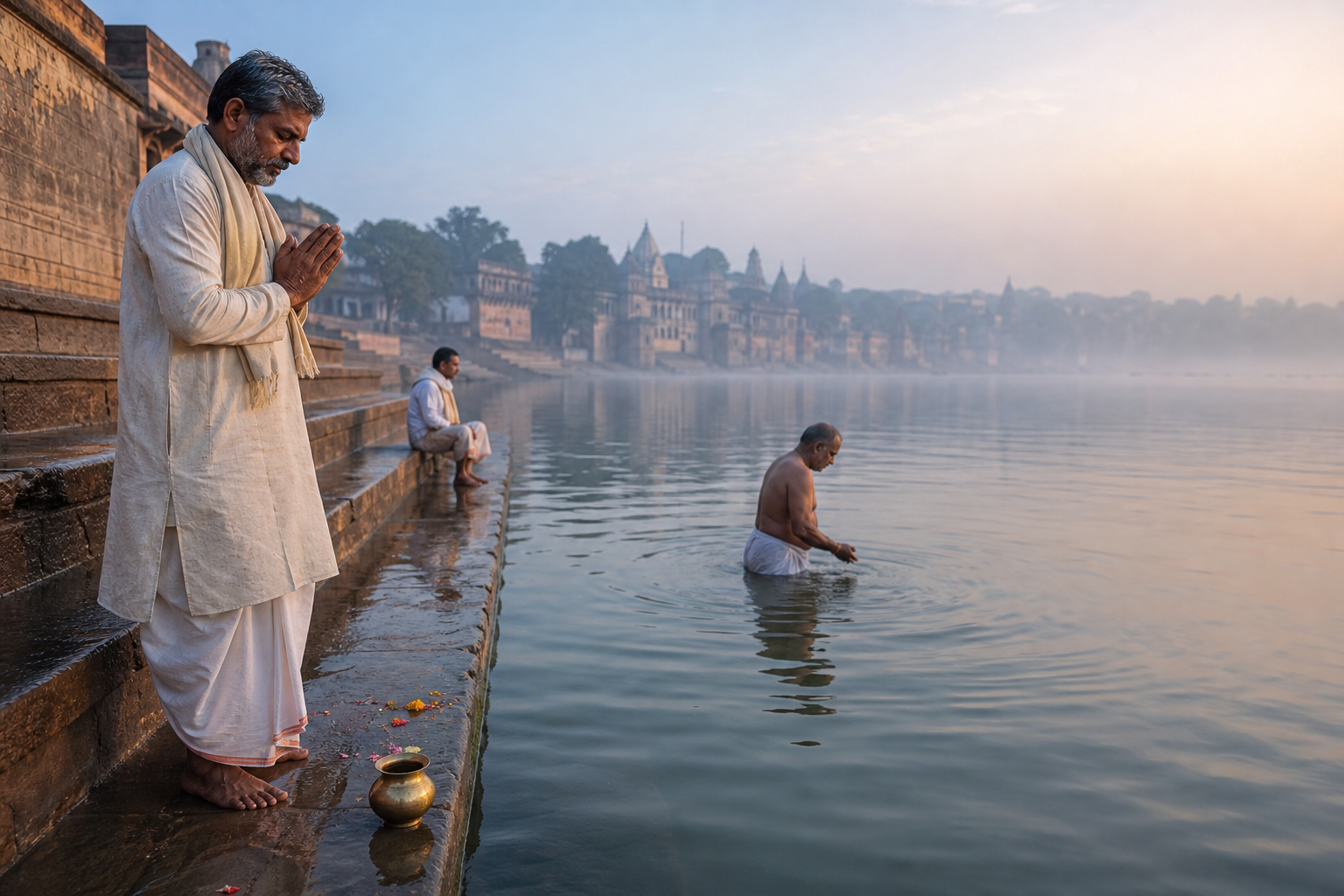
A river bath can easily become hurried: secure a place on the steps, enter the water, take a photograph, and move on. The remedy is a simple sequence that gives each action enough attention.
- Pause before entering. Notice the permitted access, the safest exit, the movement of the water, the crowd, and any instructions from local authorities. Sanctity is not permission to ignore physical danger.
- State your sankalpa quietly. Keep it short enough to remember when the water is cold, the ghat is crowded, or people around you are moving quickly.
- Approach the water without rushing. If arghya is customary, offer it with gratitude. If immersion is permitted and safe for you, perform it attentively. If it is unsafe or prohibited, do not let embarrassment push you into the water; follow the guidance at the site.
- Remain silent for a few moments afterward. Notice the intention you brought and the conduct it now requires. This pause prevents the rite from ending with the physical sensation of the bath.
- Leave without adding pollution. Carry away packaging and personal waste. Keep detergent, plastic, and unsuitable offerings out of the water.
Pilgrims may undertake Tirtha Snana during Purnima or Amavasya, Magh Snan, Karthika Masam, or a gathering such as the Kumbh Mela. The same devotional pattern also appears in a quiet dawn visit to a neighborhood ghat. If an auspicious date is essential to your vow, prepare for its crowds. If it is not, a less crowded ghat can make safety, silence, and mindful observance easier.
The Ganga, Yamuna, Godavari, Narmada, and Cauvery belong to a sacred geography that has joined worship, settlement, livelihood, and collective memory across Bharat. Reverence for these rivers therefore carries a direct obligation. If your offering harms the water or obstructs other worshippers, the method has contradicted the intention. Choose biodegradable materials accepted at the site, use designated facilities, and follow local rules even when an older habit points elsewhere.
At Sabarimala, the Irumudi makes the vow tangible
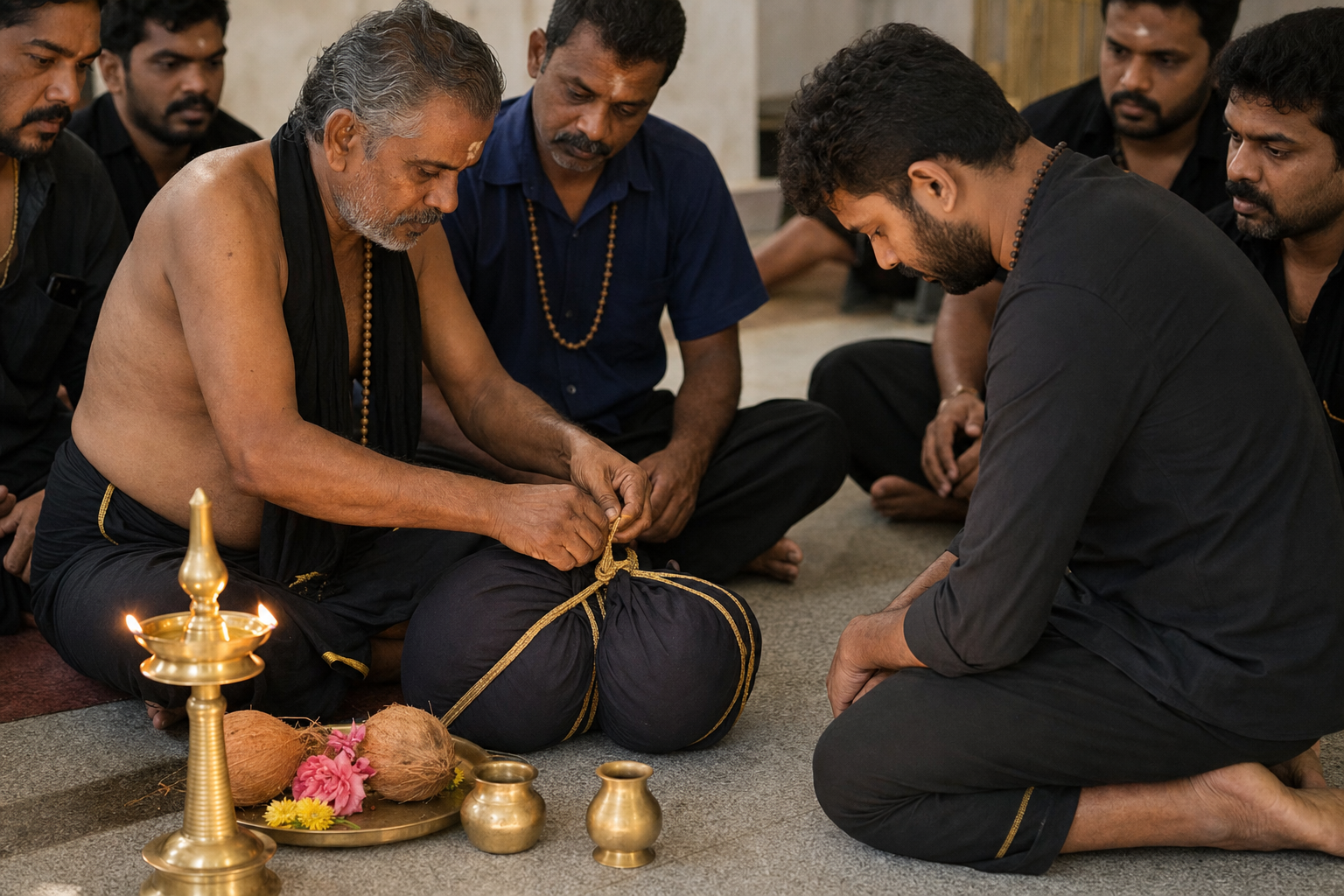
The Irumudi shows how a pilgrimage object can organize the whole journey. It is a two-compartment cloth bundle carried reverently on the head, but its arrangement matters as much as its appearance. The front compartment, or mun-mudi, is for sacred offerings. The rear compartment, or pin-mudi, holds minimal personal necessities. Worship leads; personal comfort follows.
The mun-mudi commonly contains the neythenga – a coconut filled with ghee – together with items such as rice, camphor, incense, vibhooti, kumkum, and a contribution for annadanam. The coconut shell is often understood as the hard casing of ahankara, while the ghee represents clarity cultivated within. At the temple, the coconut is opened and the ghee is offered for Ayyappa’s abhishekam. The symbolism becomes an action: what was carefully carried is finally surrendered.
If you are undertaking this yatra, treat Irumudi kettu as a rite, not a packing exercise. It is typically prepared with mantra, sankalpa, and collective prayer in the presence of a Guru Swami or temple priest. Confirm the accepted contents with that guide. Do not add objects merely because they seem devotional, and do not substitute internet familiarity for lineage-specific instruction.
Conduct on the road should preserve the meaning established during preparation:
- Keep the pin-mudi genuinely modest. Its purpose is self-sufficiency without letting personal convenience dominate the pilgrimage.
- Do not place the Irumudi on the ground. The protocol turns ordinary moments of resting, waiting, and moving through crowds into exercises in awareness.
- Support fellow pilgrims without treating another person’s service as an entitlement. A shared vow should produce patience and cooperation.
- Keep the chant Swamiye Saranam Ayyappa connected to surrender in conduct, especially when fatigue makes irritation easier.
- Follow the established approach to the Sannidhanam. Pilgrims bearing the Irumudi traditionally ascend the eighteen sacred steps; carrying the bundle is what marks their eligibility for that ascent.
These details should not be detached from the Ayyappa tradition and reproduced as spectacle elsewhere. The Irumudi is not a generic symbol for every Hindu pilgrimage. Its wider lesson can travel – sacred priorities first, personal needs kept modest, ego surrendered through disciplined offering – while its ritual form remains rooted at Sabarimala.
The test of purification begins when the rite ends
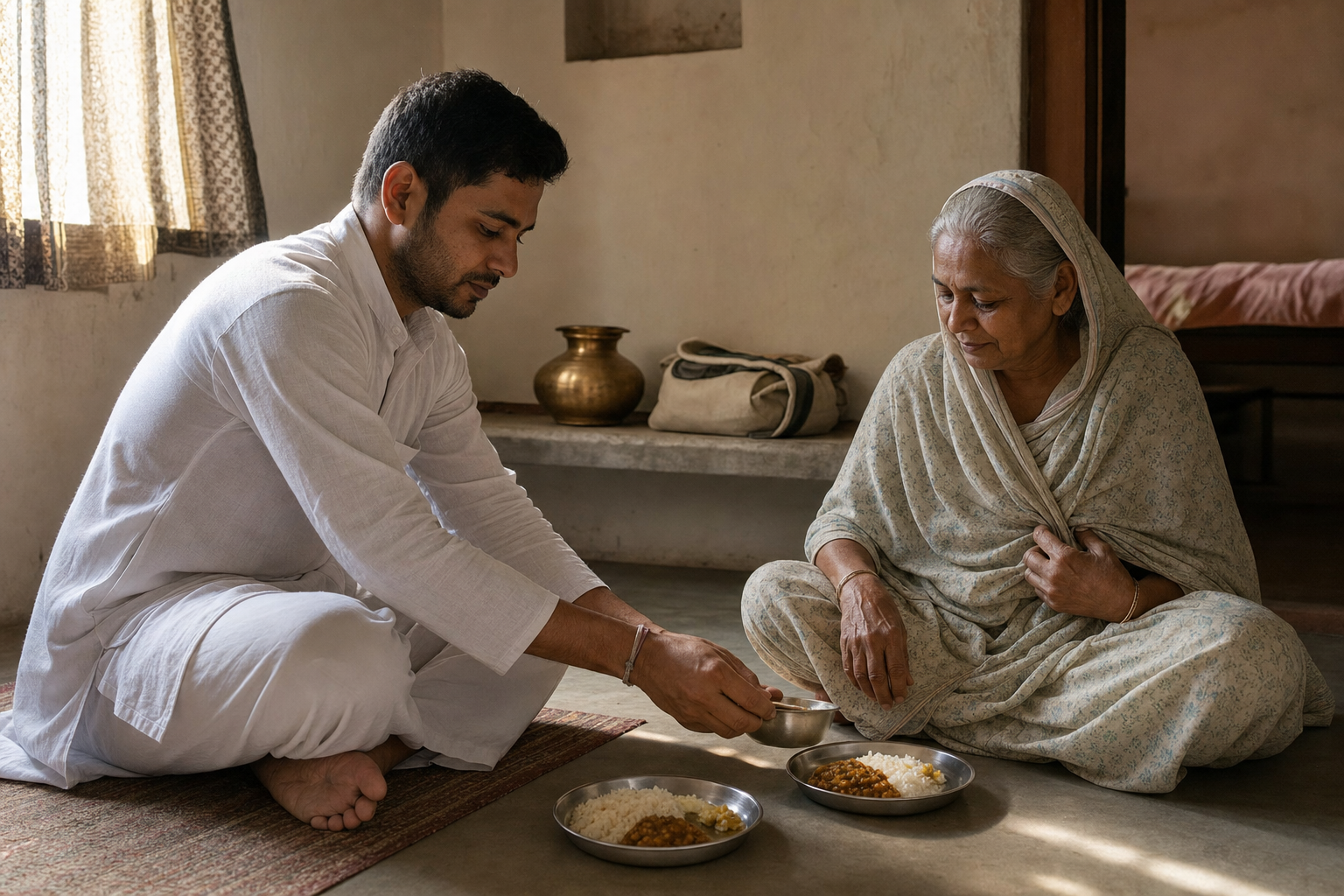
A sacred bath does not make harmful conduct harmless. An arduous walk does not excuse impatience. An offering cannot purchase freedom from consequence. Pilgrimage marks a redirection, but you still have to walk in that direction after the visible ceremony is complete.
Give the return journey its own discipline. Within the ordinary duties waiting at home, continue one practice that can be observed rather than merely felt. Resume daily japa at a fixed point in your routine. Keep one form of unnecessary consumption out of your life. Contribute to annadanam or another form of seva. Join the protection of the river, temple, trail, or sarovar whose sanctity supported your pilgrimage. Choose the continuation that matches your sankalpa.
Prasadam helps clarify this movement. What was offered does not return as private property in the same spiritual sense; it returns as grace to be received and shared. Annadanam, mutual assistance on the path, and care for the sacred environment extend purification beyond the isolated individual. They turn devotion toward community.
This outward movement also reveals a shared dharmic language without erasing distinct traditions. Hindu Tirtha Snana, sarovar immersion associated with seva and humility in Sikh practice, Jain snatra puja and jalabhisheka, and Buddhist water offerings or ritual washings are not interchangeable ceremonies. They do, however, place purity beside qualities such as discipline, compassion, reverence, and service.
When you visit a sacred place belonging to another dharmic tradition, preserve both kinship and difference. Use the names practitioners use for their own rite. Observe before participating. Ask the custodians when you are uncertain. Do not insist that your preferred symbolism explains their practice. Respectful attention is itself a form of purification because it restrains the urge to place the self at the center.
Key takeaways for your next pilgrimage
- Begin with the tradition’s actual guidance and a one-sentence sankalpa.
- Join the external rite to a concrete discipline before and after the journey.
- At a river or sarovar, follow local safety instructions and never force an unsafe immersion.
- Keep offerings appropriate, biodegradable, and free of unnecessary packaging.
- Prepare and carry the Sabarimala Irumudi under proper guidance; do not treat it as an ordinary travel bag or a generic pilgrimage accessory.
- Measure purification by the humility, restraint, seva, and ecological care that survive your return.
Before your next yatra, write down three things: the sankalpa you will carry, the local instruction you still need to confirm, and the practice you will continue at home. If those are clear, the sacred bath, bundle, offering, and journey can do what ritual does best – give disciplined form to a change you are prepared to live.
References
- DharmaRenaissance Blog – Irumudi’s Sacred Power in Sabarimala Yatra: Symbolism, Ritual Practice, and Devotional Unity
- DharmaRenaissance Blog – Sacred River Bathing: Timeless Rituals, Inner Renewal, and Shared Dharmic Heritage
