
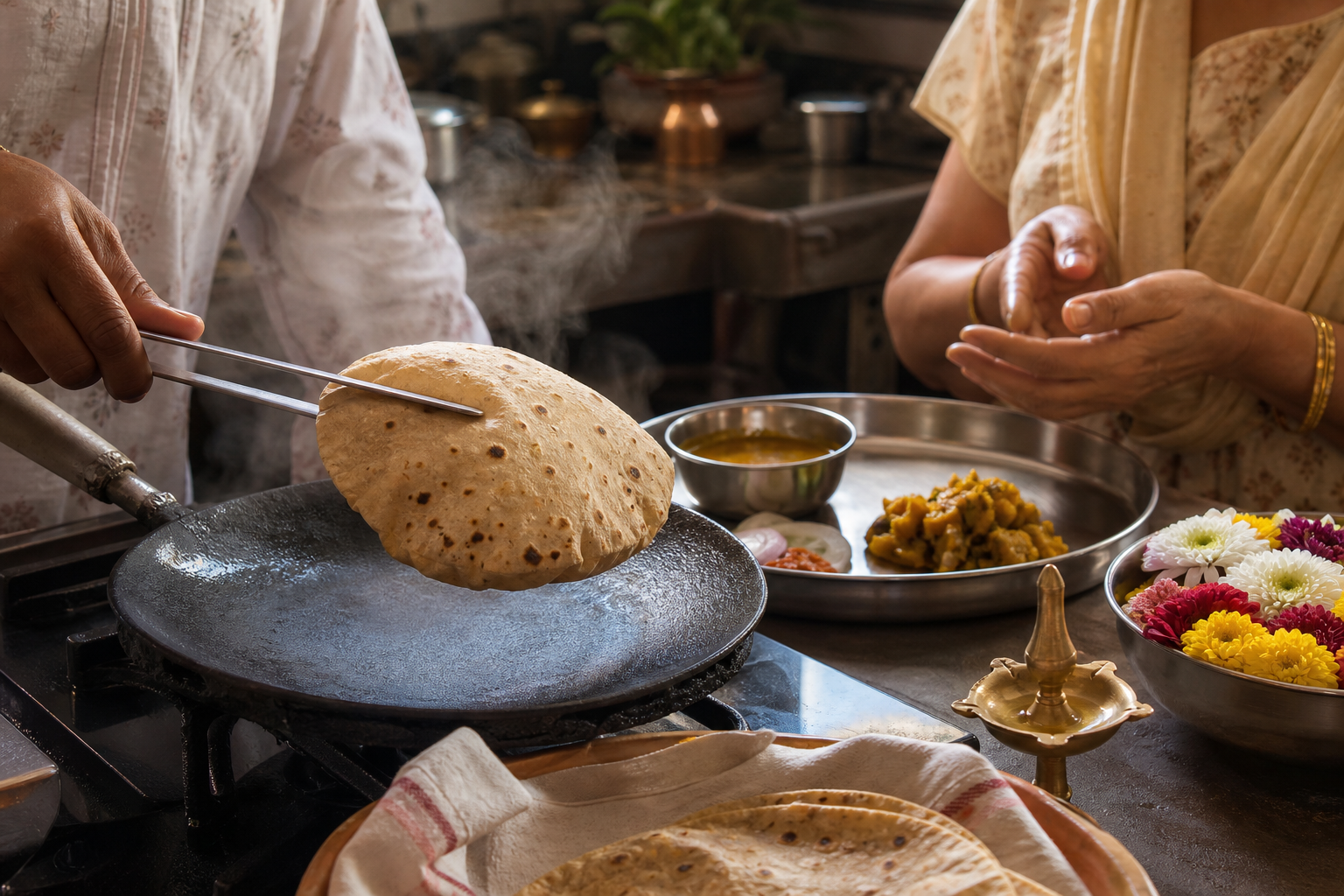
You have soft dough, a hot tawa, and someone waiting to eat. The difference between merely making chapati and serving it as seva now comes down to a few minutes of attention.
Your aim is not a flawless-looking stack prepared long in advance. It is a properly cooked chapati reaching the recipient while it is still supple, fragrant, and warm with steam. Here is how to build your kitchen practice around that moment.
Let the eater define the finish
During a meal in Madras, Srila Prabhupada touched a roti and gave a three-word standard: “Chapati means hot.” The instruction was repeated until a fully puffed chapati arrived and released visible steam when gently pressed. Then came the approval: that was chapati.
The lesson is practical before it is symbolic. A chapati is at its best immediately after cooking. Its internal moisture is still distributed through the crumb, the surface remains flexible, and the wheat aroma is pronounced. As it waits, it loses heat and begins to stiffen. Freshness therefore cannot be inspected only at the stove; it has to survive the journey to the plate.
This gives you a useful definition of care: complete the work when it matters to the person receiving it. A beautifully puffed roti left cooling beside the tawa has missed part of its purpose. A modest-looking one served promptly, cooked through and still soft, may express greater attention.
Make dough that can hold and release steam
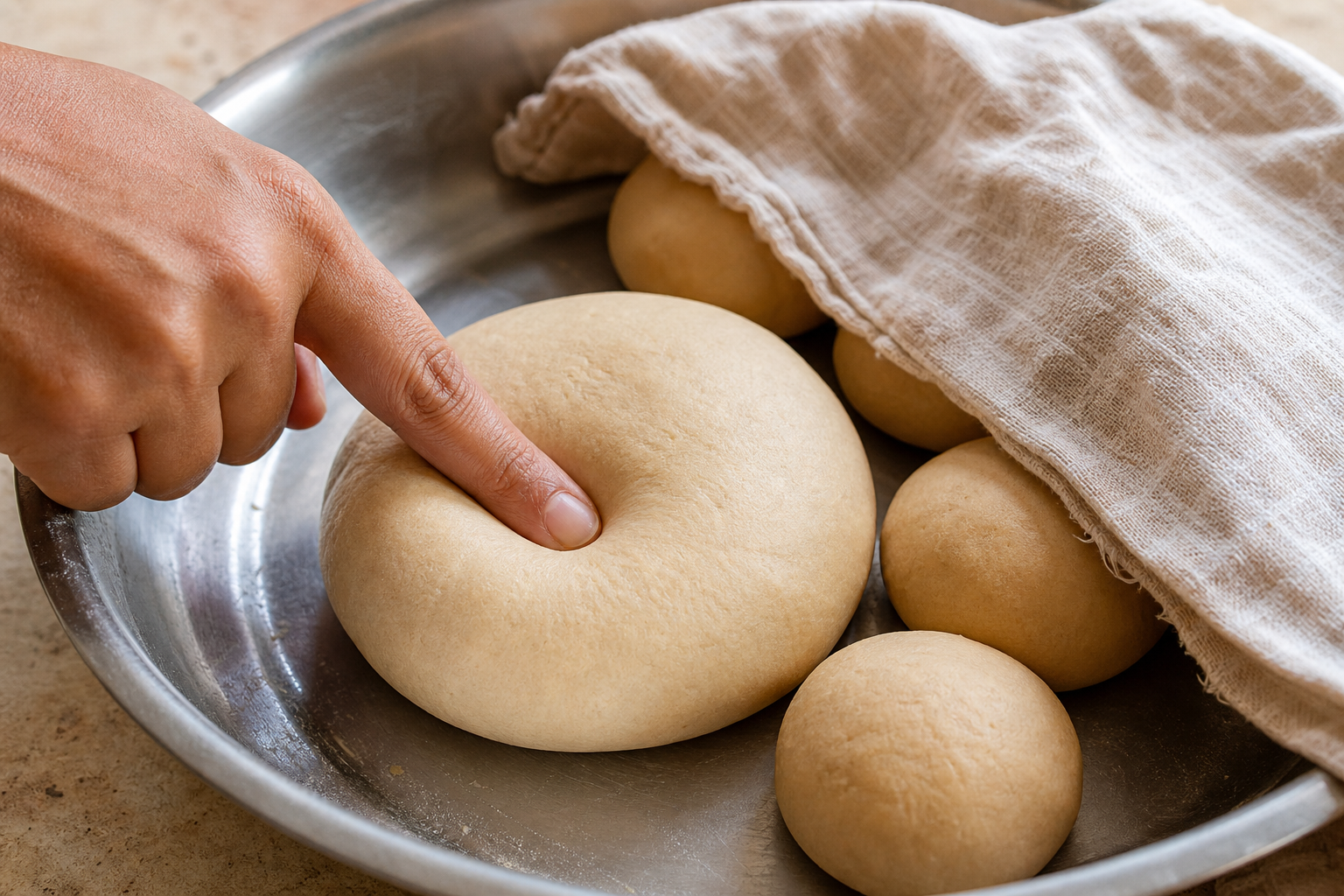
Chapati puffs because heat turns water in the dough into vapor. A cohesive dough and an evenly rolled disc allow that vapor to separate the upper and lower layers instead of escaping through a thin edge or tear. You are building a temporary pocket for steam, not adding leavening.
- Measure the atta and water. A typical hydration range is 58-62 percent water by flour weight. For 500 grams of atta, that is 290-310 grams of water. Begin near the lower end if your flour absorbs slowly, then add the remainder as needed.
- Knead for cohesion. Work the dough until it becomes smooth and elastic. It should hold together without dry seams, but it does not need aggressive or prolonged kneading.
- Rest for 20-30 minutes. This gives the flour time to hydrate and lets the gluten relax, making the dough easier to roll without springing back.
- Divide evenly. Similar portions cook at a similar rate. This matters when you are trying to establish a reliable serving rhythm.
- Roll with even pressure. Avoid a thick centre surrounded by a paper-thin rim. Steam usually escapes at the weakest point before it can inflate an uneven chapati.
If a disc repeatedly resists rolling, do not fight it with more pressure. Let it rest briefly and return to it. If the edges crack, check whether the dough is too dry or whether loose flour is being added too freely during rolling.
Cook for puff without sacrificing softness
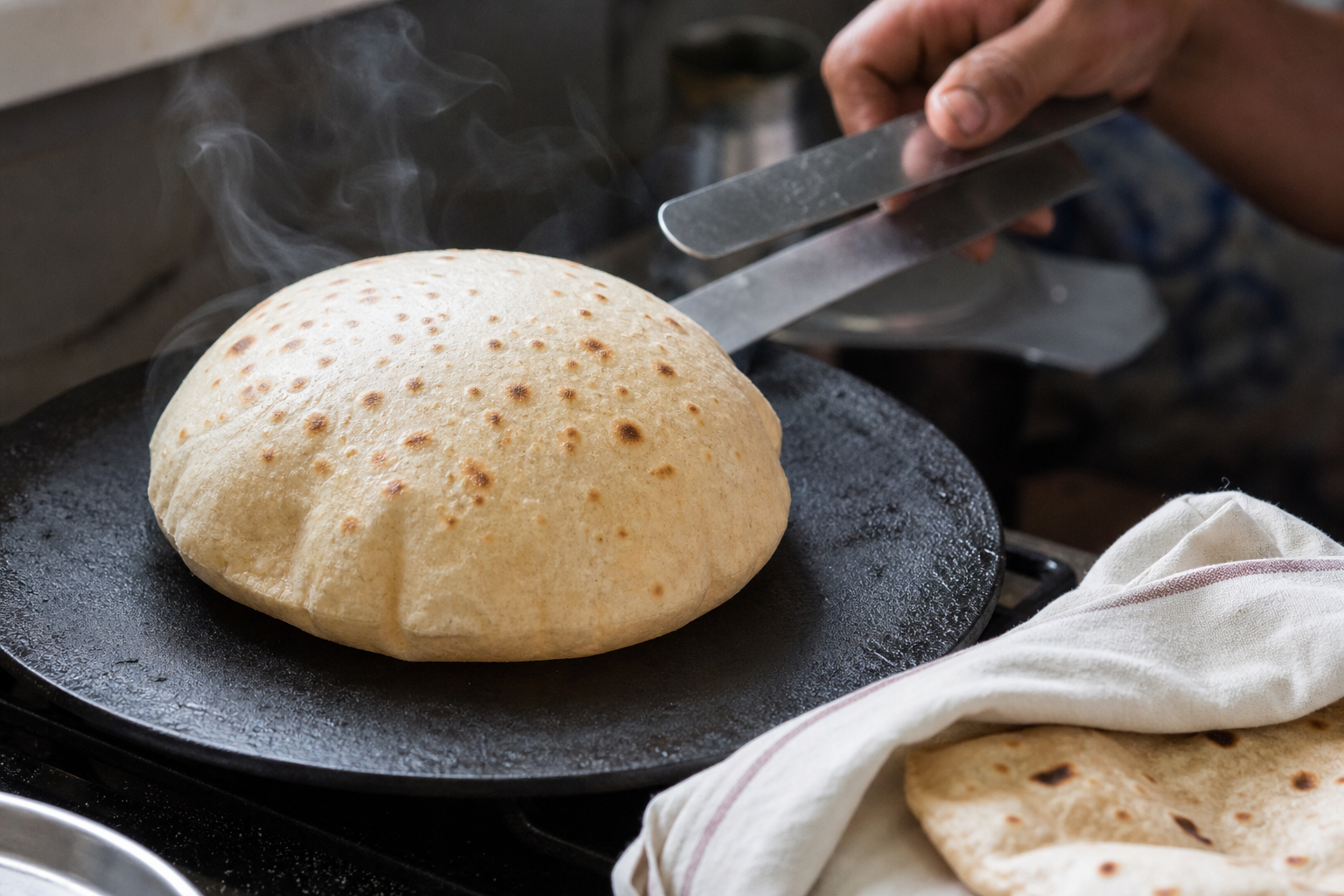
Preheat the tawa before placing the first disc. A cool pan slowly dries the surface without setting the structure needed to contain steam. Excessive heat creates the opposite problem: dark spots and scorching appear before the interior has cooked properly.
- Lay the rolled disc on the preheated tawa and allow the first side to set for roughly 20-30 seconds.
- Flip it and cook the second side for about 30-45 seconds. Watch the surface rather than treating the clock as an absolute rule.
- Finish it briefly over a direct flame or on a hotter zone of the pan. The sudden increase in heat creates the vapor pressure that separates the two layers.
- Remove it as soon as it is cooked and puffed. Brush lightly with ghee if that suits the dietary requirements and devotional custom of the meal.
- Move it directly into the offering or serving sequence instead of leaving it beside the stove.
Use tongs over an open flame, keep loose sleeves secured, and keep cloths away from the burner. Escaping steam can also burn, so do not point a puffed chapati toward your hand or face when pressing it.
Puff is a diagnostic tool, not a spiritual scorecard. If the chapati remains flat, first inspect the rolling: thick and thin patches interrupt the steam pocket. If it scorches before expanding, reduce the heat or shorten the earlier stages. If it emerges stiff, the tawa may be too cool, the flips may be late, or the bread may simply be waiting too long before service.
Do not confuse inflation with the method used for puri. Puri develops its shell through deep-frying, while chapati is dry-cooked and inflated by steam inside a lean dough. A chapati may briefly look like a balloon, but it should settle into a soft, flexible round rather than retain a crisp, oil-fortified shell.
Turn kitchen timing into seva
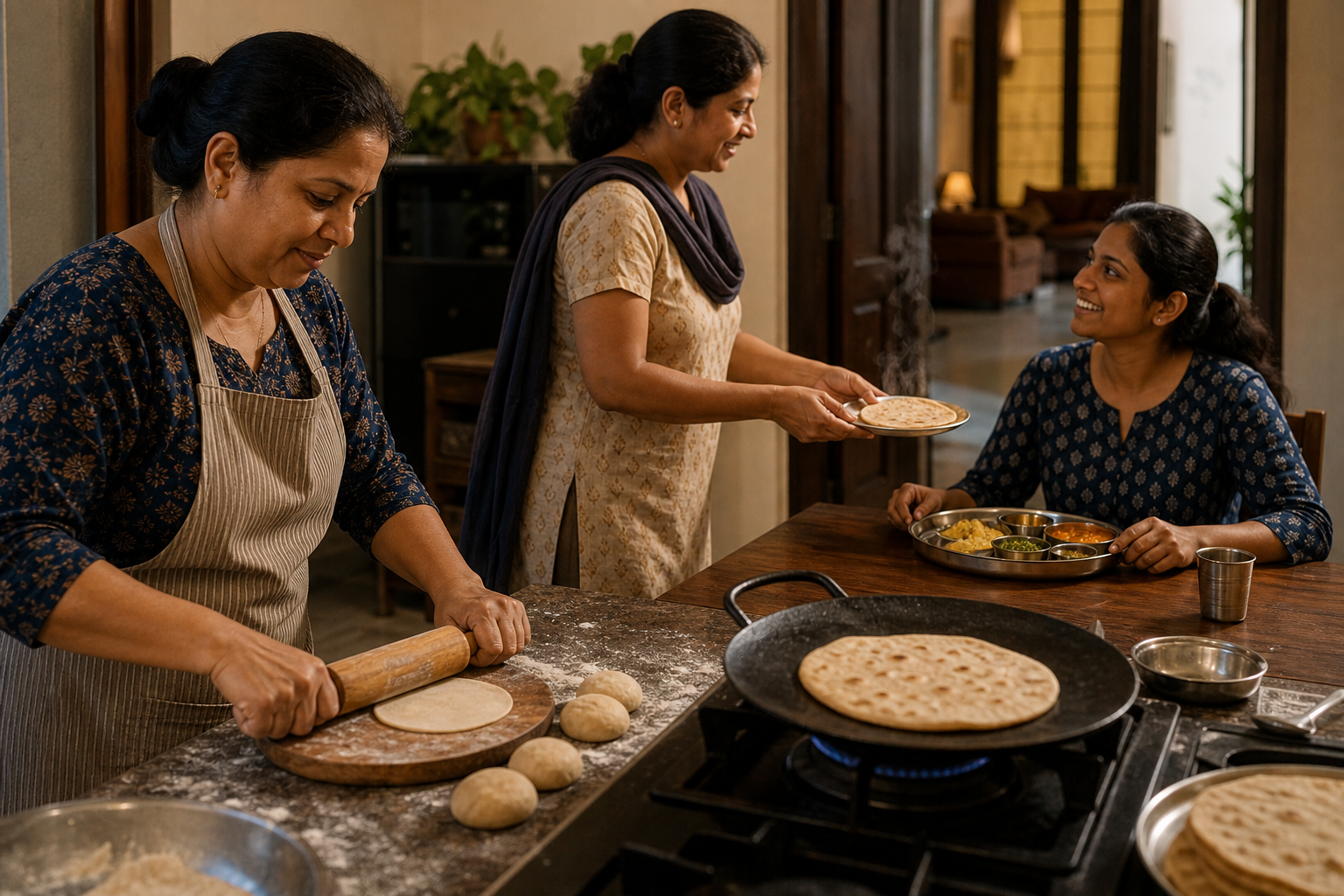
The most difficult part of hot chapati service is often not kneading or rolling. It is coordination. If the dal is unfinished, the plates are elsewhere, or the recipient has not yet sat down, your first rotis will cool while everyone waits. Treat readiness outside the tawa as part of the recipe.
- Finish the rest of the meal first. Have accompaniments ready, the eating place prepared, and the serving vessels in position before cooking the first chapati.
- Shorten the route. Place the rolling area, tawa, finished plate, and server in a safe sequence. Devotional urgency is not a reason to run across a polished floor.
- Assign roles for a group meal. One person can roll, one can cook, and another can carry the chapati promptly. If only two people are available, combine rolling and cooking while keeping a dedicated server.
- Cook to the pace of eating. Send one or two hot chapatis at a time rather than producing a complete stack that cools before it is needed.
- Protect the ritual sequence. When chapatis are intended for a deity offering, arrange the rest of the presentation in advance and follow the established temple or household procedure. Promptness should support the offering discipline, not override it.
This same attention appears in different forms across Dharmic life. Vaishnava kitchens connect sattvic preparation and timely offering with prasadam. Sikh langar keeps rotis moving so each guest receives fresh food with equal dignity. Jain households may join freshness with disciplined daytime preparation, while Buddhist monastic meals place value on simplicity, timing, and mindful receiving. These practices are not interchangeable ritual systems, but they show how ordinary food work can carry respect.
Seva also changes how you respond when something goes wrong. You correct an uneven disc instead of becoming irritated with the person who rolled it. You adjust the flame instead of hiding a scorched surface under ghee. You serve the properly cooked flat chapati instead of delaying the meal while chasing a dramatic puff. The recipient’s well-being remains more important than the cook’s performance.
Key takeaways
- Use 58-62 percent water by flour weight, knead until cohesive, and rest the dough for 20-30 minutes.
- Roll evenly so expanding steam can separate the two layers without escaping through a weak edge.
- Use a properly heated tawa, flip promptly, and finish with direct flame or a hotter pan zone.
- Prepare the meal, place settings, and serving route before the first chapati reaches the tawa.
- Judge success at the plate: the chapati should arrive cooked, soft, fragrant, and hot enough to express attentive care.
At your next meal, choose one improvement you can repeat: weigh the water, even out the rolling, preheat the tawa fully, or station a server beside the stove. Once technique and timing become dependable, each hot chapati can carry the quiet message that the person receiving it was worth your full attention.