
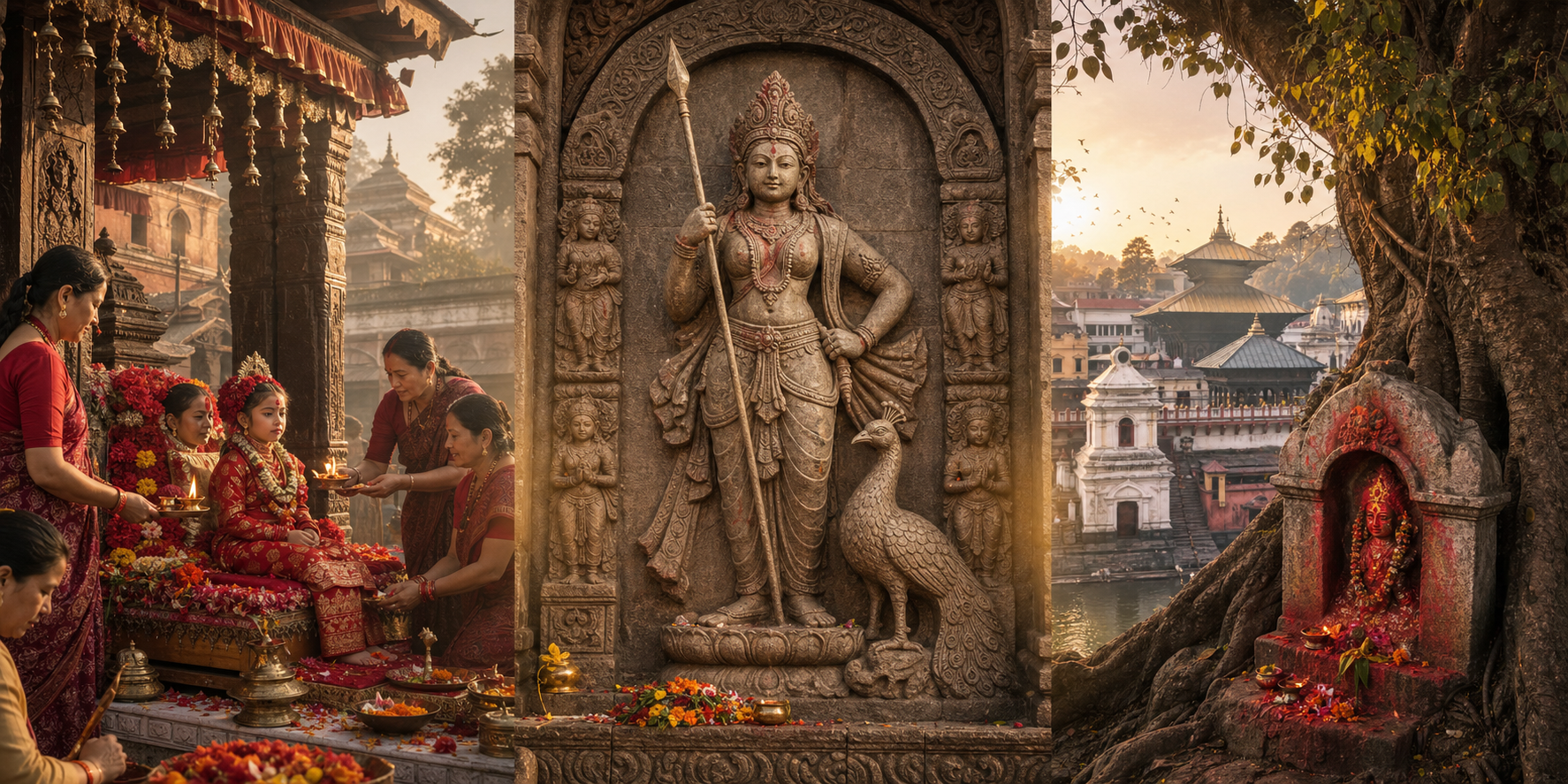
You hear of Kumari during Navaratri, see Kaumari in a Matrika panel, and encounter Pingaladevi in the sacred geography around Pashupatinath. Each belongs within the world of Shakti, but treating the names as interchangeable can make you misread both theology and ritual.
The practical question isn’t which form is the real Goddess. It is what kind of divine presence is being invoked here. Once you separate a canonical deity from a temporary ritual seat, an energetic function, and a place-bound manifestation, unfamiliar names become much easier to approach respectfully.
Begin by asking what kind of form you are meeting
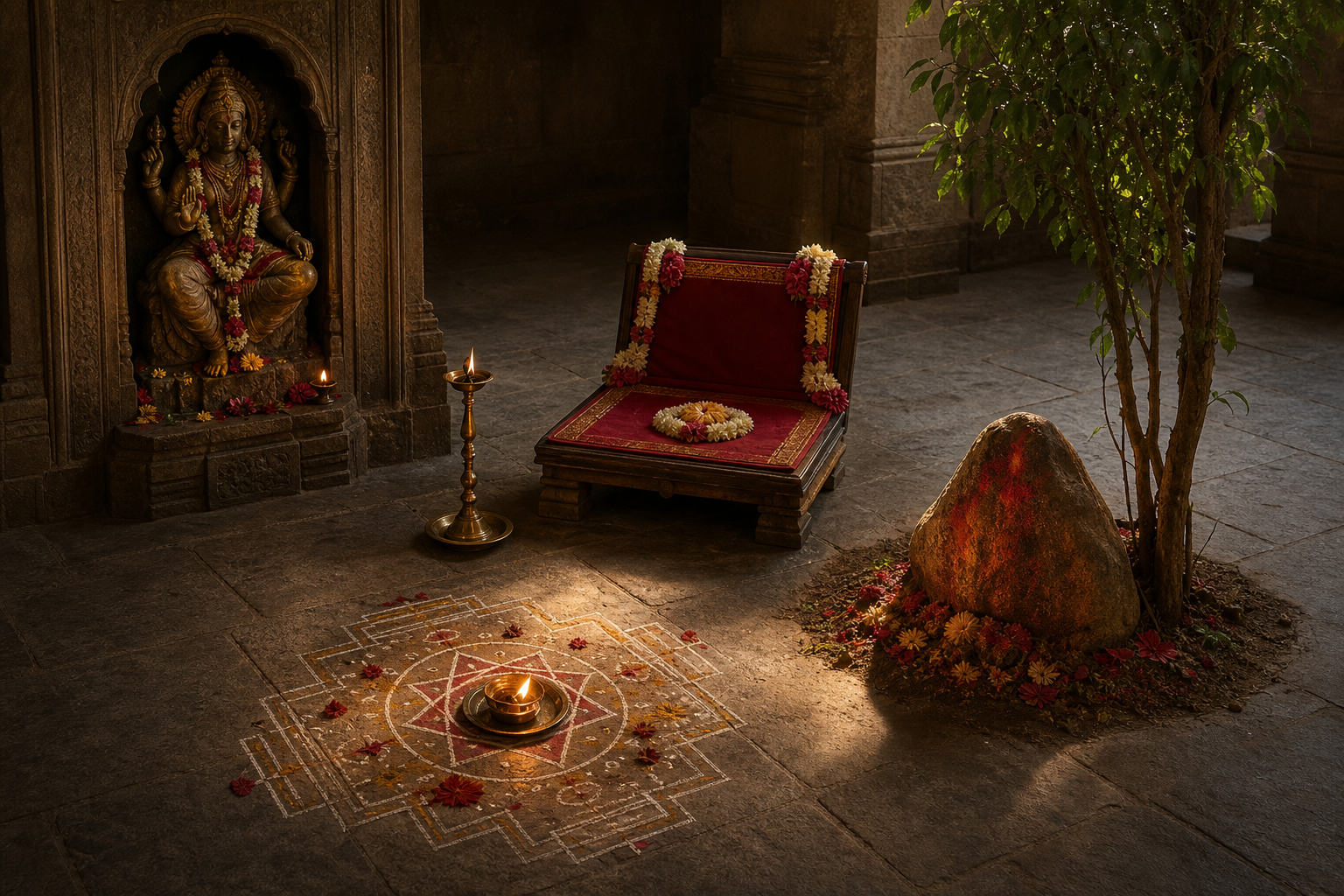
The word form can conceal several different relationships. A name may identify a deity with established iconography. It may describe a person who embodies Devi for a limited rite. It may express what divine power does, such as protect, dissolve, or purify. It may also locate that power within a temple, direction, river, or ritual landscape.
| Kind of form | Example | What you should notice |
|---|---|---|
| Temporary ritual seat | Kumari | In Kumari or Kanya Puja, a pre-pubescent girl is received as an invited seat of Devi for a bounded rite. Hospitality, protection, gratitude, and respectful release are part of the worship. |
| Canonical deity | Kaumari | Kaumari is the Shakti of Kumara, also known as Skanda or Kartikeya, and one of the Matrikas. Her identity continues beyond any single ceremony. |
| Theological function | Pingaladevi | Within the Pashupatinath setting, she redirects Aghora’s southern fire from destructive excess toward disciplined purification and clarity. |
| Sacred-geographic presence | Pingaladevi near Pashupatinath | Direction, cremation grounds, the Bagmati, and the wider Kathmandu Valley mandala help define how her power is understood. |
These aren’t airtight boxes. Pingaladevi, for example, is simultaneously a goddess, a theological interpretation of transformative heat, and a presence situated within a particular sacred landscape. The categories are diagnostic tools: they tell you which questions to ask before assuming that one familiar ritual applies everywhere.
Use three checks when you meet an unfamiliar name:
- Ask whether the name describes an age, condition, or ritual capacity. Kumari means maiden and often indicates a ritual role or contemplative quality.
- Look for a stated relationship or divine ensemble. Kaumari means belonging to Kumara, while her place among the Matrikas confirms that you are dealing with a distinct deity.
- Notice whether place, direction, or cosmic action dominates the explanation. When south, fire, dissolution, and Pashupatinath appear together, the local theology is doing essential work.
Read iconography, setting, and ritual action together
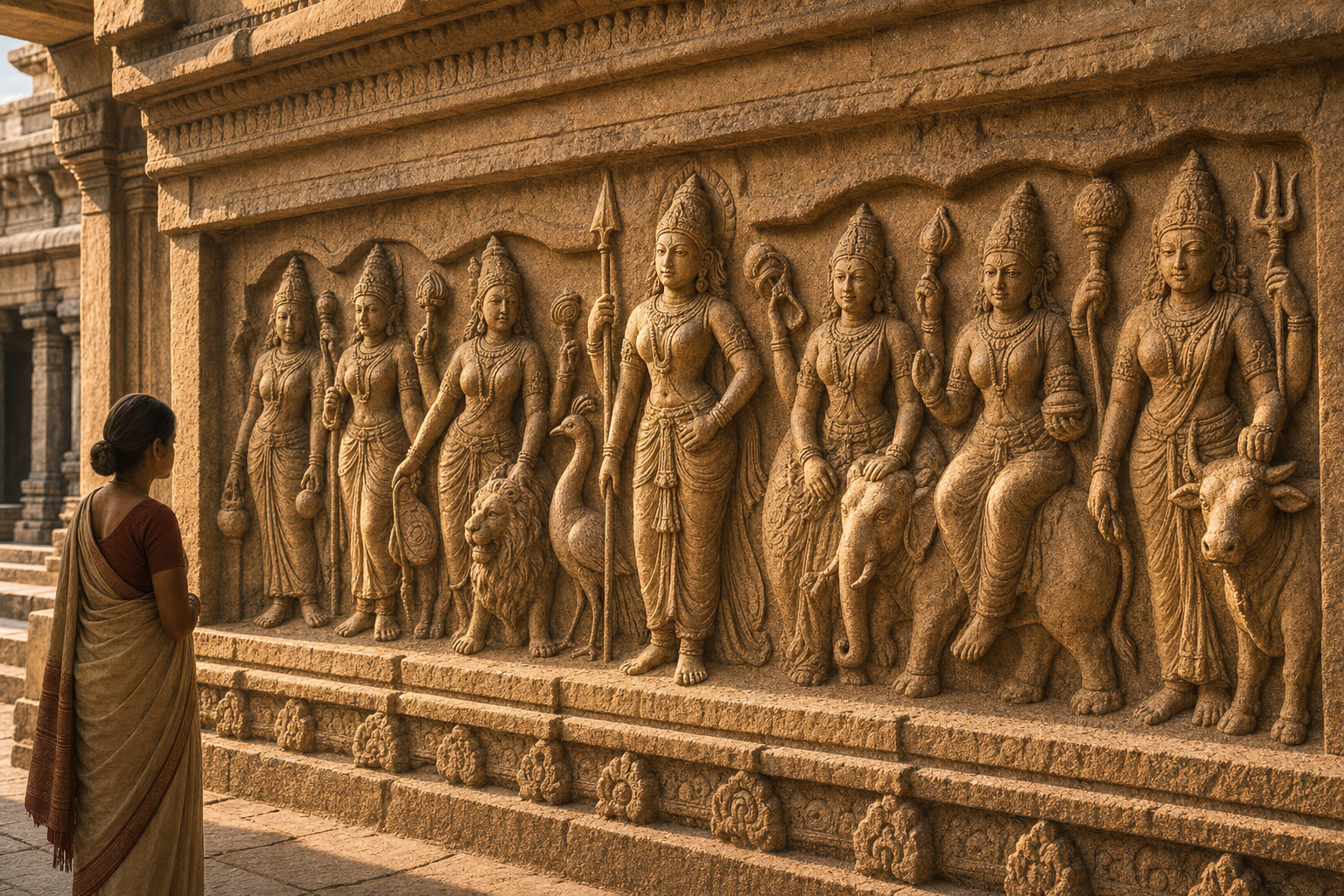
An emblem can narrow an identification, but it rarely settles the matter by itself. Read three things together: what you see, where you see it, and what worshippers are doing.
Kaumari’s visual language commonly includes the peacock, the spear or vel, and sometimes the cock-standard. Her position among Brahmani, Maheshvari, Vaishnavi, Varahi, Indrani, and Chamunda is another strong clue. Narasimhi may join them in an eightfold grouping. These relationships express disciplined protective power, not aggression for its own sake. The vel points toward clarity capable of piercing confusion and fear.
Kumari Puja works differently because the child isn’t an object in an iconographic catalogue. The identifying grammar is the ritual sequence: invitation, reverent reception, offerings, food, gifts, protection, gratitude, and release. The child’s wellbeing is therefore integral to the rite rather than an administrative concern outside it. If ceremonial ambition conflicts with her comfort or dignity, the ceremony has already missed its theological point.
With Pingaladevi, landscape functions almost like iconography. The south-facing current of Aghora, cremation fire, the Bagmati, lamps, and red-hued offerings form a connected vocabulary. Fire isn’t denied or extinguished. It is steadied so that an encounter with mortality can produce insight rather than despair. A red goddess elsewhere may carry a different relationship, so colour alone is never enough.
The name Pingala also recalls the right-sided solar channel of yogic anatomy, associated with activity, warmth, and clarity when balanced. That resemblance doesn’t make a temple goddess and a breathing technique identical. It identifies a shared symbolic field. You can understand the connection without treating the deity’s name as permission to begin an unsupervised breath discipline.
Match your practice to the form, not merely the name
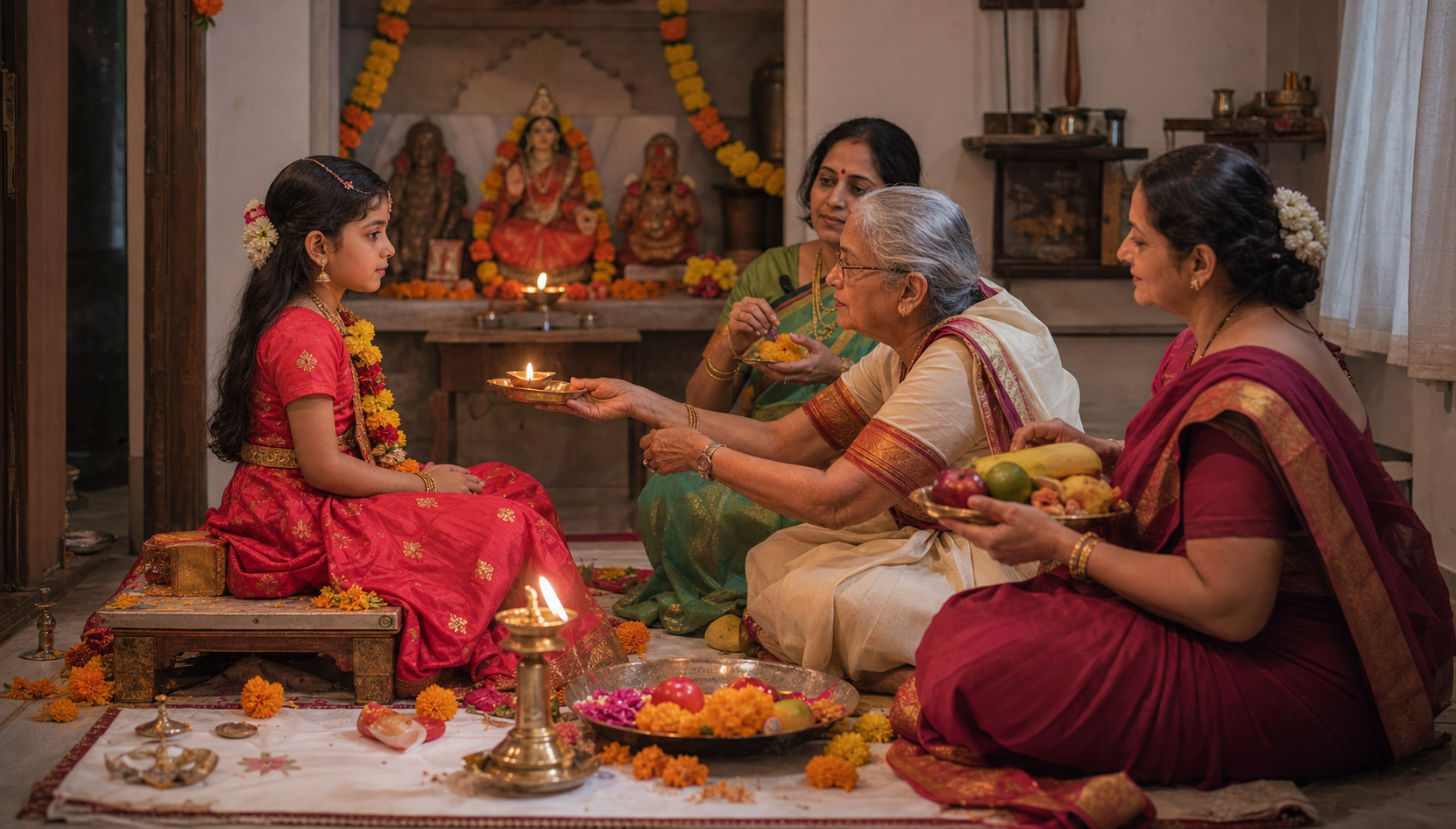
Recognising a form doesn’t automatically authorise every practice associated with it. Public darshan, a lamp, a respectful bow, a lineage mantra, a yantra installation, and deliberate breath control don’t all require the same preparation. Use this sequence before acting:
- Confirm the immediate context. Record the exact spelling, temple or festival, associated deities, direction, implements, and ritual actions. Kumari and Kaumari are close in sound but not in meaning.
- Identify the ritual level. Separate ordinary devotional reverence from practices involving specialised mantras, yantras, kavacas, initiation, or deliberate changes to breathing. Seek qualified lineage guidance for the latter.
- Protect the participant. In Kumari Puja, arrange the rite around the child’s willingness, comfort, nourishment, safety, and dignified send-off. Worship of the vulnerable must increase their security beyond the ceremonial moment.
- Name the ethical fruit. Let Kumari sharpen your reverence for girls, Kaumari strengthen courageous protection without cruelty, and Pingaladevi teach you to turn emotional heat into disciplined action.
This approach also prevents symbolic enthusiasm from becoming ritual improvisation. You may meditate on Kaumari’s protective resolve without inventing a mantra. You may understand Pingaladevi as the transformation of fierce energy without attempting right-nostril breathing. You may honour the Kumari principle without placing a child in a public role for which she hasn’t been properly prepared and cared for.
Let the unity of Shakti preserve real differences
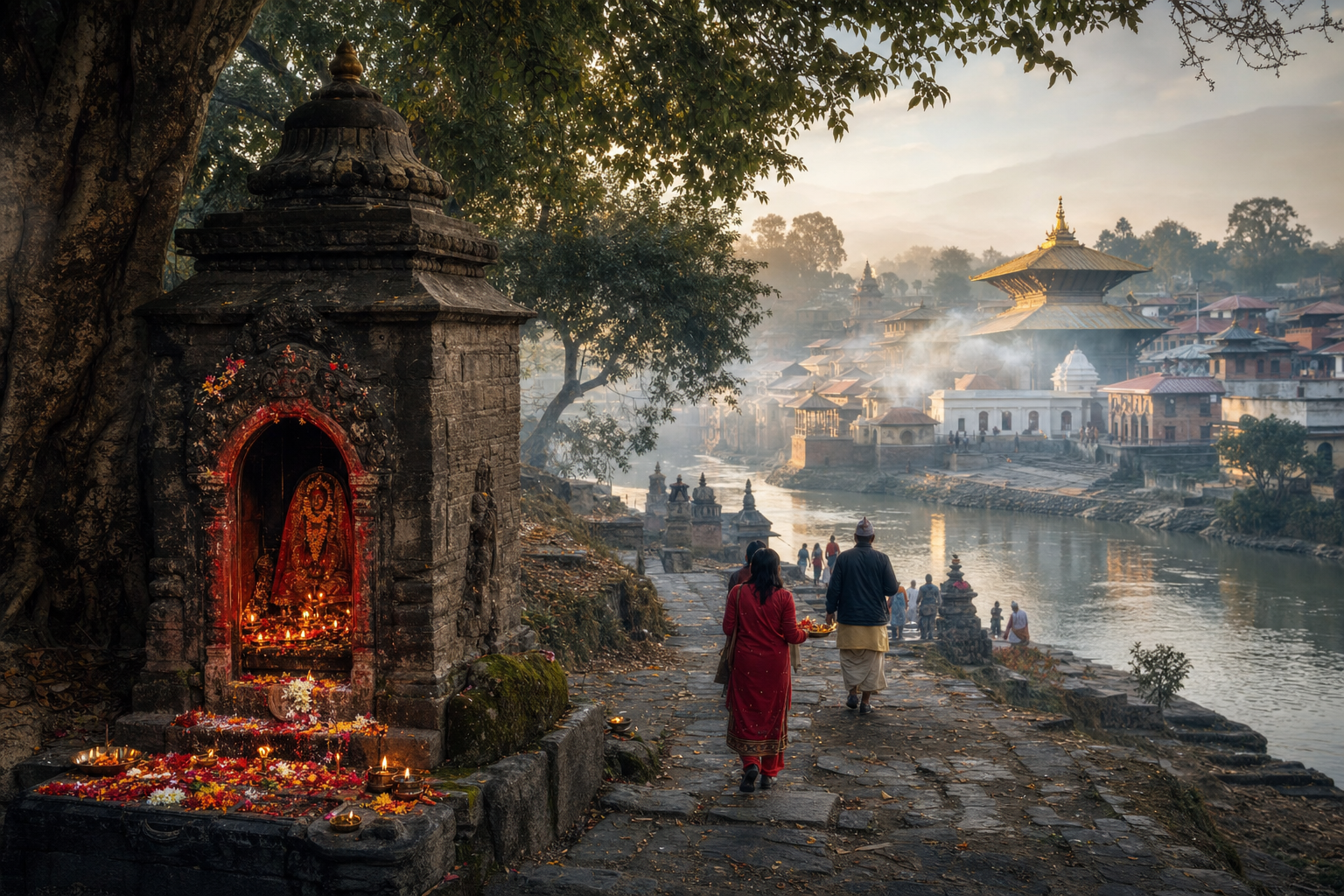
One Shakti doesn’t mean one generic ritual. Unity belongs to the divine ground; distinction appears through relationship, function, embodiment, and place. Flattening those differences doesn’t honour oneness. It removes the very grammar through which Shakti becomes intelligible.
The difference between Kumari and Kaumari begins in Sanskrit itself. Kumari denotes a maiden, while Kaumari denotes that which belongs to Kumara. The first can name virgin consciousness or a girl serving as Devi’s temporary seat. The second identifies Skanda’s Shakti and the martial Mother within a recognised divine ensemble. Similar sound doesn’t override morphology, iconography, or ritual history.
Pingaladevi shows another kind of distinction. She isn’t simply a softer replacement for Aghora. Aghora retains the power of fire and dissolution; Pingaladevi reveals how that force can be aligned, borne, and transformed. Their relationship teaches you to face a fierce reality without either glorifying destruction or fleeing from it.
You can apply the same discipline in wider Dharmic conversation. Traditions may share an esteem for compassion, courageous protection, restraint, and the transformation of harmful impulses. Shared values create meaningful resonance, but they don’t make a Hindu Matrika, a Buddhist yogini, a Jain yakshini, and a Sikh evocation of Shakti ritually interchangeable. Begin with the resonance, then state the theological difference plainly.
Key takeaways
- First determine whether a Shakti name identifies a canonical deity, a temporary ritual seat, a theological function, a sacred-geographic presence, or some combination of these.
- Use Sanskrit morphology as evidence. Kumari and Kaumari sound similar, but one means maiden while the other signals a relationship to Kumara.
- Identify a form through iconography, companions, location, direction, and ritual action together. No single colour or emblem is decisive.
- Don’t turn symbolic association into procedural permission. Specialised mantra, yantra, protective, or breath practices require the appropriate lineage and guidance.
- Look for the ethical fruit: dignity for the vulnerable, courage without cruelty, and fierce energy transformed into clarity.
The next time you meet an unfamiliar form of Devi, don’t rush to match her with a familiar name. Note the spelling, companions, implements, location, direction, and actions of the rite. Those observations will let you ask a temple authority or lineage holder a precise question and receive a much more useful answer.
References
- DharmaRenaissance Blog — Pingaladevi of Pashupatinath: The Shakti Who Tamed Aghora’s Southern Fire in Nepal’s Sacred Mandala
- DharmaRenaissance Blog — Kumari vs Kaumari in Shakta Tantra: Unmasking Virgin Consciousness and the Warrior Mother