
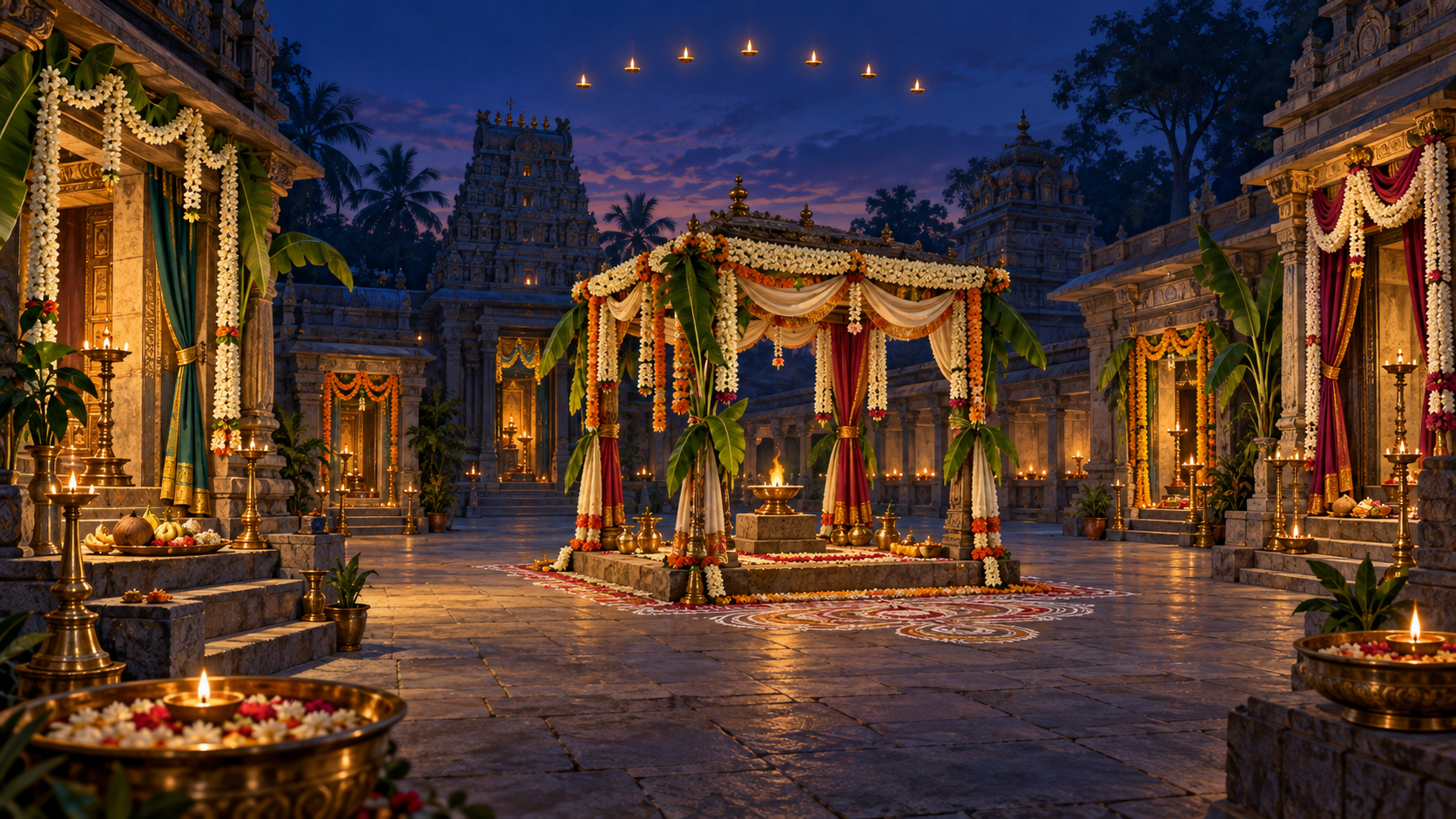
You may see a temple announcement naming Vayu, Agni, Yama, Chitragupta, Kubera or the Navagrahas and wonder what, exactly, is being celebrated. Is it a familiar wedding narrative, a symbolic ceremony, or several distinct traditions gathered under one name?
The reliable answer begins with one distinction: Thirukalyanam names a divine marriage, but the word alone does not tell you the divine couple, the local account or the ritual sequence. You need to preserve that distinction while letting the temple’s own tradition supply the particulars.
What the word Thirukalyanam tells you
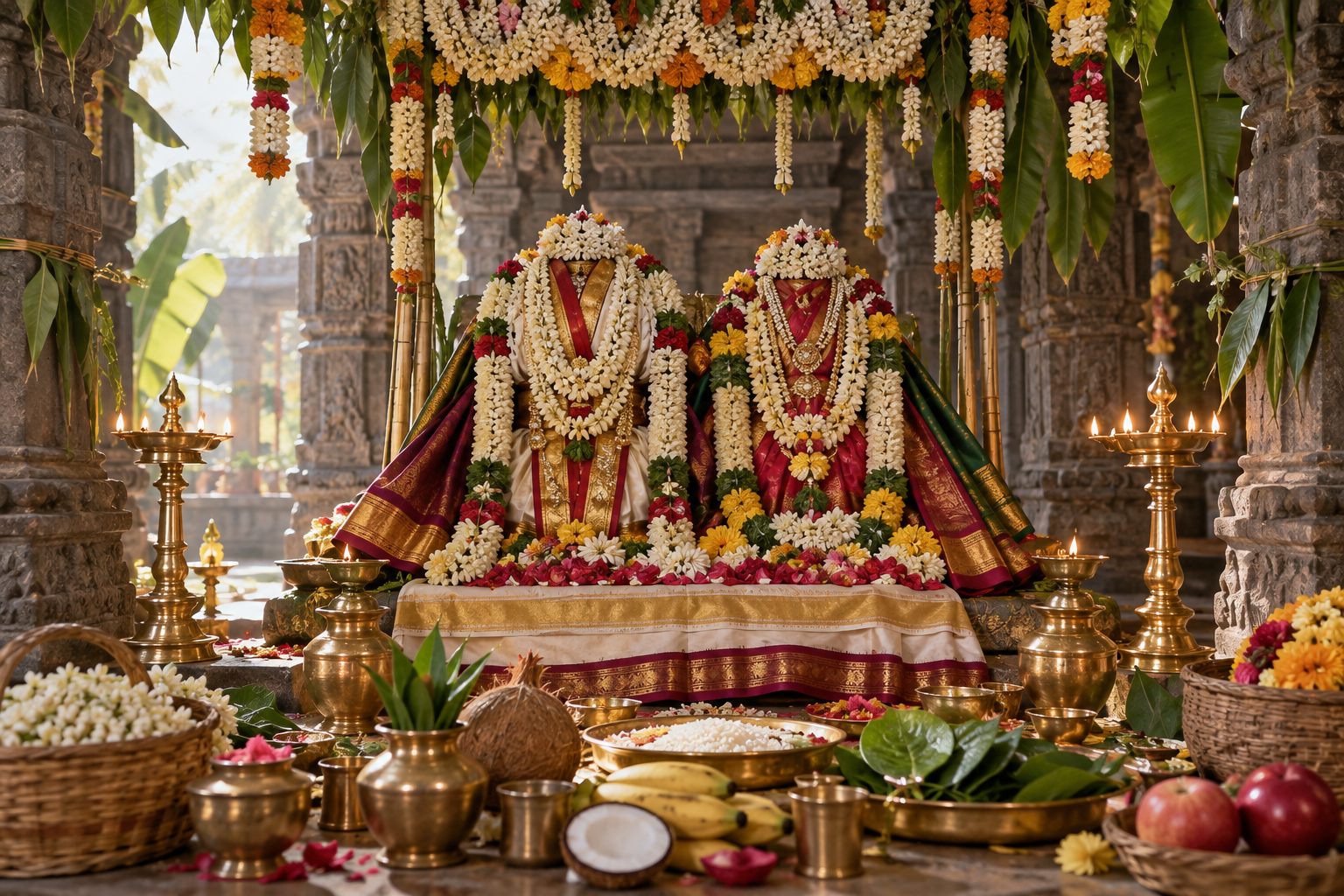
In this devotional vocabulary, kalyanam refers to marriage among mortals, while Thirukalyanam refers to the marriage of immortal deities. That is the first fact to establish when reading an invitation or festival calendar.
This difference changes the question you should ask. A human marriage establishes a social and familial union between two people. A divine marriage celebration belongs to worship. The deity may be approached both as a sacred person and as a cosmic power, so the ceremony can carry theological, communal and auspicious meanings at the same time.
Do not press the event into only one of two modern categories. It is neither necessary to treat it as a record of an ordinary human wedding nor helpful to dissolve it into a vague metaphor. The tradition invites devotees to relate to divine realities through the intelligible language of union, relationship, hospitality and celebration.
Three distinctions will keep your reading precise:
- The name of the observance is not its complete narrative. “Thirukalyanam” identifies the kind of sacred celebration, not every figure, story or rite involved.
- A shared term does not guarantee an identical ceremony. Two temples may use the same word while following different local accounts, divine forms or customary sequences.
- A divine marriage is not merely information about a deity. It is an act of worship in which devotees, priests, images, offerings and a worshipping community may all have defined places.
Why this tradition reaches beyond the best-known divine couples
Many devotees first associate divine marriage with widely narrated pairs. Yet the tradition is broader. Thirukalyanam observances are also associated with Vayu Bhagawan, Agni Bhagawan, Yamadharma Raja, Chitragupta, Kubera and the Navagrahas.
That list matters because these names direct attention toward different dimensions of an ordered cosmos. Vayu is associated with wind and vital movement; Agni with fire; Yama with death, dharma and moral consequence; Chitragupta with the accounting of deeds; Kubera with wealth; and the Navagrahas with the nine planetary powers of Hindu sacred cosmology. Their inclusion shows that the grammar of divine marriage is not limited to one emotional theme or one type of deity.
A useful devotional reading is that cosmic powers are not treated as cold mechanisms. They stand within relationships and a morally meaningful order. Fire, movement, mortality, accountability, prosperity and planetary influence are not isolated compartments in the Hindu vision of life. Thirukalyanam places the divine personality at the centre and allows the community to approach that order through reverence and auspicious celebration.
At the same time, do not flatten all the named figures into one historical or textual category. “Vedic deity” is not a universal label for every divine personality in every later tradition. Agni, Vayu and Yama have clear places in Vedic religious vocabulary; the Navagrahas form a planetary grouping; and Chitragupta and Kubera carry their own bodies of sacred narrative. A festival can bring these names together devotionally without erasing those distinctions.
This is also why you should resist guessing the spouse, narrative or ritual form from the deity’s name alone. The bare name “Kubera Thirukalyanam,” for example, does not authorize you to supply details that the local temple has not provided. Preserve the stated name, then ask which form and tradition are being invoked.
How to read a festival notice without inventing details
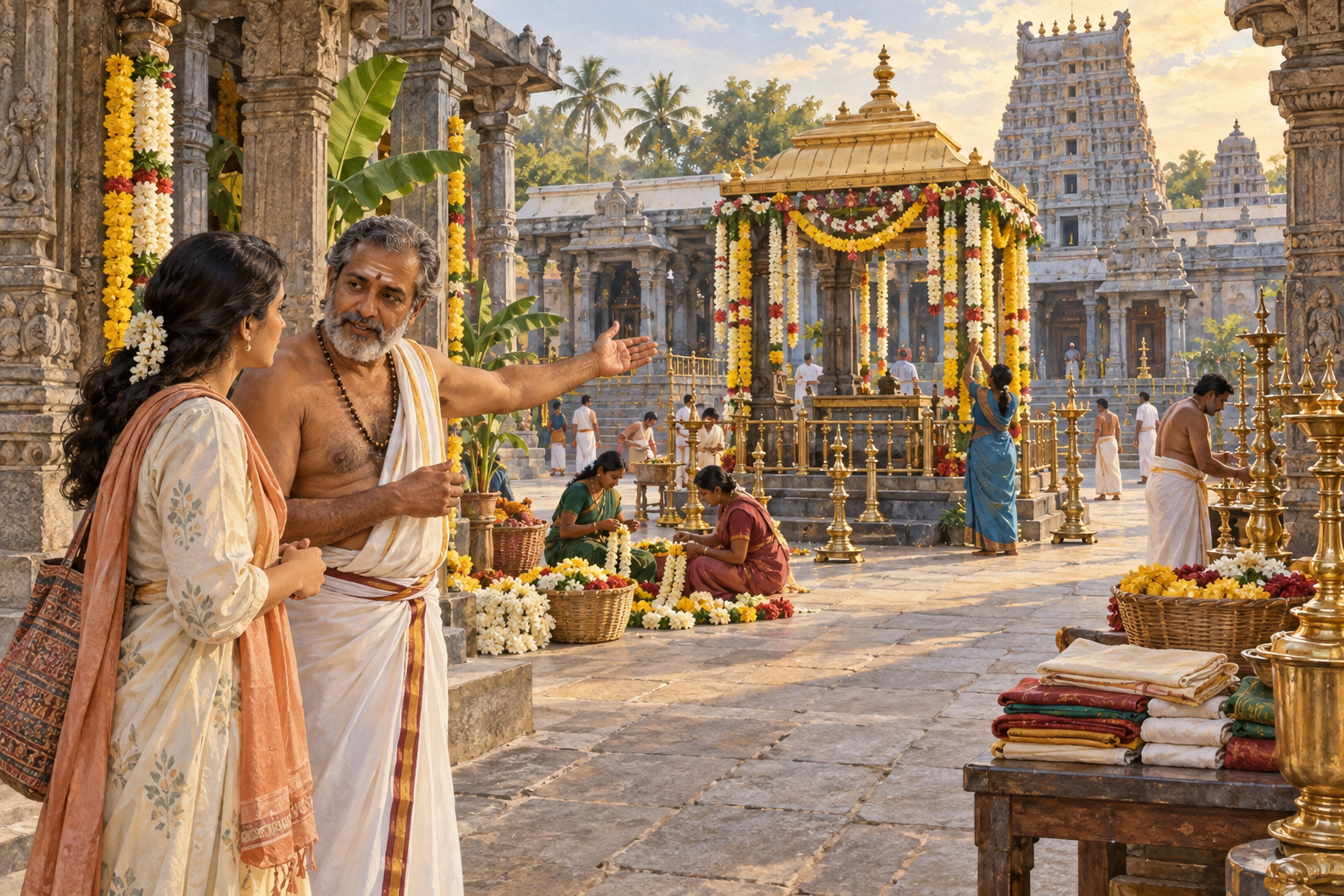
A short announcement often assumes knowledge held by the local community. If you are outside that community, use a simple verification process before describing the observance to anyone else.
- Copy the exact wording. Keep titles such as Bhagawan or Yamadharma Raja, and notice whether “Navagraha” is being used collectively. Do not silently replace a temple’s terminology with a more familiar label.
- Separate what is stated from what you are assuming. Write down the named deity, temple, place and scheduled observance. Put the divine counterpart, local narrative and ritual sequence in a separate “to verify” column unless they are explicitly supplied.
- Identify the local authority. Ask the temple office, archaka or announced organizer which divine forms participate and which temple tradition explains the celebration.
- Determine whether the notice describes one collective occasion or separate observances. A line containing several divine names can be misread as a single wedding involving them all. Confirm the structure instead of inferring it from punctuation.
- Ask how devotees may participate. Find out whether there is a sankalpa, an approved offering, a procession, darshan arrangements or another locally defined role. Do not assume that practices from a different temple transfer unchanged.
Four direct questions usually uncover what a short notice leaves unstated:
- Which divine forms are represented in this Thirukalyanam?
- What local sacred account or temple tradition gives the observance its meaning?
- Is this one collective festival or a series of separate celebrations?
- What should a visiting devotee bring, do or refrain from doing?
If you are preparing a calendar entry, community message or social-media caption, publish only the answers you have verified. Retain transliterated names where translation would blur a distinction. “Yamadharma Raja,” for instance, communicates more than reducing Yama to a one-word label, because it keeps dharma visible in the title.
The same caution applies to home worship. A festival title is not a complete ritual manual. If the rite is not already part of your family’s sampradaya, use the prayers and forms of worship you have actually received, or seek guidance from a competent priest connected with the relevant tradition. Do not fabricate a marriage sequence from fragments found in unrelated celebrations.
How to participate with attention and respect
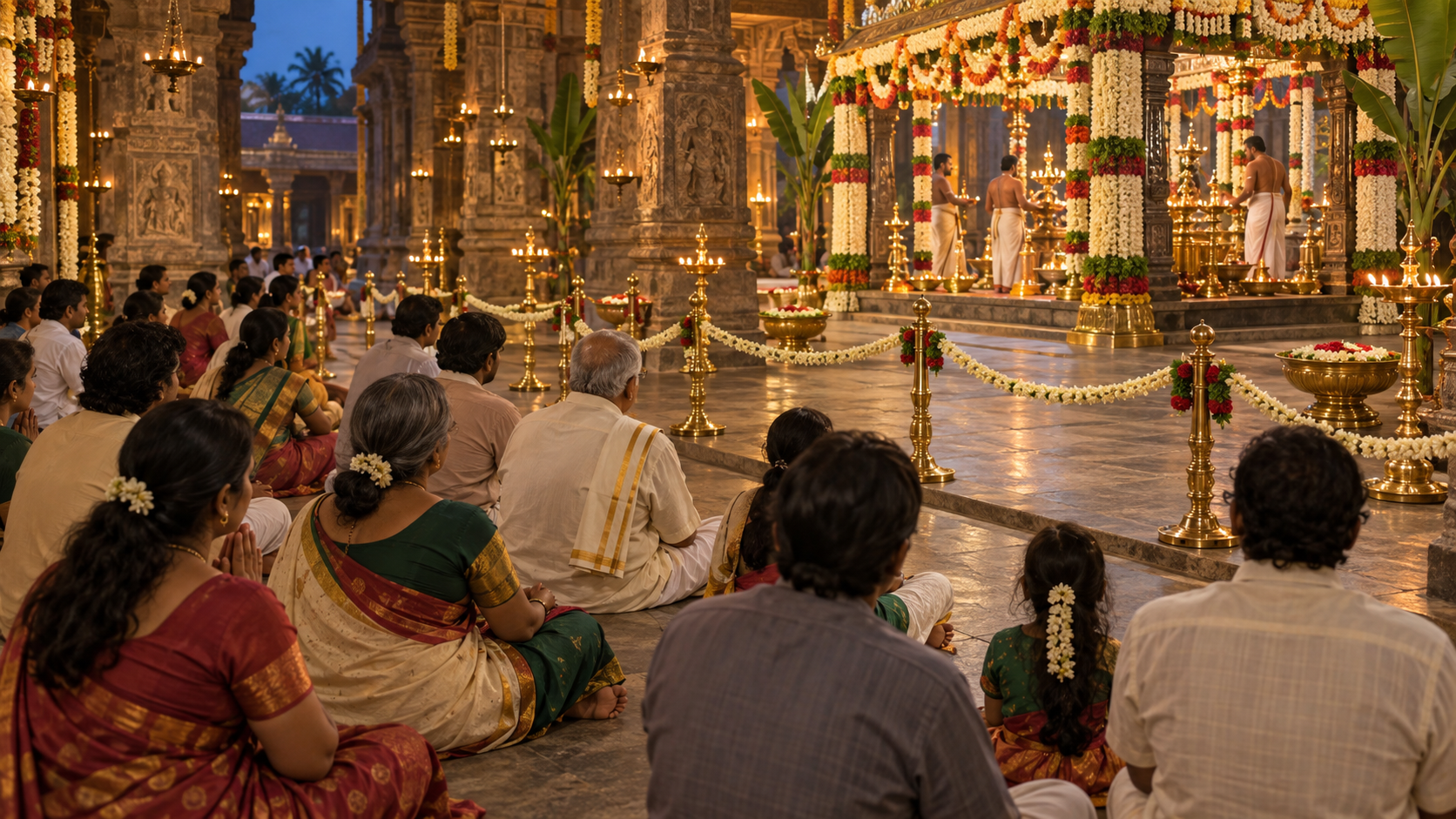
You do not need to know every theological detail before attending. You do need to let the host temple define the observance. That begins before you arrive.
- Confirm the practical details. Check the temple, date, starting time and any separate time given for darshan or procession. Do not assume that the most prominent time on a poster is the moment visitors should arrive.
- Ask about local expectations. Clothing, footwear, seating, photography and offerings are governed by the temple’s practice. A brief question is better than relying on habits learned elsewhere.
- Bring only accepted offerings. If the announcement does not specify what devotees may bring, ask. Unrequested items can create work for the people conducting the worship.
- Follow the ritual rather than staging your own. Let the archakas and temple volunteers direct movement, darshan and distribution of prasada. Avoid blocking the view or crossing a ritual boundary for a photograph.
- Listen for the divine names. Even when you do not understand every mantra, the names and titles can show which forms are being invoked. Compare what you hear with the wording of the announcement.
- Save interpretive questions for an appropriate moment. The middle of a rite is rarely the right time to request a long explanation. Ask beforehand or after the immediate duties are complete.
If you are observing from a distance, resist turning the occasion into generic “Hindu wedding” imagery. Record the exact deity names, preserve the word Thirukalyanam, and explain that the detailed form belongs to a particular temple or community unless you have evidence that it is more widely shared.
Several common mistakes are easy to avoid. Do not invent a consort because a name appears without one. Do not treat the Navagrahas as though they were simply interchangeable planets in a modern astronomy lesson. Do not assume that every divine marriage has the same theological emphasis. And do not dismiss local variation as inconsistency; first ask whether different temples are preserving different lineages, narratives or ritual purposes.
Key takeaways
- Thirukalyanam denotes a divine marriage celebration; kalyanam, in the stated distinction, refers to marriage among mortals.
- The term applies more broadly than many devotees realize, including observances connected with Vayu, Agni, Yama, Chitragupta, Kubera and the Navagrahas.
- A festival name does not by itself identify the divine counterpart, local narrative or full ritual sequence.
- The named deities do not all belong to one identical textual or theological category, so “Vedic” should not be used as an indiscriminate catch-all.
- For an accurate account, preserve the temple’s wording and verify the divine forms, local tradition, event structure and permitted participation.
- When attending, let the host temple determine offerings, movement, photography and other practical conduct.
The next time a Thirukalyanam notice reaches you, begin with the exact names rather than a ready-made story. Verify the four missing pieces—divine forms, local account, event structure and devotee participation—and you will be prepared to worship, attend or explain the occasion without stripping it of its particular tradition.
References

Leave a Reply
You must be logged in to post a comment.