
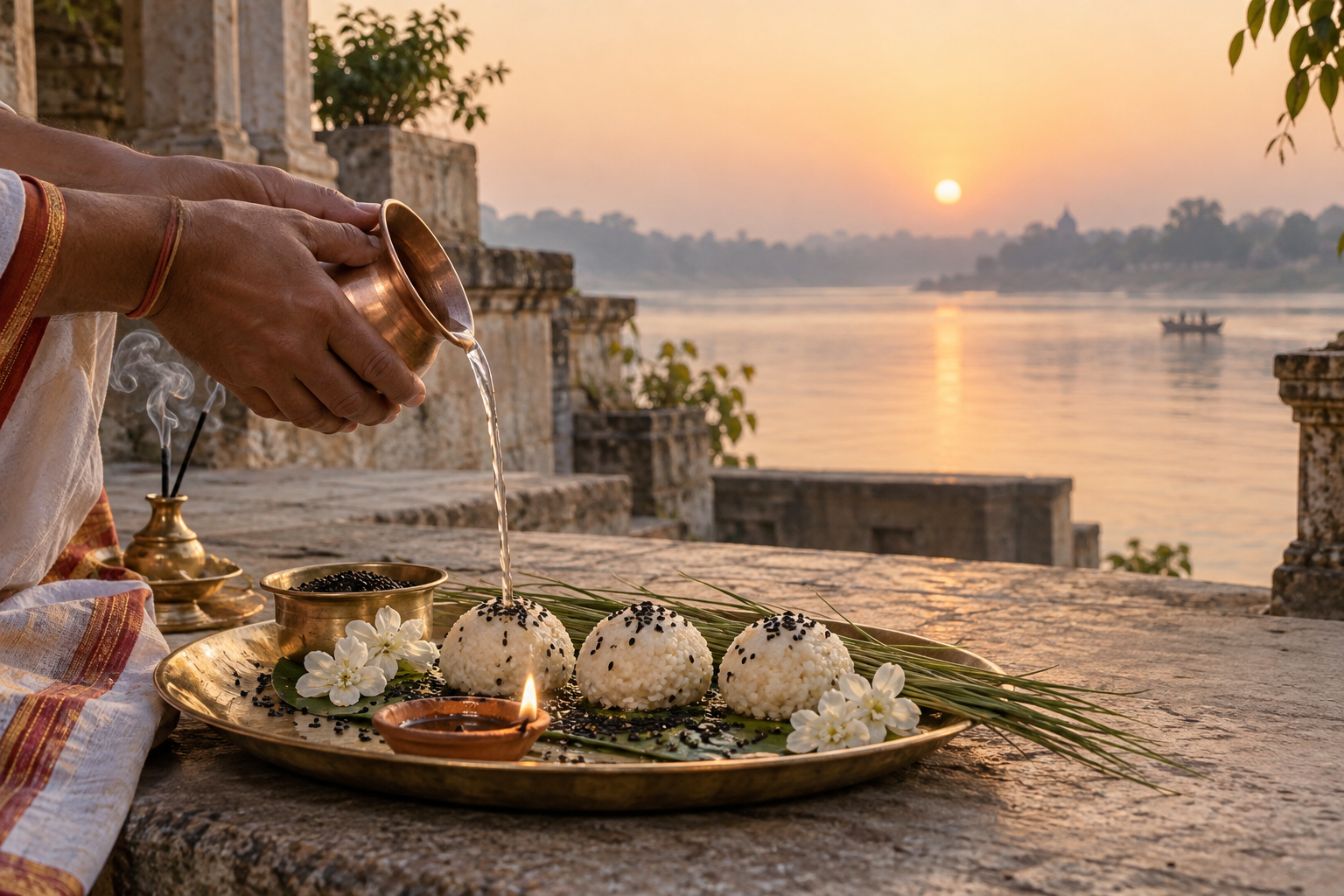
You are trying to settle a practical question: does Pitru Paksha 2026 open on September 26 or September 27, and which date belongs to your family’s rite? Both dates matter, but they do not represent the same tithi.
September 26 is the day assigned to Purnima Shraddha. Pratipada follows on September 27, and Dwitiya on September 28. Use this opening sequence to plan, but choose the observance by the ancestral death tithi and your family’s sampradaya, not by the civil date alone.
Why the opening appears to have two different dates
The apparent conflict comes from the boundary between Purnima and the waning fortnight. Purnima Shraddha falls on September 26, 2026. Pratipada Shraddha, associated with the first tithi after Purnima, falls on September 27.
This distinction matters. If your family’s observance is for an ancestor whose death tithi was Purnima, September 26 is not simply a preparation day. It is the relevant Shraddha date. If the death tithi was Pratipada, the corresponding date is September 27. Dwitiya follows on September 28.
You may also encounter the names Apara Paksha or Mahalaya Paksha. They refer to this ancestral observance period in the calendar material used for these opening rites. A calendar beginning its list with Purnima Shraddha and one beginning the waning fortnight with Pratipada are therefore answering slightly different questions.
Pitru Paksha 2026 opening tithi calendar

| Observance | Civil date | Published tithi transition | What you should do |
|---|---|---|---|
| Purnima Shraddha | September 26, 2026 | Purnima begins at 11:06 PM on September 25 and ends at 10:18 PM on September 26. | If the ancestral death tithi was Purnima, confirm the local performance window for September 26. |
| Pratipada Shraddha | September 27, 2026 | Pratipada continues until 9:00 PM, after which Dwitiya begins. | Use September 27 as the planning date for a Pratipada observance, subject to your local panchanga and family practice. |
| Dwitiya Shraddha | September 28, 2026 | Dwitiya continues until 7:15 PM, after which Tritiya begins. | Use September 28 as the planning date for a Dwitiya observance, again confirming the local ritual window. |
These clock times are useful planning markers, but they are not a location-independent muhurta. A tithi can begin or end partway through a civil day, and the displayed clock time must be read in the context of the calendar’s location. Before fixing the ceremony, check a panchanga calculated for the place where the rite will actually be performed.
Do not select September 27 merely because Pratipada remains until 9:00 PM, or September 28 merely because Dwitiya remains until 7:15 PM. The duration tells you how the lunar sequence crosses the civil calendar; it does not by itself settle every ritual timing rule followed by your lineage.
Choose the date by tithi, not by a familiar anniversary
The three dates are not interchangeable options. Each one is attached to a different lunar tithi. If a record gives only a Gregorian death anniversary, that date alone does not establish whether the corresponding Shraddha is Purnima, Pratipada, or Dwitiya in 2026.
- Identify the ancestral death tithi preserved in your family record, priest’s record, or earlier Shraddha arrangements.
- Match that tithi to the opening calendar: Purnima on September 26, Pratipada on September 27, or Dwitiya on September 28.
- Check the tithi and applicable ritual window in a panchanga for the place of performance.
- Confirm the result with the purohit or knowledgeable elder who understands your family’s sampradaya.
- If the tithi is unknown, provide the date, time, and place of death to the person helping you determine it. Do not guess from the day of the month.
The local check becomes especially important when family members live in different countries. The ceremony should be planned for the place where it will be performed, not automatically copied from a calendar prepared for another location.
What to arrange before the opening rites
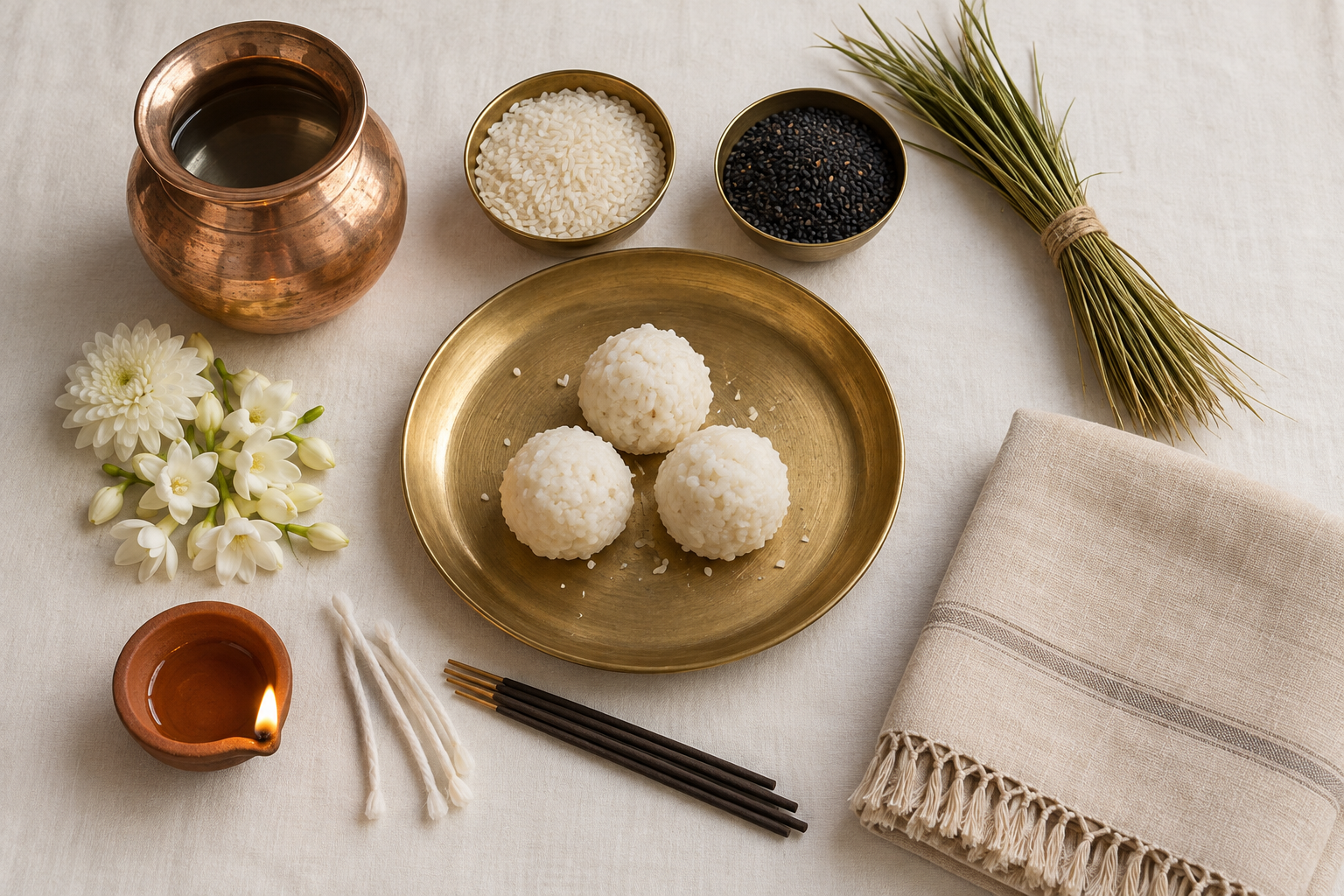
A sankalpa is not a generic prayer that can be moved unchanged from one date to another. It states the intention and calendrical context of the rite. Separate formulations are used for Purnima Shraddha and Tarpana, Pratipada Shraddha and Tarpana, and Dwitiya Shraddha and Tarpana.
That is why changing only the tithi word in a copied sankalpa is a poor substitute for proper guidance. Other calendrical or lineage-specific elements may also need to agree with the actual observance. Arrange the following before the day:
- The intended tithi: Write down whether the rite is for Purnima, Pratipada, or Dwitiya. Do not leave this to a last-minute assumption.
- The place of performance: Give the city or locality to the person calculating the ritual window.
- The karta: Confirm who will perform the rite under your family custom.
- The ancestral details: Prepare the names, relationships, and gotra information used by your family. If something is unknown, say so rather than improvising it.
- The scope of the observance: Ask whether you are arranging Tarpana, a fuller Shraddha observance, or both. The preparation and material list may differ.
- The sankalpa text: Obtain the version appropriate to the date, location, and family tradition. Also decide who will recite it and who will guide the pronunciation.
- The ritual materials: Request one exact list from the officiating purohit. This prevents a generic online checklist from overriding a lineage-specific requirement.
If your household follows an established annual procedure, preserve its order. The calendar should supply the correct tithi context; it should not be used to redesign a family rite without reason. Where memory and internet instructions disagree, pause and resolve the difference with someone competent in that sampradaya.
Key takeaways
- Purnima Shraddha is on September 26, 2026; Purnima runs from 11:06 PM on September 25 until 10:18 PM on September 26.
- Pratipada Shraddha is on September 27; Pratipada continues until 9:00 PM.
- Dwitiya Shraddha is on September 28; Dwitiya continues until 7:15 PM.
- September 26 and September 27 are not competing opening dates: the first is Purnima Shraddha, while the second is Pratipada.
- Choose the rite by the ancestral death tithi and family tradition, then verify the performance window for your location.
- Use a tithi-specific sankalpa rather than mechanically altering a text prepared for another day.
Put September 26, 27, and 28 in your planning calendar now. Then contact your purohit with the ancestral tithi, place of performance, and family tradition. Those three details turn a general date list into a workable plan for the opening of Pitru Paksha 2026.
References
- Hindu Pad – Dwitiya Shraddh Tharpana Sankalpa Mantras | 28 September 2026
- Hindu Pad – Pratipada Shraddh Tharpana Sankalpa Mantras | 27 September 2026
- Hindu Pad – Purnima Shraddha Tharpana Mantras | 26 September 2026
- Hindu Pad – Purnima September 2026 Date, Time

Leave a Reply
You must be logged in to post a comment.