
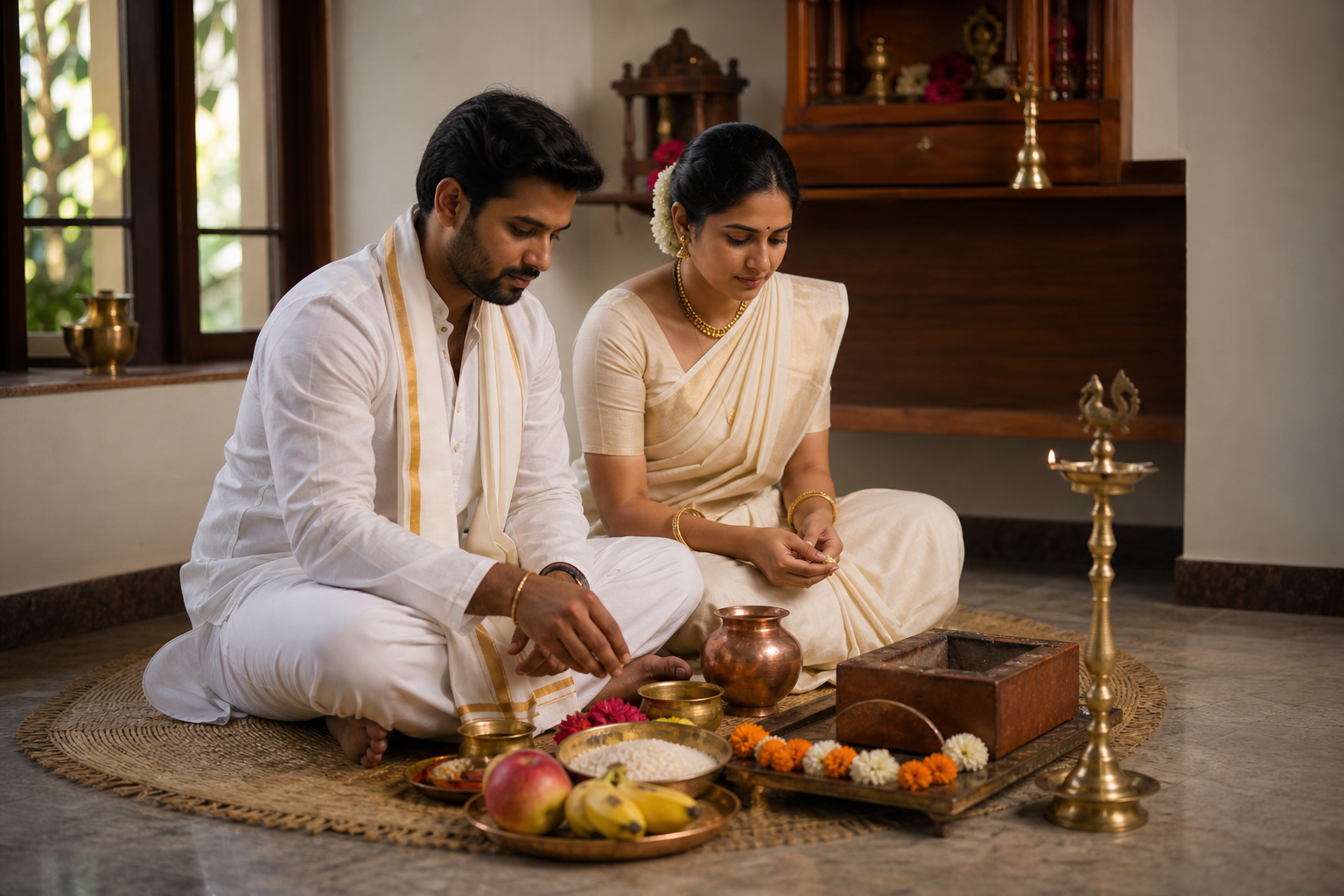
Your wedding calendar says Chaturthi Karman, but the family answers are still vague. Is it a prayer, a homa, an elders’ blessing, a private marital observance, or all of these?
You do not need to turn it into another reception or let relatives manage what belongs to the couple. You need a clear understanding of your family tradition, a simple ritual sequence, and firm respect for consent and privacy.
What the fourth-day rite actually marks
Chaturthi means the fourth, while karman means a ritual act. Also written Caturthikarman, it is a post-wedding observance associated with the fourth day after the vivaha samskara. It marks the couple’s movement from the public wedding ceremonies into the shared life of the grihastha ashrama.
That transition has both spiritual and physical dimensions. The rite acknowledges conjugal union, but reducing it to a deadline for consummation misses its ethical structure. The larger purpose is to begin household life with sacred intention, mutual fidelity, care, responsibility, and the blessings of those who have helped sustain the family.
The opposite mistake is to speak so indirectly that the rite’s physical meaning disappears. Hindu marriage does not treat embodied married life as something outside dharma. Chaturthi Karman brings prayer, household duty, affection, and conjugal life into one framework. The body is not separated from spiritual responsibility, and neither spouse is separated from the duty to respect the other.
Regional, lineage, and family forms differ. Some households keep the day quiet and vrata-like. Some select a muhurta using the local panchanga. Some include snana, a lamp, prayers to Ganesha or the kuladevata, brief mantras, a homa, modest gifts, and ashirvada from elders. These are possible elements, not a universal script that every Hindu family must reproduce.
Key takeaways
- Chaturthi Karman marks the threshold between the wedding ceremonies and lived household partnership.
- The observance is associated with the fourth day, but you should confirm the counting method and any muhurta with your own family priest or knowledgeable elder.
- Purification, deity worship, a lamp or agni, mantras or homa, renewed commitments, and elders’ blessings may be included according to tradition.
- The rite’s private culmination belongs to the couple. Marriage does not remove the need for present, mutual consent.
- A simpler adaptation can retain the rite’s purpose when it preserves sacred intention, family blessings, shared responsibility, and privacy.
Resolve family custom before you finalize the schedule
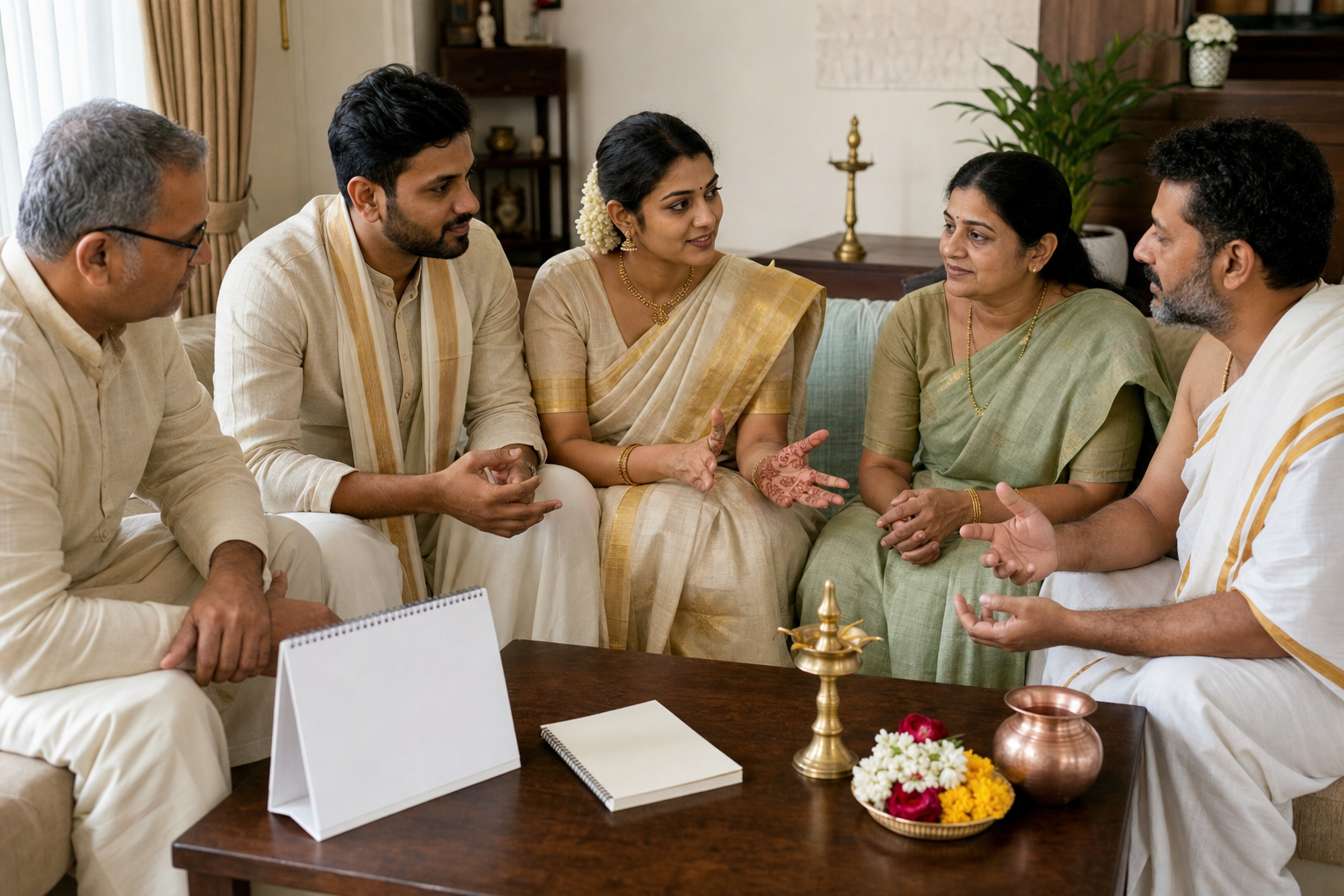
The most common planning problem is not lack of enthusiasm. It is the assumption that one relative’s familiar version is the only correct version. Chaturthi Karman belongs to a network of regional and lineage practices, so settle the ritual authority before ordering materials, inviting people, or promising a particular schedule.
Ask your family priest or the elder who actually knows the tradition these questions:
- How does our family count the fourth day, and is a panchanga-based muhurta used?
- Which elements are required in our practice: snana, a sacred lamp, agni, homa, mantras, offerings, or deity worship?
- Are Ganesha, the kuladevata, or other household deities invoked?
- Who performs each act, and which portions require a priest?
- When do elders offer ashirvada, and who should be present for that portion?
- Does the family observe any simplicity in food or vrata-like discipline?
- Which details are inherited ritual requirements, and which are merely social habits?
- How should the observance be adapted if travel, venue rules, or the couple’s circumstances make the customary arrangement impractical?
Record the answers in a short run sheet. It only needs the date or muhurta, participants, ritual acts, required materials, priestly responsibilities, and the point at which the public observance ends. That final item matters. Without a defined ending, a quiet rite can drift into photographs, teasing, and prolonged social attention precisely when the couple should be allowed to withdraw.
Keep the roles distinct. The priest guides prescribed mantras and ritual procedure. A knowledgeable elder explains family custom. The couple decides its personal commitments and boundaries. No single participant needs to control every part of the day.
A simple sequence that preserves the rite’s purpose
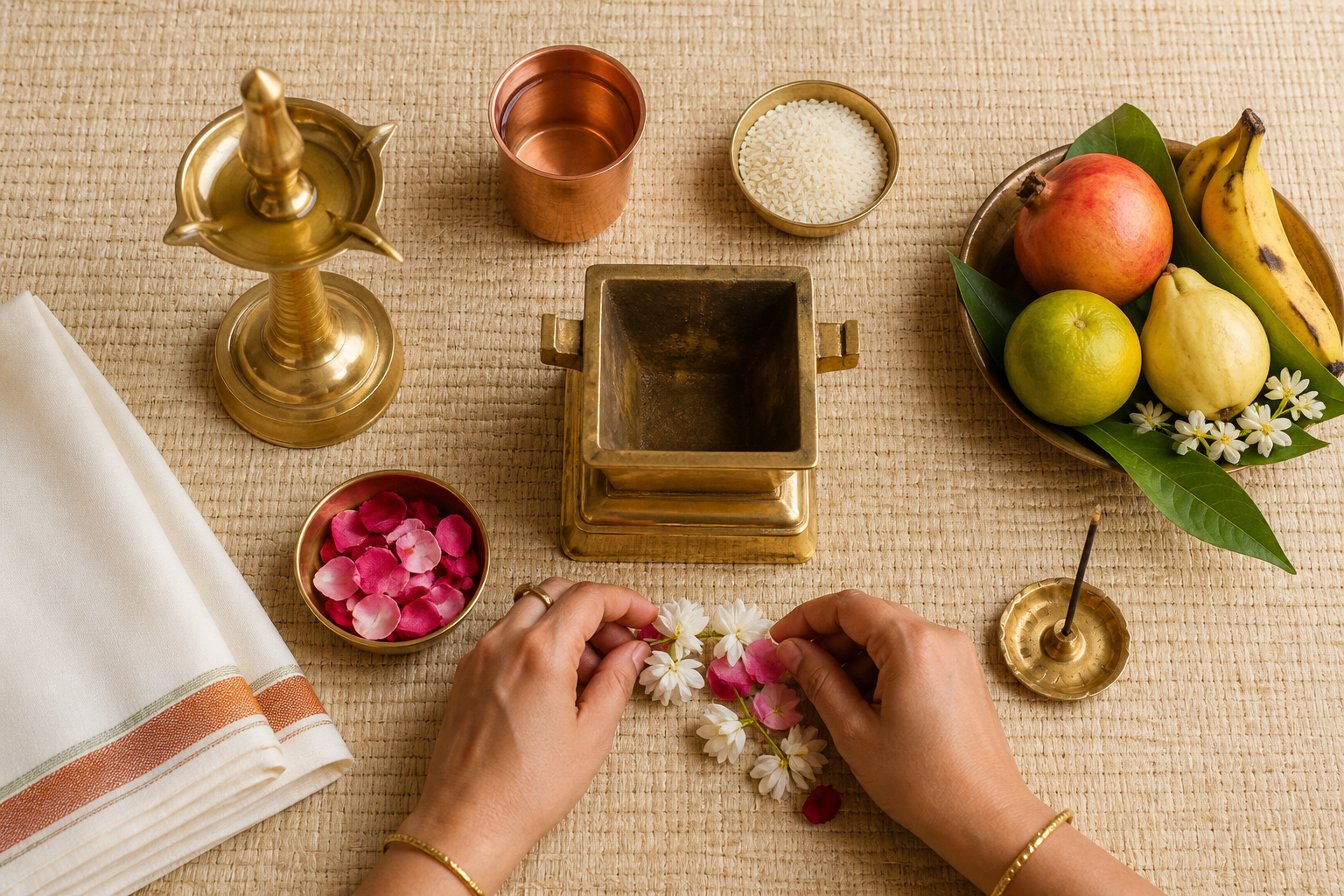
If your tradition does not require an elaborate observance, use a restrained sequence rather than inventing extra ceremonial layers. The following order is a planning framework, not a substitute for lineage-specific instruction.
- Prepare and purify. Set aside a clean, quiet place and arrange only the materials your practice calls for. The couple may begin with snana and suitable dress. The shift from wedding bustle to deliberate calm is part of the point.
- Invoke auspiciousness. Light a sacred lamp or establish agni as the tradition directs. Offer a brief prayer to Ganesha, the kuladevata, or the household deities named by your family practice. If homa is prescribed, let the priest direct it. Do not assume that an improvised ceremony or a generic mantra found online can replace the form your lineage observes.
- Reaffirm the partnership. Where custom permits, the couple can exchange modest gifts or speak concise commitments concerning fidelity, care, companionship, household harmony, and shared responsibility. Personal words can complement inherited mantras; they should not silently replace a required mantra.
- Receive blessings. Elders offer ashirvada for steadiness, harmony, and wise household life. Keep this portion warm but contained. The blessing is the elders’ contribution; interrogation about the couple’s private life is not.
- Close the public observance. Thank the participants and make the conclusion unmistakable. Conjugal intimacy, when mutually desired, takes place outside the audience, photography, commentary, and expectations of the extended family.
A sattvic atmosphere comes from restraint, clarity, and reverence, not the cost of decorations. A clean space, a correctly performed prayer, sincere blessings, and an unhurried couple can carry more meaning than a large program assembled merely because the wedding venue remains available.
Consent and privacy are not optional additions
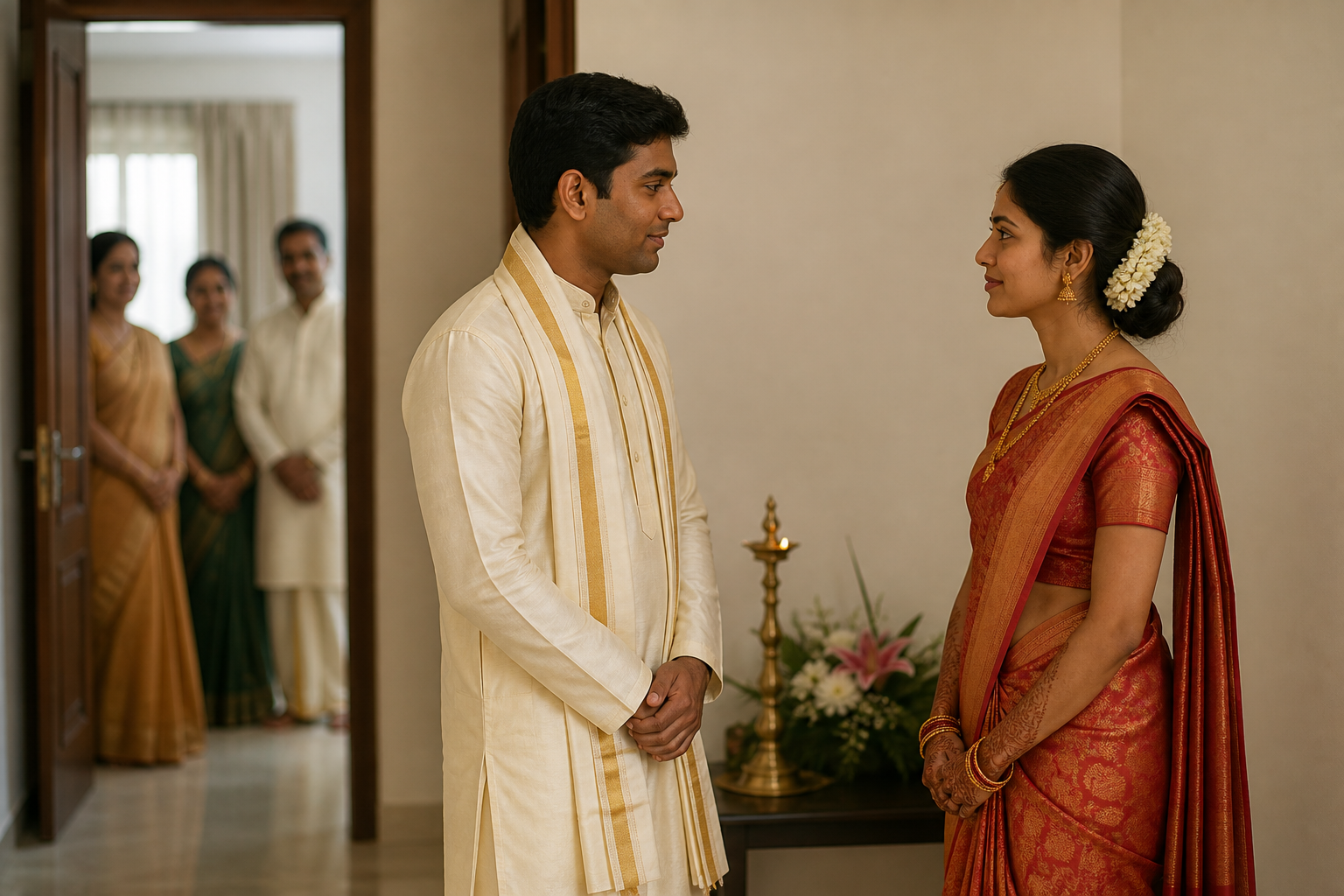
The private culmination of Chaturthi Karman must rest on present and mutual consent. Consent to the marriage ceremony is not automatic consent to intimacy at a particular time. A muhurta can guide a ritual observance; it cannot overrule either spouse’s bodily autonomy.
If either person is not ready, the physical part waits. The couple can still pray, receive blessings, and reaffirm its responsibilities, then ask the family priest how any remaining customary element should be handled. No relative is entitled to a private explanation, and no ritual benefit is served by turning hesitation into family pressure.
You can establish that boundary before the wedding celebrations become hectic. A simple joint statement is enough: “We will receive the family’s blessings and complete the public observance, but everything after that is private.” Both partners should use the same wording so that one is not left to resist intrusive questions alone.
The couple can also use the quiet interval to name three things privately: one responsibility each person intends to carry, one boundary that will protect the marriage, and one way each prefers to ask for support. This turns the language of companionship into something usable in daily life. It also keeps the rite connected to grihastha dharma instead of allowing it to become a ceremonial formality.
Elders have an honored place here, but it is a precise place. They transmit blessings, memory, and guidance. They do not supervise intimacy. Preserving that distinction protects both the dignity of the rite and the dignity of the newly married couple.
Adapt the form without hollowing out the meaning
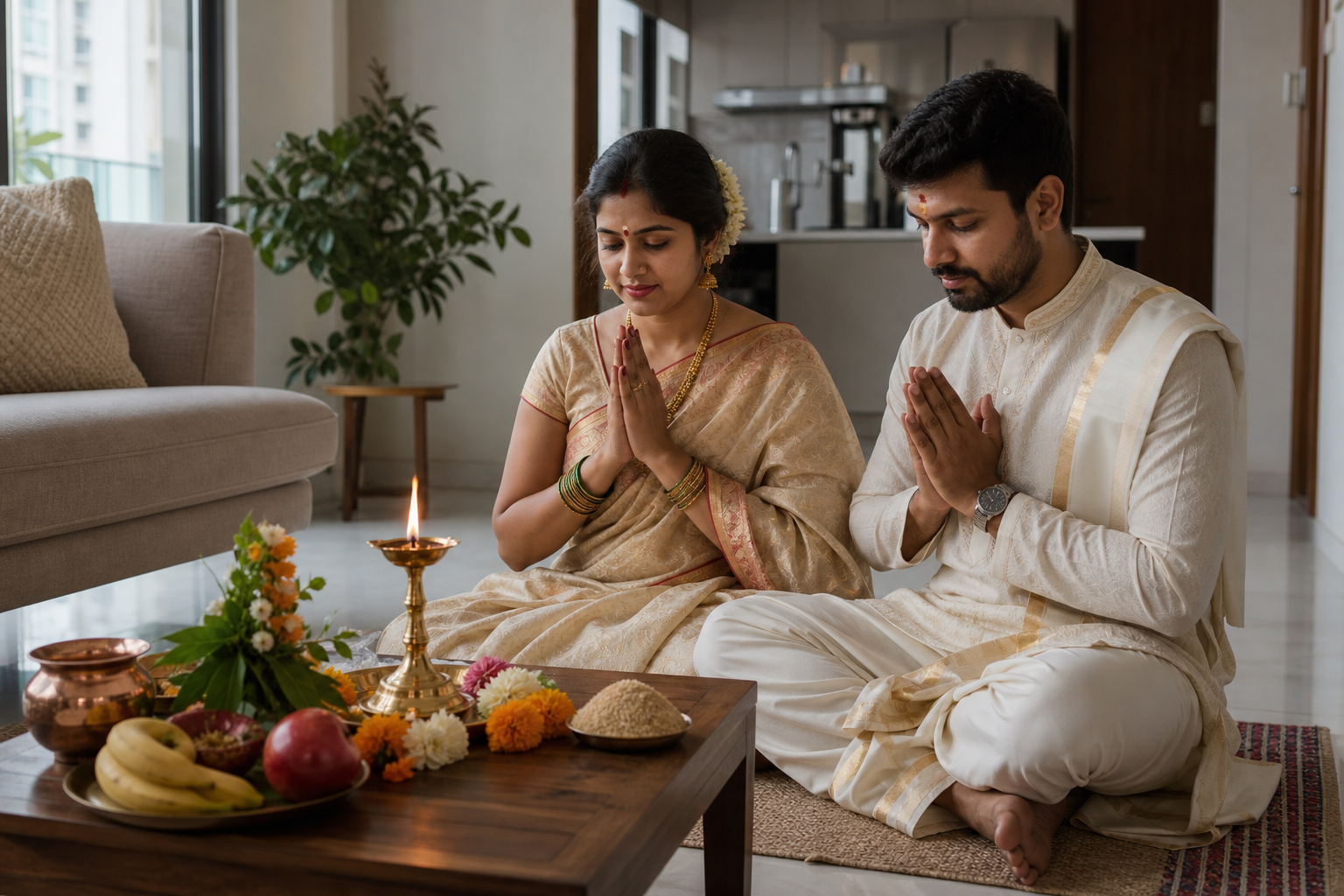
A diaspora wedding, a destination event, a small apartment, or distant elders may make the inherited arrangement difficult. Adaptation is not automatically abandonment. The useful question is whether a change preserves the purpose or replaces it with convenience and spectacle.
Sort every proposed element into three groups:
- Lineage-specific core: the timing, prescribed prayers, homa, deity invocation, or ritual actions that your priest identifies as integral to your practice.
- Ethical core: mutual respect, consent, fidelity, shared responsibility, household harmony, and the couple’s right to privacy.
- Adaptable expression: the size of the gathering, the location, the simplicity of the meal, modest gifts, and how elders who cannot attend convey their blessings.
Protect the first two groups. Simplify the third whenever it begins to burden the couple or obscure the rite. If a distant elder cannot be present, ask the priest or knowledgeable family elder whether the blessing may be offered at another suitable moment or through a remote connection. Do not quietly change prescribed ritual timing and assume the social adaptation settles the religious question.
Inter-Dharmic families should name the observance accurately. Chaturthi Karman is a Hindu marriage rite. Buddhism, Jainism, and Sikhism also give weight to compassion, ethical conduct, and community blessing, but shared values do not make distinct rites interchangeable. A non-Hindu relative may participate respectfully in a family blessing without being asked to pretend that every theological or ritual form is identical.
Before you print Chaturthi Karman on the wedding itinerary, secure two agreements: the ritual sequence from the person qualified to guide your family tradition, and the personal boundaries agreed by the couple. Once those are clear, keep the observance focused, let elders bless the new household, and give the couple room to begin married life without spectacle.
References
