
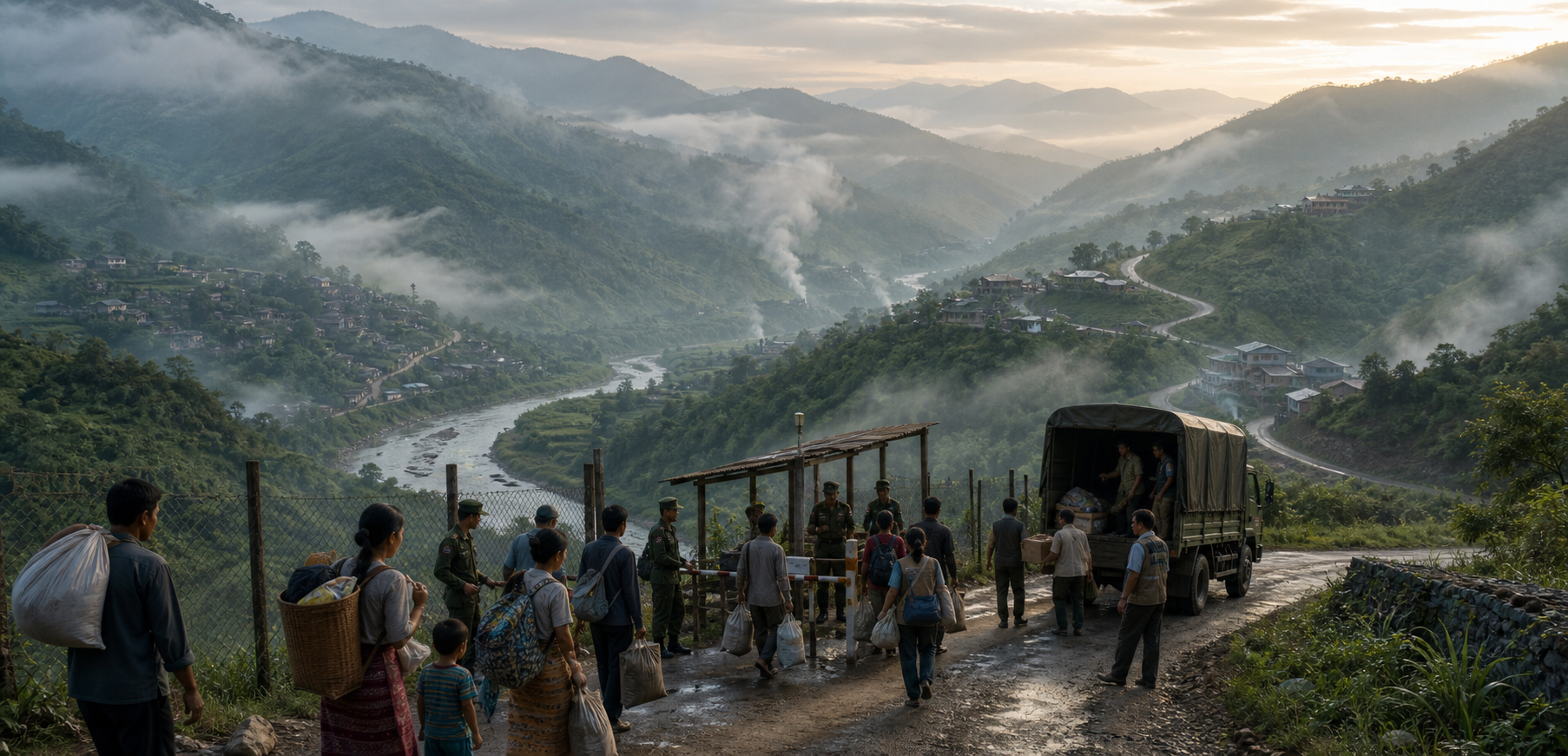
If you are trying to judge whether Myanmar’s fighting is becoming a direct threat to Northeast India, do not wait for gunfire across the border to answer the question. Displacement, interrupted trade, pressure on clinics, narcotics activity and tension inside host communities can all intensify before a conventional military spillover becomes visible.
India therefore faces a harder choice than opening or sealing the frontier. It needs a system that can distinguish a displaced family from an armed operative, keep legitimate commerce moving, disrupt criminal networks and prevent Myanmar’s conflict from being recast as an ethnic struggle within India.
First identify which part of Myanmar has changed
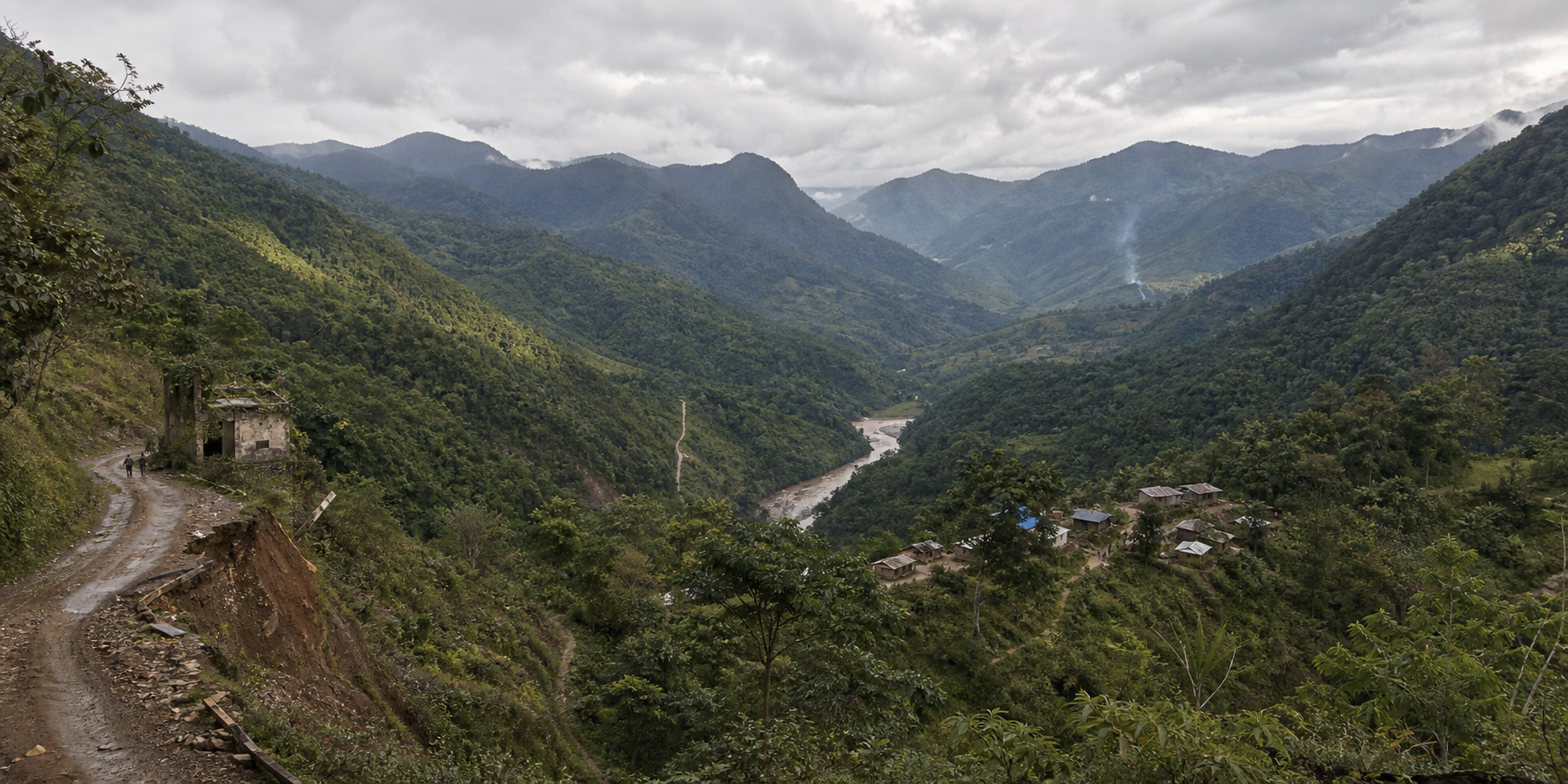
Myanmar is not one battlefield, and every rebel advance does not create the same danger for India. Armed ethnic conflicts have persisted since independence in 1948, with organisations such as the Kachin Independence Army and Shan State Army forming part of a long, fragmented security landscape. The February 2021 military coup added nationwide protests and People’s Defence Forces to that older structure.
When you encounter a report about new fighting, ask three questions before deciding what it means for Northeast India:
- Where did the balance change? Violence in Chin State and other areas adjoining the Indian frontier has a more immediate relationship to displacement and border movement affecting Mizoram and Manipur than fighting far from the frontier.
- Which actor controls the relevant roads and settlements? An organisation’s location matters as much as its name. The Arakan Army is prominent in Rakhine State, the Myanmar National Democratic Alliance Army concentrates on the Kokang region, and the Ta’ang National Liberation Army operates in northern Shan State.
- Which Indian interest is connected to that location? The practical issue may be the Moreh-Tamu trade route, the Kaladan Multi-Modal Transit Transport Project, a refugee-receiving district or a corridor that armed and criminal networks could exploit.
The Three Brotherhood Alliance links the Arakan Army, the Myanmar National Democratic Alliance Army and the Ta’ang National Liberation Army. Coordination allows them to share resources, increase the pace of operations and place greater pressure on military positions and logistics. Their demands for ethnic rights, autonomy and a federal political order also shape negotiations over Myanmar’s future.
That does not make every alliance victory an immediate Indian border emergency. The correct test is proximity plus connection: has fighting moved toward a frontier area, displaced people toward India, altered control of a trade or infrastructure route, or created space for an armed or criminal network? This prevents distant battlefield news from being exaggerated while locally important warning signs are missed.
Five pathways carry the conflict into Northeast India
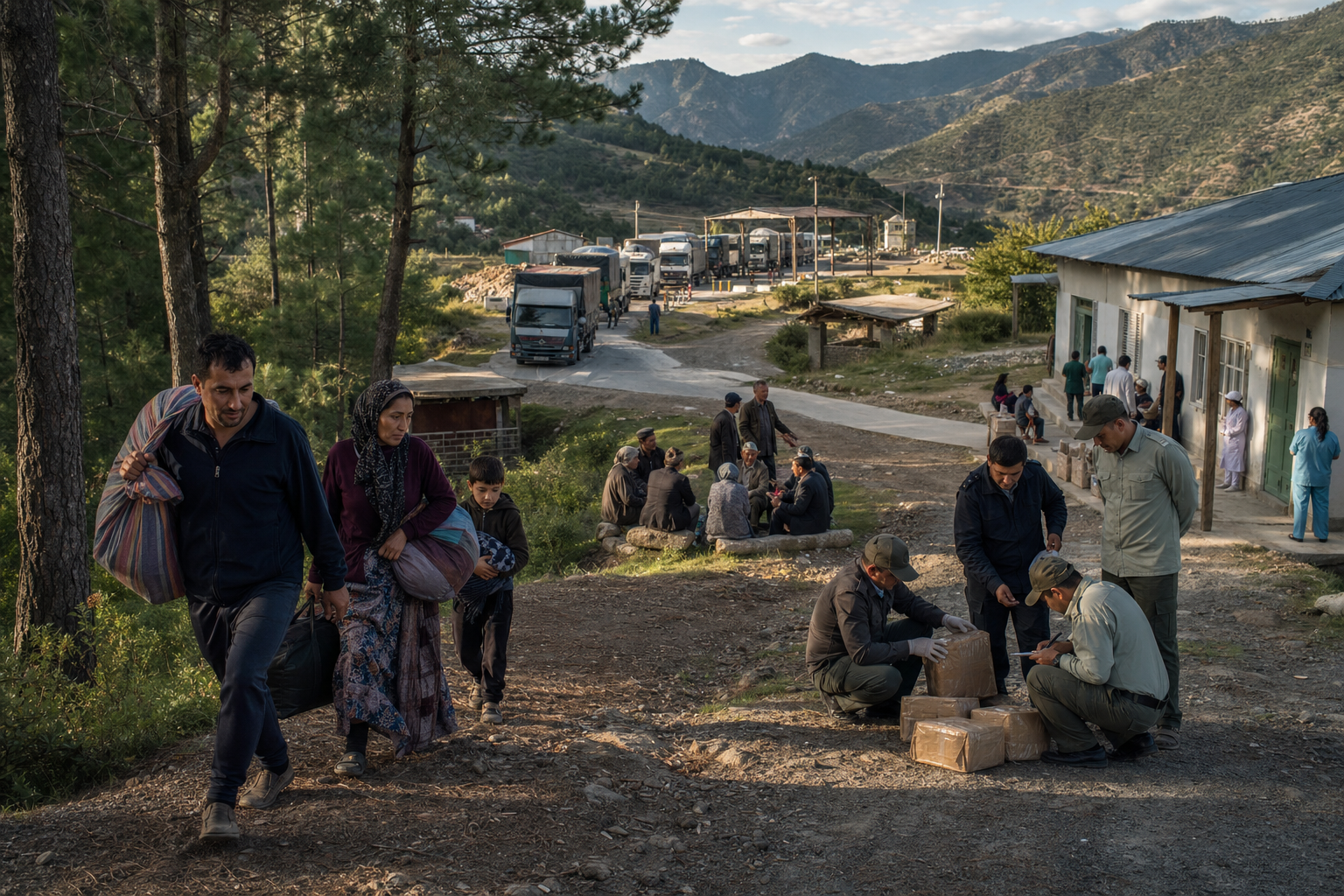
Spillover is not one event. It is a chain of pressures that can arrive through different institutions at different speeds. You can assess the risk more accurately by watching each pathway separately.
- Displacement strains local capacity. One reported estimate placed more than 35,000 refugees in temporary shelters and relief camps in Manipur. Because movement and registration change with the conflict, that figure should be treated as a warning about capacity rather than as a permanent population count. District planning needs current shelter occupancy, clinic load, water and sanitation demand, immunisation coverage, disease surveillance and local food-price data. Cumulative registrations should not be mistaken for the number of people requiring a service on a particular day.
- Uncontrolled movement can be exploited by armed groups. Intense fighting can create opportunities for insurgent elements to move, seek sanctuary or reconnect with cross-border networks affecting Manipur and Nagaland. Shared Kuki-Chin, Mizo and related ethnic ties can provide humanitarian support to displaced relatives, but ethnic kinship is not evidence of militancy. Screening must focus on identity verification, conduct, affiliations and security information rather than treating a community label as a threat category.
- Governance gaps strengthen organised crime. Instability around the Golden Triangle can open routes for narcotics, money laundering and criminal financing. Seizing a shipment is not enough if financiers, brokers and laundering channels remain intact. Border enforcement therefore needs anti-narcotics work, financial investigation and information sharing to operate as one effort.
- Trade disruption reaches households quickly. The Moreh-Tamu axis supports bilateral commerce and frontier livelihoods. Reduced trading hours, periodic market closures and uncertain transport can restrict supply and raise prices. Officials should track market opening days, freight regularity, staple availability and price changes together. Supporting formal and transparent trade is a security measure because predictable commerce leaves less room for extortion and illicit substitution.
- Infrastructure risk can outlast a battle. Conflict affecting routes connected to the Kaladan Multi-Modal Transit Transport Project can delay India’s eastern connectivity ambitions even when violence does not enter Indian territory. Route redundancy, stronger protection for critical nodes and permanent liaison with nearby communities should be designed into the project rather than added after repeated disruption.
These pathways also interact. A closed market can reduce household income just as shelter demand raises local prices. Weak documentation can frustrate humanitarian delivery as well as security screening. A policy that handles each problem in a separate administrative silo will miss those connections.
A humane border system is also a stronger security system
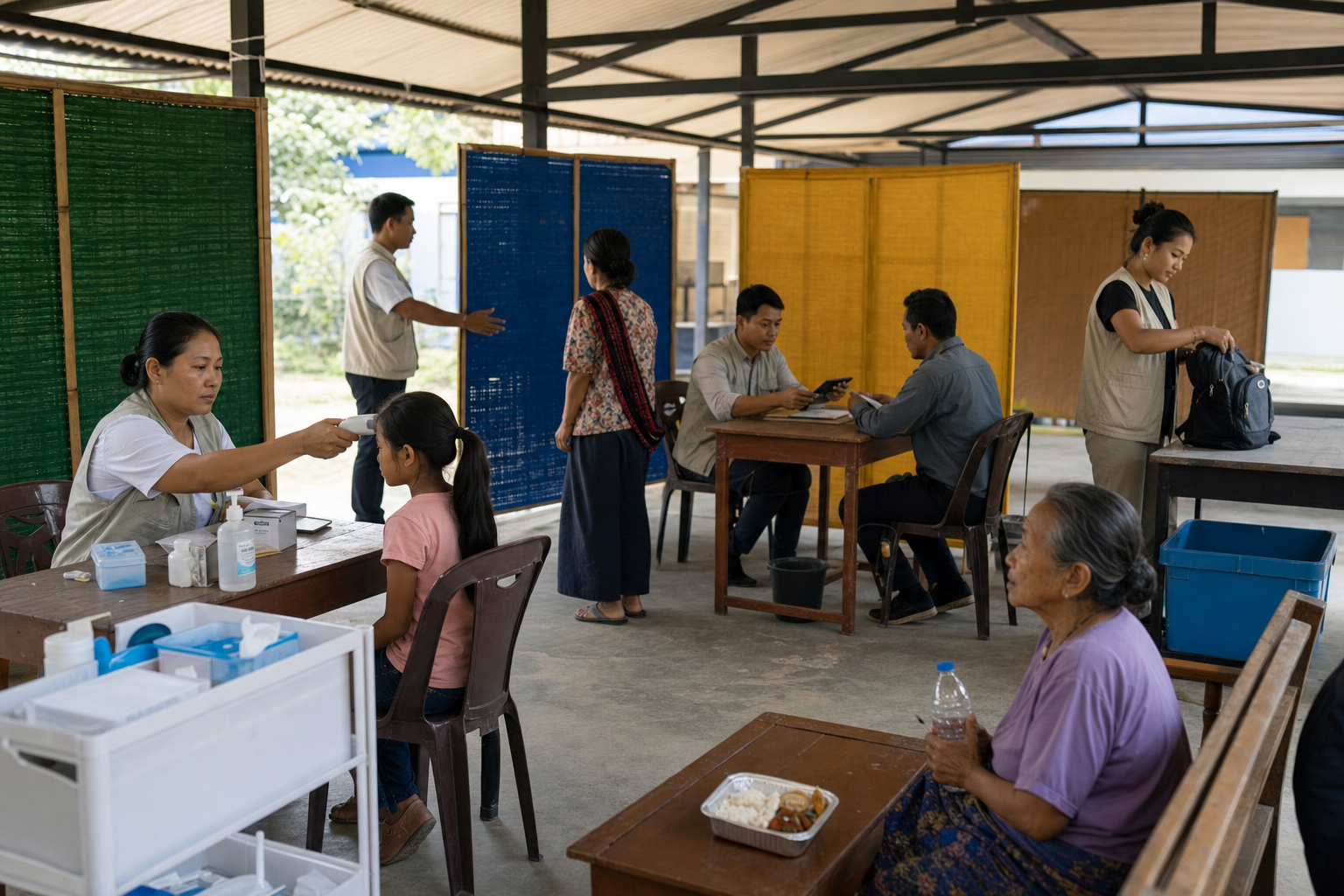
Selective fencing and tighter immigration controls may help direct movement toward monitored crossing points, but a barrier cannot determine who needs protection, who poses a risk or which goods are legitimate. That work requires a controlled reception process behind the physical border.
A workable sequence has five parts:
- Register people promptly. Documentation and biometric registration can reduce duplicate identities and help families access organised assistance. Data collection should be limited to what is needed for identification, household linkage, vulnerability assessment and security screening, with access restricted to authorised personnel.
- Screen without presuming guilt. Security agencies need to compare registration information with relevant intelligence and investigate specific risk indicators. Community knowledge can assist this process, but anonymous ethnic accusations should never substitute for verification.
- Stabilise basic services for everyone. Water, sanitation, primary healthcare, immunisation and disease surveillance must cover displaced families and residents of host settlements. If local people lose access while relief is expanded, resentment becomes predictable. Capacity and benefits should be published clearly enough for both groups to see how resources are being allocated.
- Use managed humanitarian access. Where conflict conditions permit, humanitarian corridors and orderly entry procedures are safer than forcing vulnerable people toward informal routes. They also give authorities a better opportunity to document entrants and separate civilian movement from smuggling.
- Review return conditions instead of imposing a calendar. An uncertain war makes fixed return deadlines unsafe and difficult to enforce. Safe-return planning should follow conditions in places of origin, changes in route control and the ability of families to travel without being pushed back into active violence.
Community vigilance needs similar discipline. Residents should report suspicious conduct through designated police or administrative channels, not confront suspected traffickers or circulate unverified names and photographs. Local liaison groups should include host communities, displaced people, traders, health workers, women and trusted civil-society representatives. That gives officials information they cannot obtain from surveillance alone while creating a place to correct rumours before they become ethnic accusations.
This distinction is especially important in Manipur, where solidarity with Kuki-Chin refugees can intersect with existing tensions involving Kuki-Chin and Meitei communities. Relief must be impartial, consultations must include affected groups, and law enforcement must respond to conduct rather than identity. Otherwise, a conflict imported through displacement can be amplified by domestic grievance.
Security, trade, diplomacy and dharma must reinforce one another
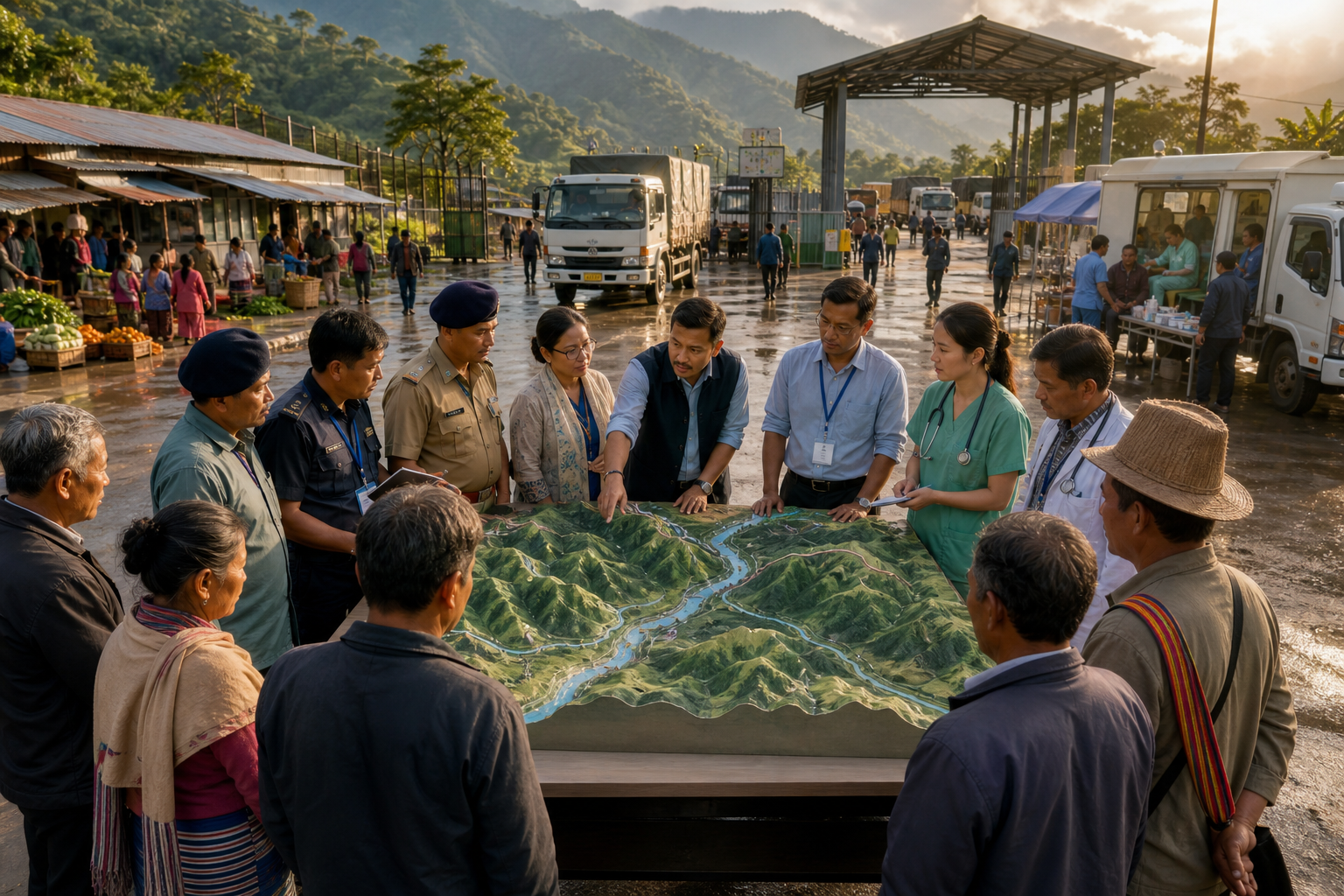
Make enforcement intelligence-led
Border forces, state police, anti-narcotics units and financial investigators need shared operating information rather than parallel files. Performance should not be judged only by the number of people stopped at the border. Authorities also need to know whether trafficking networks were dismantled, suspicious financial channels were investigated, legitimate trade became more reliable and frontier villages became more willing to share information.
Development belongs inside this security design. Education, healthcare, fair administration and viable livelihoods in frontier settlements reduce the incentive to work for insurgent or criminal networks. Surveillance without public trust may detect movement, but it will not generate the local cooperation needed to understand who organised it.
Keep economic corridors usable
Moreh-Tamu and Kaladan should not be treated as ordinary projects operating beside a security crisis. Their continuity affects prices, employment and India’s Act East Policy. Each corridor needs an updated risk map, an alternative logistics plan, protection for critical points and a community contact system able to flag disruption early. Formal trade procedures should remain usable during periods of tension; if lawful trade becomes impossibly slow or unpredictable, illicit channels acquire an advantage.
Maintain more than one diplomatic channel
India needs working contact with Myanmar’s authorities for border management and counterinsurgency deconfliction. It also needs cooperation with ASEAN mechanisms, United Nations agencies and trusted civil-society organisations for humanitarian delivery. Maintaining an operational channel is not the same as endorsing every action of the party controlling it. Quiet diplomacy can protect Indian interests while keeping de-escalation, civilian protection and regional stability on the agenda.
Apply dharmic values as operating disciplines
Karuna, ahimsa and dana are not ornaments to be added after the security plan is complete. Karuna requires officials to see a displaced family as human beings before seeing a case file. Ahimsa requires prevention of ethnic retaliation, trafficking and coercion; it does not require the state to abandon lawful enforcement. Dana calls for organised and accountable support, not occasional generosity that disappears while camps still need clean water and medicine.
Interfaith councils, youth groups and joint community service can turn those principles into practical resilience. A health camp serving hosts and refugees together, or a relief committee with representation across communities, does more for cohesion than a slogan about harmony. The test is whether compassion reduces vulnerability without allowing armed or criminal actors to hide behind it.
Questions to ask when the next border crisis is reported
Is more border fencing enough?
No. Selective fencing can channel movement and improve monitoring, but it cannot replace registration, intelligence, humane reception, anti-narcotics work or cooperation with border communities. Without those layers, pressure simply moves to a less monitored route.
Are refugees the main security threat?
That is the wrong category. Displaced civilians need protection, while armed operatives and criminal actors require investigation and enforcement. Unmanaged movement can be exploited, but treating an ethnic or refugee population as presumptively dangerous damages intelligence, social cohesion and legitimate humanitarian work. Registration and evidence-based screening protect both the state and innocent families.
Which warning signs should you watch?
Look for changes near Chin State and other frontier areas, new displacement into Mizoram or Manipur, repeated disruption on the Moreh-Tamu route, rising pressure on shelters and health services, indications of narcotics and laundering networks, and delays affecting Kaladan. One sign alone may be manageable. Several moving together indicate that a battlefield change is becoming a wider Northeast India security problem.
When the next development arrives, ask which route, district and institution will feel it first. Then demand a response that documents people, targets networks, protects local services and keeps lawful trade functioning. That is how India can defend the Northeast without abandoning the civilisational duties that give security its purpose.
References
- DharmaRenaissance Blog – Myanmar’s Insurgency After the 2021 Coup: The Complete Guide to Northeast India’s Security
