
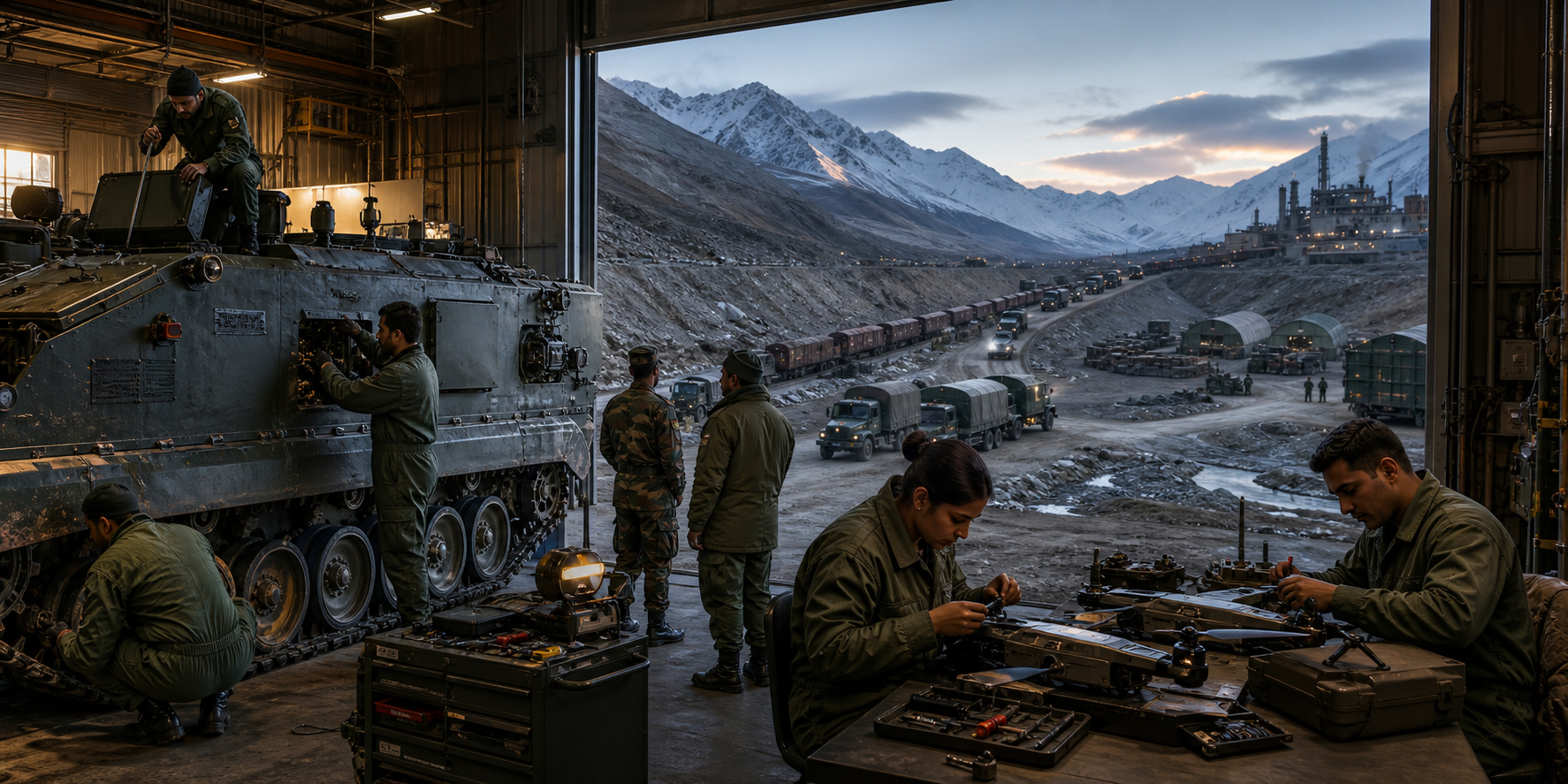
If you are trying to decide whether India’s defence self-reliance drive is substance or slogan, do not begin with the nationality of a platform or the percentage of parts assembled in Bharat. Begin with a harder wartime question: can the armed forces keep operating when overseas deliveries slow, suppliers pursue different priorities, and a conflict lasts longer than expected?
The Russia-Ukraine war makes that question impossible to treat as an industrial-policy footnote. Self-reliance affects how long India can defend its interests, how quickly it can replace losses, and whether another country can narrow its military choices. You can use the following tests to judge defence announcements, technology programmes, and claims of indigenisation more seriously.
Self-reliance is measured by endurance, not launch day
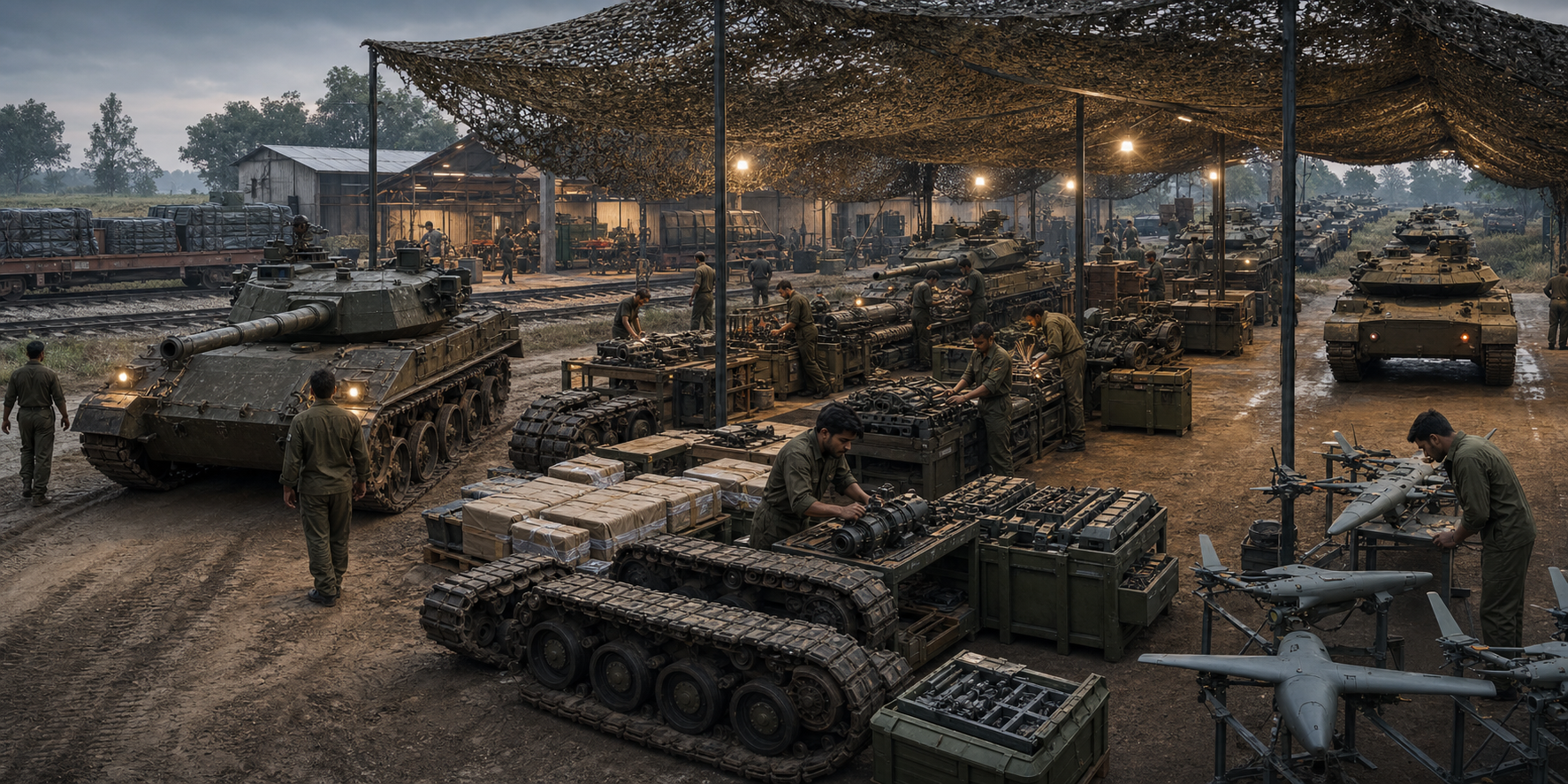
At the curtain-raiser for the Chanakya Defence Dialogue, Chief of Army Staff General Manoj Pande identified the central danger: external dependence can become an operational vulnerability during prolonged, high-intensity operations. The important word is not merely “external.” It is “dependence.” India can cooperate with foreign partners without allowing a foreign decision, delayed shipment, or inaccessible component to disable an essential capability.
A weapon may be available on the first day of a crisis yet become progressively less useful if India cannot obtain spares, replenish consumables, repair damaged equipment, update software, or expand production. Wartime readiness therefore covers the entire life of a system. A ceremonial induction proves that a platform has entered service. It does not prove that the platform can be sustained under pressure.
This distinction changes how you should read the word “indigenous.” Final assembly in an Indian facility is useful, but it is not the same as Indian control over design, development, production, maintenance, and upgrades. If an irreplaceable imported subsystem remains outside Indian control, the operational dependency remains even when much of the platform is made locally.
Look closely at the verbs used in procurement announcements. “Designed in India” answers a different question from “manufactured in India under licence.” “Technology transfer” matters only to the extent that Indian organisations can absorb, modify, repair, and reproduce the relevant technology. A prototype demonstrates possibility; a repeatable production line demonstrates capacity. Delivery numbers show what has arrived; maintenance and replenishment plans show whether it will remain available.
Self-reliance does not require autarky. Imports can fill urgent capability gaps, and international partnerships can bring knowledge, scale, and useful competition. The strategic test is whether cooperation leaves India with greater freedom of action. Bharat should be able to purchase globally when that serves its interests without making the continued functioning of its armed forces contingent on permanent foreign consent.
India needs a land-centred strategy, not an army-only strategy
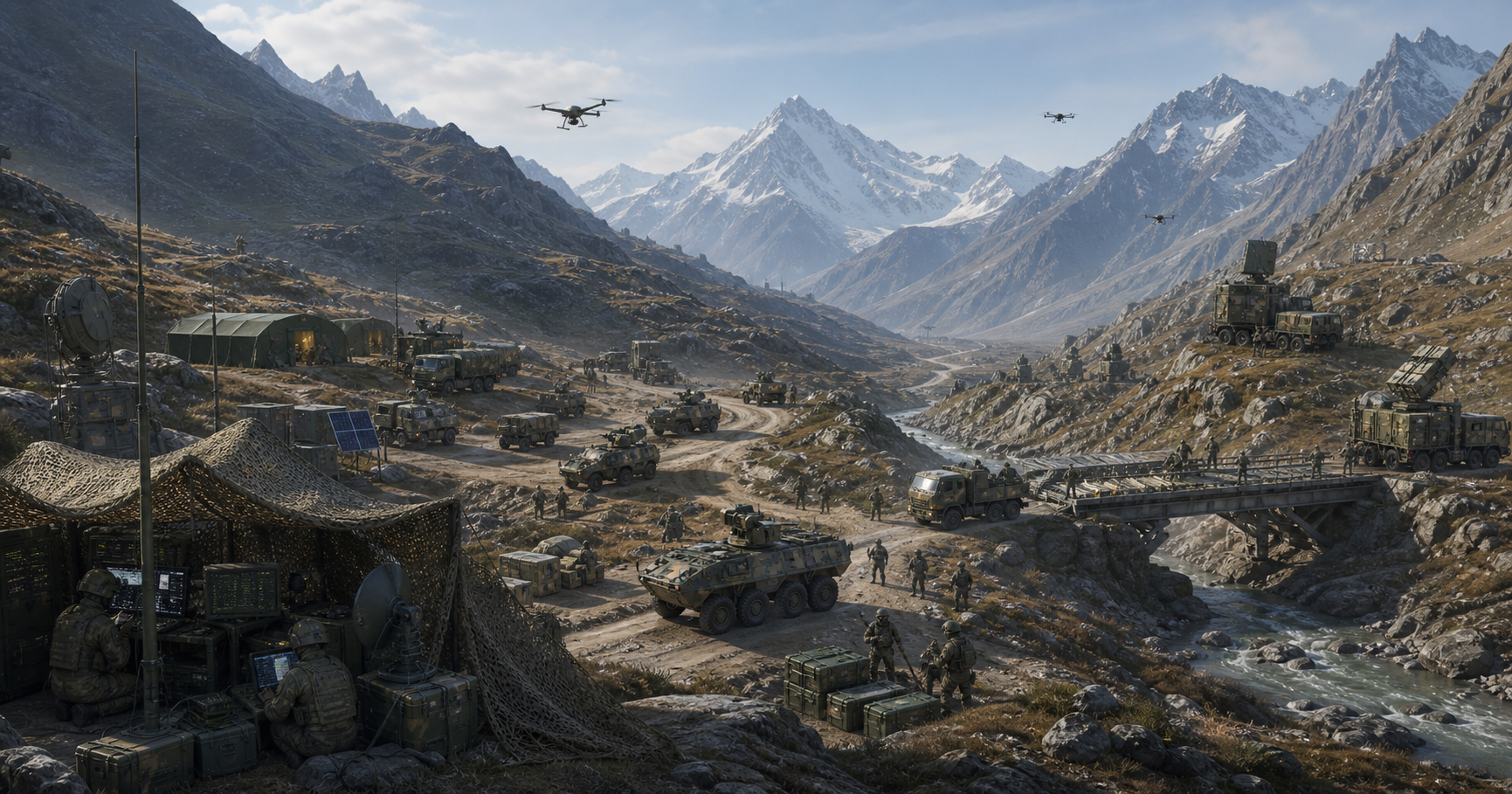
India’s contested borders give the land domain an enduring importance. Territory is ultimately defended, held, or recovered by forces operating on the ground. That reality should shape preparedness, stockpiles, surveillance, mobility, and the ability to sustain formations in difficult conditions.
Yet “land is central” must not be misread as “the Army can act alone.” Modern land operations depend on information and effects arriving from several services and domains. Surveillance must feed decisions. Communications must carry those decisions. Air defence must protect forces and infrastructure. Air and maritime assets may support the wider campaign. Logistics must keep the whole system functioning after the first operational plan meets friction.
This is why jointness is not an administrative slogan. A surveillance system that detects a threat but cannot pass usable information to the unit capable of responding has created awareness without effect. A sophisticated platform whose data cannot be shared across commands may add inventory without adding proportionate combat power.
When you assess a new platform, ask what happens after it detects, decides, or fires. Which service receives its information? Can another service act on that information without manual reconstruction? Does the system use compatible communications and operating procedures? Who coordinates the response when several commands are involved? These questions reveal whether India is acquiring an integrated capability or another isolated asset.
The practical lesson is balance. India should preserve the land forces required by its geography while insisting that surveillance, air power, air defence, unmanned systems, communications, and logistics work as one operational network. Giving primacy to the land challenge and demanding jointness are complementary choices.
Military technology should earn its place in decisions saved
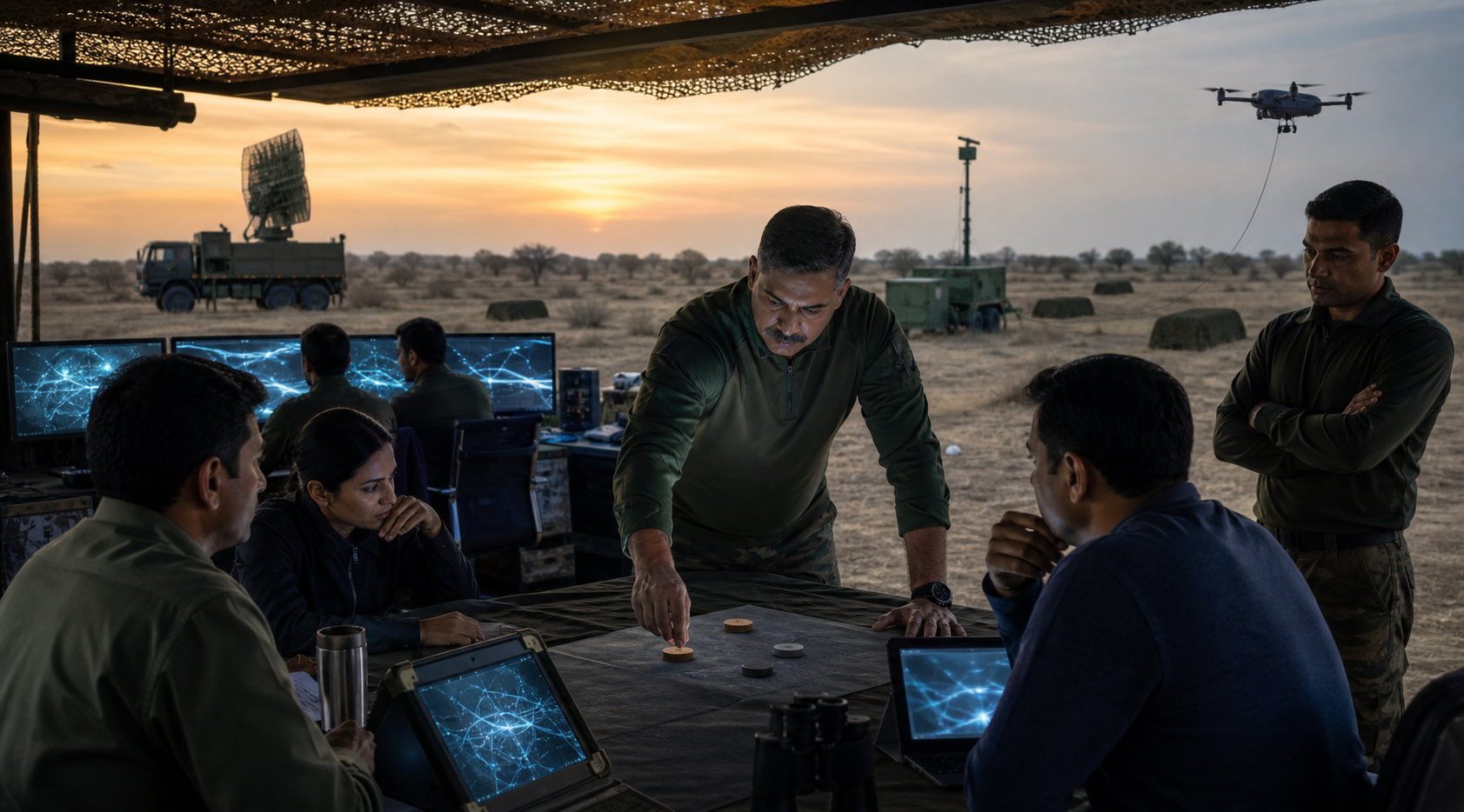
Artificial intelligence, machine learning, advanced surveillance, and rapid image interpretation matter because modern forces can collect more information than human operators can examine at operational speed. Machine assistance can sort imagery, flag possible anomalies, and direct attention toward the material most likely to require a human decision. The value lies in reducing the distance between observation and informed action, not in attaching an AI label to an existing process.
Robotics and man-unmanned teaming offer a related advantage. Unmanned systems can extend a unit’s reach, increase its operational tempo, and reduce the exposure of personnel in dangerous tasks. But an unmanned vehicle or drone does not become useful merely by being available. It must fit communications, training, command arrangements, maintenance capacity, and the mission for which the unit is responsible.
You should therefore judge defence technology by operational questions. Does it help an operator reach a verified decision faster? Does it reduce risk to personnel? Can it work with the data, terrain, and conditions for which India needs it? What happens when communications are degraded? Can Indian teams repair it, modify it, and update its software? Does the operator understand when an automated recommendation is uncertain?
These tests also expose a hidden form of dependence. A system may carry an Indian name while relying on a foreign-controlled software layer, sensor, processor, or maintenance chain that cannot readily be replaced. Conversely, selective use of foreign components need not defeat self-reliance if India retains sufficient design control, alternative supply paths, integration knowledge, and the ability to sustain the capability. The correct question is not whether every input is domestic. It is whether a critical external input can become a veto over Indian action.
The move from platform-centred warfare to data-driven warfare also changes what must be funded. Sensors and unmanned platforms attract attention, but data handling, communications, testing, image interpretation, operator training, maintenance, and repeated upgrades determine whether the equipment produces an operational advantage. A contract that pays for hardware while neglecting integration and continued learning leaves modernization unfinished.
People and institutions determine whether equipment endures
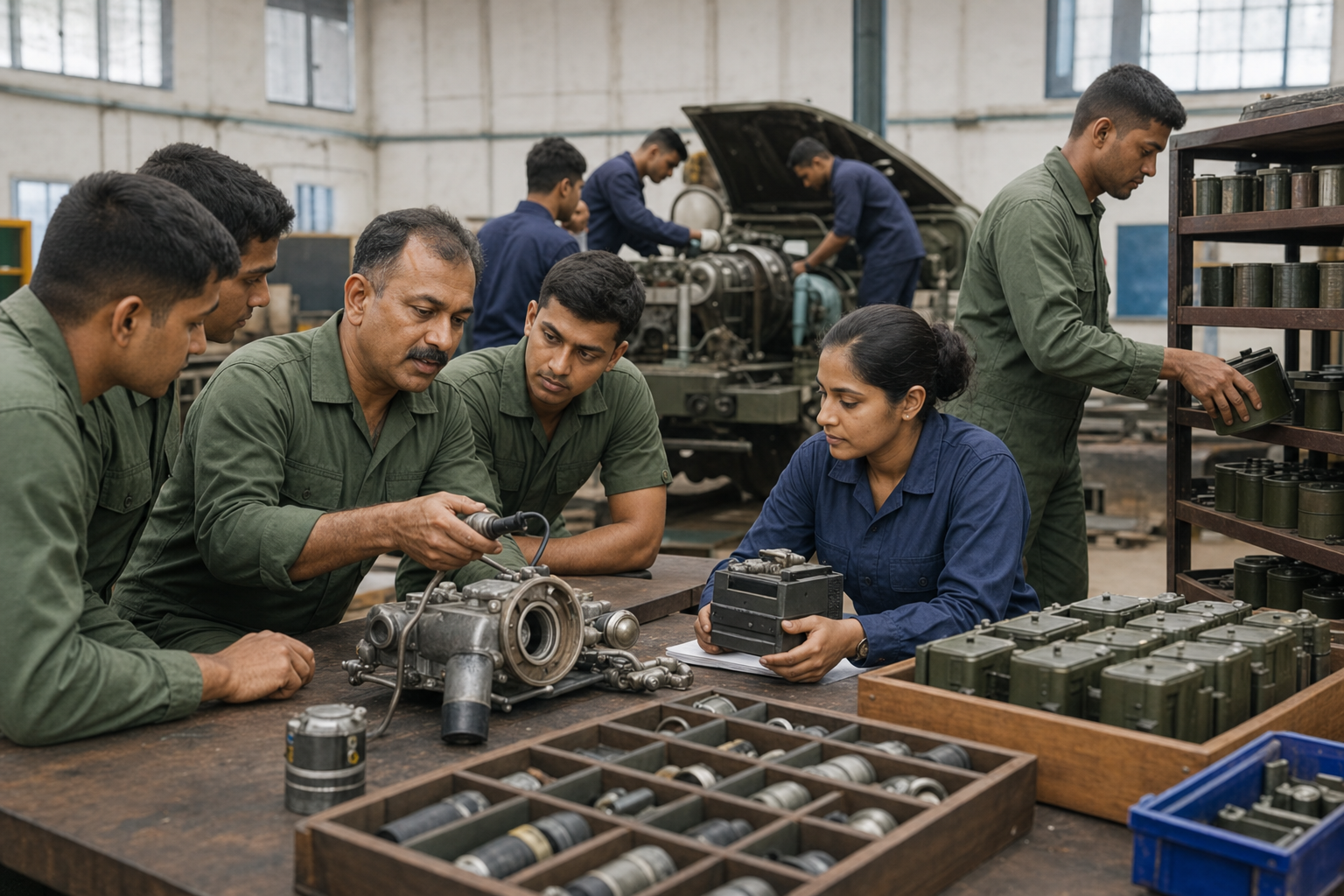
The first cohort of 40,000 Agniveers joined units, with field feedback characterized as encouraging. Their youth and familiarity with technology may help a force adopting digital tools and unmanned systems. That is a promising input, not proof that recruitment reform or military modernization has already succeeded.
The meaningful test is what units can teach recruits to do reliably. Can personnel interpret surveillance outputs instead of merely receiving them? Can they operate and maintain unmanned systems under field conditions? Can technicians diagnose failures without waiting for an outside team? Can commanders use machine-generated recommendations without either dismissing them reflexively or trusting them blindly? Technology affinity helps, but training and institutional practice turn it into military competence.
Defence self-reliance consequently requires more than factories. Designers need accurate feedback from users. Manufacturers need to understand field failures. Training establishments must adapt as systems change. Commanders need realistic exercises that expose weaknesses in integration. Procurement officials must account for maintenance and upgrades rather than treating delivery as the end of a programme. If these groups work in sequence instead of learning from one another, India can produce equipment without building a resilient capability.
There is a civic dimension as well. National security is a collective enterprise sustained by public trust, disciplined institutions, and social cohesion. Hindu, Buddhist, Jain, and Sikh traditions offer overlapping ethical vocabularies of service, responsibility, restraint, and duty. Those values become strategically relevant when they encourage serious preparation and steadiness rather than performative aggression.
Citizens have a practical role here: demand clear standards without confusing scrutiny of a programme with hostility toward the armed forces. Ask whether public money is creating durable Indian capacity. Notice whether failures produce learning or are hidden behind patriotic branding. A confident nation can support its soldiers while still examining the systems intended to equip them.
Key takeaways: five tests for the next defence claim
- Endurance: If an external supply line became unreliable, which essential functions would fail first, and what Indian capacity could restore them?
- Control: Who owns the design knowledge, software access, repair process, and ability to replace critical components?
- Jointness: Does the capability connect land forces with air, maritime, surveillance, communications, and logistics systems, or remain isolated inside one service?
- Operational value: Do AI, surveillance, robotics, or unmanned systems produce faster verified decisions, greater reach, or lower risk to personnel under realistic conditions?
- Whole-life readiness: Are training, maintenance, upgrades, replenishment, and production expansion planned alongside the initial purchase?
If an official claim answers only where a platform was assembled or how much of its value is classified as indigenous, the answer is incomplete. Look for control across the full chain: conception, design, production, integration, operation, repair, replacement, and improvement.
Bharat does not have to choose between international cooperation and strategic autonomy. It needs partnerships that strengthen its choices rather than determine them. The next time you see a major defence announcement, apply these five tests. Support programmes that build design authority, combat endurance, joint operations, and skilled people; ask harder questions of those that merely relocate an assembly line. That is how self-reliance becomes a usable instrument of sovereignty.
References
- DharmaRenaissance Blog — Essential Takeaways from the Russia-Ukraine War: Army Chief’s Complete Case for Self-Reliance
