
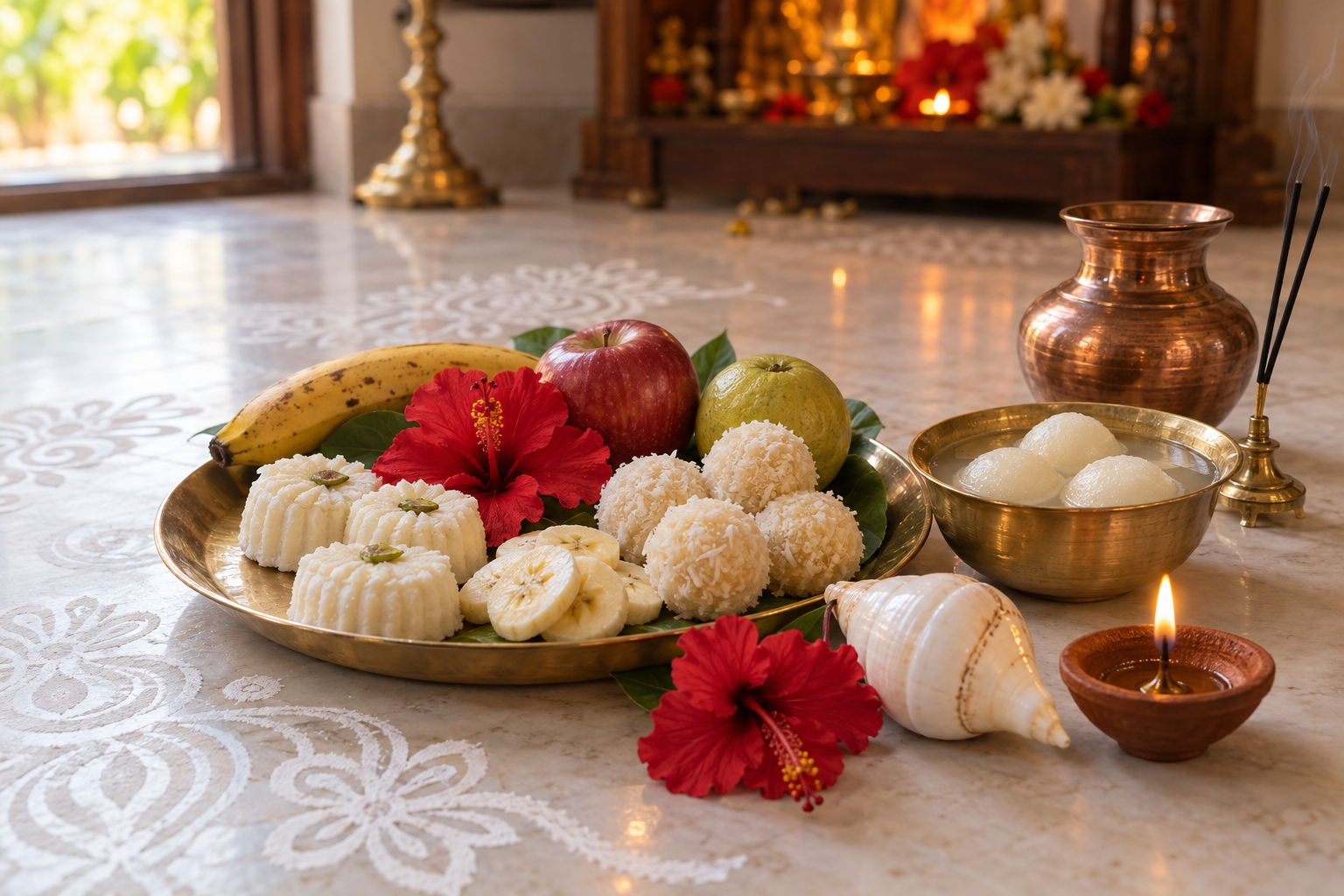
You have a plate of sweets ready for Durga or Kali, but a practical doubt remains: Is this the right offering, and what should you do with it? Begin with a clean, untouched portion that your household or temple regards as suitable. Offer it deliberately, follow the ritual custom you have received, and share it only after the offering is complete.
The sweet itself matters, but it is not the whole act. In Bengali worship, food is placed before the Divine Mother as nivedya or bhog, sanctified through prayer, and then received and distributed as prasad. The movement is from possession to surrender and from surrender to shared grace.
Start with the custom that actually governs your puja
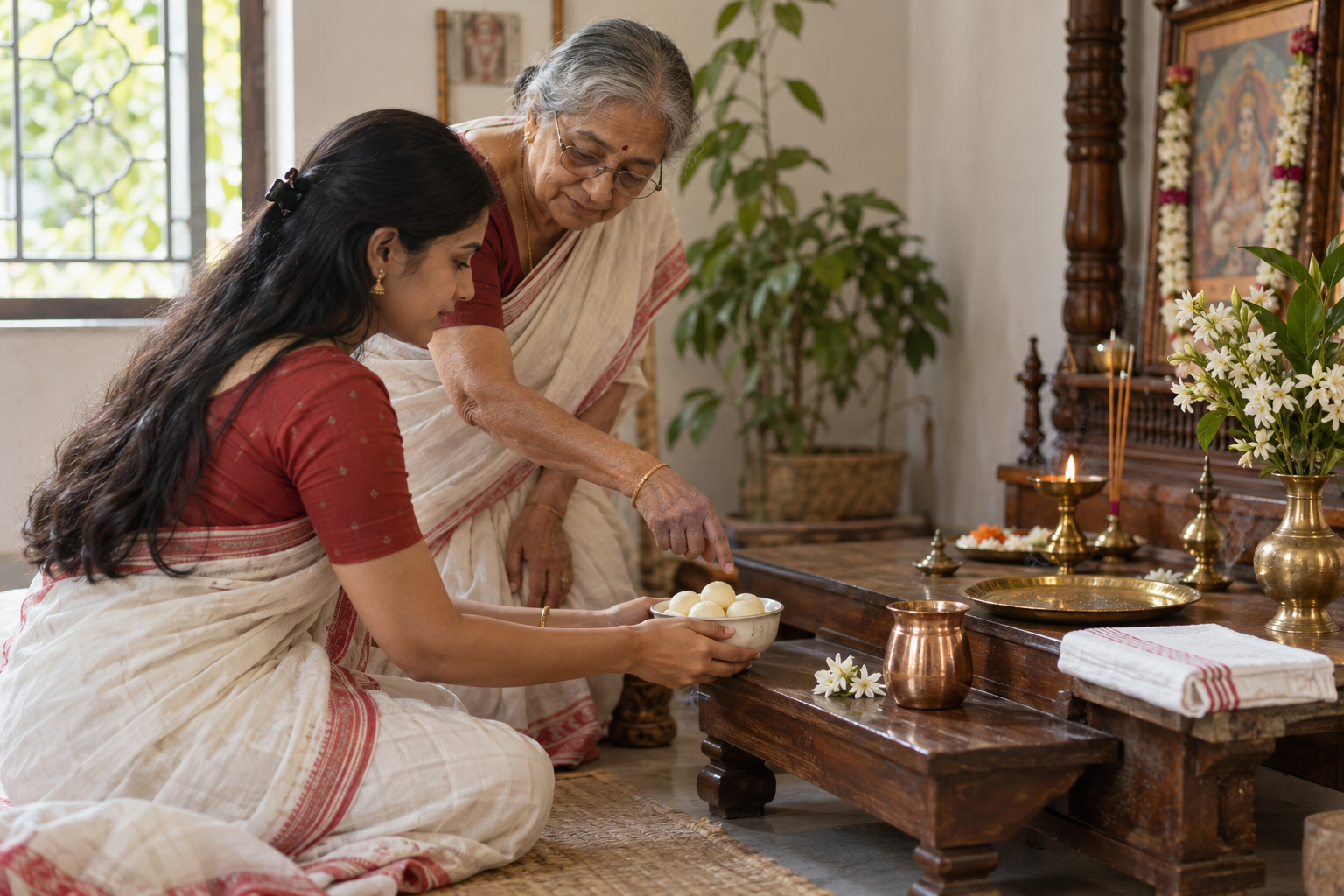
There is no benefit in assembling an impressive Bengali sweet platter if it conflicts with the practice of the household, temple, priest, or lineage conducting the worship. Durga Puja and Kali Puja are celebrated in many settings, from formal community worship to a small shrine at home. The appropriate offering can therefore depend on the setting.
If you are participating in an organised puja, ask the organisers before bringing food. They may have rules about ingredients, preparation, packaging, timing, or whether outside offerings can be placed with the principal bhog. Giving the sweets directly to the person managing offerings is better than quietly adding them to a ritual area.
At home, use this order of authority:
- Follow an established family or lineage practice if you have one.
- If a priest is conducting the puja, follow the priest’s instructions for that rite.
- If neither applies, keep the offering simple, clean, vegetarian, untouched, and free of ingredients your household avoids in worship.
Do not assume that a generic festival checklist should overrule living custom. If your family traditionally offers one modest sweet, you do not need to replace it with an elaborate assortment merely because another household does things differently.
Know what changes when food becomes prasad
Before the offering, the sweet is food selected by the devotee. During worship, it is nivedya, something presented to the deity, or bhog, the food offering associated with the rite. After it has been offered and sanctified through prayer, it is prasad: grace received back and shared among devotees. That movement from nivedya or bhog to prasad explains why handling and intention both matter.
This distinction changes what you do. Set aside the Divine Mother’s portion before anyone tastes from the box, tray, or preparation vessel. Do not sample the designated portion to check it after making the dedication. Once the worship is complete according to your custom, treat the returned food as prasad rather than as leftover dessert.
Prasad is ordinarily shared, not kept as a private display of devotion. Offer manageable portions so the food can reach the people present without waste. If the gathering is large, work backwards from the number of people who will receive it. A modest quantity that can be distributed respectfully is more useful than an oversized arrangement that cannot be handled well.
Choose a sweet that can be offered cleanly and shared well
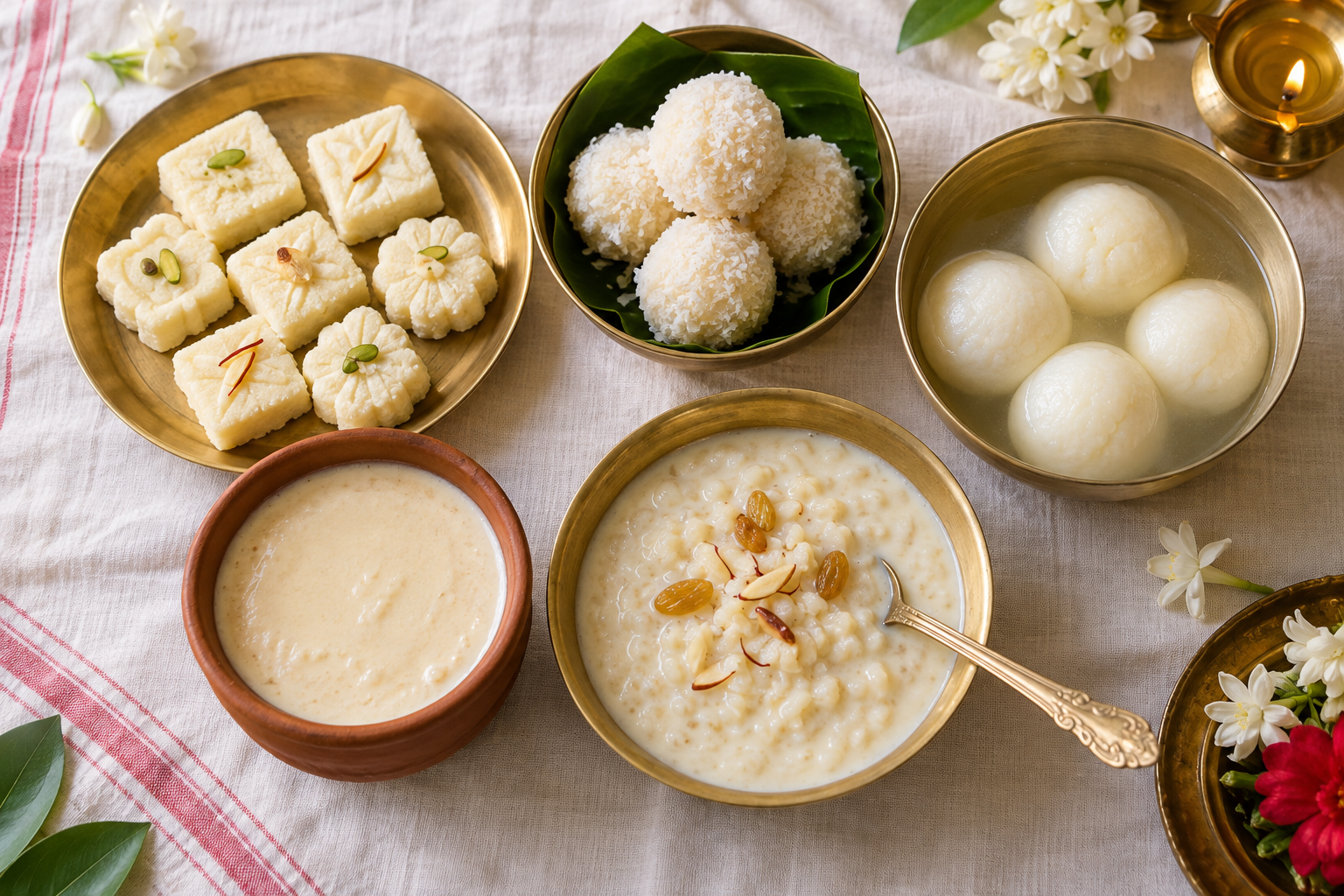
When deciding among Bengali sweets, use four practical tests: ritual suitability, freshness, handling, and distribution. These tests help whether the sweet is homemade or purchased.
- Ritual suitability: Check that the ingredients comply with the rules of the puja you are attending. If you cannot verify an ingredient, ask rather than guess.
- Freshness: Choose food that can remain wholesome through the worship and the period of distribution. Plan storage before placing a perishable item on the offering plate.
- Clean handling: Reserve the offering portion first. Use clean hands, utensils, plates, and containers, and keep the food covered until it is time to present it.
- Easy sharing: Prefer a form that can be divided without excessive handling. If cutting is necessary, arrange for a clean knife and serving surface after the offering.
A shop-bought sweet is not automatically less devotional, just as a homemade sweet is not automatically more suitable. The meaningful question is whether you selected and handled it conscientiously, whether its ingredients fit the worship, and whether you are presenting it in a spirit of offering rather than display. If your received tradition specifically requires home preparation, however, that instruction governs your choice.
Durga and Kali are both forms of the Divine Mother, but their individual pujas need not use identical procedures. Do not infer an offering rule merely from the visual character of the deity. Use the custom of the actual rite. When you do not know that custom, a simple question to the officiant prevents both waste and awkwardness.
Use a simple home-offering sequence without inventing ritual
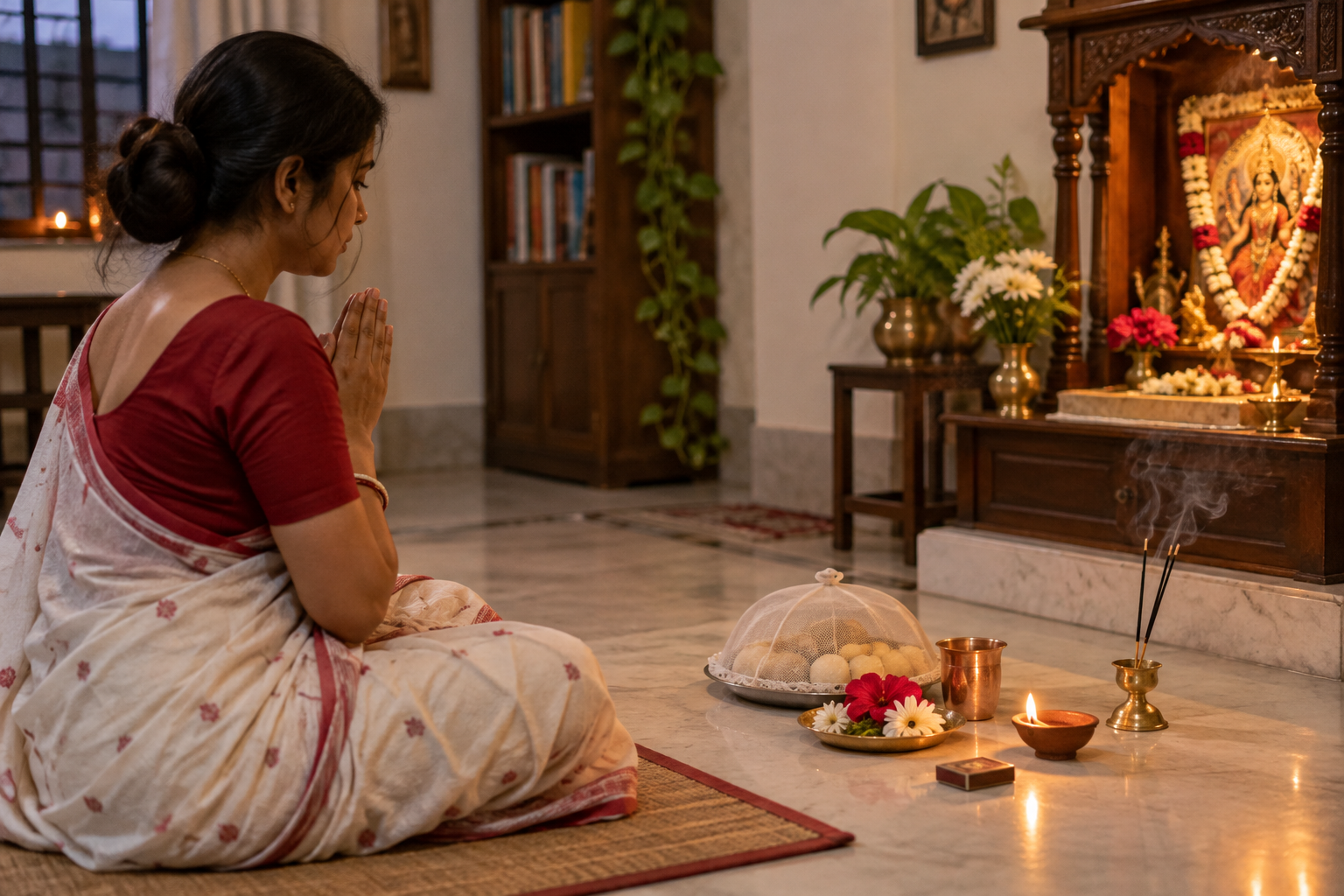
If your household already has a puja paddhati, mantra, or sequence, follow it. The steps below are a practical framework for handling the sweet; they are not a substitute for a lineage-specific ritual.
- Prepare yourself and the worship space according to your household custom.
- Place a clean, untasted portion of the sweet on a dedicated plate or bowl.
- Keep the offering separate from food already served to people.
- Present it before Durga or Kali during the appropriate point in your worship.
- Make the dedication using the mantra, prayer, or silent form of remembrance accepted in your tradition.
- Leave the offering in place for the period observed by your household or directed by the officiant.
- Conclude the offering as your practice requires, then remove the plate respectfully.
- Distribute the sanctified food as prasad with clean hands or serving utensils.
If you do not know a formal mantra, do not manufacture Sanskrit words or imitate a ritual whose meaning you do not understand. A sincere, intelligible prayer of gratitude and surrender is more honest while you seek guidance from someone competent in your tradition.
The symbolism is clearest in the action itself. You begin with something pleasing that you could have consumed. You offer it first to the Divine Mother, relinquishing the claim that it is simply yours. You then receive it back and share it. Bengali festival worship makes this relationship between devotion, surrender, sanctification, and distribution especially visible.
That is why bhog should not be treated as a fee paid for a desired result. You may bring a prayer, need, or hope before Durga or Kali, but the offering is not a commercial exchange. Sweetness can express affection, gratitude, auspiciousness, and the hope that divine grace will soften human life. The deeper discipline is letting the offered sweetness reshape how you receive and share.
Key takeaways
- Let household, temple, priestly, or lineage custom determine what is suitable for a particular Durga or Kali puja.
- Reserve the Divine Mother’s portion before anyone tastes or serves the sweets.
- Choose for appropriate ingredients, freshness, clean handling, and easy distribution rather than for display.
- Understand the sequence: food is presented as nivedya or bhog and received after worship as prasad.
- Share the prasad respectfully; distribution completes the movement from personal possession to shared grace.
For your next puja, settle the custom first, reserve the offering portion before serving anything, and plan how the prasad will reach everyone present. Those three decisions keep the sweet offering focused on the relationship that gives it meaning: devotion to the Divine Mother expressed through surrender and sharing.
References

Leave a Reply
You must be logged in to post a comment.