
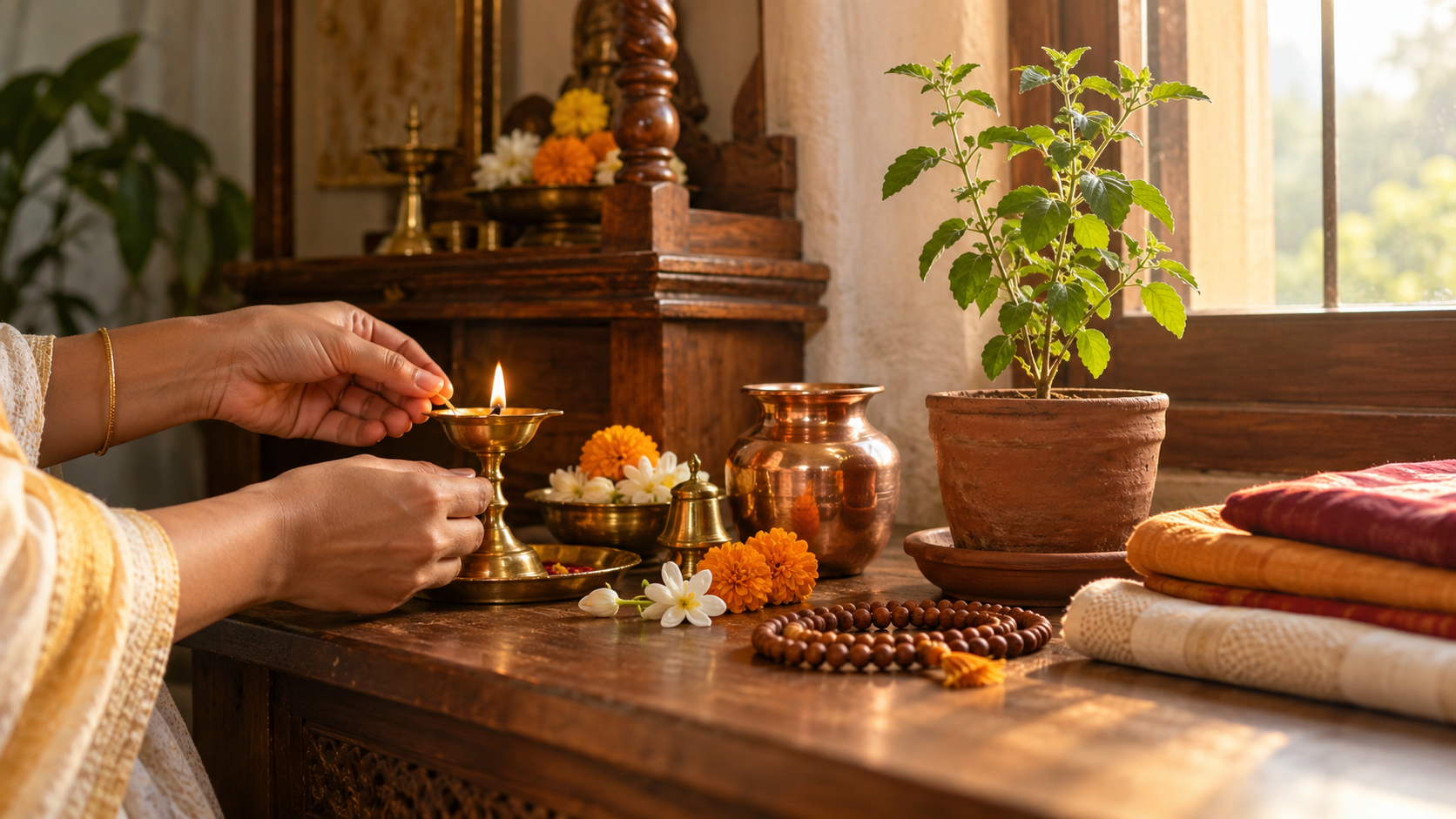
You want a devotional practice for ordinary life: something to do after a frightening dream, something meaningful to wear on a particular day, or something living to plant for a cherished intention. The difficulty is rarely a lack of remedies. It is knowing which practices deserve your trust and how to follow them without turning every choice into a source of fear.
A sound approach is modest and repeatable. Choose one practice rooted in your family or sampradaya, understand what it is meant to express, and keep doing the practical work connected with your prayer. A remedy can orient the mind and deepen devotion. It should not become a guarantee, a superstition-driven purchase, or a substitute for necessary care.
Understand the difference between a remedy and a correspondence
A devotional remedy is an action you undertake in response to a difficulty or intention. Chanting before sleep is one example. Planting and caring for a tree in connection with a manokamna, or heartfelt wish, is another. The action gives your concern a disciplined spiritual form.
A correspondence links one part of life with another: a weekday with a colour, for example. Its purpose is not necessarily to solve a crisis. It can turn an ordinary decision, such as choosing clothes in the morning, into a cue for remembrance.
This distinction matters. If you treat every correspondence as a compulsory remedy, missing a colour can feel dangerous. If you treat every remedy as a guaranteed transaction, an unanswered wish can make you distrust your devotion. Neither response is necessary.
Before adopting a practice, ask four questions:
- Where did you receive it? Prefer a family tradition, temple practice, recognised teacher, or established calendar over an anonymous list passed around online.
- What is it asking you to cultivate? A good practice should support remembrance, steadiness, gratitude, service, restraint, or care.
- Can you perform it safely? It should not require you to damage your health, harm an animal or tree, ignore professional help, or spend beyond your means.
- Can you sustain it? A small observance you can repeat is usually more useful than an elaborate act abandoned after one attempt.
These questions do not erase regional or sectarian differences. They help you honour those differences without mixing unrelated practices into a private rulebook that nobody actually taught you.
For bad dreams, begin with a simple bedtime mantra
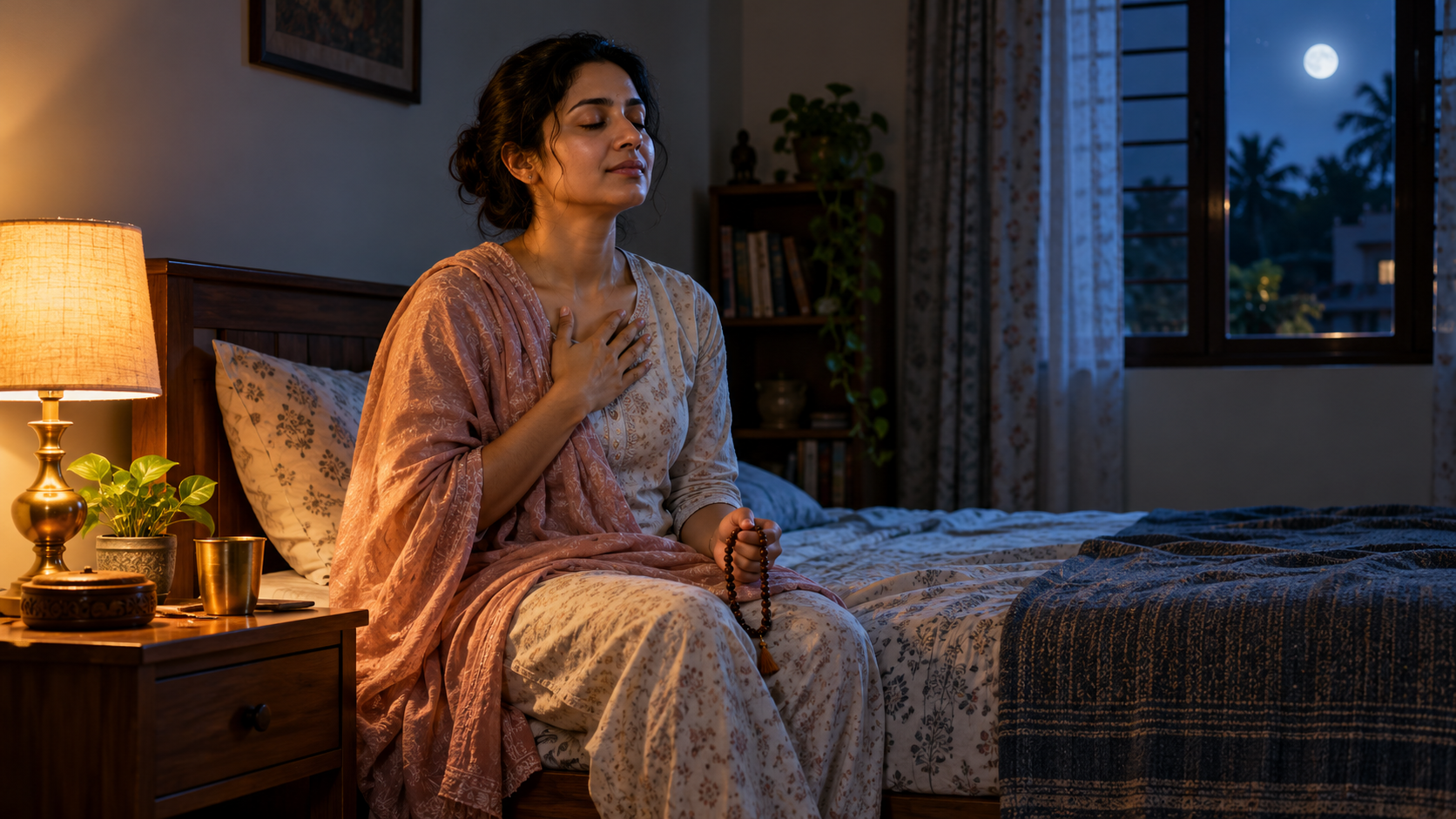
A disturbing dream can leave you afraid to return to sleep. In that moment, you do not need to decode every image or assemble a complicated ritual. One accessible devotional response is to chant Om Namah Shivaya, Jai Gurudev, or both before sleeping.
Keep the routine uncomplicated:
- Sit or lie in a position in which your breathing is comfortable.
- Bring your attention to the mantra rather than continuing to rehearse the dream.
- Chant Om Namah Shivaya, Jai Gurudev, or both at a natural pace. No special count is necessary unless your own teacher has given you one.
- End without bargaining for a particular dream. Let the practice be an act of remembrance, then return to rest.
- If you wake frightened again, repeat the same short practice instead of searching for a new remedy in the middle of the night.
Consistency is more important here than escalation. Do not assume that one difficult night means you chose the wrong mantra, pronounced it imperfectly, or need to purchase another ritual. If your lineage has given you a different bedtime prayer, follow that instruction. The aim is coherent practice, not collecting alternatives.
There is also a clear boundary. A mantra can be part of your devotional response, but it does not diagnose or treat a sleep or mental-health condition. If nightmares recur, disrupt sleep, produce daytime exhaustion, make you avoid sleeping, or are connected with traumatic experiences, speak with a qualified medical or mental-health professional. Seeking help does not weaken the spiritual practice; it addresses a different part of the problem.
Use weekday colours as reminders, not predictions

Vedic astrological custom associates particular colours with the days of the week and their planetary energies. For a devotee, that correspondence can place a small moment of intention at the beginning of the day.
The practical difficulty is that circulated colour charts are not always identical. Regional custom, household practice, and the astrological framework being followed may affect the list. Do not combine several charts and then worry about their contradictions. Select one coherent set of correspondences from a tradition you recognise and keep a copy where you choose your clothes.
Then use it in a restrained way:
- Check the next day’s colour when you prepare your clothes, not when you are already rushing out.
- Use something you already own. A devotional correspondence does not require a new wardrobe.
- If the prescribed colour is unsuitable for work, school, mourning, safety requirements, or the weather, follow the real obligation in front of you.
- Treat the colour as a prompt for recollection. When you notice it during the day, return briefly to your prayer or chosen virtue.
- If you forget or cannot wear it, continue your day without inferring that harm must follow.
The belief concerns positive planetary association; it is not a measurable promise that a shirt will produce a particular event. Your conduct still matters. A colour associated with an auspicious influence cannot compensate for dishonesty, negligence, cruelty, or a duty deliberately ignored.
This gives you a useful test. If the colour makes you more mindful, it is serving as a correspondence. If it makes you anxious, financially pressured, or afraid of punishment for an unavoidable omission, simplify the observance and seek guidance from someone grounded in the tradition.
Turn a wish-related tree practice into long-term seva
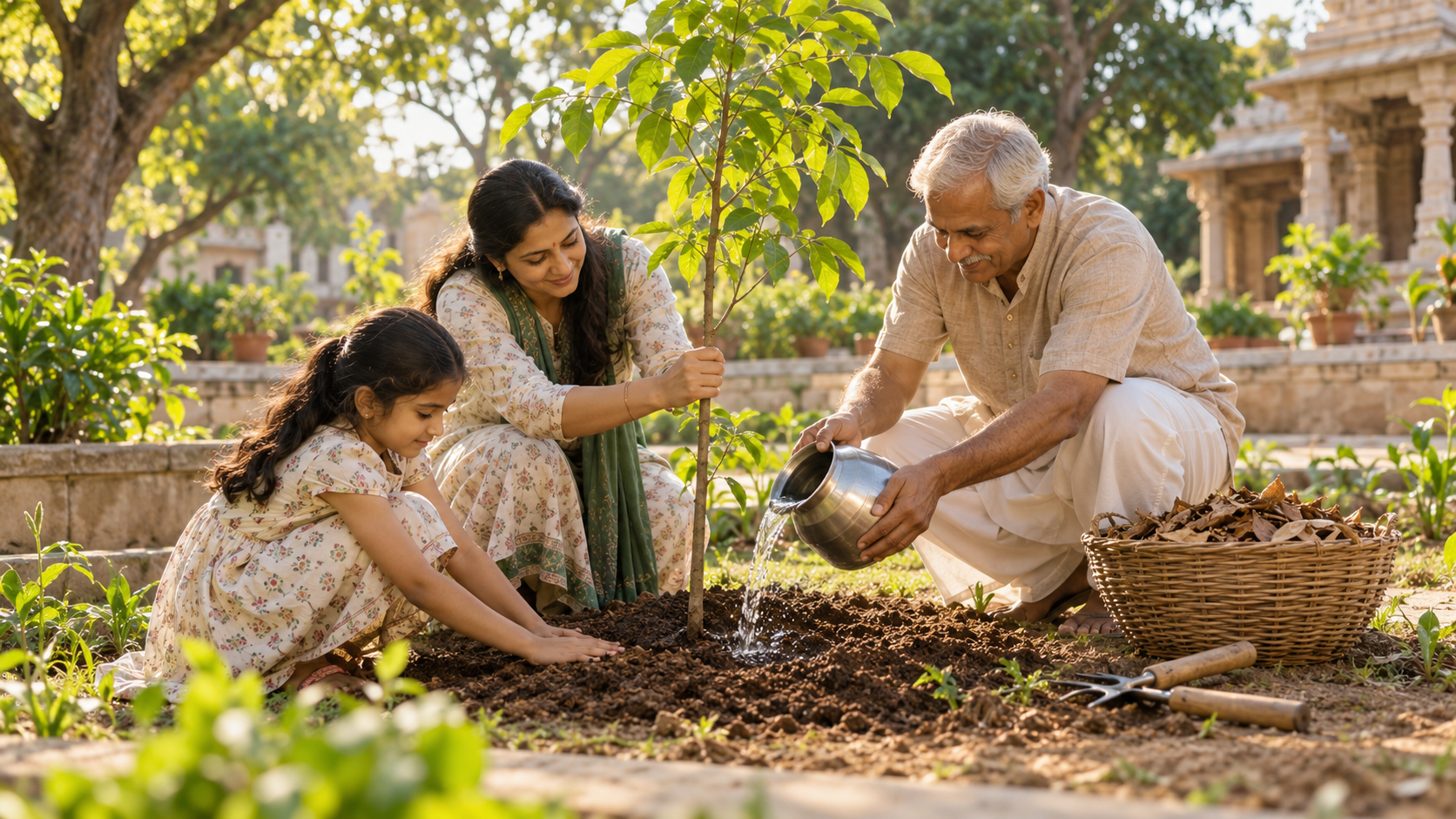
Sanatana traditions give an important place to trees, animals, birds, and the wider natural world. Within that setting, one customary approach connects particular wishes with the planting of particular trees. The correspondence may begin with a manokamna, but planting creates an obligation that continues after the prayer is spoken.
First determine which tree your family, temple, or sampradaya associates with the intention. Do not select a species merely because a viral chart promises a result. A sacred association does not remove practical questions about climate, available space, local rules, mature size, roots, water, or ecological suitability.
Once the correspondence is clear, proceed in this order:
- Name the intention plainly. Use one sentence. Avoid a long catalogue of demands.
- Name your responsibility beside it. If you pray for success, identify the disciplined work you will perform. If you pray for family well-being, identify the care, patience, or reconciliation required from you.
- Choose a viable location. Obtain permission where necessary and make sure the tree has room to mature.
- Plant without damaging the surroundings. Sacred purpose is not permission to introduce an unsuitable species or obstruct a shared space.
- Create a care plan. Decide who will water, protect, and monitor the young tree. The responsibility should not disappear after the ceremonial moment.
- Keep offerings harmless. Do not drive nails into the trunk, constrict it with wire, or leave plastic and other non-biodegradable material around it.
If you live in a rented room or an apartment, do not pretend that placing a large tree in an unsuitable container is the same as giving it a viable home. Ask whether you can assist with an appropriate planting at a temple, community site, farm, or permitted restoration project. Caring for an existing tree is also a worthy ecological act, though you should not silently relabel that adaptation as an exact ritual substitute if your tradition specifies planting.
A tree also corrects the impatience that can enter wish-based worship. You can state a wish in a moment, but you cannot command a sapling to mature immediately. Watering, protecting, and observing it shifts attention from one dramatic act to sustained seva. Whatever happens to the wish, the care itself remains real.
Build one daily rhythm instead of collecting remedies
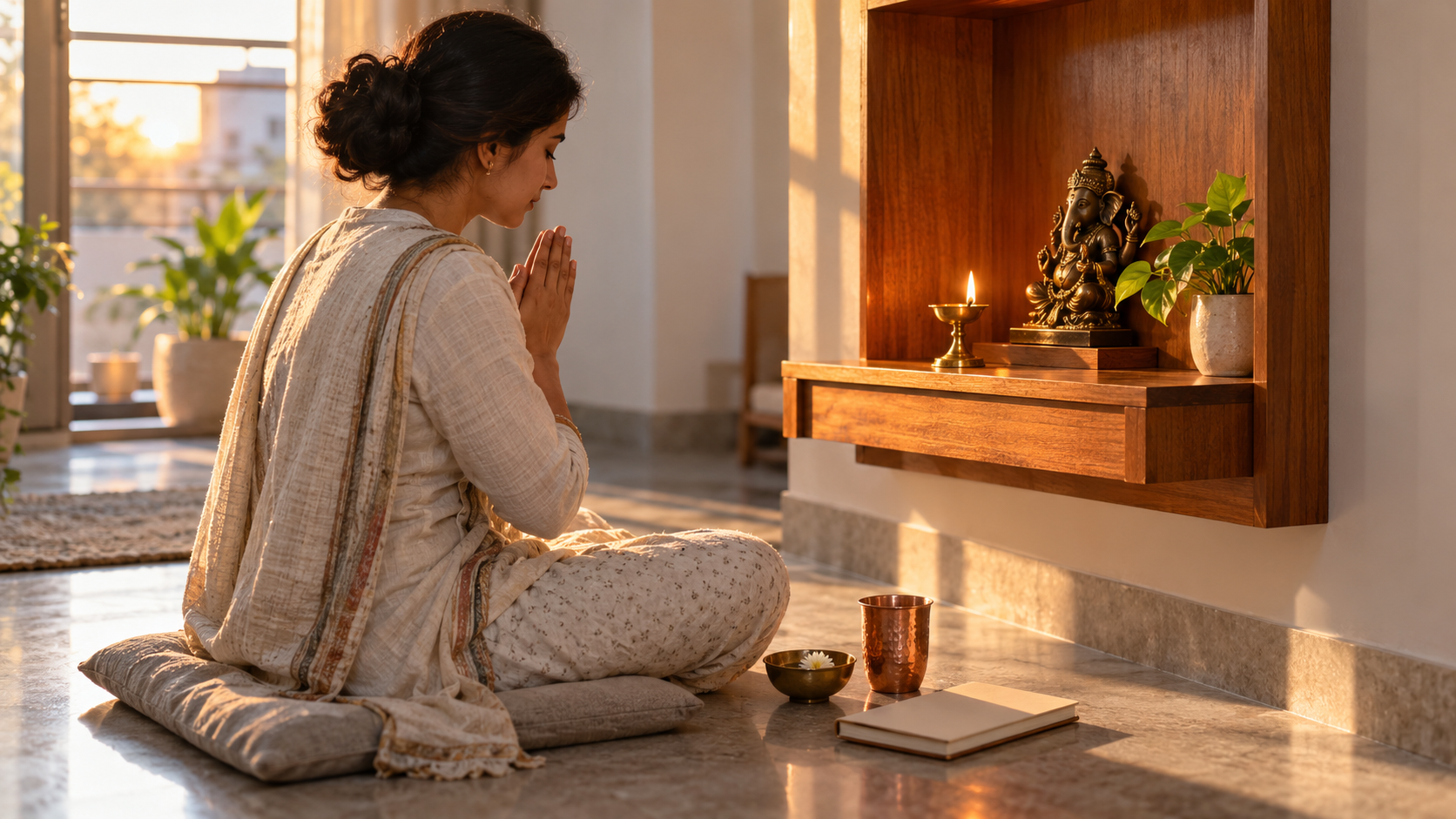
You do not need to perform every available observance. Start with a three-part rhythm that fits ordinary life:
- Morning: if you follow weekday colours, use the day’s colour as a cue for the quality you want to bring into your conduct.
- During the day: perform the practical duty connected with your intention. If you planted a tree, this includes its actual care.
- Before sleep: chant your chosen mantra without turning the practice into a demand for perfect dreams or guaranteed outcomes.
Follow that rhythm for one full week before adding anything. At the end of the week, ask whether the practice was clear, sustainable, safe, and connected to better conduct. Those questions are more revealing than searching every inconvenience for a hidden sign.
If you receive a specific instruction from a trusted guru or established lineage, that instruction may be more detailed than this household framework. Keep it intact rather than extracting one attractive element and combining it with unrelated advice. Context is part of a practice.
Key takeaways
- Use remedies to support devotion and responsible action, not to purchase certainty.
- For frightening dreams, begin with a simple bedtime chant such as Om Namah Shivaya or Jai Gurudev; seek professional help when recurrent nightmares impair your life.
- Follow one recognised set of weekday-colour correspondences and treat the colour as a reminder, not a guarantee or threat.
- Confirm the appropriate tree before planting, choose an ecologically suitable place, and accept continuing care as part of the observance.
- When a practice produces mounting fear, compulsive rule-checking, harmful expense, or neglect of real duties, simplify it and seek trustworthy guidance.
Choose the smallest observance you can honour today. Prepare tomorrow’s colour if that custom belongs to you, care for the living thing entrusted to you, and end the day with one steady mantra. Let repetition deepen the practice before you add another remedy.
References
- Hindu Pad — Bad dreams in Sleep – What to do?
- Hindu Pad — Colours of Clothes to Wear on each day as per Vedic Astrology
- Hindu Pad — मनोकामनाओं हेतु वृक्ष | Manokamna hetu Vriksh

Leave a Reply
You must be logged in to post a comment.