
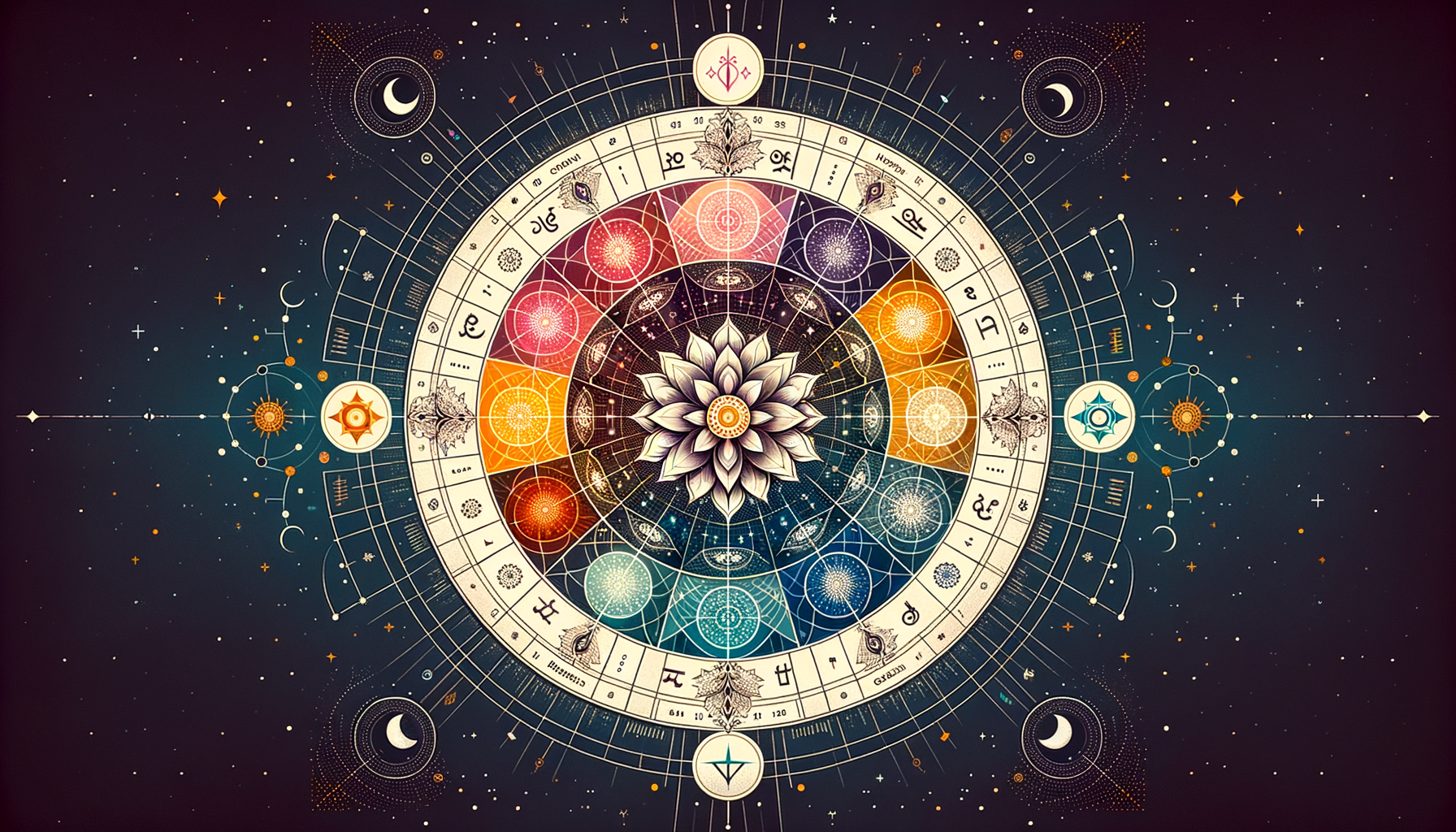
In Vedic astrology, the strength of the 12 Houses in a horoscope is primarily understood through their positional divisions and the quality of planetary influences within them. A standard framework classifies the Houses into four groups: Kendra Houses, Tricona Houses, Dhushta Sthana, and Upachaya Houses. This structure offers a clear pathway to interpret life themes, timing, and the maturation of results with accuracy and balance.
The fourfold division serves distinct purposes. Kendra Houses (Kendra Sthana) anchor stability and life direction; Tricona Houses illuminate purpose, learning, and fortune; Dhushta Sthana highlight challenges, transformation, and release; and Upachaya Houses indicate areas that improve with effort over time. Together, these categories help assess the overall strength of Houses in a horoscope as well as the capacity of planets to deliver their results.
Kendra Houses (Kendra Sthana) comprise the 1st, 4th, 7th, and 10th Houses. These are the cardinal pillars of identity, home, partnership, and profession. Planets occupying these Kendras tend to become prominent in expression, supporting visibility, stability, and practical outcomes. When well dignified, planets in Kendras can consolidate life’s foundations and strengthen day-to-day resilience.
Tricona (often written Trikona) Houses are the 1st, 5th, and 9th. They represent dharma, creativity, and higher guidance. Strong placements here typically correlate with insight, learning, and good fortune. In classical assessments, the synergy of Kendra and Tricona factors is considered highly auspicious, often signaling the capacity for steady progress and timely opportunities.
Dhushta Sthana include the 6th, 8th, and 12th Houses. Traditionally associated with conflict resolution, hidden change, and letting go, these Houses can present challenges that shape character, discipline, and compassion. While placements here may demand effort and patience, they also invite transformation, healing, and deeper self-understanding when approached with clarity and ethical intent.
Upachaya Houses are the 3rd, 6th, 10th, and 11th. These domains typically improve through practice, persistence, and time. Results here tend to grow stronger with consistent effort, skill-building, and community or professional engagement. Notably, the 6th serves as both a Dhushta Sthana and an Upachaya, and the 10th is both a Kendra and an Upachayaillustrating how challenge and growth often coexist in practical life.
Assessing the strength of a House extends beyond its category. Consider the dignity of the House lord (own sign, exaltation, or debility), benefic and malefic aspects, planetary occupancy, combustion or retrogression, and the overall harmony among Houses and their lords. Over time, predictive factors such as dasha periods and transits further modulate how each House delivers its results. This layered method keeps interpretation grounded, nuanced, and testable across charts.
Across dharmic traditionsHinduism, Buddhism, Jainism, and Sikhismthere is shared respect for self-inquiry, ethical living, and the cycles of time. Read in this spirit, the horoscope becomes less a tool of fatalism and more a mirror for growth, responsibility, and unity in diversity. This integrative outlook encourages mutual understanding while honoring different paths within the broader dharmic family.
Many students and practitioners observe that clarity emerges when Kendras and Triconas are well supported, life milestones align more smoothly, and decisions feel grounded. By contrast, Dhushta Sthana often highlight where patience, service, and inner transformation can reduce friction, while Upachaya Houses reward steady effort, skill, and community participation. Such patterns make the study of House strength both relatable and actionable for everyday life.
In summary, understanding Kendra Houses, Tricona Houses, Dhushta Sthana, and Upachaya Houses provides a practical map for interpreting the 12 bhavana. Evaluating House categories alongside planetary dignity and timing techniques leads to interpretations that are precise, compassionate, and constructivesupporting wise choices and inner steadiness over the long term.
Inspired by this post on Hindu Pad.
