
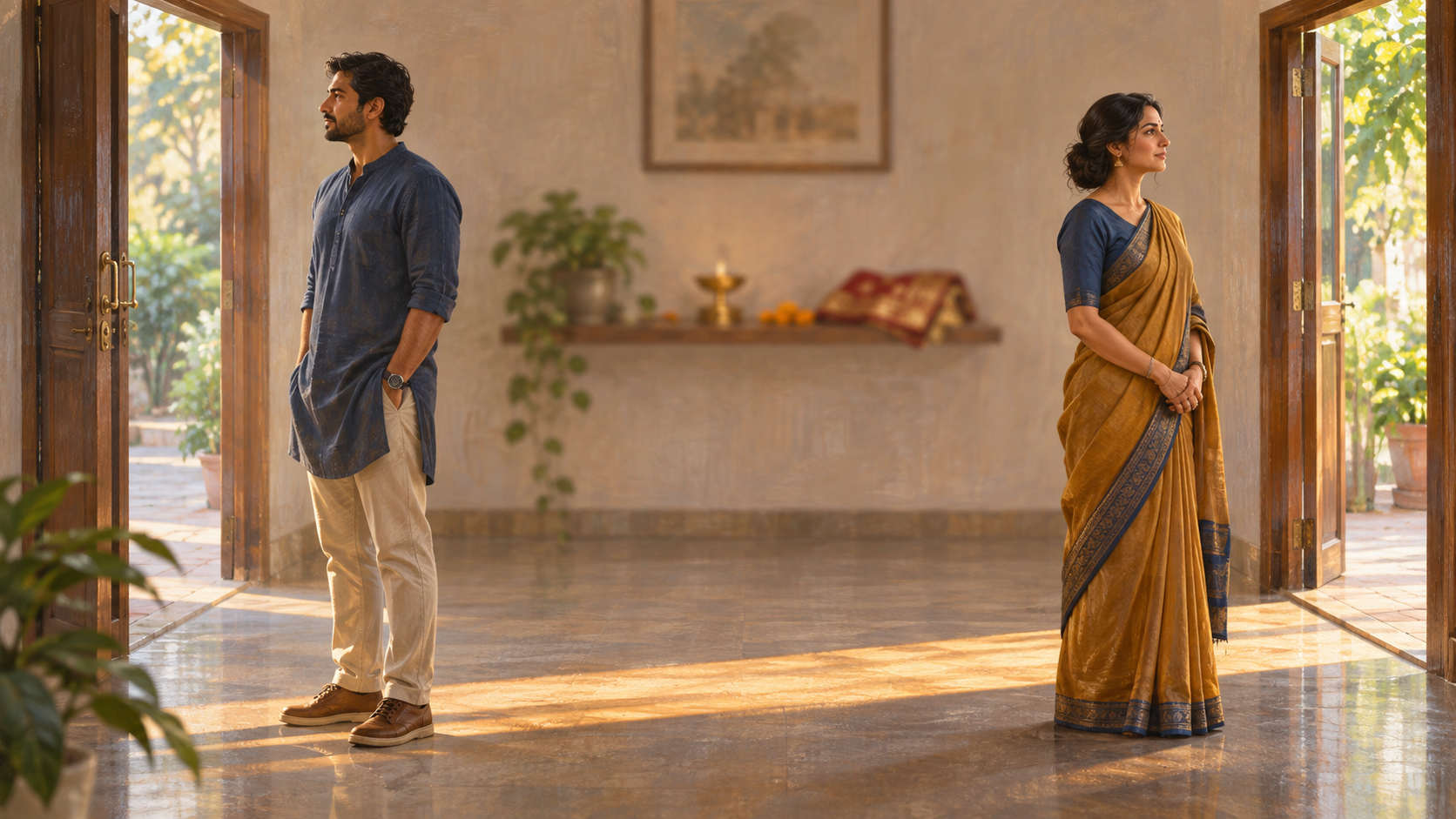
If your marriage is ending, the absence of a divorce sanskara can feel like a religious verdict. It is not. It tells you how the traditional rites classify divorce; it does not, by itself, decide whether you must remain in an unsafe or unworkable marriage.
You need to separate four questions that families often collapse into one: Is there a recognised ritual? What conduct is dharmic now? What does civil law require? What will protect everyone affected? Once those questions are separated, you can make decisions without inventing a ceremony or mistaking ritual silence for a command.
What the missing divorce sanskara actually means
A sanskara is a formative or consecrating observance. It marks an entry, development, or transition through which something is undertaken or received. Within the familiar group of sixteen sanskaras, marriage has such a place because it establishes a new relationship and set of responsibilities.
Divorce moves in the opposite direction. The traditional explanation treats it as the removal of an existing bond rather than entry into a new state requiring consecration. That asymmetry explains why there is no corresponding divorce rite among the sixteen.
This is a classification, not a complete moral ruling. A list of sanskaras is not a list of every event that can happen in human life, and the absence of a rite does not automatically make an event impossible, permitted, forbidden, honourable, or blameworthy. Those conclusions require additional ethical, pastoral, and legal reasoning.
This distinction corrects a common but invalid argument: there is no divorce sanskara; therefore Hinduism recognises no separation under any circumstances. The premise supports only the first statement. It cannot carry the second one on its own.
Sannyasa is sometimes used as an analogy because it involves leaving attachments behind. The comparison can illustrate subtraction, but it should stop there. Renunciation is not a divorce procedure. It does not determine civil status, divide property, arrange support, settle responsibility for children, or automatically release another person from marital obligations. Do not use sannyasa as a workaround for matters that require legal and family resolution.
Keep the ritual, ethical, legal, and safety questions separate
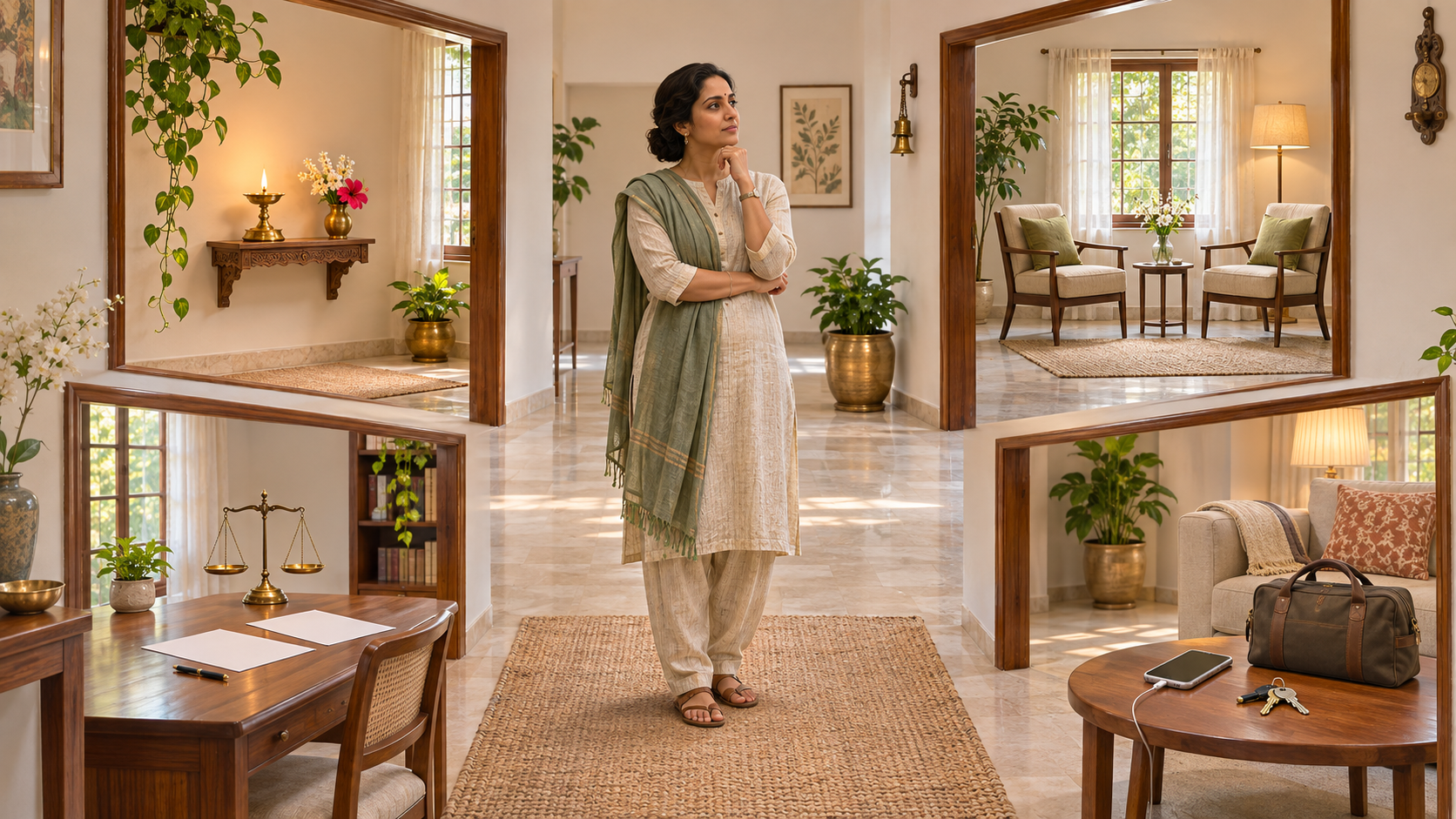
The most damaging confusion begins when one answer is made to do four different jobs. A priest may explain ritual custom without being qualified to advise on family law. A lawyer may establish your civil rights without deciding what religious closure means to you. A respected elder may help with communication while lacking the independence needed in a coercive family dispute.
| Domain | Question to answer | Appropriate help | Limit of that answer |
|---|---|---|---|
| Ritual | Does our sampradaya, temple, or family custom recognise any practice after separation? | A practitioner who actually knows that tradition | A ritual answer does not change civil status. |
| Ethical | How should we act truthfully, responsibly, and without avoidable harm? | Careful personal reflection, qualified counselling, and trustworthy spiritual counsel | Good intentions do not cancel financial, parental, or legal duties. |
| Legal | What ends the marriage, and what happens to property, support, residence, and children? | An independent family lawyer in your jurisdiction and, where required, a court | A legal order does not automatically provide emotional or religious closure. |
| Safety | Is anyone facing violence, threats, stalking, confinement, or coercion? | Emergency services, a local domestic-violence service, law enforcement, or another qualified safety professional | Safety planning should not be delayed for mediation, family approval, or ritual discussion. |
If the marriage has civil legal status, do not assume that a private prayer, family declaration, temple visit, physical separation, or religious renunciation ends it. Laws vary by jurisdiction. Before signing an agreement, moving significant assets, surrendering important documents, or making consequential arrangements concerning children, obtain independent legal advice.
Where violence or coercive control is present, joint counselling or family mediation may be unsafe. Begin with a confidential safety professional and legal counsel. Religious guidance can accompany that work, but it must not replace protection or pressure you into direct contact.
Build responsible closure without inventing a sanskara
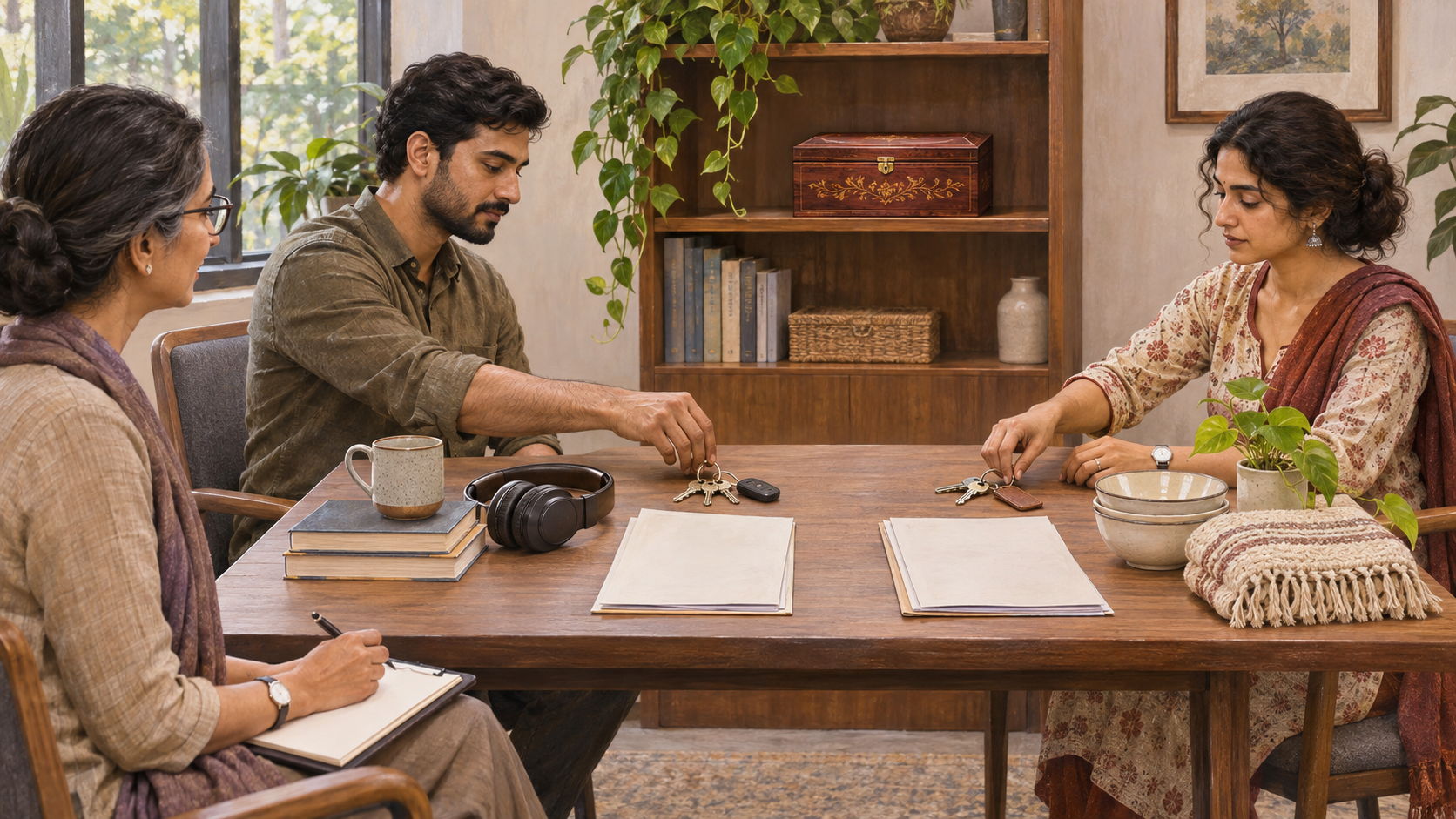
No standard divorce sanskara does not mean you must leave the ending morally unexamined. It means your work is primarily practical and ethical: reduce harm, tell the truth, meet continuing responsibilities, and avoid falsely presenting a personal observance as a canonical rite.
- Address immediate safety first. If there are threats, violence, stalking, forced confinement, or fear of retaliation, make a confidential safety plan before announcing decisions or arranging a joint meeting.
- Establish your legal position. Ask a family lawyer what formally changes your marital status and what rules apply to housing, finances, support, property, immigration status, and children in your jurisdiction. Do not rely on a relative’s experience in a different place.
- Ask a tradition-specific ritual question. A useful formulation is: Is there a recognised custom in our sampradaya, temple, or family for conduct after a civil separation, and if not, what private observance would be appropriate? This invites guidance without demanding that someone manufacture a seventeenth sanskara.
- Write down the responsibilities that survive separation. Include care of children or other dependants, financial commitments, shared property, documents, personal belongings, family heirlooms, and sacred objects. Resolve ownership and handling by agreement or legal process rather than using a ceremony to bypass disagreement.
- Use symbolic closure modestly, if it genuinely helps. Private prayer, reflection, or a personal resolution may mark the transition, but call it what it is: a personal or local observance. Do not claim that it annuls a civil marriage, erases past vows, or belongs to the traditional sixteen sanskaras.
- Set a communication boundary. A simple statement may be enough: We are separating and are addressing our responsibilities privately. Please do not pressure either person, circulate allegations, or treat speculation as fact. In a hostile or unsafe case, let a lawyer or designated representative handle communication instead.
A joint closure observance is not required. It may be inappropriate when one spouse is coercive, when facts are disputed, or when contact creates danger. Religious dignity does not depend on staging mutual harmony that does not exist.
Be equally cautious about public purification language. Separation may involve grief, failure, wrongdoing, necessity, or several of these at once. Declaring one person spiritually contaminated converts a difficult family process into communal punishment. Accountability should be tied to specific conduct and fair process, not attached indiscriminately to divorced status.
How to answer the claim that Hinduism has no divorce
When a relative or religious adviser says that Hinduism has no divorce, first identify what kind of claim is being made. They may mean that there is no divorce sanskara among the traditional sixteen. They may instead be offering a moral opinion, describing one community’s custom, or making a legal claim. Those are not interchangeable.
You can respond without turning the conversation into a contest over authority: I understand that there is no divorce sanskara among the traditional sixteen. I am not asking anyone to invent one. I am asking what conduct is truthful and responsible when the marriage cannot continue, what duties remain, and which customs actually apply to our family.
Then ask precise questions:
- Are you making a statement about ritual classification, moral duty, community custom, or civil law?
- Is this position specific to our sampradaya or family, or are you claiming it for every Hindu tradition?
- What concrete responsibility do you believe continues after separation, and to whom is it owed?
- Would your advice change if the marriage involved violence, threats, coercion, or serious danger?
- Are you qualified to advise on the legal consequences, or should that question go to a family lawyer?
- If there is no recognised closing rite, what private conduct would preserve dignity without pretending to create one?
These questions move the discussion from slogans to responsibilities. They also reveal when religious vocabulary is being used to make a legal assertion, suppress evidence of harm, or demand social conformity without addressing the actual marriage.
You do not have to choose between respecting sanskara and dealing honestly with a marriage’s end. Respect begins with using the category accurately. The absence of a divorce sanskara should keep you from inventing ritual authority; it should not keep you from obtaining protection, following the law, fulfilling obligations, or seeking careful spiritual counsel.
Key takeaways
- The traditional sixteen sanskaras contain no divorce rite because divorce dissolves an existing bond rather than consecrating entry into one.
- That absence is not, by itself, proof that every separation is religiously impossible or that civil divorce has no effect.
- Ritual guidance, ethical responsibility, civil law, and personal safety are separate questions requiring different kinds of help.
- A personal prayer or local custom may offer closure, but it should not be represented as a canonical divorce sanskara or a substitute for legal process.
- Continuing duties to children, dependants, property, truthfulness, and safety matter more than constructing a ceremonial ending.
Your next step is not to search for a ritual that the traditional list does not contain. Write down the unanswered ritual, ethical, legal, and safety questions in your own situation, then take each one to the person qualified to answer it. That is a more honest form of closure than asking one ceremony to solve everything.
References

Leave a Reply
You must be logged in to post a comment.