
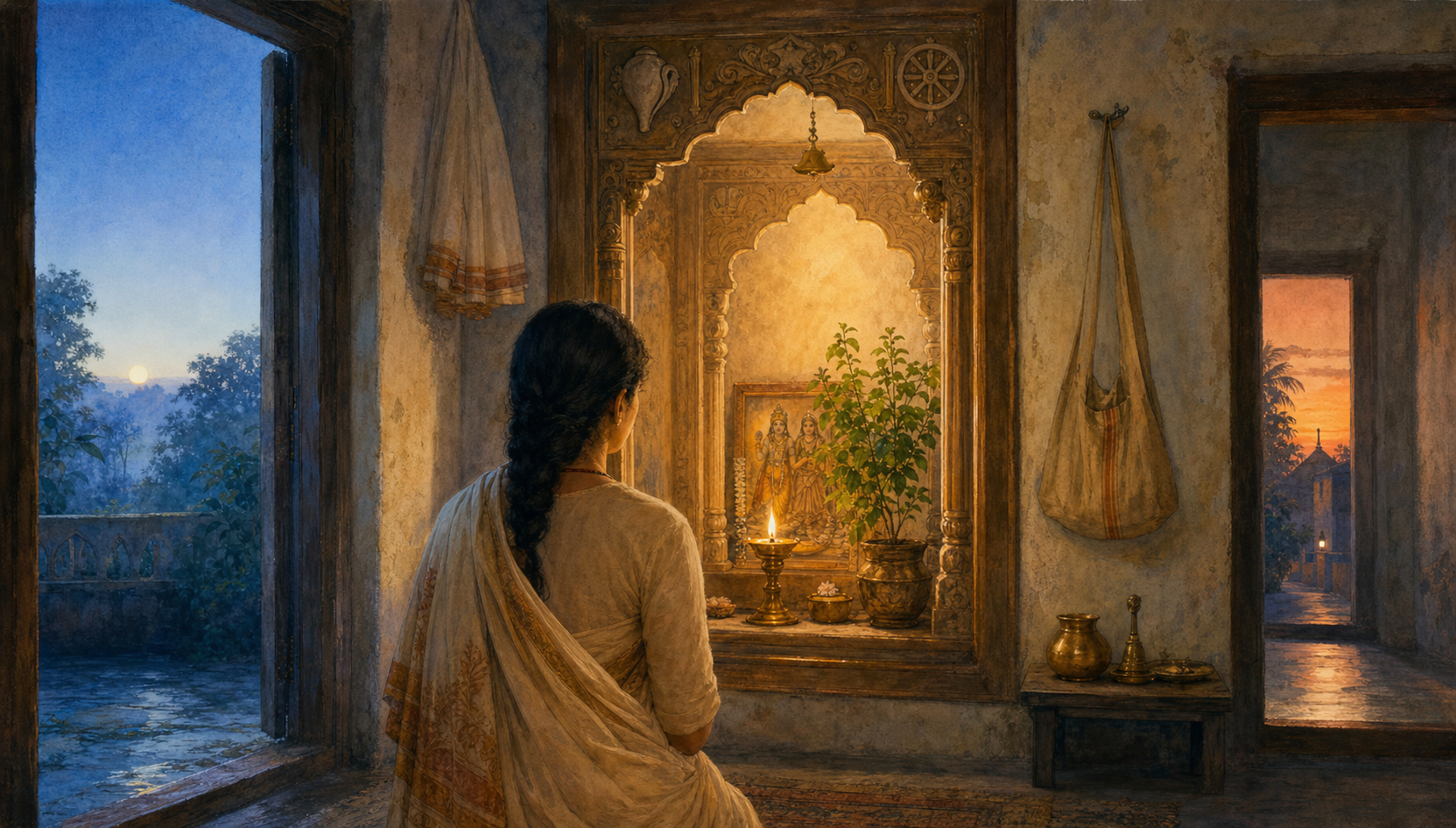
You may remember Narayana easily during puja yet lose the Name precisely when you need it most: on a hurried morning, before sleep, during illness, or beside someone who is dying. The answer is not to wait for a more spiritual state. It is to give remembrance a regular place at the thresholds you already cross.
A workable Vaishnava practice should be simple enough for an ordinary day, deep enough for a sacred season, and gentle enough for the final passage. Here is how to build that continuity without turning remembrance into another performance or imposing it on someone in your care.
A threshold reveals what the mind has practised
The final thought is often discussed as though it were an isolated spiritual test. Vaishnava teaching offers a more demanding and more compassionate view. At death, smriti, or remembered awareness, does not arise from nowhere. It is shaped by samskara, the tendencies repeatedly impressed upon the mind throughout life. The Bhagavad Gita therefore treats consciousness at the final moment as consequential, while bhakti makes preparation possible through repeated remembrance of the Divine.
This means that remembrance at death should not be separated from remembrance at dawn, before sleep, and during the smaller transitions of the day. A Name made familiar through regular japa is more likely to remain available when attention is strained. The final threshold matters, but daily thresholds train the mind that will meet it.
Treat a threshold as a change of state: waking from sleep, beginning worship, closing the day, entering a period of illness, or accompanying a person whose life is ending. You do not need to ritualise every movement. Choose the transitions that recur reliably and attach the Name to them. Consistency matters more than adding numerous observances that disappear when life becomes difficult.
- Use a stable cue. Let waking, the start of evening quiet, or lying down for sleep prompt remembrance before another activity takes over.
- Keep the formula recognisable. If Om Namo Narayanaya belongs naturally to your devotion, use it consistently rather than changing mantras whenever the mood changes.
- Make the minimum practice dignified. On a disrupted day, repeat the complete Name without haste. Do not abandon the practice because a longer session is impossible.
- Return without self-reproach. A missed threshold is not repaired by guilt. Resume at the next one.
The aim is not to produce a dramatic feeling every time. You are making a path that attention can recognise. When fear, fatigue, or confusion narrows the mind, familiarity becomes spiritually important.
Build a daily rule the mind can carry
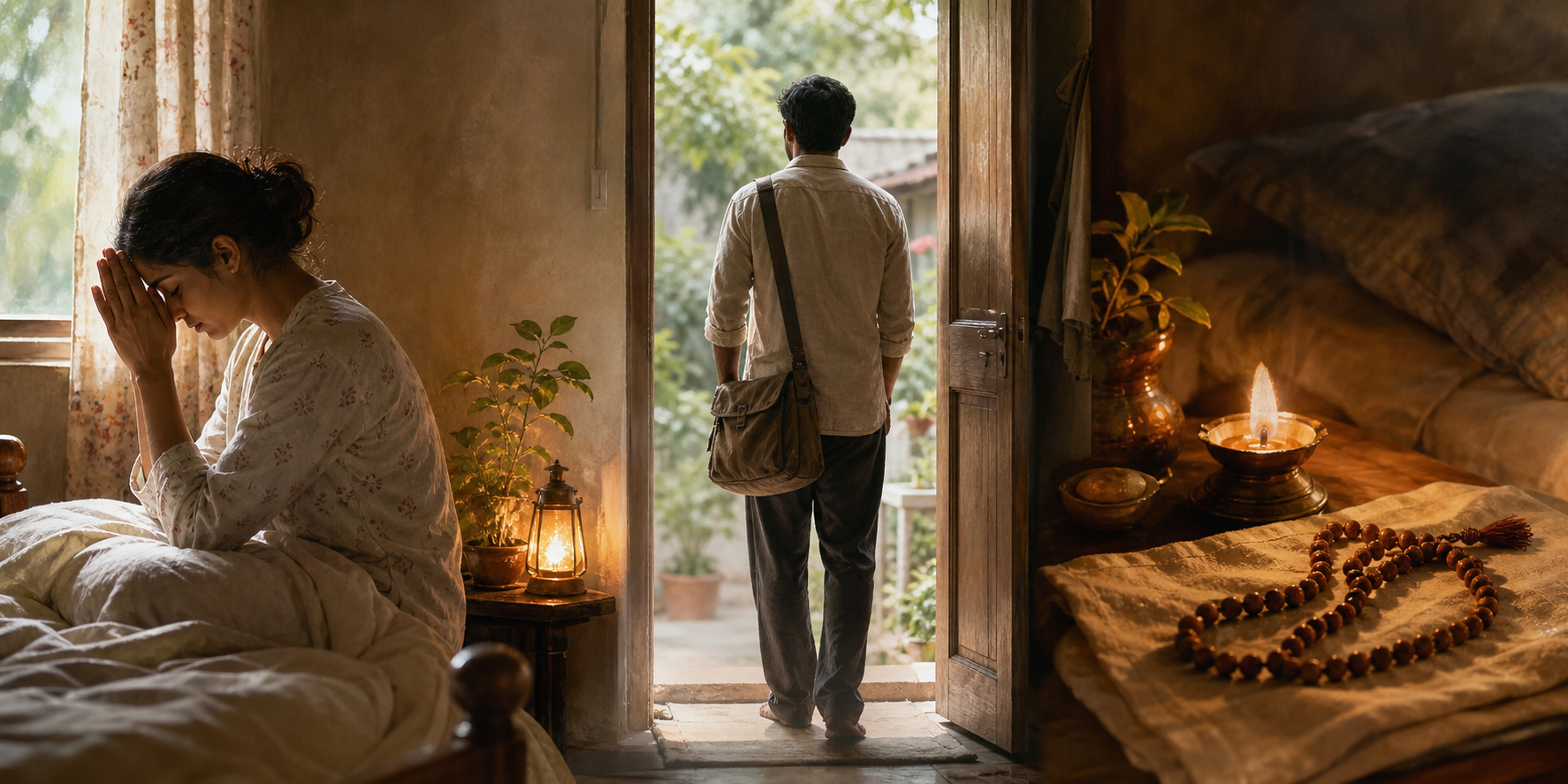
A daily rule works when it answers three questions in advance: which Name will you remember, at which threshold, and in what manner? If you renegotiate all three every day, the decision itself becomes an obstacle.
- Choose the Name in keeping with your devotion. A devotee of Narayana may use Om Namo Narayanaya; a Krishna devotee may use the Hare Krishna mantra. If your guru, family tradition, or sampradaya has given a practice, preserve that coherence.
- Attach it to dawn and sleep. Remember the Name before the day’s demands gather momentum and again before the mind enters sleep. These are dependable thresholds even when the rest of the schedule changes.
- Select the least strained mode. Manasika japa is mental repetition. Upamsu japa is voiced softly under the breath. Gentle audible chanting or kirtan may be suitable when the setting and the people present welcome it.
- Let breathing remain natural. You may mentally place Om Namo Narayanaya along an easy exhalation if that steadies attention. Do not prolong, hold, or force the breath merely to fit the mantra.
- Carry remembrance into conduct. When chanting ends, let the next action express humility, patience, or seva. The threshold then changes not only what you are thinking but how you enter the next part of the day.
If mental japa becomes vague, move temporarily to a soft whisper so the ear can support attention. If vocal repetition feels intrusive, return to silent remembrance. The modes are not rivals. They are practical ways of protecting the same orientation toward Bhagavan under different conditions.
Mixed households need a clear but generous rule. No family member should have to erase a sincere form of devotion to participate. Vaishnavas may remember Narayana or Krishna, while relatives formed by another dharmic path may keep silence or repeat the Divine Name familiar to them. Shared reverence does not require pretending that all theologies and disciplines are identical.
Let dawn and Dhanurmasam deepen the pattern
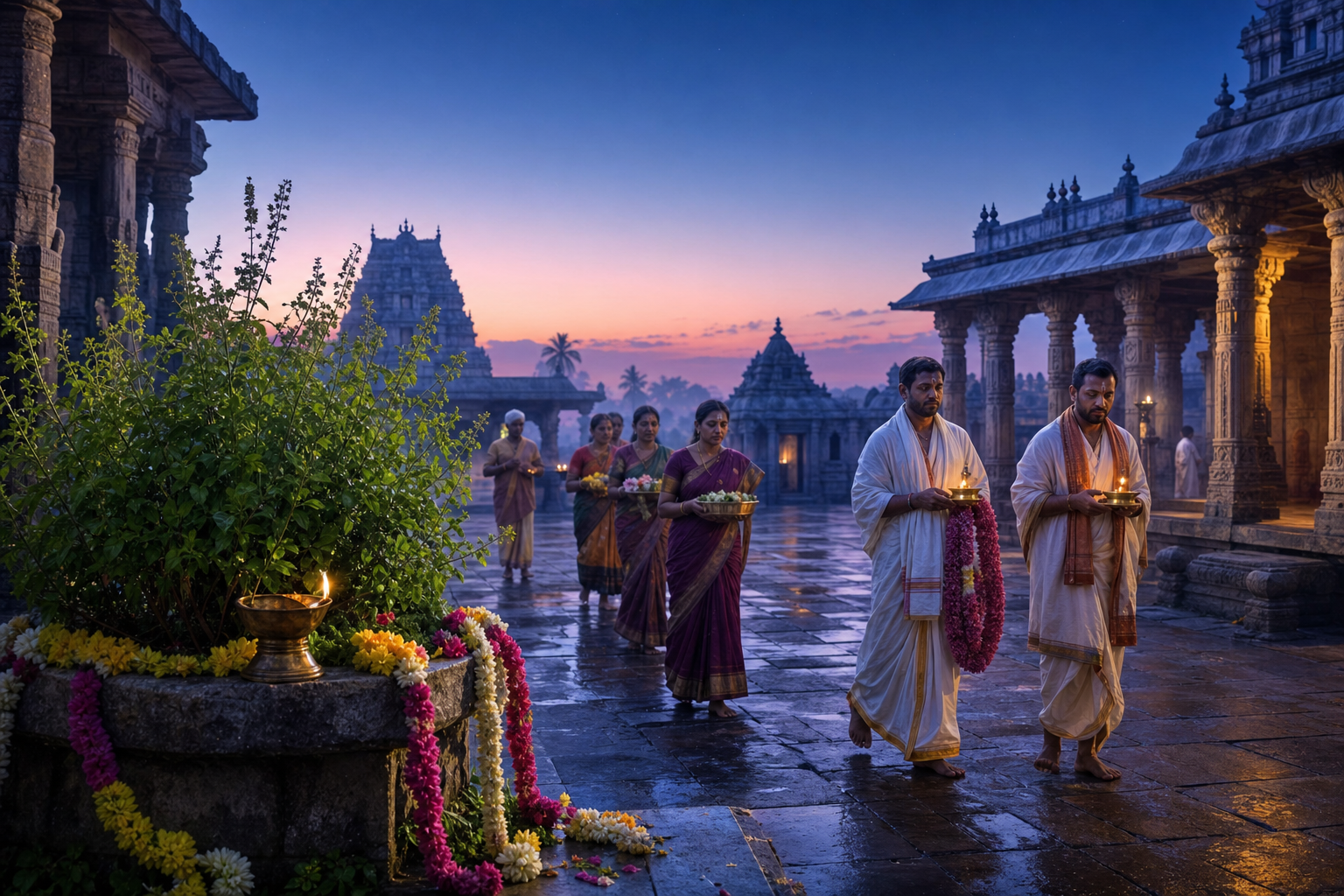
Ordinary daily repetition lays the foundation, but a sacred season can intensify it. During Margazhi or Dhanurmasam, the thirty pasurams of Andal Sri Godai’s Tiruppavai give Vaishnava households a disciplined language of awakening, surrender, communal effort, and service. The season’s value lies not in adding festive busyness. It lies in allowing dawn itself to become a school of bhakti.
Tirumala makes this emphasis visible by placing Tiruppavai Parayanam at daybreak in place of the customary Suprabhata Seva during Dhanurmasam. Tomala, the offering of floral garlands, and Archana, systematic recitation of the Lord’s names, are performed in Ekantam. The pattern joins poetry, offering, name-remembrance, and inwardness without reducing dawn worship to spectacle.
You can translate that temple discipline into a household practice without trying to imitate a temple’s full liturgy:
- Prepare the text, lamp, or recording before going to sleep so that dawn does not begin with searching and negotiation.
- Keep the space uncluttered and the household tone quiet. The setting should support attention rather than announce an event.
- Recite Tiruppavai according to the custom you follow. If the Tamil is unfamiliar, learn gradually and use a trusted text rather than rushing through uncertain words for the sake of completion.
- Allow children or newcomers to listen before expecting fluent participation. Familiarity grows through repeated exposure.
- Connect recitation with a concrete act of seva or consideration during the day. Andal’s devotional discipline should enter conduct, not remain confined to the morning.
The household and temple then reinforce one another. Temple observance gives the season a shared cadence; domestic remembrance makes that cadence personal and intergenerational. Even when you cannot be present at Tirumala, dawn can carry the same priorities of humility, attention, and loving service.
At illness and death, devotion must remain consent-based
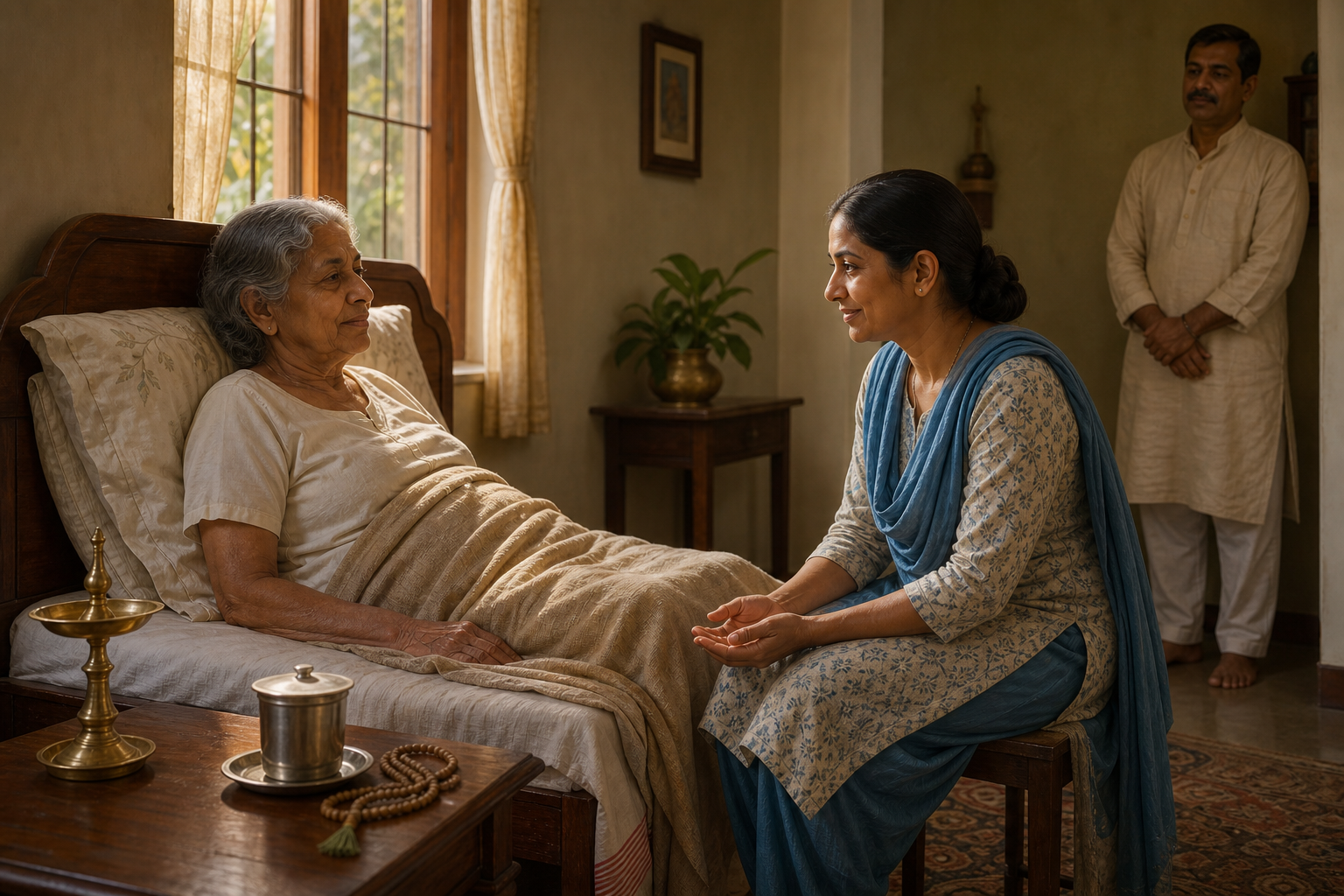
The bedside is not the place to introduce an unfamiliar ritual, display religious intensity, or settle family disagreements. It is a place for attentive care. If a person is seriously ill, ask early what Name they want remembered, whether they prefer silence or audible chanting, which verses or bhajans are familiar, and who they want present. Record those wishes in a form that relatives and caregivers can follow.
When the final stage arrives, reduce avoidable stimulation. Keep voices low, limit competing sounds, and use a steady cadence. A familiar Bhagavad Gita passage or bhajan may be read softly if the person welcomes it. A hand may be held if touch is comforting. If speech has become difficult, do not ask the person to prove awareness by repeating after you. Silent japa by the bedside or soft chanting from companions can preserve the atmosphere of remembrance without placing another demand on them.
The mantra may follow the person’s natural breathing, but breathing must never be forced. Illness can make breath irregular or laboured. If chanting appears to increase distress, lower the volume, change to silent japa, or stop. New agitation, pain, or breathing difficulty belongs immediately with the medical or palliative-care team; mantra is not a substitute for clinical relief.
The Vaishnava conviction that consciousness at death helps orient the onward journey is a theological teaching linked to karma, rebirth, and liberation. Empirical science does not determine whether rebirth occurs. It can, however, support the immediate wisdom of a calm environment: soft, consistent auditory cues and reassurance may lessen agitation, while long-term attentional practice conditions familiar responses. You need not confuse these two kinds of claim. The spiritual meaning can be honoured without making medical promises.
Avoid the common mistake of treating loudness as devotion. More voices, more volume, and constant switching between chants can burden a person whose sensory tolerance is narrowing. Choose what they know. Maintain it gently. Leave room for silence. The quality of accompaniment lies in love, steadiness, and respect for the person’s wishes, not in how much ritual the family can fit into the room.
Religious difference requires the same restraint. Buddhist maranasati, Jain samadhi marana, and Sikh Naam Simran each approach mortality through their own disciplines and understandings. A mixed dharmic family can recognise the shared seriousness of loving remembrance while still following the dying person’s chosen path. At this threshold, hospitality means protecting that person’s devotion rather than using their vulnerability to promote your own.
Key takeaways
- Do not treat remembrance at death as an isolated test. Daily samskara is formed through repeated attention at ordinary thresholds.
- Choose a stable Name, a recurring cue, and a mode of japa that remains usable when the day is difficult.
- Use dawn and the period before sleep as dependable anchors rather than waiting for spare time.
- During Dhanurmasam, let Tiruppavai deepen the existing rhythm through recitation, humility, and seva.
- Discuss end-of-life devotional wishes before a crisis, including the preferred Name, volume, readings, and companions.
- At the bedside, follow consent, medical guidance, and the person’s comfort. Gentle remembrance is not measured by volume or display.
Choose the next threshold you will actually cross: tonight before sleep or tomorrow at dawn. Place Narayana’s Name there, keep the practice light enough to repeat, and return to it until remembrance feels less like an interruption and more like the mind coming home.
References
- DharmaRenaissance Blog — Narayana Mantra at Life’s Final Breath: How Last Thoughts Shape Destiny and Peace
- DharmaRenaissance Blog — Tiruppavai at Dawn in Tirumala: Andal Sri Godai and the Sacred Power of Dhanurmasam
