
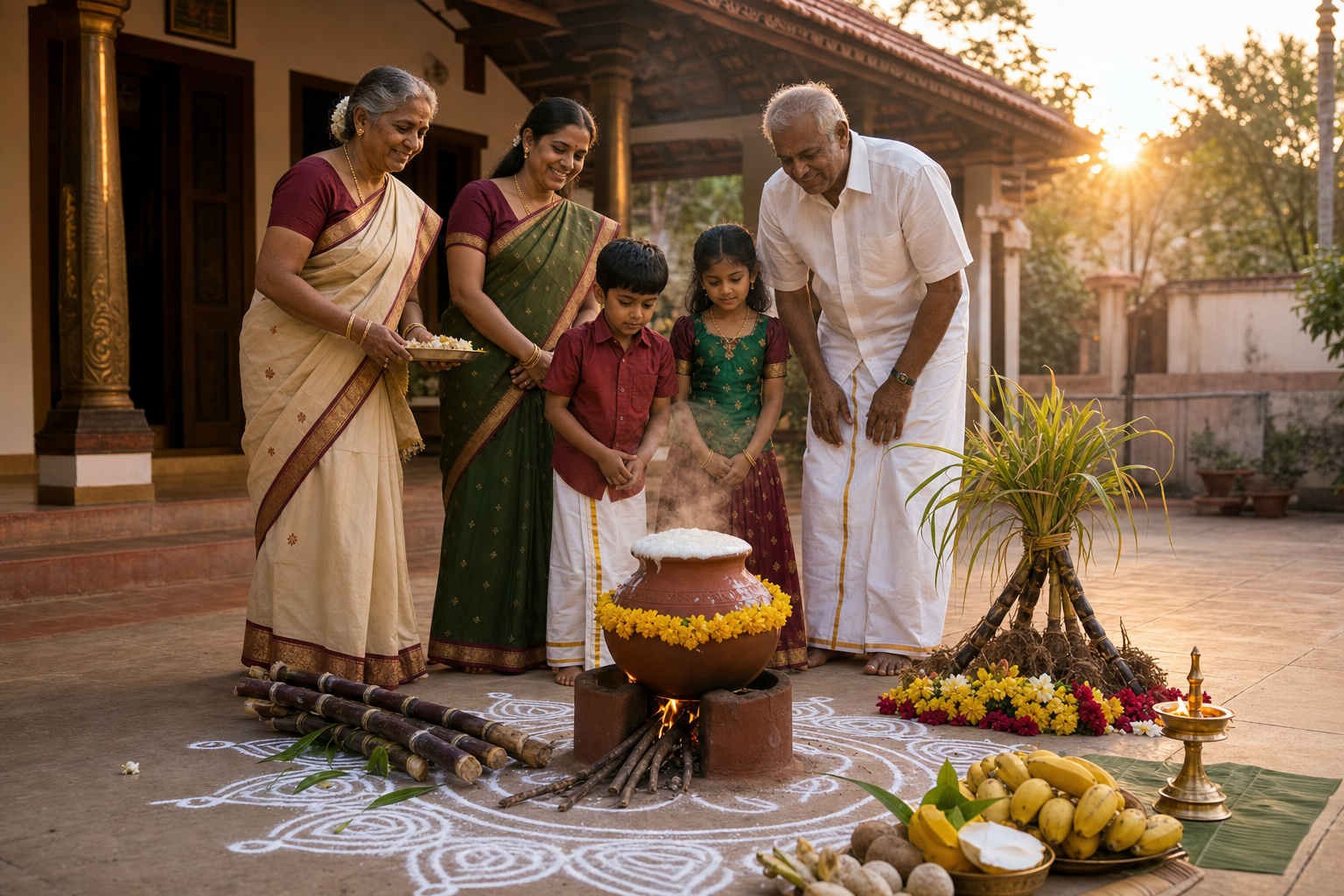
If you’re coordinating leave, a temple visit, cooking, or family gatherings for Pongal 2026, reserve four dates rather than only the main festival day. Pongal runs from 13 through 16 January 2026, beginning with Bhogi and ending with Kannum Pongal.
The sequence matters. Pongal moves from clearing what is worn out, to thanking Surya, to honoring cattle, and finally to renewing human relationships. Once you understand that movement, you can observe the festival meaningfully even if your household is small, you live outside Tamil Nadu, or work prevents an elaborate four-day celebration.
Pongal 2026 dates and key takeaways
| Observance | Date in 2026 | Primary focus | Ritual anchor |
|---|---|---|---|
| Bhogi Pongal | 13 January | Renewal and letting go | Cleaning, kolam, and the Bhogi bonfire |
| Surya Pongal | 14 January | Gratitude to Surya and the harvest | Rice and milk boiling over, followed by naivedyam |
| Mattu Pongal | 15 January | Gratitude and care for cattle | Bathing, decorating, and feeding cows and bulls |
| Kannum Pongal | 16 January | Family and community bonds | Visits, shared food, prayers, and time together |
Key takeaways:
- Keep 13-16 January available if you want to follow the complete four-day observance.
- If you can observe only one day, make 14 January your anchor. Surya Pongal is the principal day and coincides with Makara Sankranti.
- The civil dates do not provide one universal hour for every temple or household ritual. Confirm local timings with your temple, priest, or family tradition.
- Do not use Bhogi as an excuse to burn mixed household rubbish. Natural materials and lawful, safely managed fires preserve the rite’s purifying intention.
- Read the four days as one discipline: clear, thank, care, and reconnect.
The four days are one spiritual movement
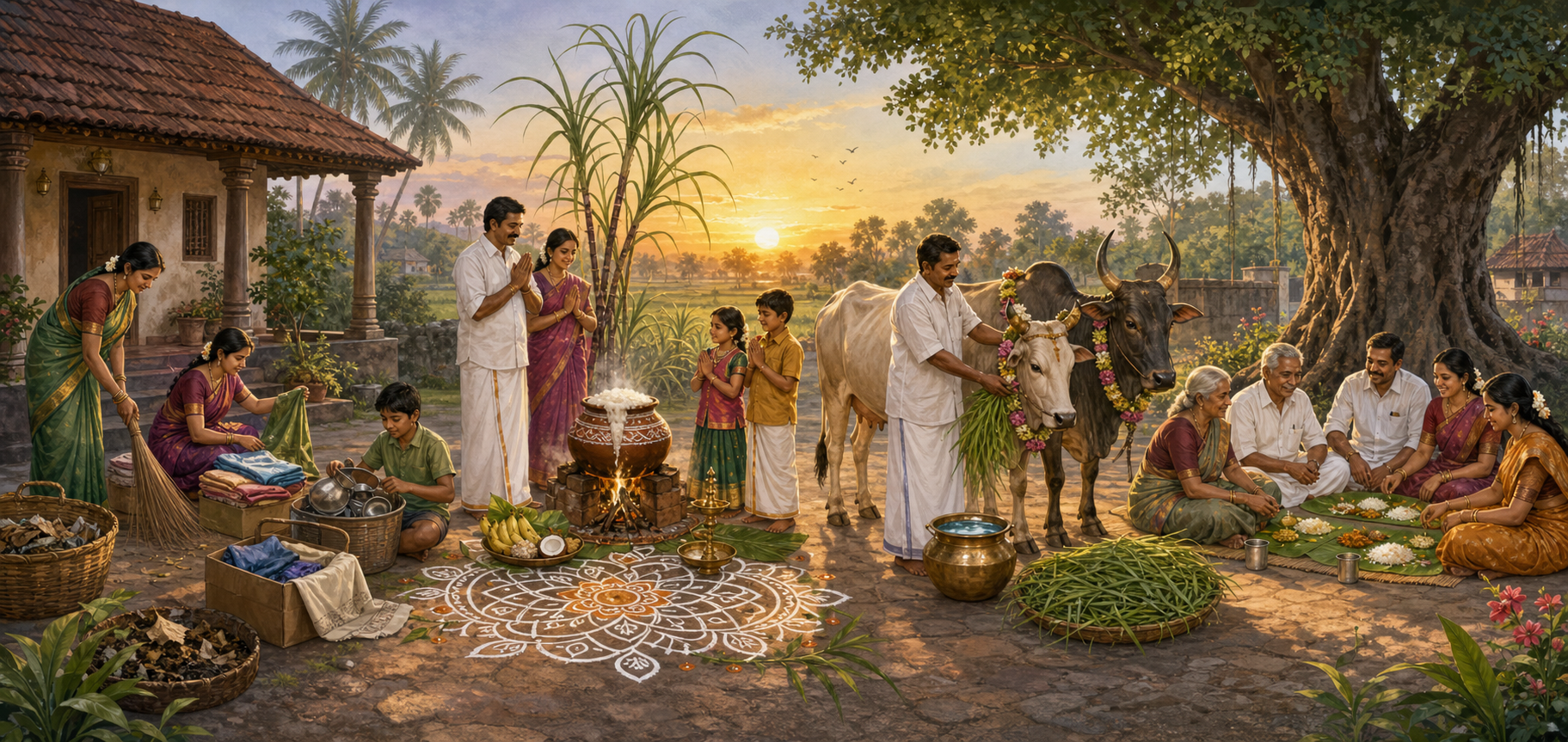
Pongal is a Tamil Hindu harvest festival observed in the Tamil month of Thai. Its central concerns are agricultural but not merely economic. Sunlight, rain, earth, crops, animals, household labor, and community cooperation are treated as an interdependent order worthy of gratitude.
Surya Pongal’s alignment with Makara Sankranti places the Tamil observance within a wider Indian season of thanksgiving. Bhogi also has a family resemblance to bonfire-centered observances such as Lohri and Magh Bihu. These festivals are not interchangeable, but they share a seasonal language of fire, renewal, food, nature, and community. Dharmic readers across traditions may recognize values such as gratitude, ahimsa, service, and restraint while still respecting Pongal’s distinctly Tamil Hindu form.
Bhogi Pongal: clear with discernment
On 13 January, clean the home and renew the entrance with a kolam. Sort possessions by what should be repaired, donated, recycled, or responsibly discarded. That is more faithful to renewal than treating every unwanted object as fuel.
The traditional focal point is Bhogi Mantalu, a dawn bonfire associated with purification and release. Where a fire is lawful and safe, use appropriate natural material such as dried leaves or twigs and keep plastics and other pollutants out. If an open flame is prohibited or impractical where you live, retain the day’s central work through cleaning, responsible disposal, prayer, and reflection rather than creating a hazard.
You can also name one habit that has become stale and decide what will replace it. This is a personal practice alongside the traditional rite, not a substitute for it. Its purpose is to prevent Bhogi’s symbolism from ending when the floor is swept.
Surya Pongal: receive abundance as a gift
On 14 January, prepare freshly harvested rice and milk in a vessel and allow the mixture to boil over. The household calls “Pongalo Pongal” as it rises, and the food is offered to Surya as naivedyam before it becomes part of the shared celebration. Use your family’s recipe and ritual order; regional and household details need not be forced into a single template.
Plan the overflow instead of treating it as an ordinary kitchen spill. Choose a stable vessel, a safe heat source, and a surface that can accommodate the ritual without causing burns or damage. The overflowing pot expresses abundance, but the deeper discipline is humility: light, warmth, land, seed, animal labor, and human effort have all met in the meal before you.
If work or travel restricts your observance to one day, center it here. Offer gratitude to Surya, prepare the Pongal dish as circumstances permit, and share the meal rather than reducing the day to a greeting exchanged online.
Mattu Pongal: let the animal’s welfare govern the ritual
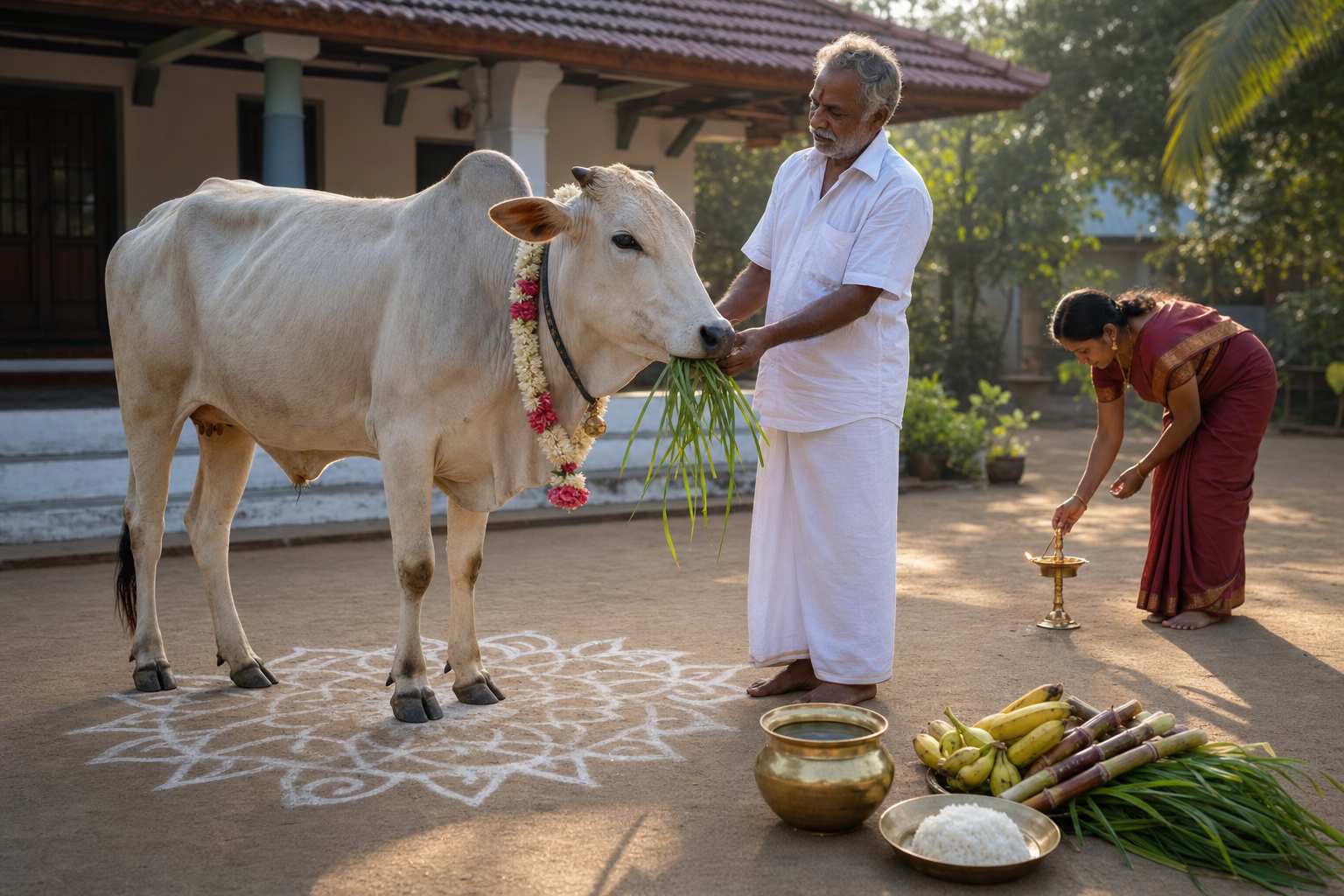
On 15 January, cows and bulls are bathed, decorated, and fed special offerings in recognition of their role in agriculture. The day corrects a common human habit: noticing the harvest while overlooking the beings whose work helped produce it.
If your family keeps cattle, let the animal’s comfort determine how the observance is conducted. Decoration should never frighten, exhaust, injure, or obstruct the animal. Feeding and gentle care carry more meaning than an elaborate display performed for photographs.
Urban families need not manufacture an imitation encounter with cattle. Instead, teach children why cattle matter in agrarian life, avoid wasting the food that farming produces, and make a concrete commitment to compassionate treatment of animals. Those actions do not replace the traditional Mattu Pongal rite, but they preserve its ethical direction where direct observance is unavailable.
Kannum Pongal: turn gratitude into relationship
On 16 January, the festival turns toward relatives, neighbors, and the wider community. Visits, shared food, prayers for well-being, and time in communal spaces make belonging visible. Kannum Pongal reminds you that abundance cannot be measured only by what is stored in the house; it also appears in the relationships that can still be called upon and cared for.
Decide whom you will contact before the day arrives. Prioritize an elder, a distant relative, or someone who might otherwise pass the festival alone. A modest visit with full attention is more consistent with the day than an overfilled social schedule in which nobody is truly met.
Prepare the home before January 13
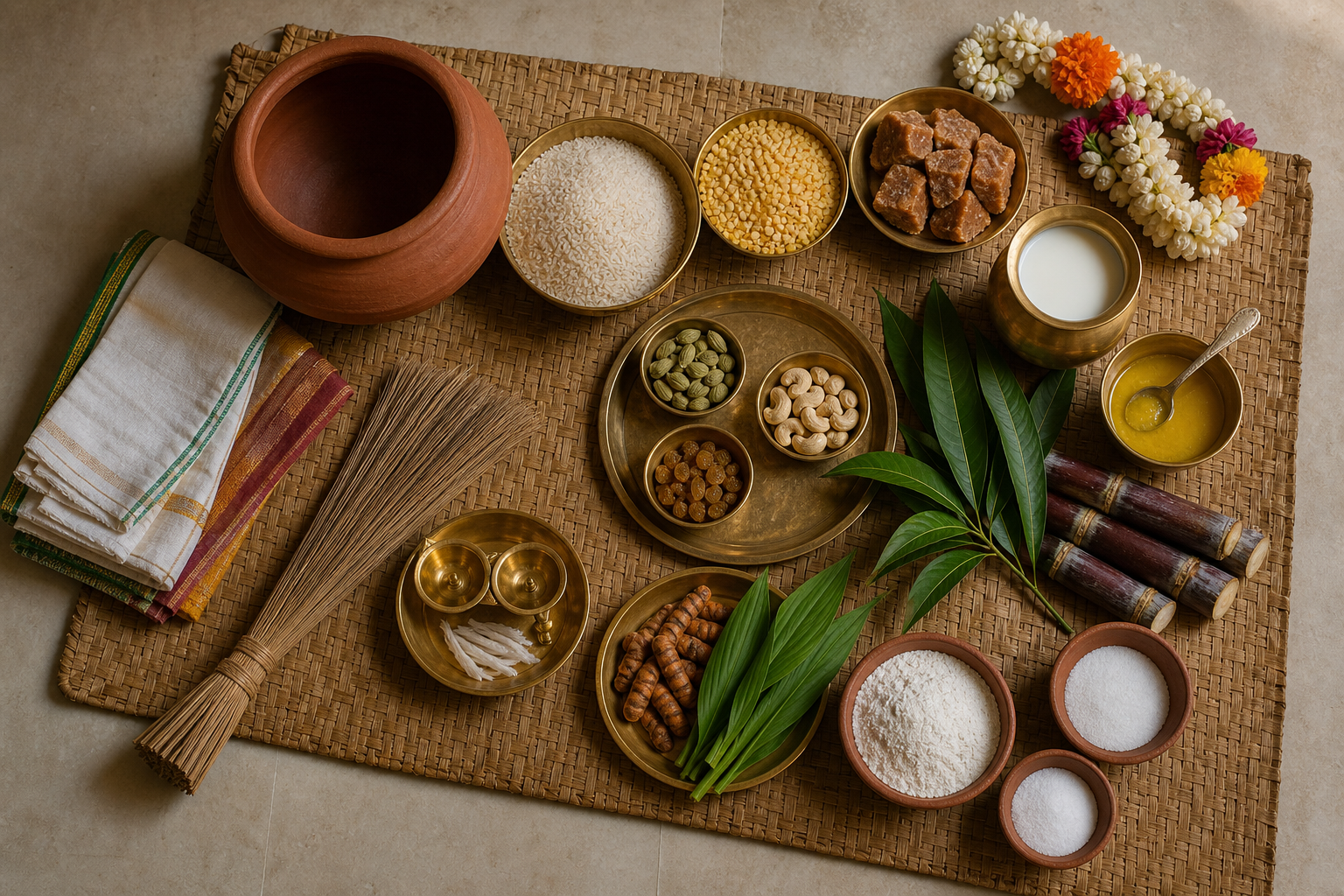
The easiest way to lose the four-day rhythm is to begin planning on Surya Pongal morning. Complete these decisions before Bhogi:
- Block all four dates. Mark which observances will happen at home, at a temple, or with relatives. If you cannot take four full days away from work, assign one realistic act to each date.
- Check local worship details. Ask your temple or family priest about puja schedules rather than copying an hour from a calendar prepared for another place.
- Settle the fire question early. Find out whether an outdoor Bhogi fire is permitted and how it will be supervised. If it is not safe or lawful, plan a non-burning observance centered on cleaning and release.
- Prepare the cooking space. Arrange freshly harvested rice, milk, seasonal produce, the household’s customary ingredients, a stable vessel, and a surface suitable for the ceremonial overflow.
- Gather natural kolam materials. Clean the threshold in advance so the kolam can be made as a deliberate welcome rather than a rushed decoration.
- Plan care and connection. Decide how cattle will be treated on Mattu Pongal, where that applies, and confirm Kannum Pongal visits before relatives make other plans.
Keep the distinction between date and timing clear. The festival calendar tells you which day to reserve; your local temple and inherited household practice tell you how the worship is ordered in your setting. That distinction is especially important for Tamil families living outside India.
Keep the celebration worthy of what it honors
Pongal’s ecological meaning disappears if the celebration itself becomes careless. A smoky pile of plastic is not a stronger Bhogi because it is larger. A distressed animal is not better honored because its decoration is more elaborate. Food prepared in excess and thrown away does not express gratitude for a harvest.
Use dried natural material for an approved bonfire, natural powders for kolam, and locally grown seasonal ingredients where they are available. Plan shared portions before cooking so surplus food can reach relatives or neighbors while it is still suitable to serve. Charitable giving and community sharing can extend the festival’s benefits beyond the immediate household.
These choices are not cosmetic updates imposed upon an old festival. They follow from Pongal’s own center: reverence for the natural conditions and living beings that sustain life. The form should reveal that gratitude, not contradict it.
Decide what continues after Kannum Pongal
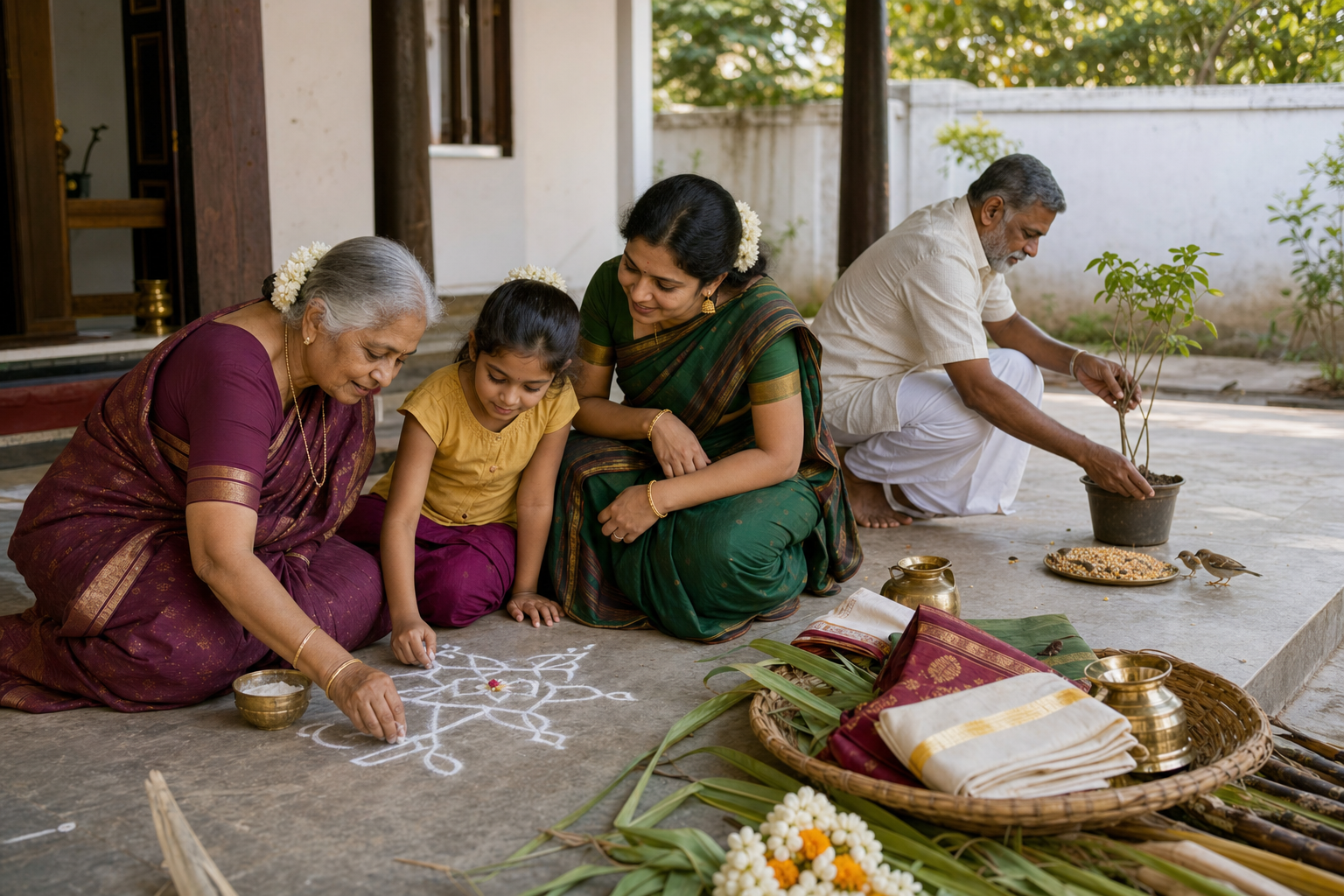
Before 13 January, write down four small commitments: one thing to clear, one source of sustenance to thank, one form of harm or waste to reduce, and one relationship to renew. Carry them through the four days in that order.
On the evening of 16 January, choose one commitment to continue beyond the festival. That decision turns Pongal from a beautiful annual observance into a living discipline of gratitude.
References
- DharmaRenaissance Blog – Bhogi 2026 on 13 January: Sacred Bonfires, Renewal Rituals, and Sankranti Harvest Joy
- DharmaRenaissance Blog – Pongal 2026 Calendar: Exact Dates for Bhogi, Surya, Mattu & Kannum Pongal with Meaning
