

If you have seen “Guru Dwadashi” and “Shripad Shri Vallabha Antardhan Din” listed on the same calendar date, you are not looking at two competing observances. The two names bring different aspects of one sacred day into focus: reverence for Sri Guru Datta and remembrance of Shripad Shri Vallabha’s withdrawal from visible presence.
In 2026, keep November 6 aside for the observance. Before arranging a puja, temple visit, or family gathering, understand what the lunar date signifies and decide how you will honour it without presenting a personal custom as a universal rule.
The date to mark in 2026
Guru Dwadashi is observed on the twelfth lunar day of the waning fortnight of Ashwin, written as Ashwin Krishna Dwadashi. Ashwayuja is another calendar name associated with the month in some regional traditions. The day is important to devotees of Sri Guru Datta, or Dattatreya, and the 2026 observance falls on November 6.
This is a tithi-based observance, not merely an anniversary fixed by the civil calendar. A Hindu tithi does not necessarily begin at midnight, and its local timing can affect a time-bound vrata or temple programme. Use November 6 as the date to reserve, but consult the panchanga followed by your temple, family, or region before assigning exact puja hours. The supplied calendar identification gives the day, not a universal start and end time for every location.
The commemoration is identified with Ashwin Krishna Dwadashi in the Amavasyant reckoning followed in Telugu and Marathi calendar contexts. If your household uses a differently named regional calendar, do not assume that a variation in month terminology means the sacred occasion has changed. Match the tithi first, then follow the established local convention.
Why Guru Dwadashi and Antardhan Din belong together
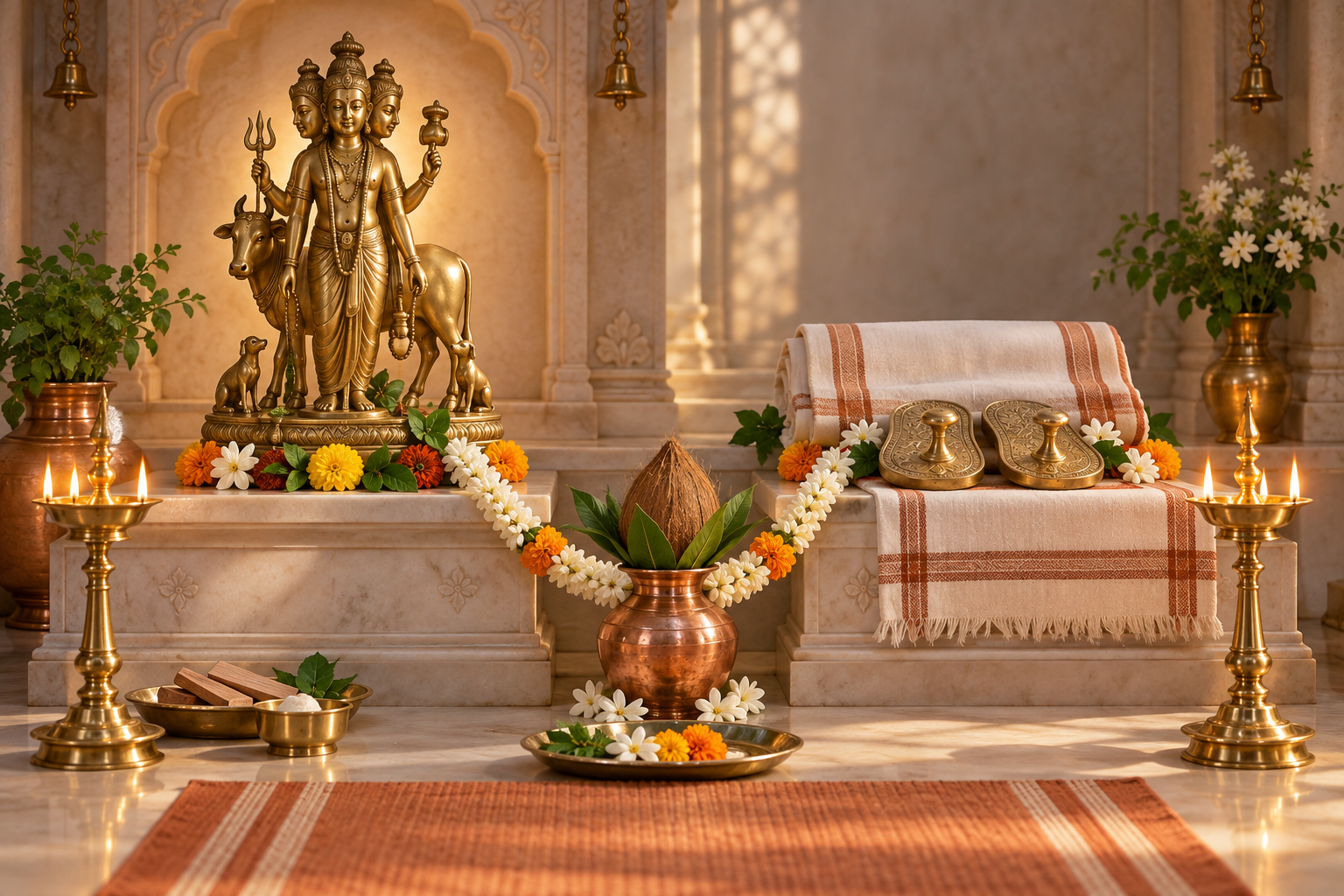
Guru Dwadashi supplies the wider devotional frame: it is a festival of the Guru principle for devotees of Dattatreya. Shripad Shri Vallabha Antardhan Din gives the same day a particular focus because Shripad Shri Vallabha is revered as an incarnation of Lord Dattatreya.
“Antardhan” is commonly rendered in English as “disappearance.” Here, the word should be read within a devotional vocabulary. It marks the conclusion of visible presence and invites remembrance; it does not turn the day into a merely biographical date. The practical question is therefore not only, “What happened on this tithi?” It is also, “How will the guru’s guidance remain present in the way I live?”
That distinction can shape your observance. If you treat the day only as a date to acknowledge, it ends when the calendar page turns. If you treat it as guru-smriti, remembrance of the guru, it asks for attention to teaching, discipline, gratitude, and conduct. A modest observance followed by one sincere change is more coherent than an elaborate programme with no effect on the following day.
A simple, tradition-respecting way to observe
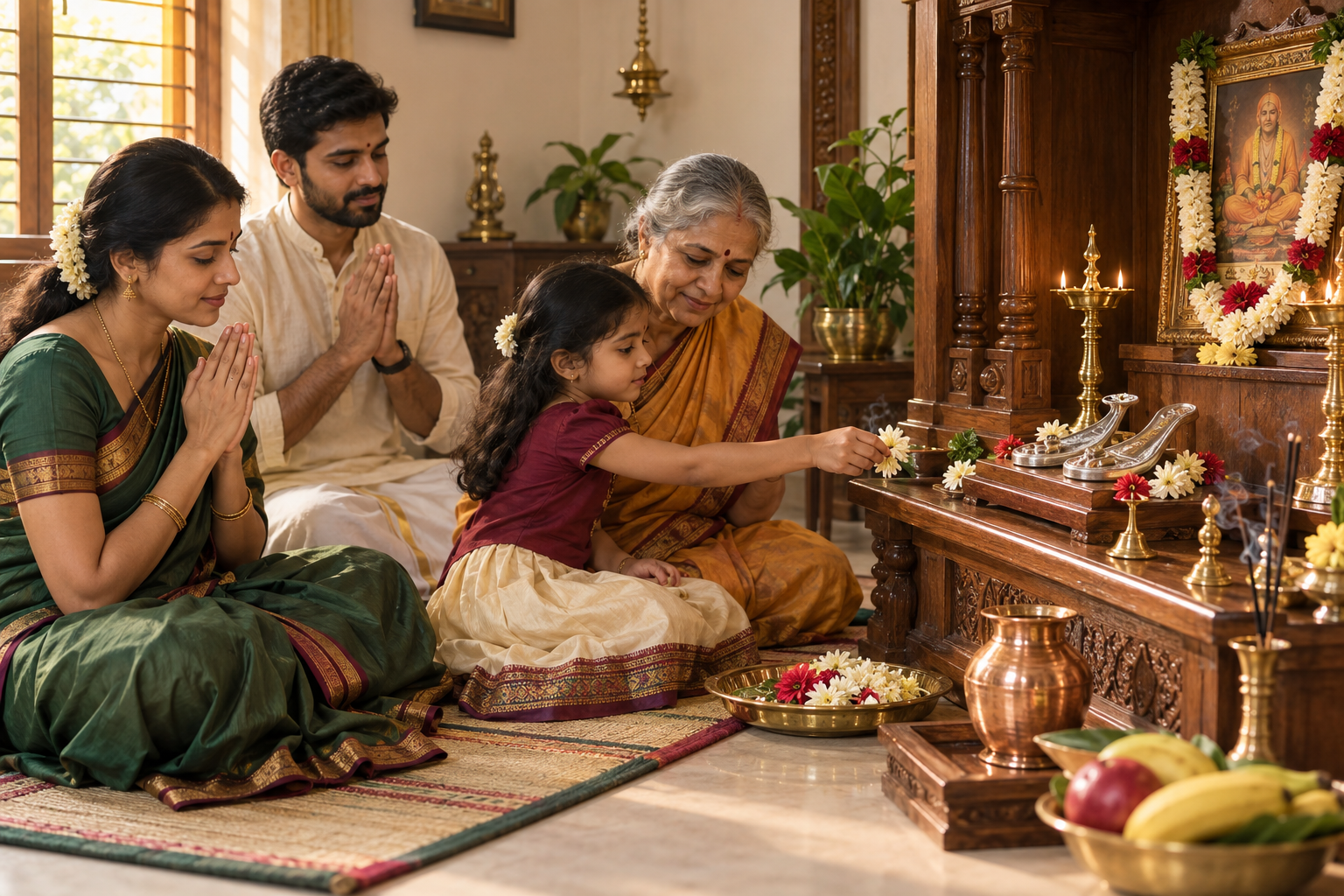
There is no need to invent a supposedly ancient ritual when your family has not transmitted one. If you belong to a sampradaya, temple, matha, or household tradition, its established method should lead. If you do not, you can keep the day reverently without claiming that your personal sequence is compulsory for everyone.
- Confirm the local observance. Check the panchanga or announcement used by the temple or community you actually follow. This matters especially when you are arranging a sankalpa, vrata, or group programme around a tithi boundary.
- Choose an undisturbed period. Set aside a definite part of November 6 rather than leaving remembrance to whatever time remains. If a temple programme is available, its schedule can provide the structure.
- Prepare a clean, quiet place. Place the image or symbol you normally use for Dattatreya or Shripad Shri Vallabha. Light a lamp only where that is part of your practice and can be done safely.
- Begin with pranam and familiar prayer. Use a mantra, nama-japa, stotra, or prayer already received through your family or tradition. Familiar words recited attentively are preferable to an unfamiliar text copied without context.
- Give time to remembrance and teaching. Read from a trusted text used in your community, listen to an authorised discourse, or sit in silent contemplation of the guru’s place in your life.
- Carry one resolve beyond the puja. Choose a concrete act of disciplined study, service, restraint, or care for another person. Make it small enough to begin immediately and definite enough that you will know whether you kept it.
If you are organising the observance for others, label each element honestly. Say “our temple’s practice,” “our family custom,” or “a simple devotional arrangement” when that is what you mean. This protects the diversity of Dharmic practice while allowing the gathering to remain confident and orderly.
Common mistakes that weaken the observance
- Treating the civil date as the whole calculation. November 6 is the stated date for 2026, but tithi timing still governs observances that depend on a precise lunar interval. Check locally before publishing exact hours.
- Separating the two names into rival festivals. Guru Dwadashi expresses the broader Dattatreya-centred occasion; Antardhan Din identifies the remembrance of Shripad Shri Vallabha on that tithi.
- Reducing antardhan to an ordinary absence. The devotional purpose is remembrance of the guru and renewed attention to guidance, not fixation on physical absence alone.
- Borrowing a ritual without understanding it. Follow practices you have received or can verify through a trusted community. Do not present an improvised online checklist as a binding scriptural requirement.
- Ending the observance at the altar. Decide beforehand what teaching, discipline, or act of service will continue after the formal worship. Without that bridge, the day can become ceremonial but leave conduct untouched.
Key takeaways
- Guru Dwadashi and Shripad Shri Vallabha Antardhan Din fall on November 6 in 2026.
- The governing lunar date is Ashwin Krishna Dwadashi, the twelfth tithi of the waning fortnight.
- Guru Dwadashi honours the Dattatreya guru tradition, while Antardhan Din centres remembrance on Shripad Shri Vallabha.
- Use a local, trusted panchanga if your observance requires exact tithi hours.
- Follow your inherited tradition where you have one; otherwise keep the worship simple, sincere, and clearly described as a personal or community practice.
- Let the day produce one concrete act of study, discipline, gratitude, or service that continues afterward.
Reserve November 6 now, then ask your temple or family which practice and panchanga convention you will follow. Arrive at Guru Dwadashi with one prayer you know, one teaching you are prepared to contemplate, and one resolve you are ready to keep.
References

Leave a Reply
You must be logged in to post a comment.