
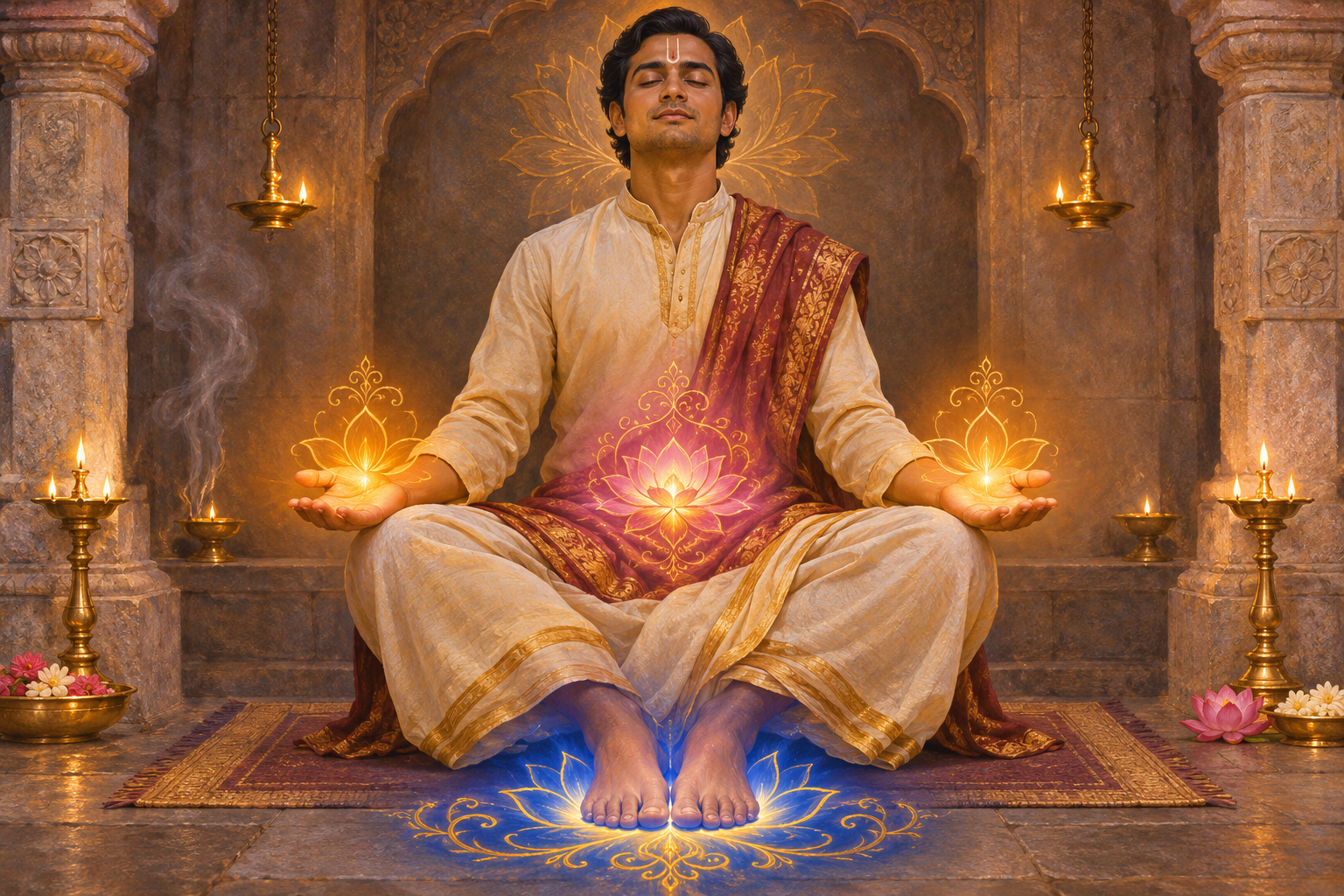
You may have heard a Sanskrit invocation placing different devas in different parts of the body and wondered how literally to take it. It is neither a lesson in anatomy nor a claim that an infinite deity is trapped inside one organ. It gives you a practical way to make the body itself a reminder of dharma.
The associations matter because they turn ordinary capacities into questions of responsibility. Your feet carry you toward a destination, your hands convert intention into action, and your generative power brings something new into being. Remembering a deva at each point asks you to use that capacity consciously.
The three body-deity associations
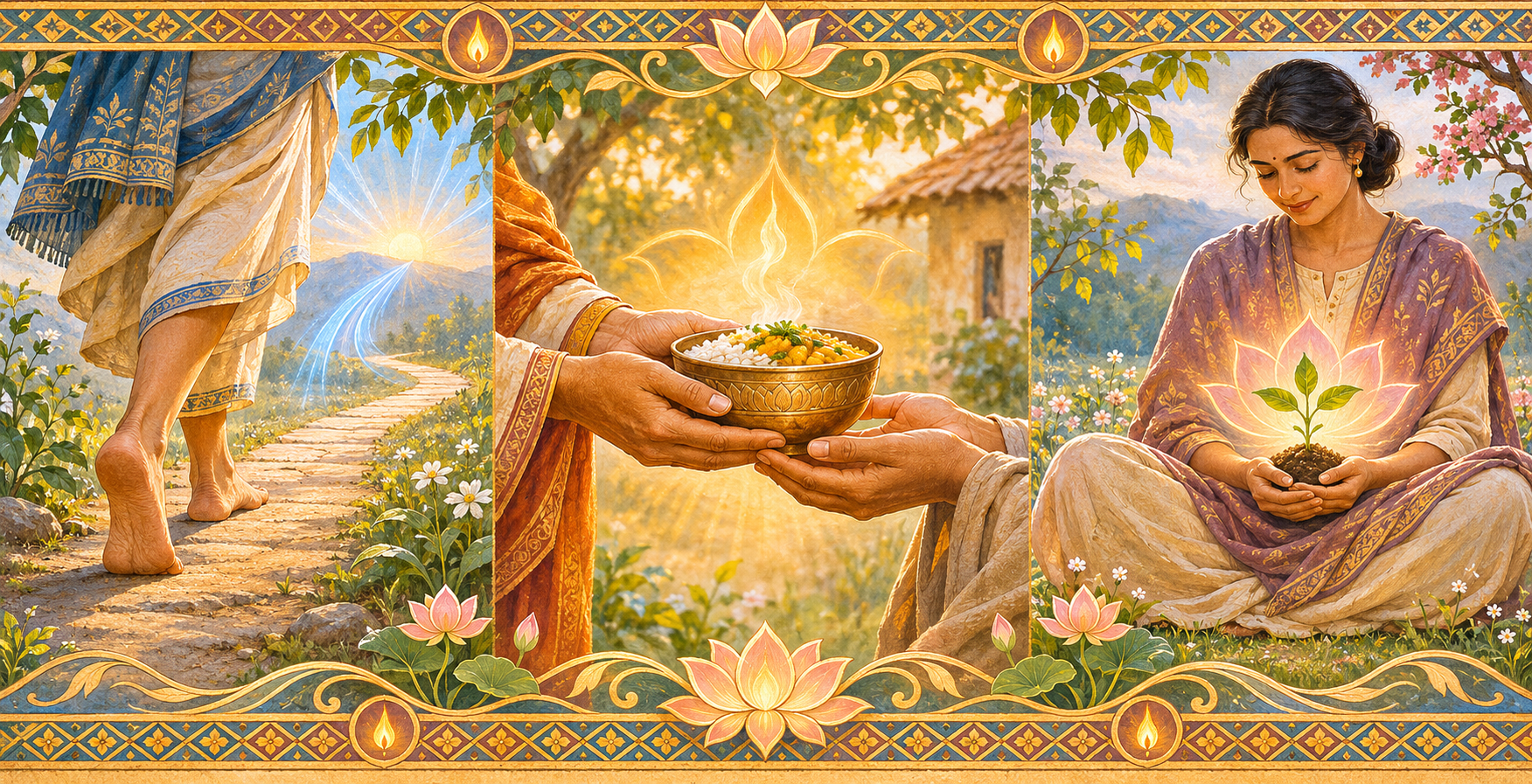
One compact formulation connects Brahma with the generative organs, Vishnu with the feet, and Hara with the hands. Each Sanskrit line expresses the presence of the named deva in the corresponding part of the body.
| Part of the body | Deity | Traditional phrase | Question for reflection |
|---|---|---|---|
| Generative organs, the seat of procreation | Brahma | Prajanane Brahma tishtatu | What am I bringing into being, and will I care for it responsibly? |
| Feet | Vishnu | Padayo Vishnu tishtatu | Where am I going, and does that direction sustain dharma? |
| Hands | Hara | Hastayo Hara tishtatu | What should I do, stop doing, or release? |
The final column is a contemplative aid, not a literal translation of the Sanskrit. It shows how you can carry the association into a decision instead of merely memorising three correspondences.
Read the body by function, not by spiritual rank
A useful reading begins with what each bodily capacity does. The generative faculty makes creation immediate, so Brahma becomes a reminder that creation carries responsibility. The feet bear and direct the body, so Vishnu becomes a reminder to choose a sustaining path. The hands put intention into the world, so Hara, a name of Shiva, becomes a reminder that action requires both disciplined effort and the willingness to let harmful action cease.
These connections do not reduce the devas to bodily functions. Brahma is not merely a symbol of sexuality, Vishnu is not limited to movement, and Hara is not confined to manual work. The body part serves as a doorway for remembrance; it does not set a boundary around the deity.
The association with the generative organs can initially feel awkward, especially if you have absorbed the idea that spirituality begins by ignoring or distrusting the body. A more constructive question is whether generative power is being governed by dharma. Procreation is its most direct meaning, but the reflection can also make you examine the obligations created whenever you initiate something that will affect other people.
Nor does sacred presence mean that every bodily impulse is automatically righteous. The mapping places responsibility beside capacity. Being able to move, act, or create does not by itself tell you where to go, what to do, or what should be brought into being. Discernment remains necessary.
A short embodied practice you can use
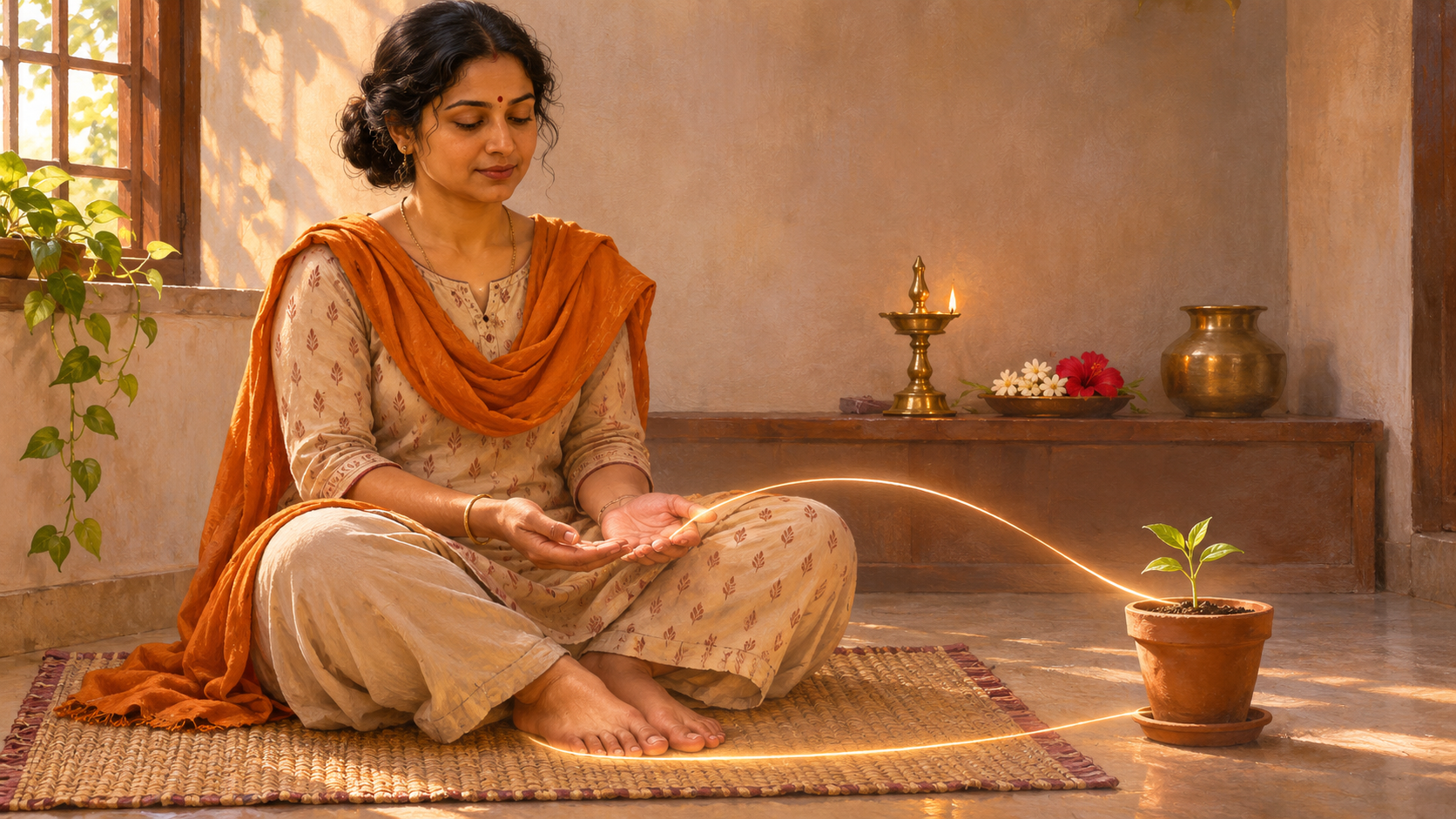
You do not need to construct an elaborate ritual to benefit from these three associations. Use them as a brief sequence before work, worship, travel, or a consequential decision.
- Become still while sitting or standing. Let your attention move through the body without trying to manufacture a special sensation.
- Notice your feet touching the floor. Recite Padayo Vishnu tishtatu, or simply remember Vishnu’s presence there. Name the direction you intend to take and ask whether it preserves what ought to be preserved.
- Look at or become aware of your hands. Recite Hastayo Hara tishtatu. Choose one action that should be completed carefully and one harmful or unnecessary action that should be withheld.
- Bring respectful attention to the generative faculty without touching the body or forcing an image. Recite Prajanane Brahma tishtatu. Ask what you are creating and what duties will follow from its creation.
- Return your attention to the body as a whole. Carry one answer into the next action you actually take.
Keep the practice proportionate. If the question about your hands produces a clear duty, perform that duty; do not keep repeating the reflection as a way to postpone it. If the question about your direction exposes a choice that violates your values, change the choice rather than treating the invocation as a blessing for whatever you had already decided.
This sequence is a reflective adaptation. If you received these lines as part of a formal practice from a guru, family, or sampradaya, preserve its wording, order, pronunciation, and instructions. A simplified personal exercise should not displace a discipline that has been specifically transmitted to you.
Avoid four common misreadings
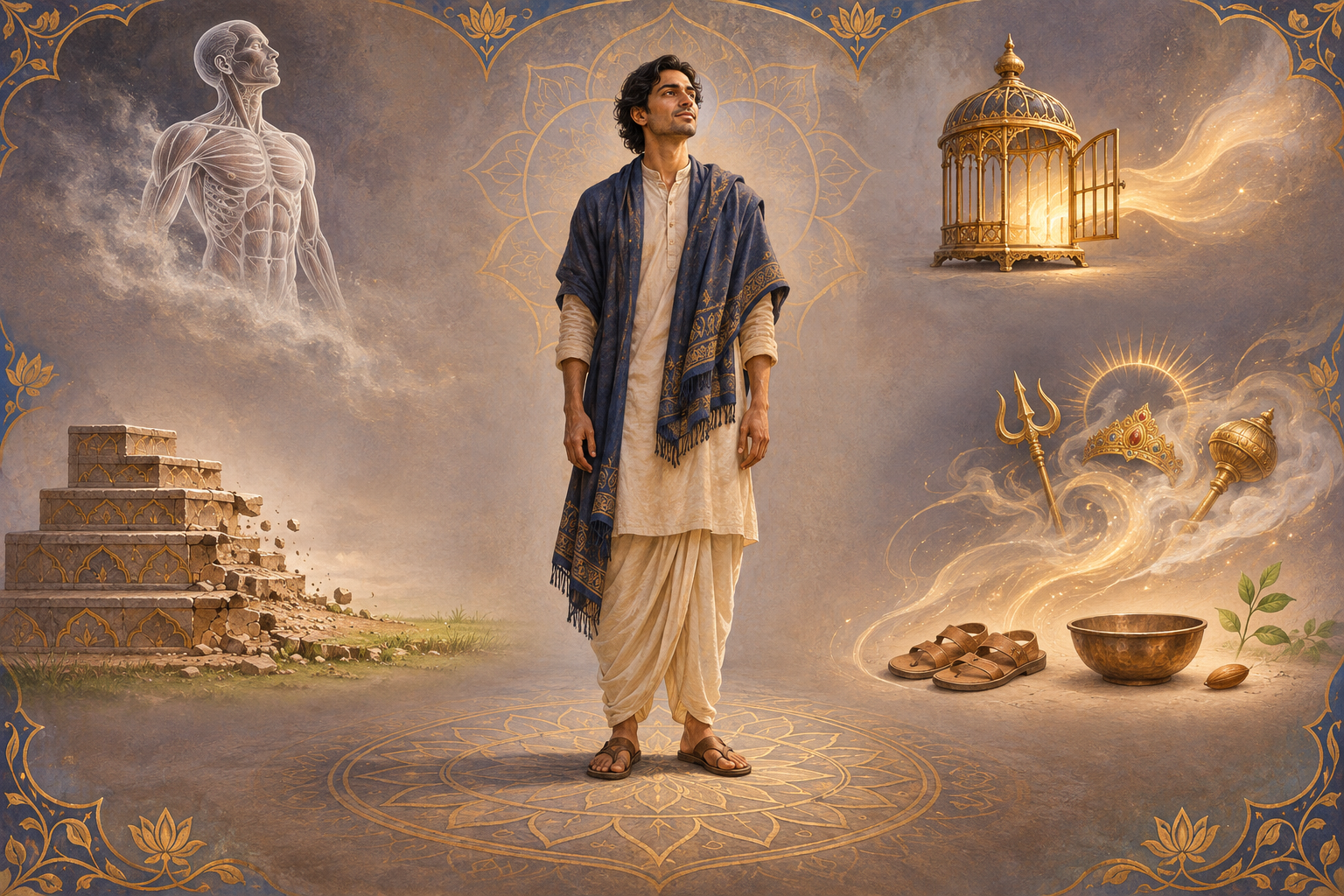
- Do not turn the associations into biological claims. They provide a sacred and ethical way of attending to the body, not a medical account of how an organ works.
- Do not present this compact formulation as an exhaustive map accepted in identical form by every Hindu tradition. When you teach it, describe the actual formulation you are using rather than claiming that it is the only possible Hindu body map.
- Do not imagine that presence means confinement. A deity associated with one bodily location is not absent everywhere else.
- Do not use the symbolism to rank body parts as clean, shameful, high, or low. Its practical purpose is to bring movement, action, and generation under dharmic attention.
There is also a simple boundary worth keeping: spiritual reflection does not diagnose bodily pain or replace appropriate healthcare. If a part of the body is injured or unwell, remembering its sacred significance can shape the care and respect you bring to it, but it does not remove the need for qualified medical attention.
Key takeaways
- Brahma is associated with the generative organs, Vishnu with the feet, and Hara with the hands in this formulation.
- The body parts work best as prompts: creation calls for responsibility, direction calls for discernment, and action calls for discipline.
- The devas are not confined to the locations with which they are associated.
- The mapping is spiritual and contemplative, not anatomical or medical.
- You can begin with one association and let it change one real action before adding the others.
Begin with your hands. Before the next action that will affect another person, pause and remember Hara there. Ask whether the deed should be done, done differently, or released altogether. Once that pause becomes natural, bring the same attention to your feet and generative power. The aim is not to accumulate a larger catalogue of correspondences. It is to make what your body does answerable to dharma.
References

Leave a Reply
You must be logged in to post a comment.