

If Punarvasu is your birth nakshatra, you may be wondering whether Tara should therefore become your Mahavidya. Treat that connection as an invitation, not an automatic spiritual assignment. It can give your devotion a clear direction, but it does not replace your ishta-devata, your family tradition, or instructions received from a guru.
The practical question is not simply, “Does Tara correspond to Punarvasu?” It is, “What kind of Tara practice is appropriate for me now?” You can begin with restrained, open devotion. Formal mantra, nyasa, yantra, homa, or other technical Mahavidya methods should remain within the lineage that teaches them.
Confirm what Punarvasu means in your own chart
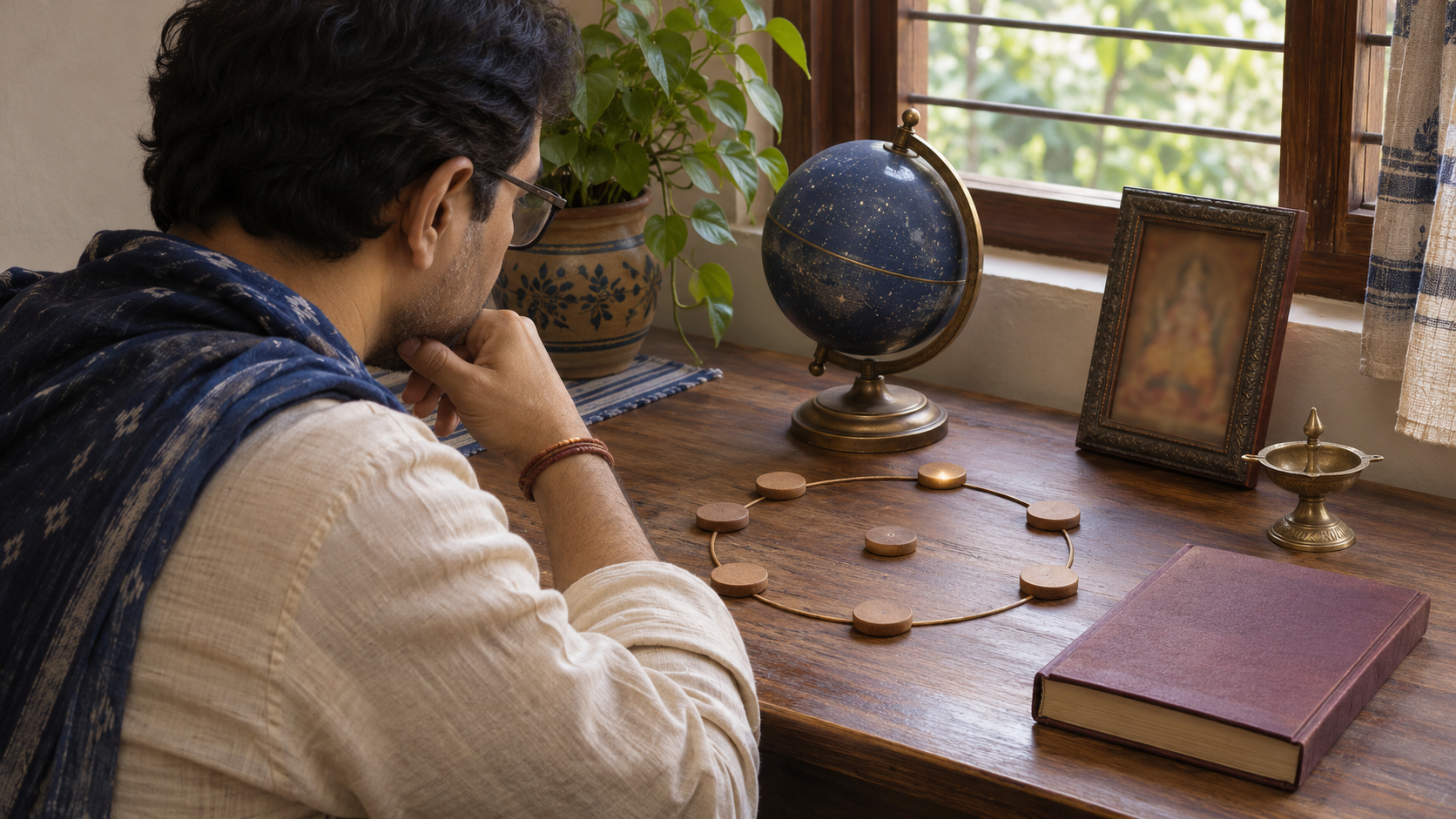
Punarvasu is a lunar mansion extending from 20 degrees Gemini to 3 degrees 20 minutes Cancer. Jupiter, or Guru, rules it. Its presiding deity is Aditi, the mother of the gods and a figure of renewal and spiritual nurturing. Its associated qualities include restoration, optimism, protection, wisdom, and adaptability.
Your janma nakshatra is ordinarily determined from the Moon’s position at birth. Do not assume that you are Punarvasu from your name, your Western Sun sign, or a calendar date alone. Use a consistently calculated sidereal chart. If your Moon lies close to either boundary, check the birth data and ayanamsha with a competent Jyotishi before building a practice around the result.
This matters because the sign boundary inside Punarvasu can distract you. A Moon in its Gemini portion and a Moon in its Cancer portion are still within the same nakshatra. The shared Punarvasu thread is the capacity to return: to recover a sound direction after dispersal, disappointment, or interruption.
Before choosing any ritual, identify the return you actually need. It may be a neglected daily discipline, a damaged relationship with study, an abandoned vow, or a devotional routine that became needlessly complicated. A precise intention gives the correspondence practical meaning. Without that intention, “Punarvasu practice” can become little more than an attractive label.
Use the Tara correspondence as an alignment, not a command
Tara is presented as the Mahavidya most closely aligned with Punarvasu. The fit should be read through the nakshatra’s concerns: renewal after difficulty, protection that permits growth, spiritual intelligence, and the ability to begin again without denying what has been learned.
That correspondence does not mean every Punarvasu native must undertake Tara sadhana. Astrology can indicate a symbolic affinity; it cannot confer initiation or decide your sampradaya. If you already have an ishta-devata or an established practice, do not discard it merely because a nakshatra correspondence appears compelling. Ask instead whether the Tara association helps you understand the work already before you.
A useful Punarvasu-oriented sankalpa should answer three questions:
- What wholesome condition are you trying to restore?
- What kind of protection would support dharma rather than strengthen avoidance or fear?
- What have you learned that should change the way you begin again?
For example, “I want everything to improve” is too broad to guide practice. “May I return to daily svadhyaya with steadiness and humility” identifies a real action. “May this conflict disappear” tries to control an outcome. “May I respond to this conflict without abandoning truth or compassion” identifies the quality you can cultivate.
Do not reduce Tara to an astrological remedy for obtaining a desired result. Mahavidya upasana is a relationship with the sacred, not a mechanism for forcing circumstances. The Punarvasu link is most constructive when it brings you back to dharma, not when it feeds anxiety about planetary influence.
Choose the level of practice that matches your preparation
The safest decision is made by distinguishing open devotion from technical sadhana. They are not interchangeable.
- If you have no initiation: keep to respectful remembrance of Tara, namaskara, prayer in your own words, quiet contemplation, and conduct consistent with your sankalpa. Do not present this to yourself or others as an initiated tantric practice.
- If you are seeking a formal mantra: find a qualified teacher in a living tradition and ask about eligibility, pronunciation, daily discipline, restrictions, and what to do after interruptions. A mantra found online is not the same as a mantra received with its method and context.
- If you are already initiated: follow the instructions of your lineage. Do not add a different bija, yantra, visualization, repetition scheme, or ritual sequence merely because it has been labelled suitable for Punarvasu.
- If you already worship another form of the Divine: keep that foundation unless a trusted teacher advises otherwise. You may contemplate Punarvasu’s themes without replacing your deity or mixing ritual systems.
This distinction protects both the practitioner and the integrity of the tradition. Technical elements are not automatically superior to simple devotion. A modest practice you understand and sustain is more honest than an elaborate method assembled from fragments.
Be equally careful when practices from different traditions use similar divine names. Shared terminology does not make mantras, iconography, vows, or ritual frameworks interchangeable. Identify the tradition of a practice before adopting it, and let that tradition explain its own method.
Build a restrained Punarvasu-Tara practice

If you do not have lineage-specific instructions, the following framework keeps the practice devotional and avoids pretending to transmit a secret or technical method.
- Name the return. Write one sentence describing the wholesome condition you intend to restore. Keep it within your own responsibility: study, truthful speech, regular worship, patient care, or another concrete dharmic commitment.
- Choose a repeatable setting. Sit in a clean, quiet place at a time you can maintain. Consistency matters more here than creating an elaborate altar that becomes difficult to support.
- Begin with respect. Offer namaskara according to your custom. If you use an image, use a form you can identify within a tradition rather than selecting one only for visual appeal.
- Address Tara without inventing a technical mantra. You can repeat her name reverently or pray in plain language. A suitable prayer is: “Tara, guide this return toward wisdom, protection, and dharma.” This is a devotional sentence, not a claim of mantra-diksha.
- Contemplate the Punarvasu pattern. Notice what scattered your effort, what remained intact, and what must be done differently now. Renewal is not repetition of the same failed approach.
- Translate devotion into one action. Open the text you intended to study, make the apology you owe, restore the neglected duty, or remove the obstacle that repeatedly breaks your discipline. The action should follow the sankalpa directly.
- Close without bargaining. Offer gratitude and release the demand for a dramatic sign. Carry the chosen action into the rest of the day.
You may use a local panchanga to identify a period when the Moon is in Punarvasu. Because nakshatra timings depend on place and calendrical calculation, use the entry for your location rather than copying an isolated time from elsewhere. This timing can give the practice a clear beginning, but it is optional. It neither creates spiritual eligibility nor limits Tara devotion to that window.
A Punarvasu observance is especially well suited to resuming something worthy that has lapsed. Do not use the day to accumulate new vows while older duties remain unattended. Restore one commitment first. That makes the symbolism visible in your conduct.
Notice whether the practice is restoring dharma
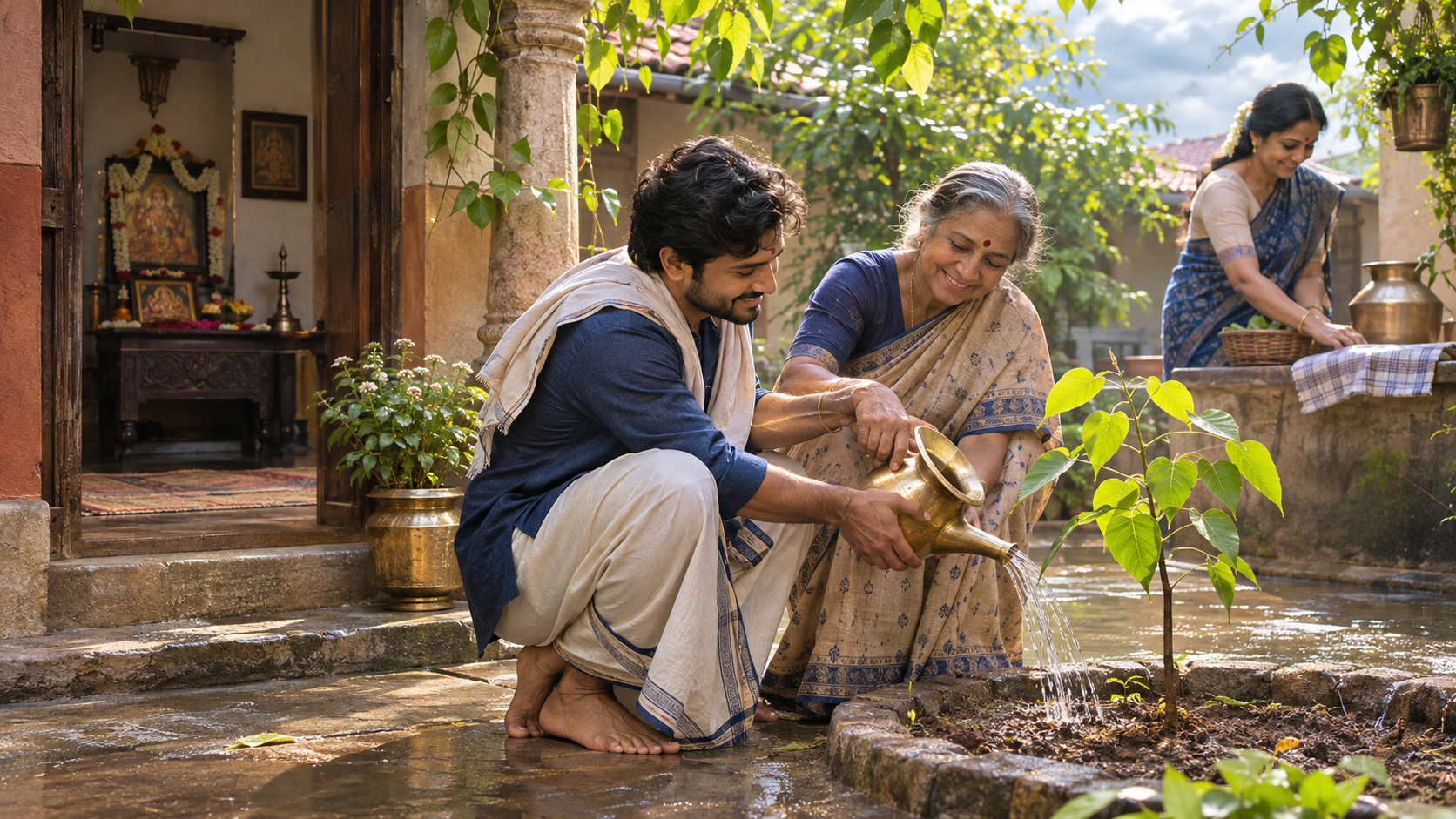
Judge the practice by ordinary but demanding evidence. Are you more able to resume a good discipline after interruption? Is your response to difficulty less scattered? Does spiritual study become steadier? Does the wish for protection help you act wisely, or does it turn into avoidance and constant astrological checking?
Visions, dreams, moods, and coincidences are unreliable measures on their own. Do not treat every unusual experience as an instruction. A sound practice should make your discernment, ethical conduct, and responsibility clearer. If it instead produces grandiosity, compulsion, fear, neglect of duties, or an urge to keep adding incompatible techniques, stop the experimentation and consult a qualified teacher.
Keep a brief record focused on conduct rather than omens. Note the sankalpa, the action taken, the obstacle encountered, and how you will respond when the routine breaks. This turns Punarvasu’s theme of return into a discipline: interruption is acknowledged, corrected, and learned from rather than used as a reason to abandon the path.
Key takeaways
- Punarvasu’s Tara correspondence is a meaningful affinity, not an automatic command to change your deity or lineage.
- Confirm that your natal Moon is actually in Punarvasu before treating it as your janma nakshatra.
- Without initiation, keep the practice to open devotion, contemplation, ethical action, and respectful name remembrance.
- Do not improvise bija mantras, nyasa, yantras, homa, or mixed ritual systems from disconnected instructions.
- Measure progress by restored discipline, clearer discernment, and better conduct rather than dramatic experiences.
Your next step can be small and definite: verify the chart, write a one-line sankalpa, and restore one neglected dharmic action. If a trustworthy guru later gives you a formal Tara method, let the lineage supply the mantra, ritual frame, and discipline that a nakshatra correspondence alone cannot provide.
References

Leave a Reply
You must be logged in to post a comment.