
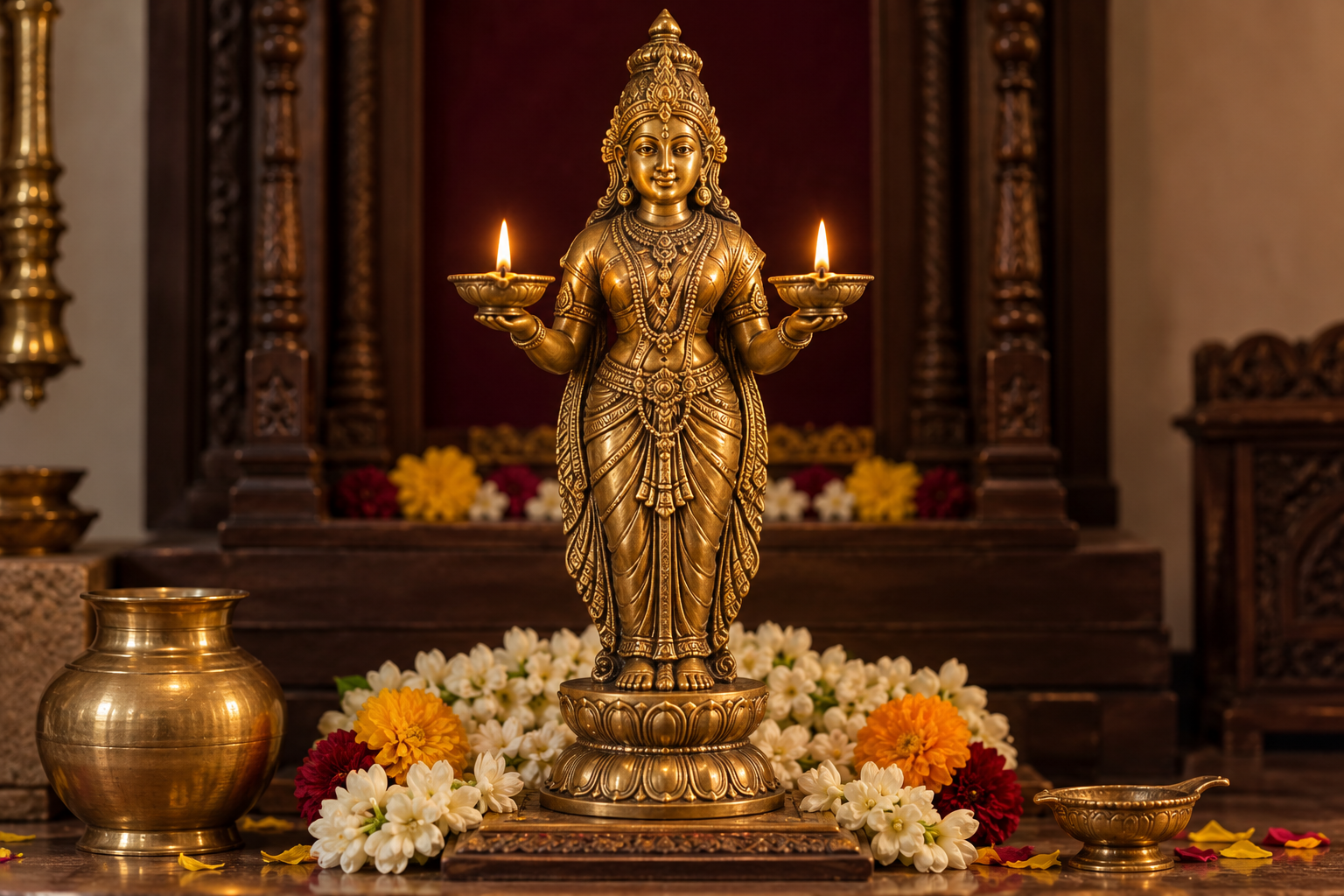
If you have brought a Deepalakshmi into your home, the immediate question is practical: is this simply a beautiful lamp, a sacred image to worship, or both? The answer depends on what the form depicts, how you intend to honour it, and whether its lamp cups were actually made to be lit.
Deepalakshmi brings deity, light and offering into one image. It depicts Mahalakshmi standing with an oil lamp in each hand, joining prosperity with illumination and wisdom. You do not need an elaborate ceremony to begin. You do need a respectful place, a safe lamp and a clear understanding of what you are asking prosperity to serve.
Key takeaways
- Deepalakshmi should be approached as a sacred representation of Mahalakshmi, not as a charm that mechanically produces wealth.
- Place her where the image can remain clean, stable and respected. Use the puja space if you intend regular worship.
- Light the lamps only if the cups are functional, heat-safe and securely supported.
- Let the worship lead to one practical expression of Lakshmi: honest earning, orderly use of resources, gratitude or generosity.
Read the form without forcing a rigid interpretation
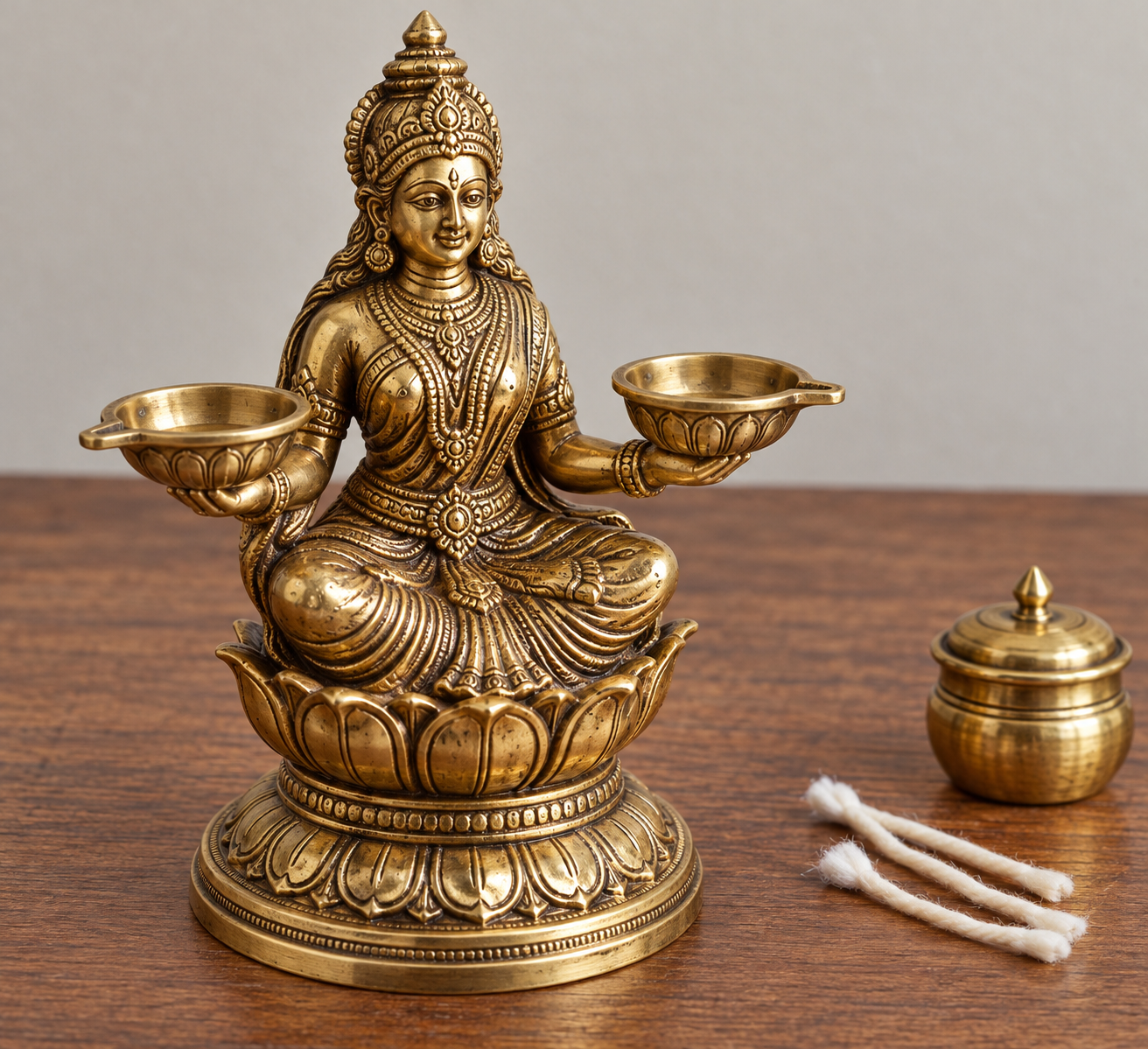
Mahalakshmi represents prosperity in a sense broader than accumulated money. Her presence includes abundance, auspiciousness, well-being and the conditions that allow a household to flourish. The lamps add an essential qualification: prosperity should be guided by clear sight.
A lamp does not attack darkness. It makes darkness unable to conceal what is present. That makes the flame a natural image for discernment. In worship, you can therefore understand Deepalakshmi as a reminder that wealth without wisdom can be wasted, while knowledge that never enters household life remains incomplete.
The fact that Mahalakshmi holds the lamps matters. Light is not merely placed near her as decoration; it is borne in her hands. Devotionally, this allows you to see prosperity as something that should carry illumination into your choices. How was the money earned? What will it support? Does an attractive opportunity also accord with dharma? Those questions belong inside Lakshmi worship rather than outside it.
You may encounter interpretations assigning separate meanings to the two lamps: material and spiritual prosperity, inner and outer illumination, receiving and giving, or knowledge and action. These can be useful contemplative pairings, but do not present one pairing as a universal scriptural equation unless your sampradaya, guru or inherited family practice teaches it. The safer approach is to use the two flames as a reminder that prosperity must remain balanced, then let your own tradition define that balance more precisely.
The same care applies to claims about scriptural origin. An image can gather themes that are deeply consonant with Hindu thought without every sculptural detail being prescribed by one named verse. Do not attach a scripture, mantra or compulsory ritual to Deepalakshmi merely because it sounds ancient. When a temple tradition or household paddhati provides a specific explanation, follow that living context.
Decide whether yours is an image, a working lamp or both
Before choosing a worship routine, inspect the object itself. Some Deepalakshmi figures have genuine oil reservoirs with space for wicks. Others reproduce the shape of a lamp but were made primarily as sculpture. A sacred appearance does not make every metal cup safe for fire.
- If it is primarily an image: keep it in a clean, elevated and respectful place. Offer pranam, flowers or your usual form of puja without trying to improvise a flame in a decorative cup.
- If it is a functional lamp: confirm that the base is level, the reservoirs are intact, the wick can rest securely and the flame will have clear space above and around it.
- If it serves both purposes: treat the figure as sacred even when unlit. Lighting is an act of worship, not the condition that makes the image worthy of respect.
For regular worship, the household puja area is usually the clearest choice. Set Deepalakshmi on a firm, non-combustible surface where oil cannot drip onto cloth, wood or paper. Give both flames room. Keep garlands, curtains, loose sleeves and other combustible items away from them.
If you display the image outside the puja space, avoid the floor, shoe storage, unstable shelves and cluttered work surfaces. The governing principle is not interior decoration but devotional intention: the location should make respectful attention easier.
You may also hear confident rules about the one cardinal direction in which every Deepalakshmi must face. Household and regional customs differ, so a generic direction rule should not displace your family’s established practice. If no such practice exists, prioritise a clean, stable and fire-safe position rather than becoming paralysed by competing instructions.
Do not assume that the sculpture itself must be moved for aarti. Aarti normally involves offering a flame before the deity, whereas a functional Deepalakshmi can remain stationary as its lamps burn. Lifting a heavy metal figure after it has become hot risks burns and spilled oil.
A simple Deepalakshmi worship sequence for the home
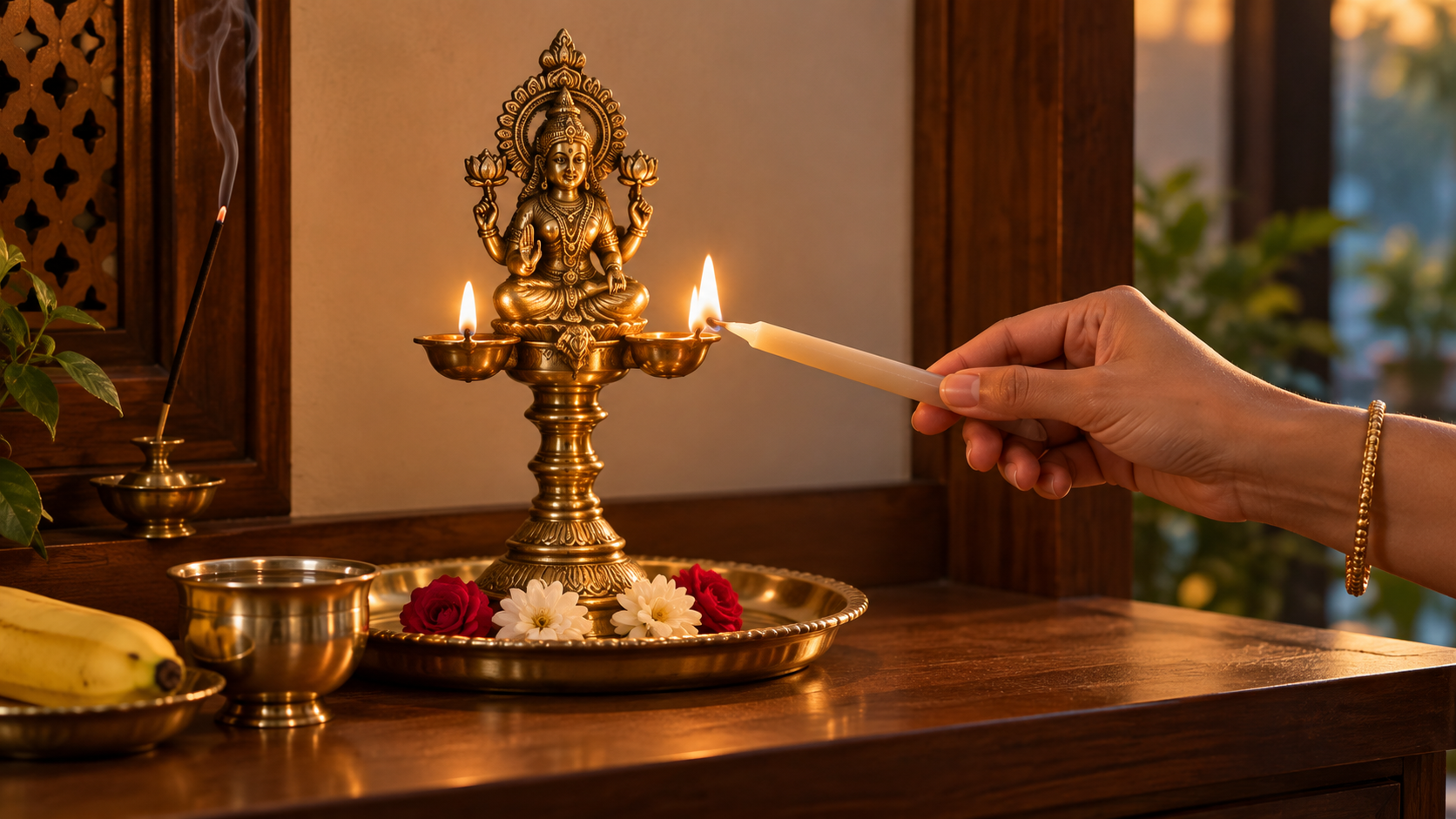
If you have received an initiated practice or a family procedure, use it. The following sequence is for a household that wants a simple, reverent beginning without pretending that one method is compulsory everywhere.
- Prepare the place. Wash your hands, clear the surface and place Deepalakshmi securely. If the lamp was previously used, remove old wick material and dried residue only after the metal has cooled.
- Prepare the lamps. If the cups are functional, use clean wicks and the lamp fuel customary in your household. Do not fill the reservoirs to the rim. An overloaded cup can spill as the wick is adjusted or the metal is moved.
- Set a sankalpa. Name the purpose of the worship in a sentence. Ask for clarity in earning, peace in the household, wise use of resources, gratitude for what has arrived or strength to meet a genuine responsibility.
- Invoke Mahalakshmi. Offer pranam and use the mantra or divine name familiar to your tradition. If you do not have an inherited formula, a plain prayer is enough: “Mahalakshmi, may the resources of this home be gained rightly, used wisely and shared with discernment.” This is a suggested prayer, not a canonical mantra.
- Light with attention. Light the lamps without rushing. If your Deepalakshmi has two working cups, you may light both; if your family custom directs otherwise, follow it. Pause long enough to look steadily at the flames instead of treating ignition as the completion of the puja.
- Make simple offerings. A flower, fruit, water or another offering customary in your home may accompany the prayer. More objects do not automatically create deeper worship. Cleanliness, attention and sincerity matter more than an overcrowded plate.
- Turn prayer into a decision. Choose one action through which Lakshmi will be honoured after the lamp is lit: settle an obligation, organise household accounts, avoid a dishonest gain, repair something being neglected or give within your means.
- Close safely. Offer pranam and remain responsible for the flame. Never leave it unattended or within reach of children or animals. Keep it away from drafts, and use a safe extinguishing method consistent with your household practice if you cannot supervise it until it goes out.
Build a rhythm you can actually sustain
A brief regular practice is better than an ambitious arrangement you soon abandon. Choose a time when you will not have to walk away from a burning lamp. Daily worship may suit one household; weekly or festival worship may suit another. Frequency should support attention, not become a contest.
You can give each sitting a three-part structure: gratitude for what sustains the home, discernment about a current choice, and responsibility for how you will use what you have. This prevents prayer for prosperity from shrinking into a list of acquisitions.
If open flame is unsafe where you live, do not force it. Offer pranam before the unlit Deepalakshmi and continue with prayer or silent contemplation. Electrical substitutes may provide visual ambience, but they should not be casually declared ritually identical to an oil lamp. Your own tradition can guide that distinction.
Let the worship correct your idea of prosperity
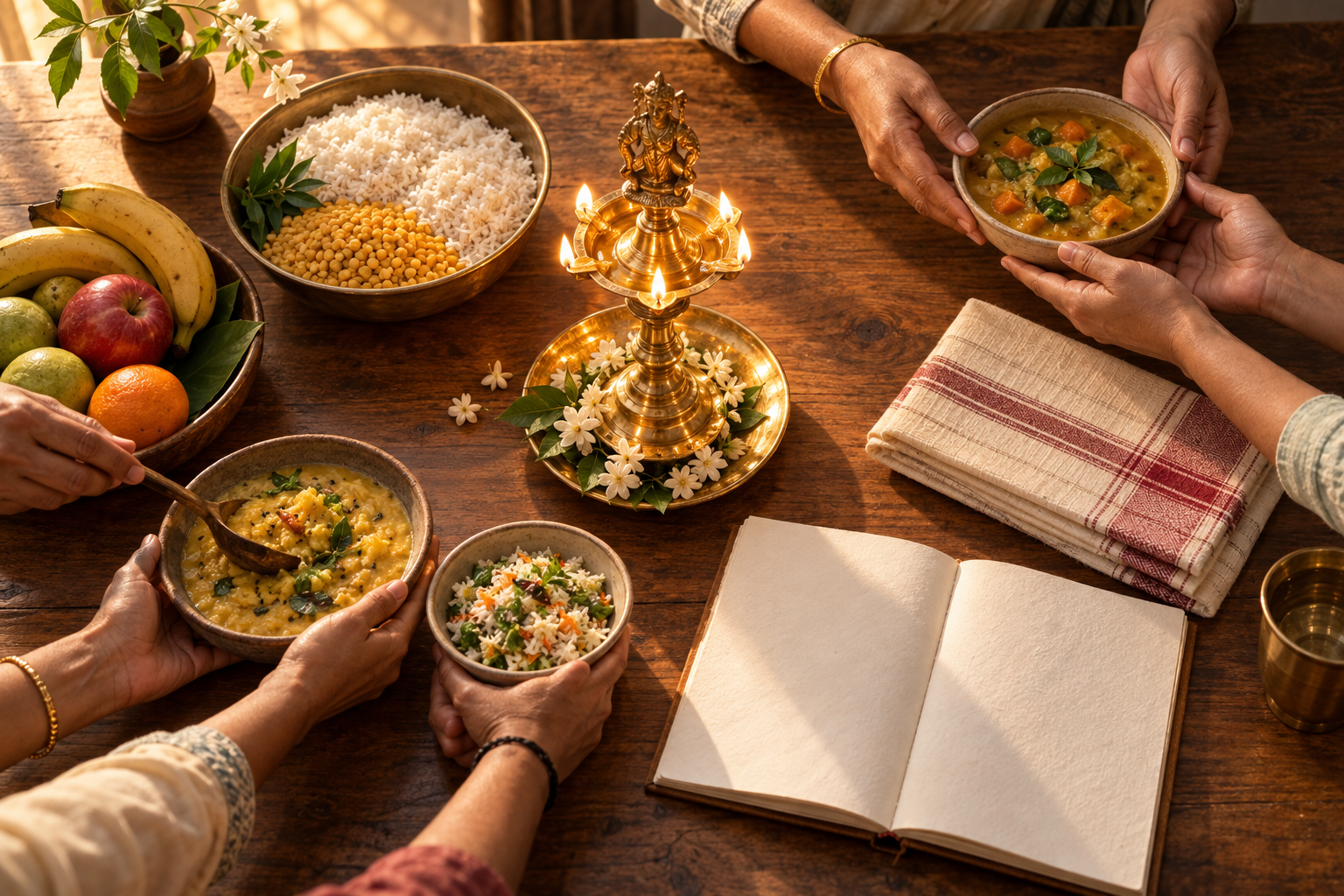
The most common mistake is to treat Deepalakshmi as a device for obtaining money. That interpretation makes the flame almost irrelevant, although light is central to the form. The worship becomes coherent when you ask not only for increase, but also for the wisdom to recognise what is worth increasing.
Four habits that weaken the practice
- Using fear as the motive: a missed day or imperfect arrangement should not push you into multiplying rituals without understanding. Resume respectfully and improve what is within your control.
- Confusing expense with devotion: an ornate statue and abundant offerings cannot compensate for carelessness, waste or exploitation in the household’s actual economic life.
- Repeating unsupported certainties: attractive interpretations can deepen meditation, but they should not be labelled ancient commandments without a reliable lineage or textual basis.
- Separating puja from conduct: asking for Lakshmi while tolerating deceit, disorder or irresponsible spending empties the symbol of its demand for illumination.
The practical test of Deepalakshmi worship is not whether the brass is always polished or the ritual always elaborate. It is whether the light enters your decisions. Honest earning, measured spending, care for shared resources, fulfilment of obligations and generosity without spectacle give the symbol a life beyond the lamp stand.
Begin with one clear choice today. Decide whether your Deepalakshmi is safe to light, give her a stable and respectful place, and offer a simple prayer. Then select one household action that will make prosperity more orderly, more ethical or more shareable. That is how the bearer of light becomes part of the way you live.
References

Leave a Reply
You must be logged in to post a comment.