
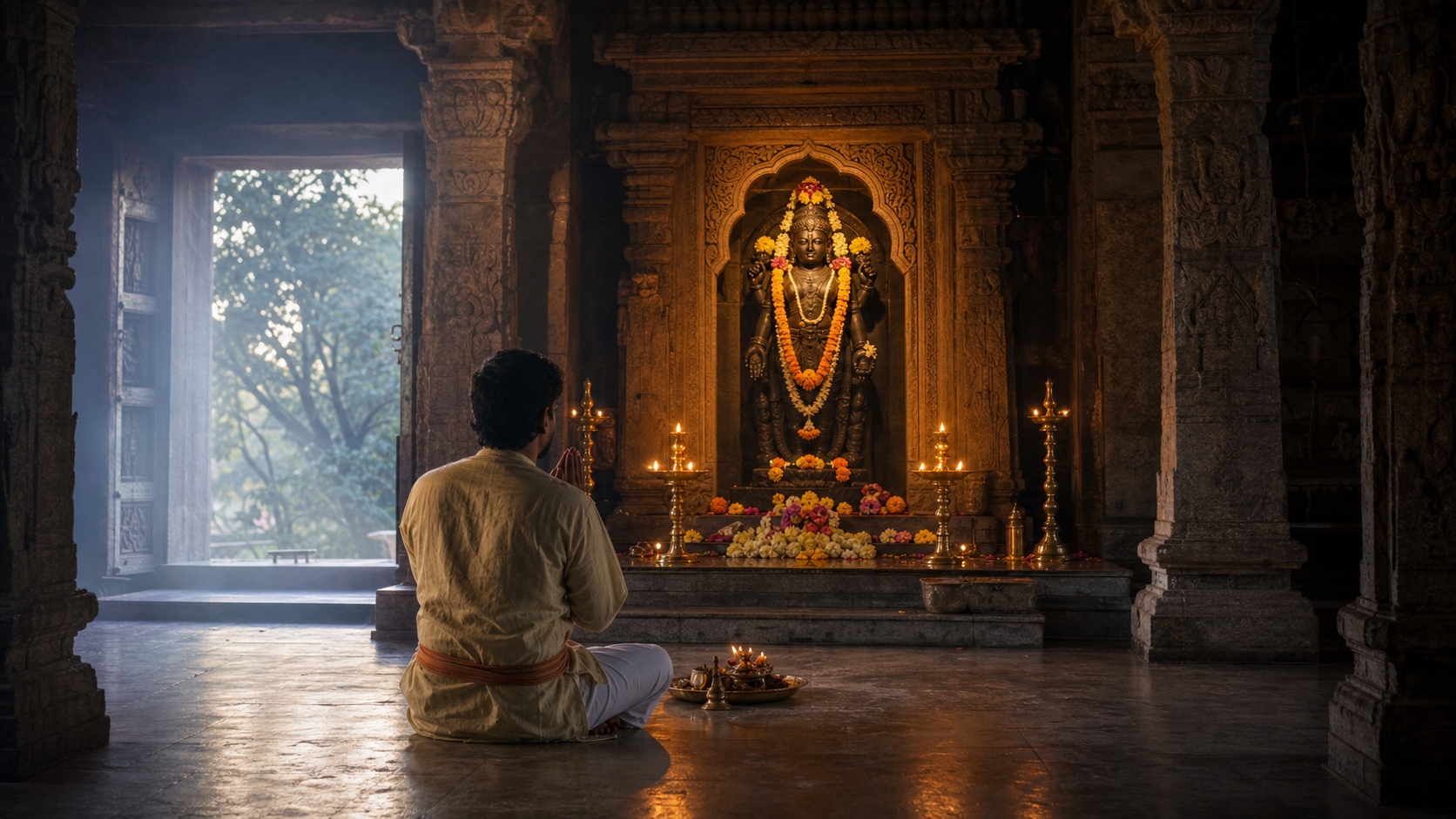
You may have felt two convictions collide while standing before a murti. The Divine is everywhere, yet this particular form asks for your full reverence. Are you meeting Bhagavan, using a symbol, or projecting religious feeling onto stone?
The clearest Dharmic answer is that a murti is a particular place of encounter with a Reality that is not confined to any place. Its material, iconography, consecration, and worship operate at different levels. Once you keep those levels distinct, form no longer competes with formlessness. It trains you to recognize divine consciousness beyond the shrine.
The murti is a meeting place, not a boundary around God
Do not begin by asking whether stone has somehow stopped being stone. Ask what relationship the tradition establishes through it. A temple image remains a fashioned object at the material level. It is simultaneously a sacred form carrying theological meaning and, within worship, a locus of divine presence. One level does not cancel the others.
Calling the murti merely an object hollows out devotion. Calling it merely a symbol can do the same, because a bhakta does not ordinarily approach the Ishta as an intellectual reminder. Yet the Infinite need not be imagined as squeezed inside matter. Presence can be particular without becoming exclusive.
Different Hindu traditions place different emphasis here. Bhakti gives the heart a living focus in Krishna, Shiva, Devi, or another beloved form. Advaita maintains that Brahman pervades everything, while still recognizing that saguna devotion can prepare perception for nirguna realization. Agamic temple traditions give consecration, ritual correctness, and continuing worship decisive importance. These emphases need not be forced into one formula before you can approach the murti sincerely.
Prana-pratishtha is therefore poorly understood if you picture a previously Godless object receiving a deity who is now trapped inside it. The rite establishes sacred status and a disciplined relationship of presence. Devotees approach a consecrated murti as one approaches the Divine, not as decoration. If the image is formally consecrated, its care and worship belong to the relevant ritual tradition; a casual personal preference should not replace lineage or temple guidance.
Divine omnipresence does not make this concentration unnecessary. If you tell an untrained mind that God can be remembered anywhere, it may quietly turn that freedom into remembering nowhere. A particular form gathers the wandering senses, emotions, and thoughts. The movement is from the tangible to the subtle, not from a supposedly false image to a supposedly real abstraction.
This is the practical role of the Ishta. Your chosen form personalizes devotion without turning the Divine into a rival among competing absolutes. Before worship, hold one sentence in mind: this form is your doorway, not God’s boundary. That protects both intimacy and universality.
Read sacred images as visual theology, not literal spectacle
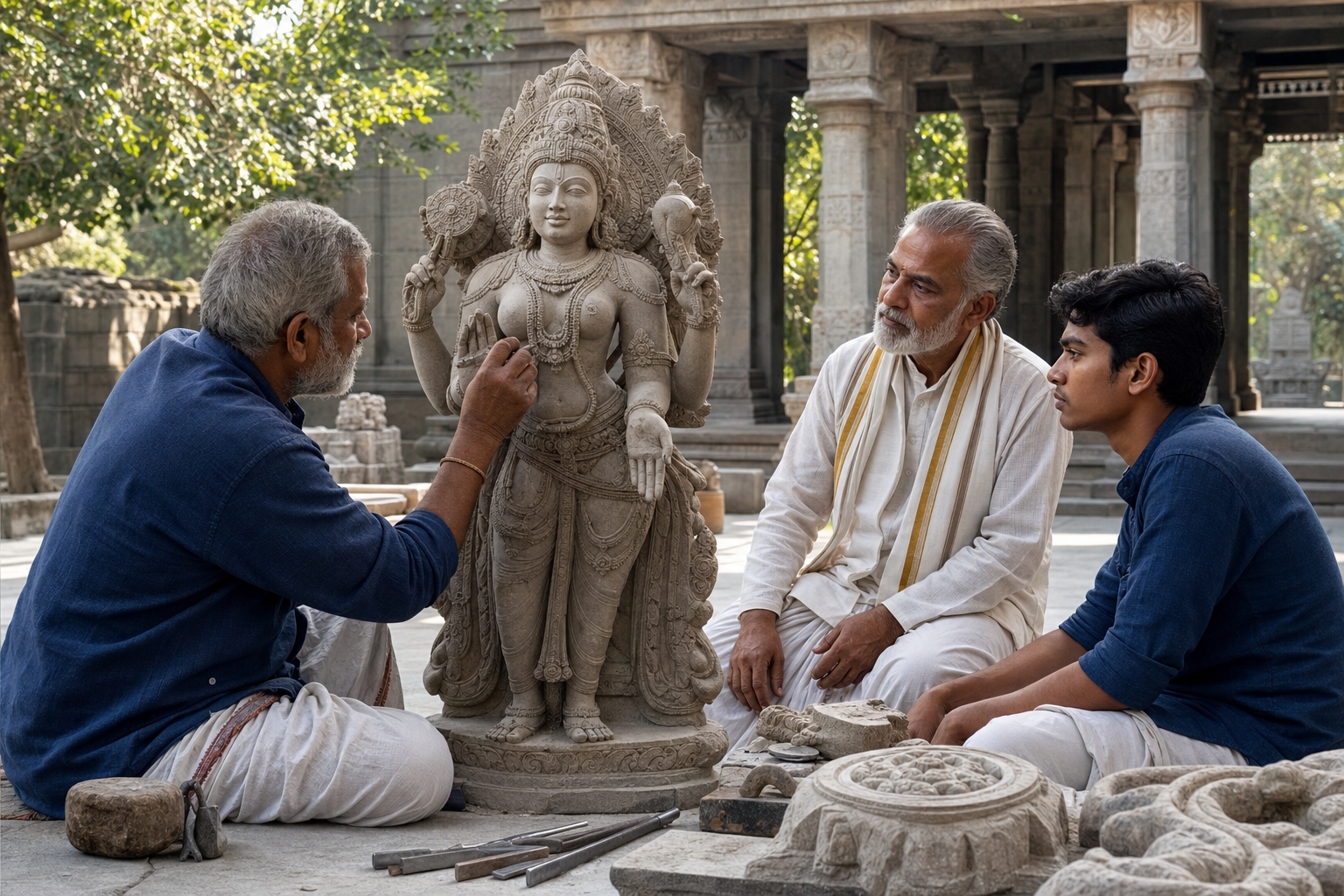
A murti does more than provide a face toward which you can pray. Posture, gesture, placement, expression, and relationship communicate a philosophy. When those details are stripped from their ritual and metaphysical setting, sacred iconography can look strange, violent, submissive, or contradictory. The problem often lies in the frame being imposed on the image.
Kali standing upon Shiva is a clear example. A superficial reading sees one deity overpowering another. Within a Tantric interpretation, however, Shiva represents still, all-pervading consciousness while Kali embodies Shakti, time, movement, and transforming power. The composition does not require a divine quarrel. It reveals that consciousness and power are inseparable.
Shiva lying beneath Kali is not rendered unimportant. He is the unmoving ground of her movement. Kali is not reduced to disorder; her fierce activity is the pulse through which worlds arise, change, and dissolve. Stillness without power would be inert, while power without an illuminating ground would lack orientation. Their contact makes visible a union that an abstract proposition could state but not embody so immediately.
The placement of Kali’s foot also should not be decoded through the social meaning of someone rudely stepping on another person. Feet have a sacred grammar in Indic practice: devotees bow at the feet of a guru or deity, and charana can signify refuge and grace. Shiva’s posture can therefore express willing support and reciprocity rather than humiliation.
Kali’s protruding tongue shows why you should resist the demand for one mechanical meaning per detail. A popular account associates it with the shock or embarrassment of stepping on Shiva. A Tantric reading can relate it to spanda, the creative throb of consciousness, and to the instant in which fierce momentum becomes aligned with awareness. The interpretations direct attention to different layers of the same sacred encounter.
When an image puzzles or disturbs you, use this sequence before reaching a conclusion:
- Identify the divine function. Ask whether the figure represents consciousness, protection, knowledge, time, abundance, dissolution, or another power. Do not reduce the deity to the literal action visible in one frozen moment.
- Study the relationships. Notice who supports whom, where each figure looks, and whether apparent opposition may express complementarity.
- Read gestures within Indic practice. A foot, weapon, flame, severed form, or fierce expression cannot be interpreted responsibly by importing an unrelated visual vocabulary.
- Look for the discipline addressed to you. Ask what quality the image requires: courage joined to compassion, action grounded in awareness, knowledge freed from pride, or surrender without passivity.
If you do not yet know the lineage-specific meaning of a detail, suspend judgment. Uncertainty is more honest than forcing a sacred image to confirm either devotion or hostility.
Let ritual turn looking into disciplined attention
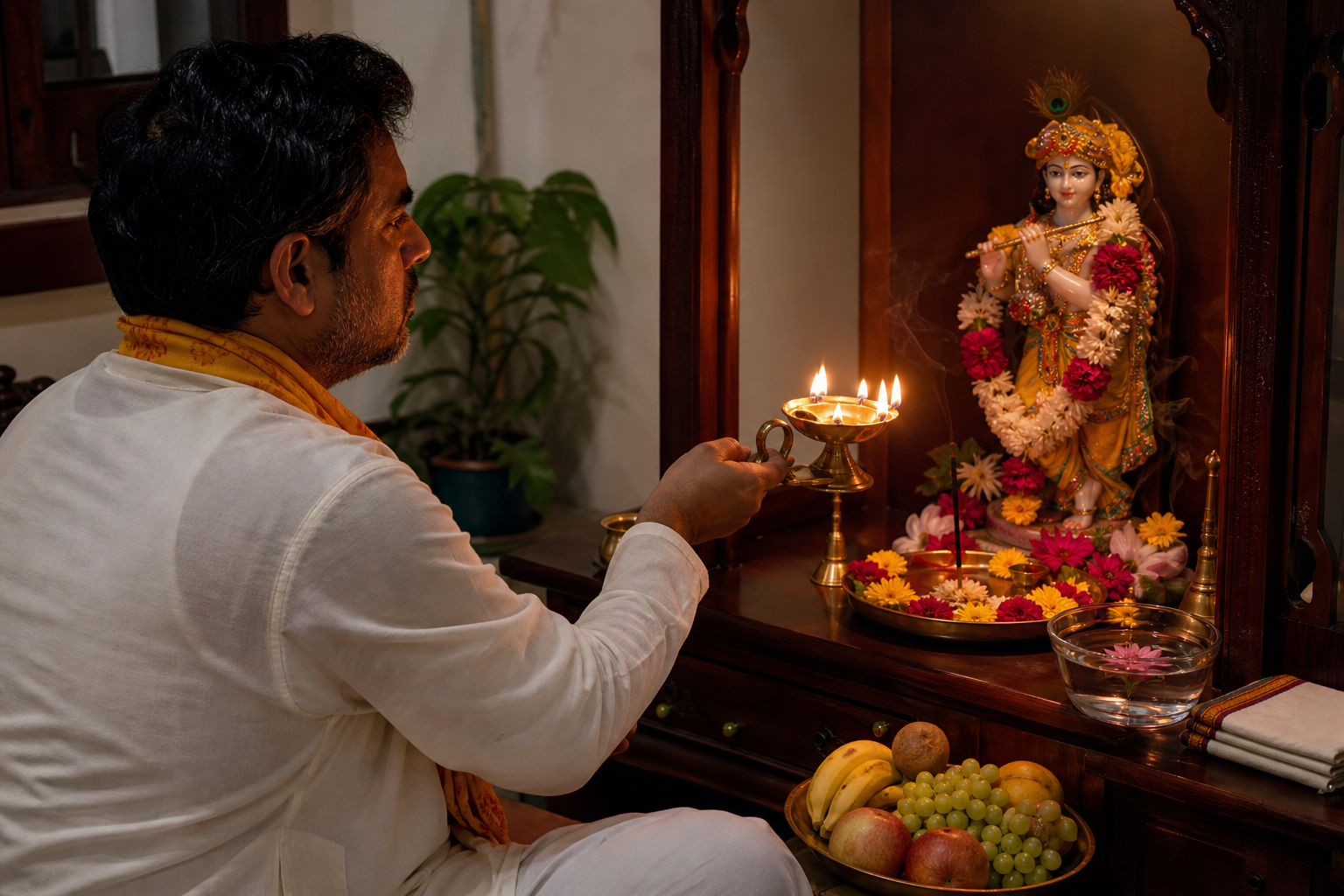
Iconography can remain art history unless ritual changes the way you attend. Darshan, aarti, japa, meditation, and puja recruit the body, senses, breath, emotions, and mind. Their purpose is not to keep you busy in front of an image. They make scattered attention receptive enough to encounter what the image discloses.
Darshan begins with receptivity. You are not merely inspecting a religious object; you allow yourself to be seen in the presence of the Ishta. Aarti gathers sight, movement, flame, sound, gratitude, and surrender around that encounter. Japa gives the mind a repeated sacred current, reducing its tendency to chase every passing thought. Silence then lets the meaning settle without demanding another explanation.
Temple worship trains the capacities needed to perceive the Divine beyond the temple. This is why precision matters, but rigidity does not. Precision means bringing your whole attention to the action. Rigidity means treating the procedure as an end in itself or judging another devotee solely by external performance.
A simple sequence for home worship
You do not need to imitate the scale of a temple ceremony. A modest practice can preserve the essential movement from form to awareness:
- Approach one chosen form deliberately. Remember why this Ishta draws your heart and which divine quality you are seeking to embody.
- Offer your attention before offering words. Look at the face, posture, hands, and relationships in the image. Let darshan interrupt mental haste.
- Use mantra or japa to gather the mind. When attention wanders, return without irritation. The return is part of the training.
- Allow a period of stillness. Move from the visible form toward the awareness in which seeing, mantra, and feeling arise.
- Choose an ethical expression. Carry one quality of the Ishta into the next part of your day through truthful speech, restraint, generosity, courage, or seva.
Do not measure the practice only by unusual sensations. A strong emotional experience may come or may not. The more dependable question is whether worship makes your attention steadier and your conduct more Dharmic. If reverence before the murti never alters how you speak to a difficult person, the movement from sacred form to lived awareness remains incomplete.
Test divine consciousness in your next charged moment
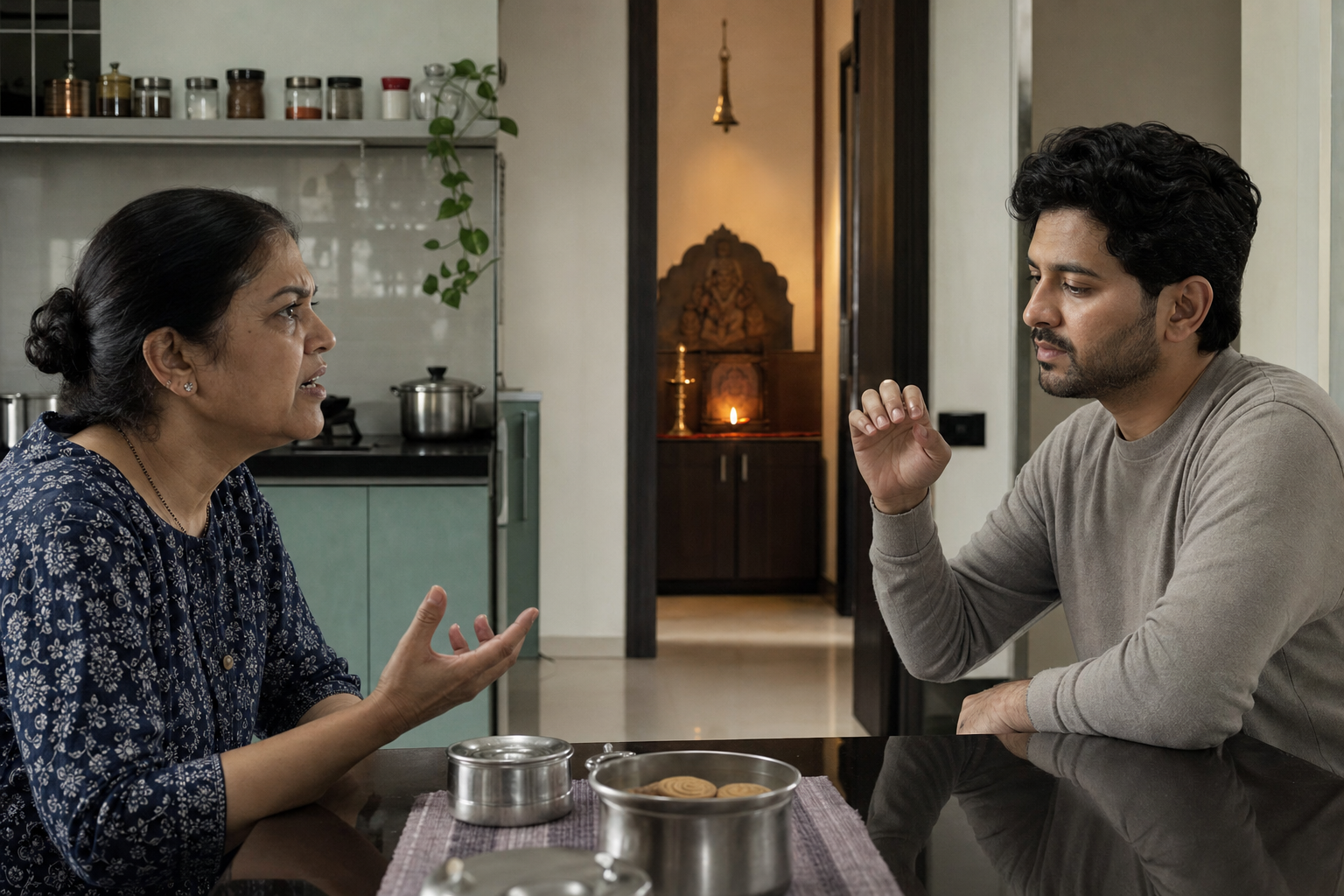
The decisive test occurs after you leave the shrine. A sacred image has not completed its work merely because it produced calm during puja. Its teaching must become available when anger, fear, urgency, ambition, or grief begins to move through you.
The Kali-Shiva image offers a practical inner method. Treat intense energy as Kali and witnessing awareness as Shiva. This does not mean suppressing energy until you feel numb, nor indulging it and calling every impulse sacred. It means allowing power to rest upon awareness before it becomes action.
- Notice the energy. Name the movement without immediately defending or condemning it.
- Return to the witness. Attend to the quiet awareness in which the emotion is appearing.
- Let awareness hold the force. Do not rush to discharge it through speech, accusation, or withdrawal.
- Choose its Dharmic expression. Speak truth without cruelty, act firmly without agitation, and use courage in the service of protection rather than ego.
This is what it means for Shakti to be grounded in consciousness. Energy is not rejected; it is clarified. Stillness is not passivity; it gives action direction. The image becomes a map you can use precisely when its teaching is hardest to remember.
The wider Dharmic family approaches sacred presence in distinct ways, and those differences should not be blurred. Vajrayana imagery can express the inseparability of wisdom and method. Jain practices of equanimity stabilize ahimsa in thought, word, and deed. Sikh remembrance of the One, Akal Purakh, moves through simran, sangat, Naam, and seva rather than requiring Hindu murti theology. The shared pattern is not identical iconography. It is the movement from concentrated practice toward clearer perception and ethical action in ordinary life.
You can assess your own worship by its direction. Practice is opening when one beloved form increases reverence for life beyond that form, when aarti matures into gratitude, when japa steadies speech, and when darshan makes another person’s dignity harder to overlook. Practice is contracting when the image becomes a possession, a display of superiority, or an excuse to despise a different Ishta or path.
Key takeaways
- A murti localizes your encounter with the Divine without limiting divine omnipresence.
- The material object, sacred iconography, consecrated status, and devotional relationship are distinct but connected levels.
- Form and formlessness need not compete: disciplined attention to saguna form can open perception toward nirguna Reality.
- Iconographic details should be read through their Dharmic and lineage-specific grammar, not through a literal first impression.
- Darshan, aarti, japa, meditation, and seva reveal their value when they produce steadier awareness and more ethical conduct.
- The proper fruit of loving one sacred form is not narrower vision, but a growing ability to recognize sacred presence throughout life.
At your next darshan, do one thing differently. Receive the form before analyzing it, identify one truth carried by its iconography, and take that truth into your next human encounter. The murti then begins its deepest work: not enclosing divine consciousness in stone, but teaching you not to overlook it anywhere.
References
- DharmaRenaissance Blog — Unveiling Yogini Tantra: Why Kali Stands on Shiva and the Sacred Union It Reveals
- DharmaRenaissance Blog — From Stone to Spirit: Temple Worship that Deepens Realization of the All-Pervading Divine
