

You finish a Ramayana adaptation and something feels wrong. The costumes may be convincing and the spectacle impressive, yet the story seems to ask you to admire what the grantha asks you to judge. Is that a legitimate interpretation, or has creative liberty become a cover for distortion?
You do not need to object to every changed scene to answer that question. Start with the promise the makers made, then examine what their additions and omissions do to character, causality and dharma. That gives you a firmer standard than either blind approval or outrage at every departure.
Read the promise before you judge the changes
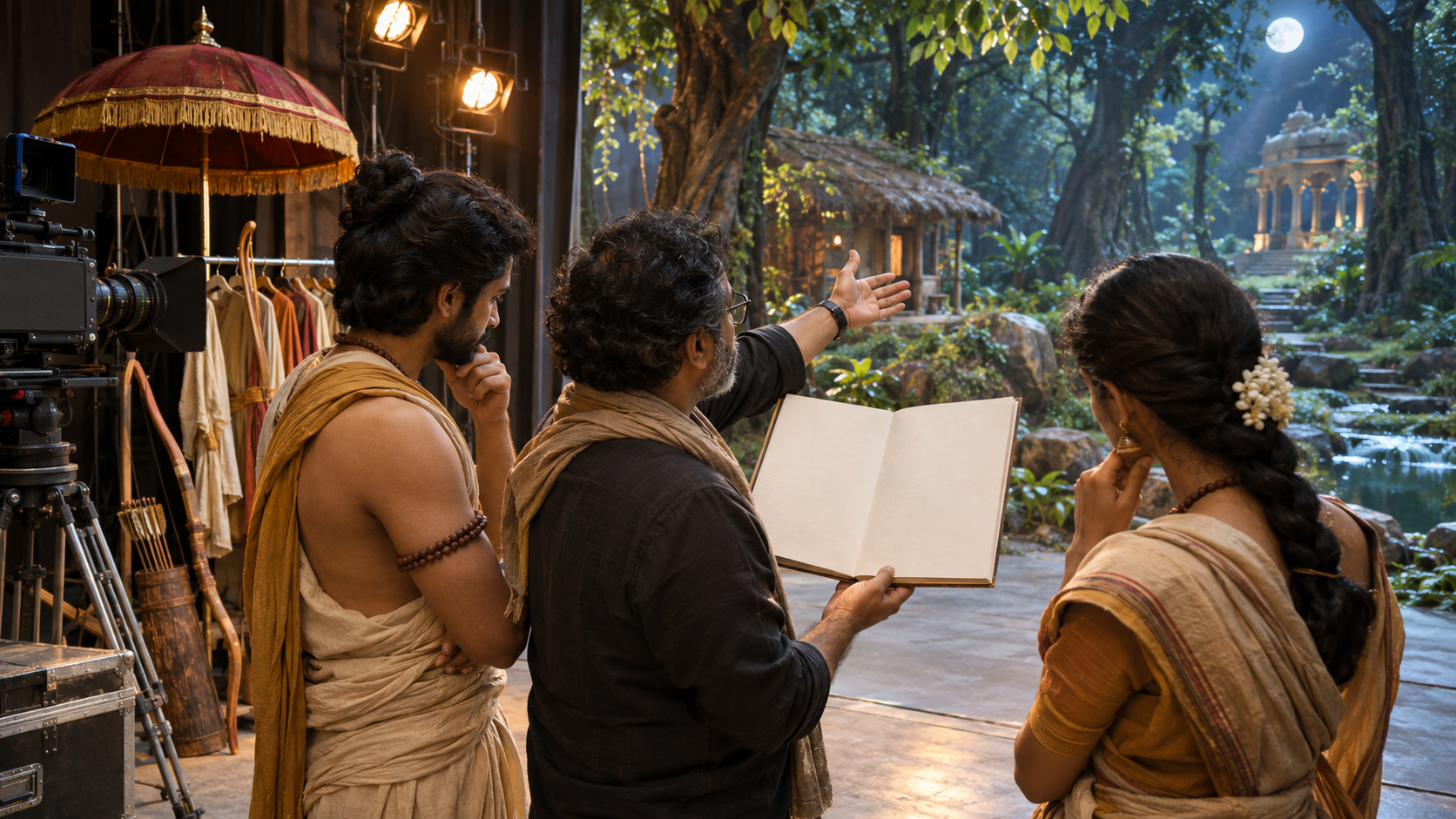
Creative liberty is not one permission with the same limits in every production. A translation, a performance of a named textual tradition, a composite retelling and a fantasy inspired by the Ramayana make different promises to you.
- A translation or close enactment promises a high degree of textual fidelity.
- An adaptation of the Srimad Valmiki Ramayana may condense and dramatise, but Valmiki’s work remains its declared benchmark.
- A retelling grounded in a regional or sampradaya tradition should identify that lineage clearly.
- A work merely inspired by the Ramayana has wider freedom, provided it does not market its inventions as the meaning of a named grantha.
This distinction is the first practical test. If the publicity invokes the Srimad Valmiki Ramayana, compare the screenplay with that text’s narrative and moral relationships. Do not let defenders quietly move the benchmark to an unspecified mixture of folklore, modern ideology and dramatic convenience after a departure is questioned.
Creative liberty becomes misleading when a production borrows the authority and recognition of a grantha while discarding the qualities that gave it that authority. Honest labelling does not settle every interpretive dispute, but it tells you what kind of fidelity you were promised.
Key takeaways
- Identify the exact Ramayana tradition the production claims to adapt.
- Distinguish compression of an episode from reversal of its moral meaning.
- Treat omitted motives and consequences as interpretive choices, not neutral absences.
- Check the exact language version, dub or international cut you watched.
- Ask what a viewer unfamiliar with the grantha would now believe about Rama, Sita, Ravan and dharma.
Many Ramayanas do not mean no standards
Rama’s story has been retold through sampradayas, regional traditions, Buddhist and Jain tellings, folklore, katha and dramatic performance. That plurality shows the extraordinary reach of the Ramayana. It does not make every version interchangeable, nor does it exempt a new production from explaining its lineage.
A living tradition can accommodate difference without surrendering provenance. Two tellings may emphasise different episodes, develop different devotional moods or teach through different narrative devices. You can recognise those differences while still asking which tradition each telling represents.
The correct question is therefore not whether every Ramayana must reproduce one screenplay scene by scene. Ask which Ramayana this particular work claims to be. If it names Valmiki, Valmiki is the proper point of comparison. If it names another established tradition, assess it within that tradition. If it combines several tellings with new material, it should tell the audience that it is a composite.
This also prevents a common double standard. A production should not advertise textual authenticity when seeking trust, retreat to creative freedom when challenged, and then use the existence of traditional diversity to avoid identifying its own inventions. Diversity within a tradition is not a blank cheque issued to every modern storyteller.
Look for moral reversal, not just altered details
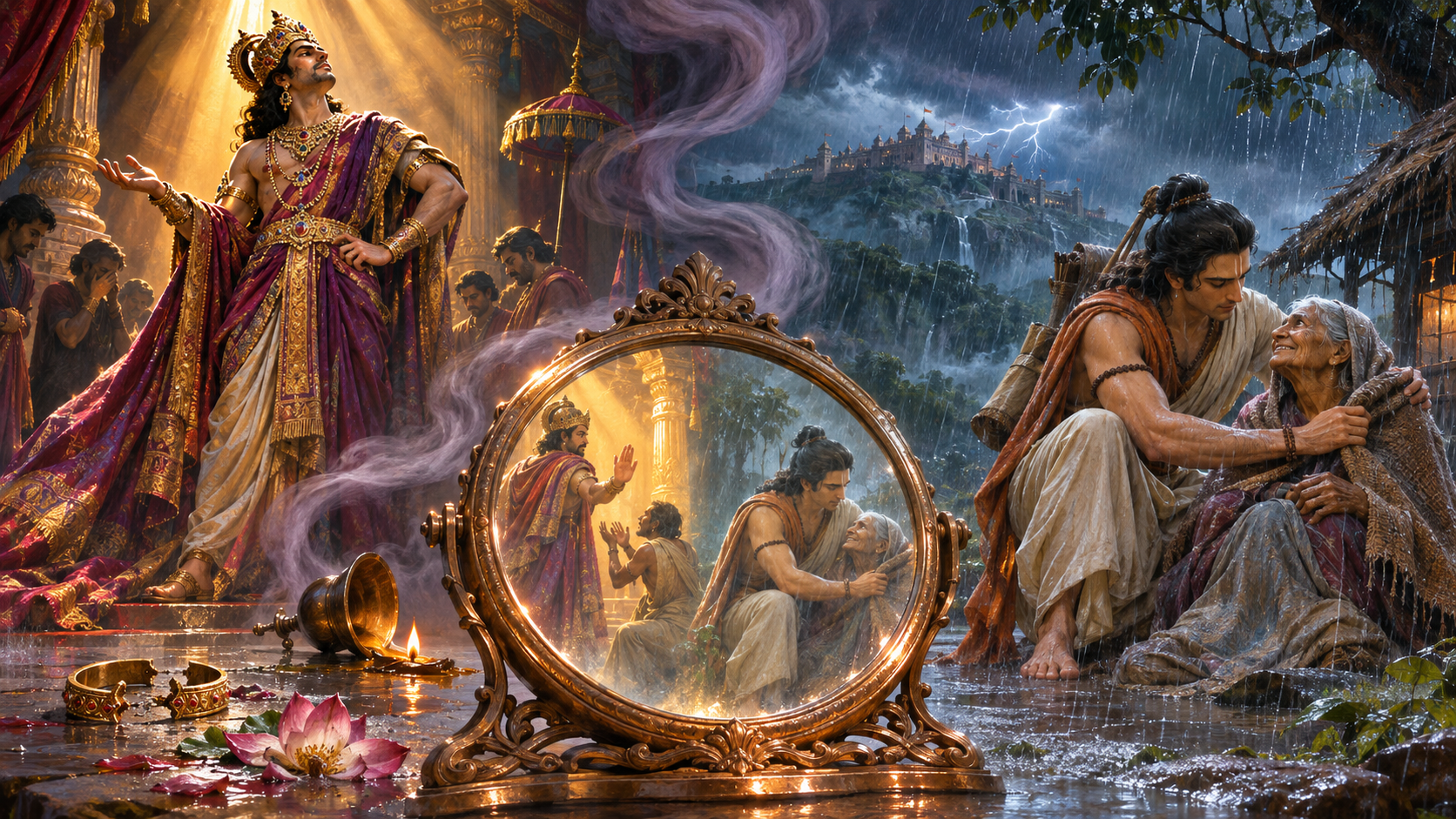
For a Dharmic audience, the Ramayana is not merely a sequence of famous events. Character is disclosed through motive, choice, restraint, transgression and consequence. Change those relationships and you can retain the names, locations and battles while telling a fundamentally different story.
Some alterations are ordinary necessities of adaptation. A film may compress time, combine minor exchanges, translate poetic ideas into visual action or leave out secondary material. The important question is what the change makes the audience believe.
Suppose a screenplay removes the conduct that establishes an antagonist’s tyranny but adds speeches presenting him as the liberator of an oppressed people. The problem is not simply that new dialogue appeared. The invention and the omission work together to reverse the moral verdict. A first-time viewer may leave believing that the conflict arose from a misunderstood campaign for justice rather than from the antagonist’s own choices.
The same principle applies to Sri Rama. If the scenes that disclose his judgement, restraint, relationships and adherence to dharma disappear, the remaining battles can be made to resemble a conventional revenge narrative. The plot may still travel from Ayodhya to Lanka, but its centre has shifted.
Giving Ravan dramatic depth is not automatically a distortion. An antagonist may be intelligent, formidable and emotionally legible while remaining accountable for his actions. Empathy becomes exoneration when invented virtues displace defining conduct, consequences are detached from choices, or the audience is prompted to see aggression chiefly as victimhood.
Keep three ledgers while you watch
- Additions: Note invented motives, political claims, relationships and speeches. Ask whether they deepen an existing tension or manufacture a new moral identity.
- Omissions: Notice missing actions, reactions and consequences. Ask whether their absence protects a character from a judgement the fuller narrative would invite.
- Results: State the conclusion produced by the combined changes. Who now appears righteous, who appears culpable, and what does the conflict appear to be about?
The third ledger matters most. Arguments about individual scenes can become endless because each alteration appears small in isolation. The accumulated result reveals whether the adaptation has compressed a story or redirected it.
Modern vocabulary can also enter a retelling as commentary. There is nothing dishonest about asking contemporary questions of an ancient work. The line is crossed when the screenplay presents a modern political category as though it were the grantha’s own governing frame, without identifying that interpretive move. You should be able to separate what the named tradition narrates from what the adapter wants to say through it.
Use this five-question test on the version you watched

Use the following test before recommending an adaptation, screening it for children or arguing about it online. It moves the discussion from vague impressions to verifiable choices.
- What did the production claim to be? Record the exact description used in its title, publicity or credits: adaptation of Valmiki, another traditional telling, a composite, or an original work inspired by the Ramayana.
- Which version did you actually see? Identify the language, dub, subtitles and cut. Do not assume that every release contains the same scenes or framing; language-specific versions can produce materially different impressions.
- What has been invented? Look especially at motives, ideological speeches and declarations of virtue. Visual changes may be obvious, but a single invented motive can redirect the meaning of several later scenes.
- What has been removed? Search for the narrative bridge that would explain a choice or establish its consequence. An omission is especially significant when it makes an otherwise blameworthy action look reasonable or turns principled conduct into unexplained aggression.
- What would an uninitiated viewer learn? Ask that person to describe each principal character’s aims, choices and consequences. Do not prompt with a desired answer. Their account will show what the adaptation actually communicated, regardless of what the makers say they intended.
If the changes mainly shorten the journey while preserving motives, responsibility and consequence, you are probably looking at adaptation. If they reverse those relationships while the production continues to claim fidelity to a named grantha, distortion is the more accurate description.
This test is also useful when the visual experience is excellent. Spectacle can enhance a Ramayana adaptation, but it cannot answer a textual objection. Strong animation, music or production design tells you how skilfully an interpretation was presented, not whether the interpretation was honest.
Give creative freedom an honest boundary
A responsible adapter does not need to eliminate imagination. The better discipline is to make the boundary between inheritance and invention visible.
- Name the textual or performance tradition being followed.
- Describe the work as composite when it combines lineages.
- Keep invented political motives from masquerading as the position of the named grantha.
- Preserve the scenes or narrative bridges necessary to understand character and consequence.
- Disclose substantial differences between language editions or international cuts.
- Market a radical reimagining as a reimagining, not as a faithful introduction to the Srimad Valmiki Ramayana.
Viewers, parents and teachers have a corresponding responsibility. If a film is a young person’s first encounter with the Ramayana, introduce it as an adaptation rather than a substitute for the textual or katha tradition it invokes. Afterwards, ask who chose what, why they chose it and what followed. Then compare those answers with the named tradition. That short exercise exposes moral reversals more effectively than a general warning about inaccuracy.
You do not have to choose between artistic imagination and reverence for tradition. Ask the maker to identify the inheritance, identify the invention and accept responsibility for the meaning produced by both. The next time a Ramayana retelling arrives, take its claim literally, keep the three ledgers, and judge the moral result before the spectacle. Creative liberty deserves room; borrowed scriptural authority requires honesty.
References

Leave a Reply
You must be logged in to post a comment.