
If you have heard one telling in which Nala alone is Vishwakarma’s son, another in which Nala and Neela both are, and a third centred on stones that float, you are not facing one simple contradiction. You are hearing different layers of Ramayana memory.
Once you distinguish the classical account, regional devotion, and theological symbolism, the episode becomes clearer. You can honour a family’s cherished telling without assigning every detail to the same text, and you can see why building Rama Setu is as much a lesson in disciplined seva as it is a sacred wonder.
The shortest accurate answer to who built Rama Setu
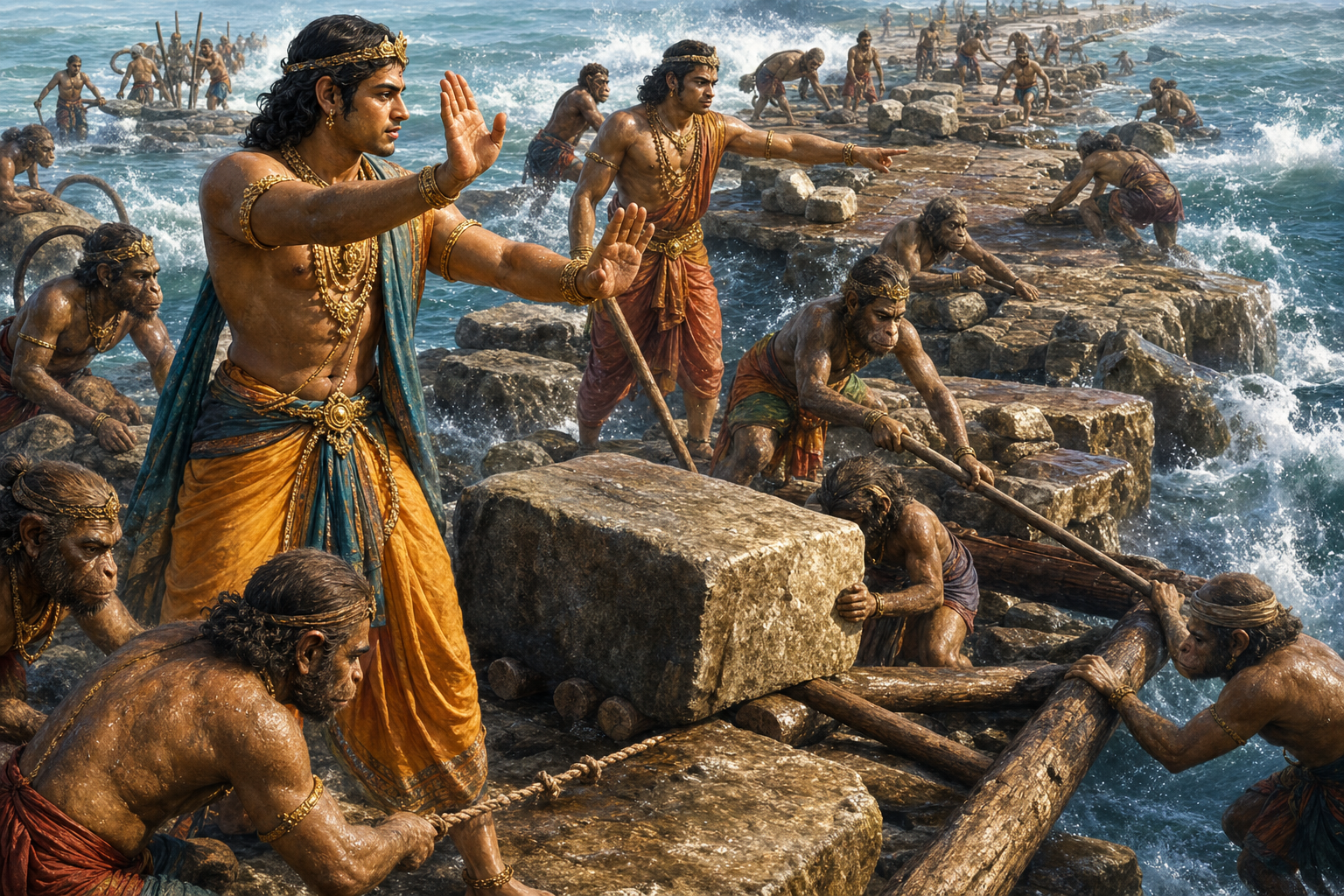
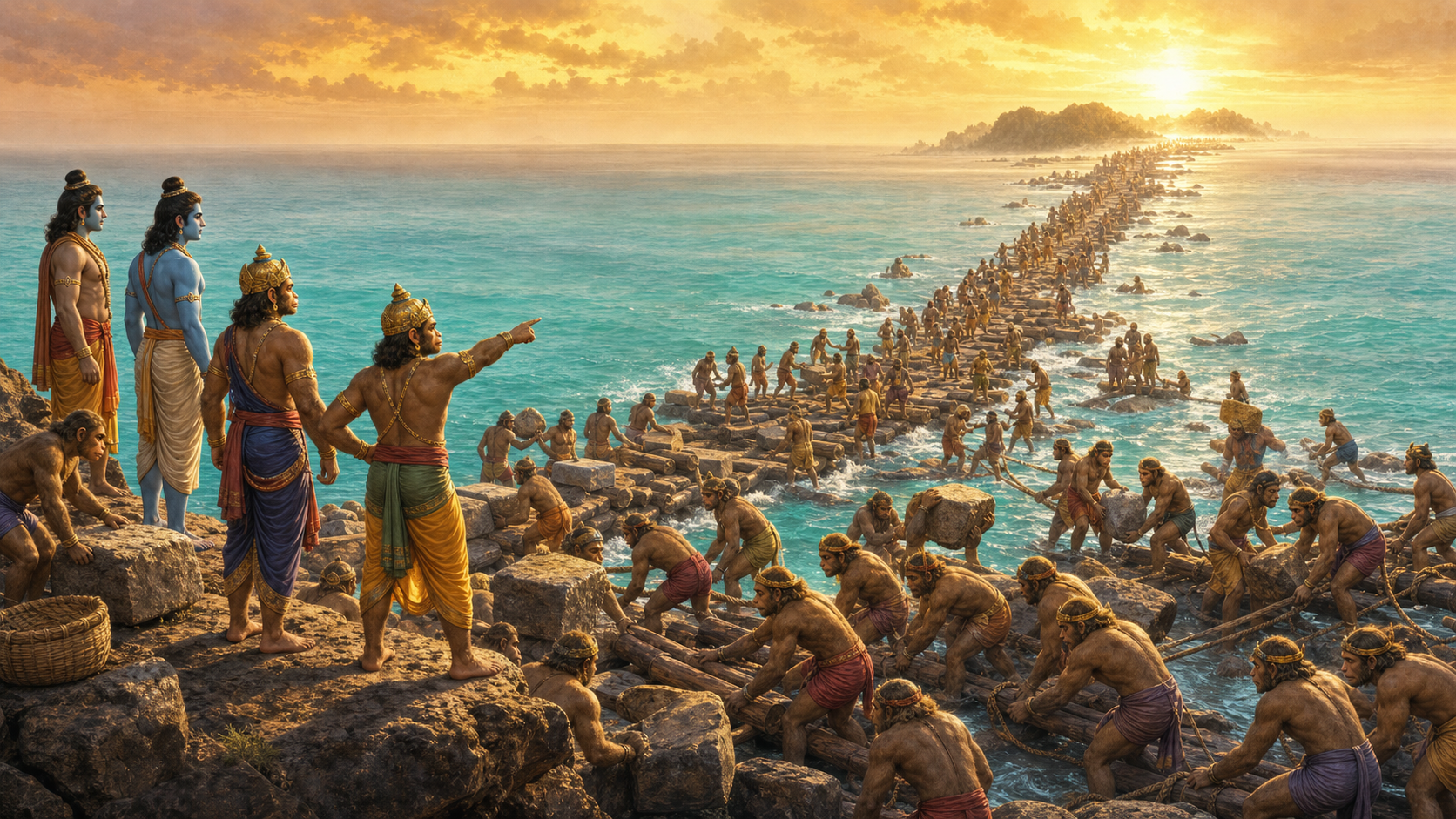
Rama Setu is the work of the vanara army acting under Rama’s direction, with Nala providing the builder’s mastery and Neela supplying military command and disciplined execution. Hanuman’s initiative and the labour of the entire force also belong to the achievement. Calling it only Nala’s bridge or only Neela’s miracle misses the collective nature of Setubandha.
Valmiki’s Ramayana presents Nala as a son of Vishwakarma and an accomplished builder. Many other accounts identify Neela as a son of Agni and commander of the vanara forces. Bengali devotional traditions often bring the two closer together, venerating both as heirs of Vishwakarma’s divine craftsmanship, whether by lineage or by the nature of their service.
The distinction is easier to remember if you separate genealogy from vocation. Nala’s stated connection to Vishwakarma is a matter of lineage in the classical telling. Nala and Neela’s shared connection to Vishwakarma in Bengali memory can also express spiritual inheritance: both place technical ability at the service of dharma. Those claims need not be forced into a single family tree before either tradition can be appreciated.
If someone asks you who built the bridge, a careful one-sentence answer is: Nala designed and led the construction, Neela commanded and organised the vanara forces, and the whole army completed the work for Rama’s righteous mission.
Setubandha joins sacred purpose to organised work
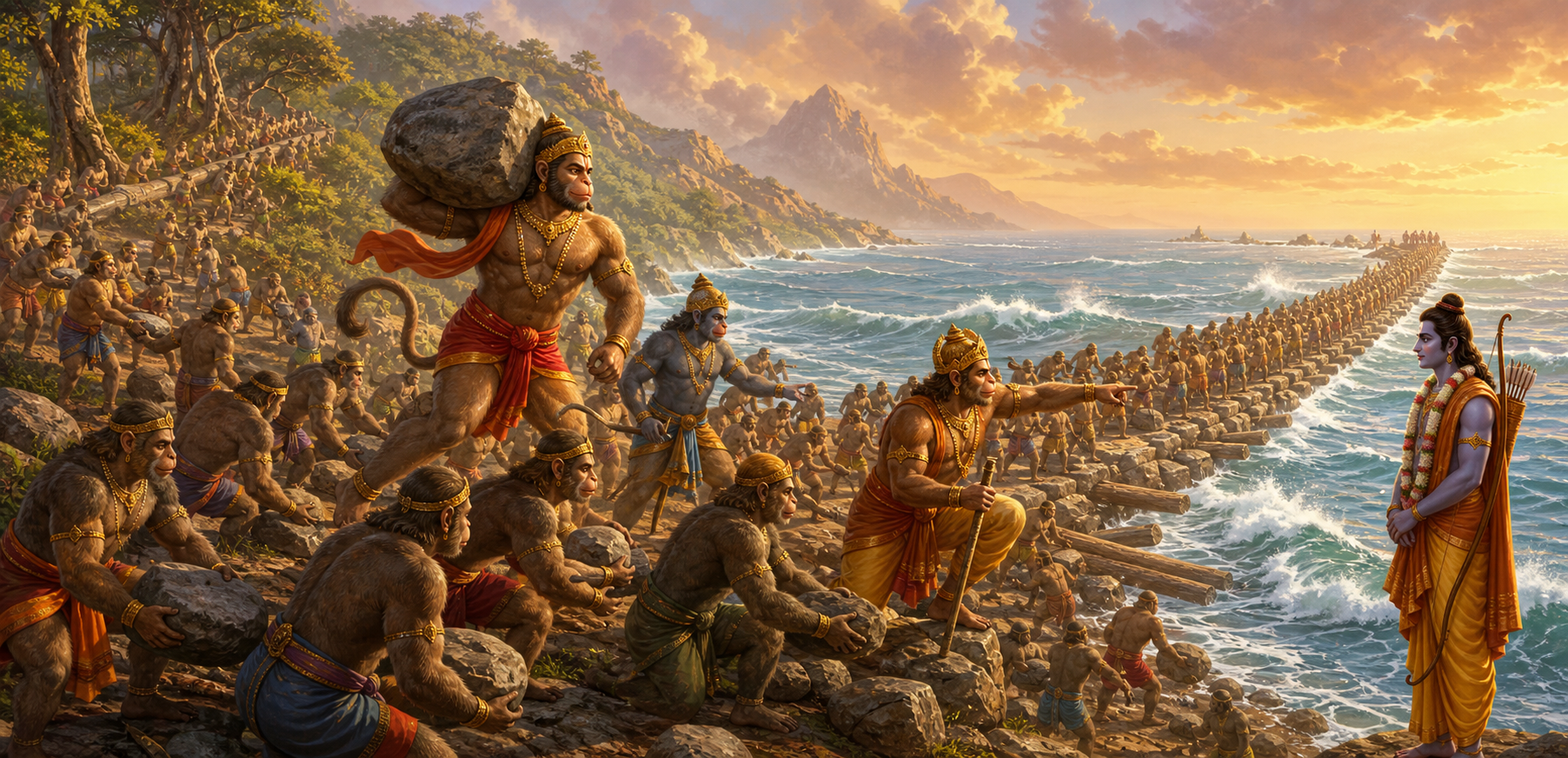
The ocean is not crossed merely because the vanaras possess great strength. Strength becomes effective only after it is organised. In the sacred engineering of Setubandha, the coast must be understood, materials assembled, labour coordinated, and the work aligned with the conditions of the sea. Stones and timber become a bridge through placement, order, and sustained cooperation.
- Rama establishes the purpose: reaching Lanka to rescue Sita and confront Ravana’s adharma.
- Nala converts that purpose into a buildable design.
- Neela turns a vast force into coordinated action.
- Hanuman embodies initiative and tireless service.
- The vanara army supplies the shared labour without which design and command would remain incomplete.
This division of responsibility is one of the episode’s most practical teachings. A righteous goal does not make competence unnecessary. Devotion does not excuse disorder. Technical skill does not determine its own moral purpose. The crossing becomes possible when purpose, knowledge, leadership, and labour point in the same direction.
That is why Nala and Neela should not be reduced to convenient miracle-workers who remove the need for effort. Their greatness lies in using the abilities available to them with precision and humility. If you are teaching this story, keep the labour visible. Children and adults alike can then notice that seva may take the form of planning, measuring, carrying, directing, correcting, or simply completing an assigned task well.
The invocations of Rama at the worksite add another dimension. They do not turn careless work into sound construction. They orient careful work toward a sacred end. In this relationship, bhakti gives skill its direction, while skill gives bhakti an effective form in the world.
Where the floating-stones tradition belongs
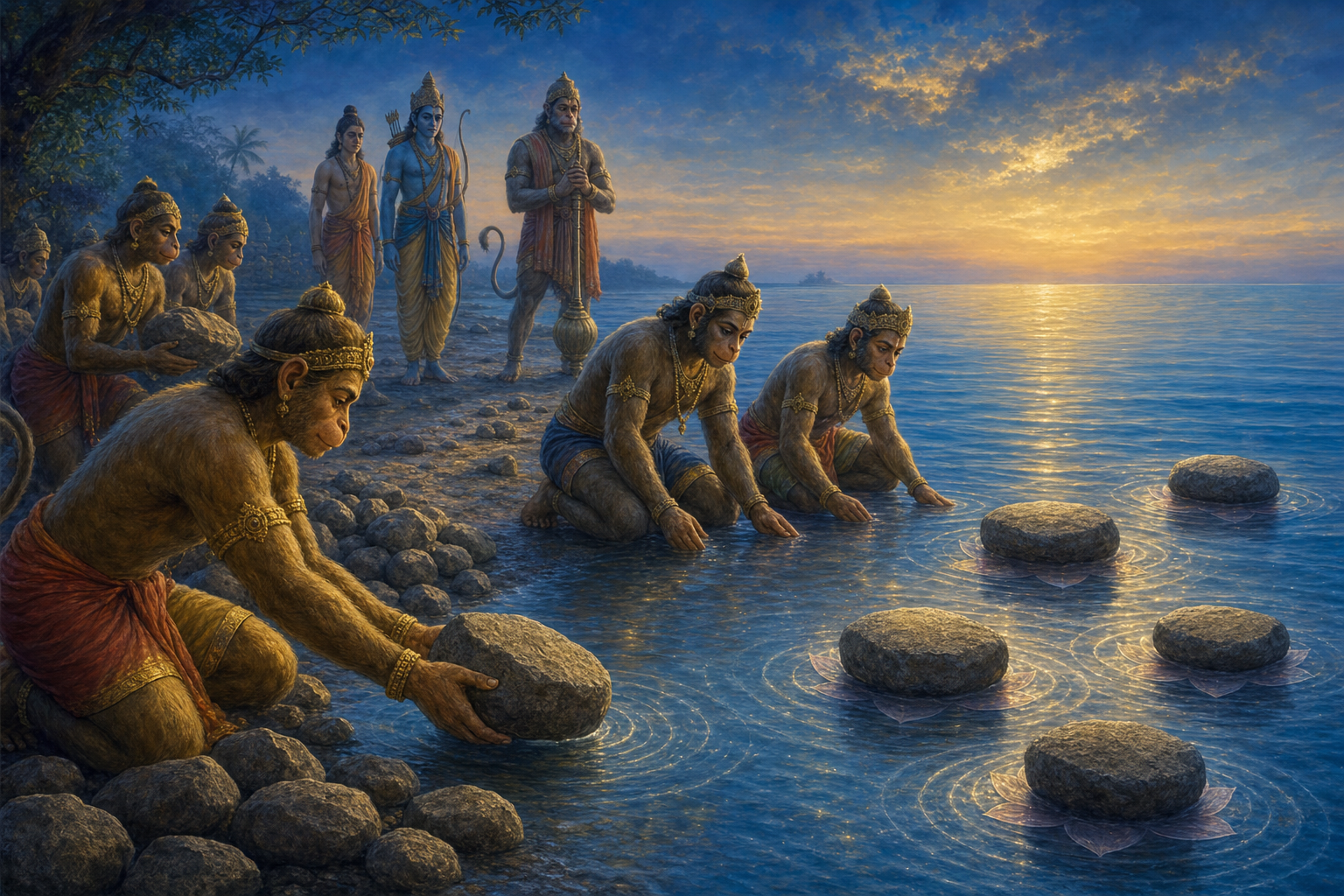
The familiar floating-stones motif belongs especially to devotional and folk memory. One widely told form gives Neela a boon-curse by which anything he casts into water will float; the stones are also associated with Rama’s name. The image is powerful because it compresses the entire meaning of Setubandha into one visible transformation: what appeared to be an obstacle becomes the support for a path.
You can receive that motif reverently without confusing three different questions. Devotion asks what the floating stones reveal about Rama-nama, grace, and service. Textual reading asks which Ramayana tradition contains the detail. Empirical investigation asks what physical evidence can establish about a material formation. An answer in one register does not automatically settle the others.
As theological symbolism, the floating stone does not mean that effort is dispensable. It means that material capability changes significance when aligned with dharma. A stone can obstruct a journey, become part of a bridge, or be thrown without purpose. Intention alone does not decide the result; intention joined to disciplined placement does.
This is also the safest way to discuss the motif when a conversation turns argumentative. Do not demand that a devotional image function as a complete geological demonstration, and do not dismiss sacred meaning merely because it is expressed through wonder. First identify whether the conversation concerns scripture, regional narration, spiritual interpretation, or physical history. Much apparent disagreement disappears once everyone answers the same question.
How to honour variant tellings without flattening them
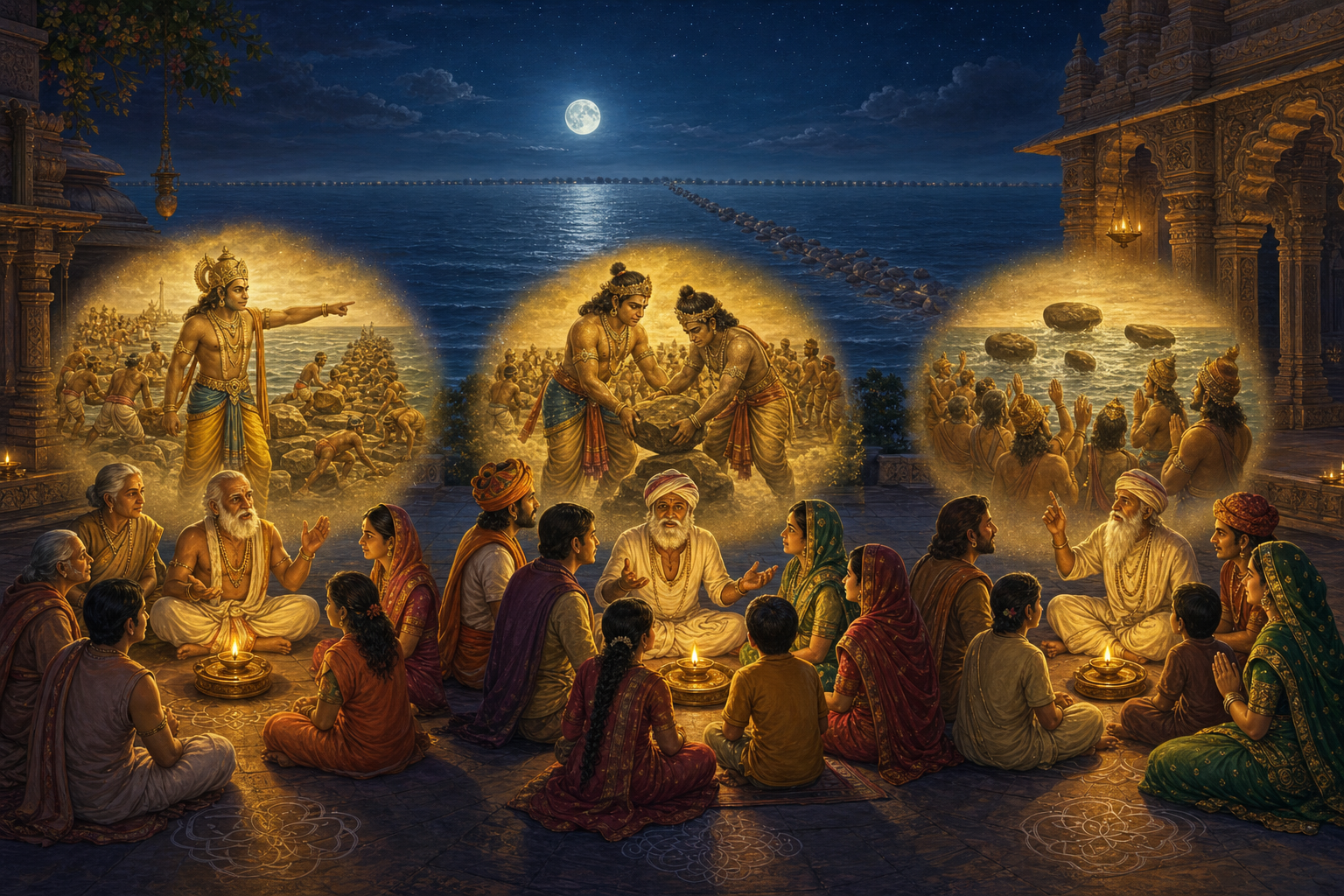
Bengal has carried Nala and Neela through pauranik katha, kirtan, pata-chitra scrolls, and pala gan. In these living forms, a detail may be expanded because it helps a community contemplate devotion, craftsmanship, or collective duty. Regional elaboration is not best understood as a careless copy of a Sanskrit account. It is a way in which sacred memory enters local language, art, music, and family teaching.
At the same time, respect for regional devotion does not require attributing every cherished detail to Valmiki’s Ramayana. When you explain the episode in a classroom, temple gathering, family conversation, or online discussion, use four steps:
- State the classical baseline: Nala is associated with Vishwakarma and possesses exceptional building ability.
- Name the relevant variation: Neela is often identified with Agni, while Bengali devotional lore may honour both Nala and Neela as Vishwakarma’s sons or heirs.
- Separate lineage from function: whatever the genealogy, Nala represents design and Neela represents command and execution within the collective endeavour.
- Return to the episode’s shared centre: specialised ability becomes dharmic when offered as seva to a righteous purpose.
This approach avoids two common errors. The first is treating one regional telling as though it were the only wording found in every Ramayana tradition. The second is treating variation as proof that the tradition has no coherent meaning. The details vary, but the moral architecture remains recognisable: Rama supplies the compass, Nala the craft, Neela the discipline, Hanuman the initiative, and the vanaras the strength of common effort.
Key takeaways for reading the Setubandha episode
- Nala is the principal builder and is identified in Valmiki’s Ramayana as Vishwakarma’s son.
- Neela is commonly remembered as Agni’s son and commander of the vanara forces, though Bengali devotional traditions may connect both heroes to Vishwakarma.
- Rama Setu is a collective achievement, not the isolated feat of one hero.
- The floating-stones account is best identified as a devotional and folk motif rather than silently assigned to every textual tradition.
- The episode unites bhakti with competence: sacred intention directs the work, while design, command, and labour make the intention effective.
The next time you hear the story, ask a concrete question: which part of the bridge could only this person build? Nala’s answer is design, Neela’s is disciplined execution, Hanuman’s is initiative, and the army’s is cooperative labour. Then ask what ability you can place in service of a worthy purpose. That is how Setubandha stops being only an event across the ocean and becomes a discipline you can practise.
References
