
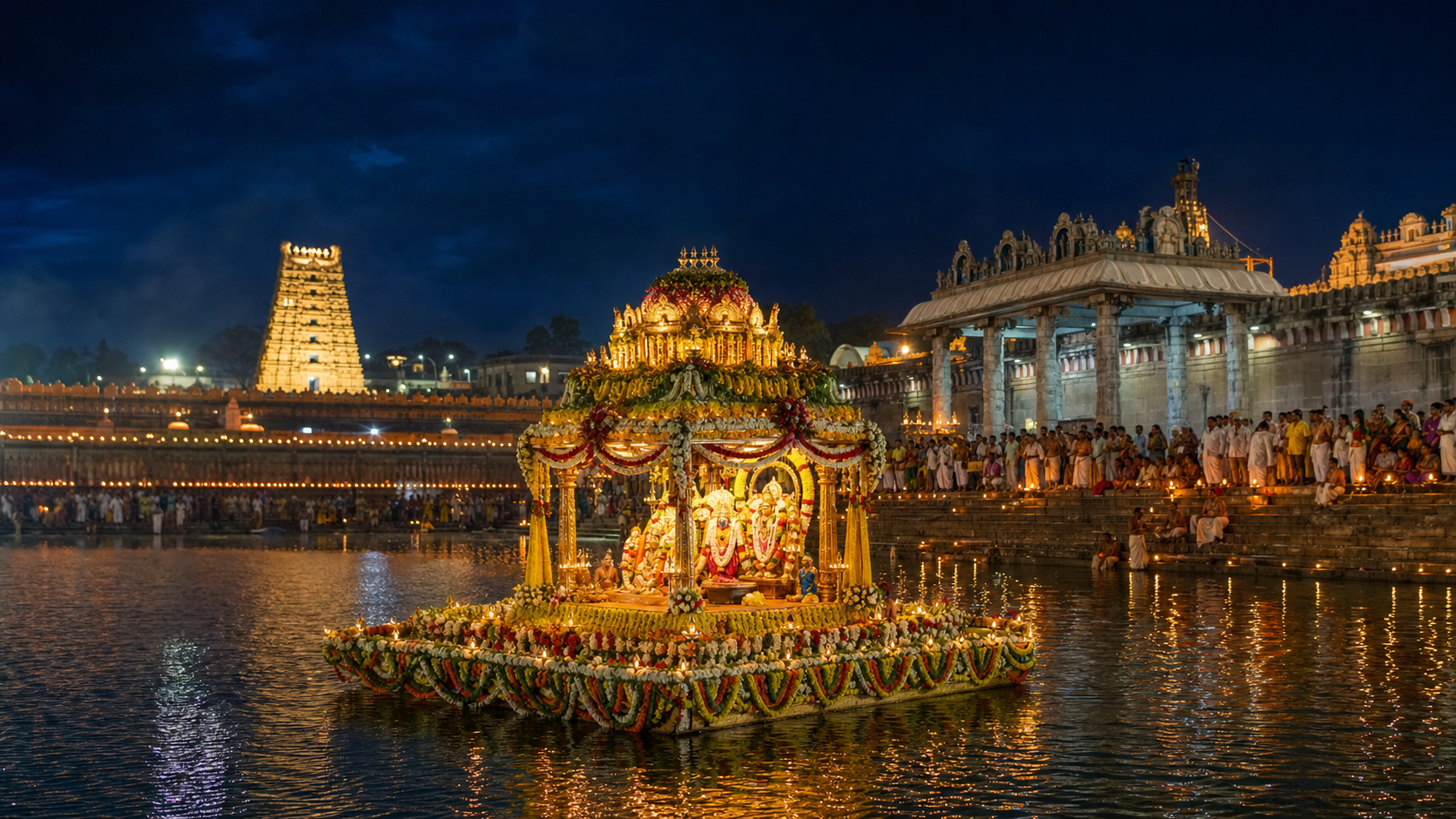
If you are arranging a Tirumala visit around Teppotsavam, three decisions matter immediately: which evening to attend, how much time to protect around the one-hour observance, and whether the opening procession is especially important to you.
The 2026 festival window is February 26 through March 2, with the float observance scheduled from 7:00 pm to 8:00 pm each evening. That gives you five consecutive opportunities, but February 26 has a distinct opening-night procession.
The five-evening Teppotsavam timetable
Keep the nightly hour fixed in your itinerary. The published schedule assigns the same 7:00-8:00 pm window to all five evenings, so changing your date does not change the announced time.
| Date | Announced time | What to note |
|---|---|---|
| Thursday, February 26, 2026 | 7:00-8:00 pm | Opening procession of Sri Ramachandra with Sita, Lakshmana and Anjaneya; three rounds on the teppa |
| Friday, February 27, 2026 | 7:00-8:00 pm | Festival evening; verify procession and access details in the applicable TTD notice |
| Saturday, February 28, 2026 | 7:00-8:00 pm | Festival evening; verify procession and access details in the applicable TTD notice |
| Sunday, March 1, 2026 | 7:00-8:00 pm | Festival evening; verify procession and access details in the applicable TTD notice |
| Monday, March 2, 2026 | 7:00-8:00 pm | Final evening in the announced five-day window |
The schedule gives a precise start and finish, but it does not create a universal arrival-time rule. Crowd conditions and access arrangements can change. Treat 7:00 pm as the beginning of the observance, not as your target arrival time, and leave a practical buffer based on the latest TTD instructions.
What you will witness at the holy Pushkarini
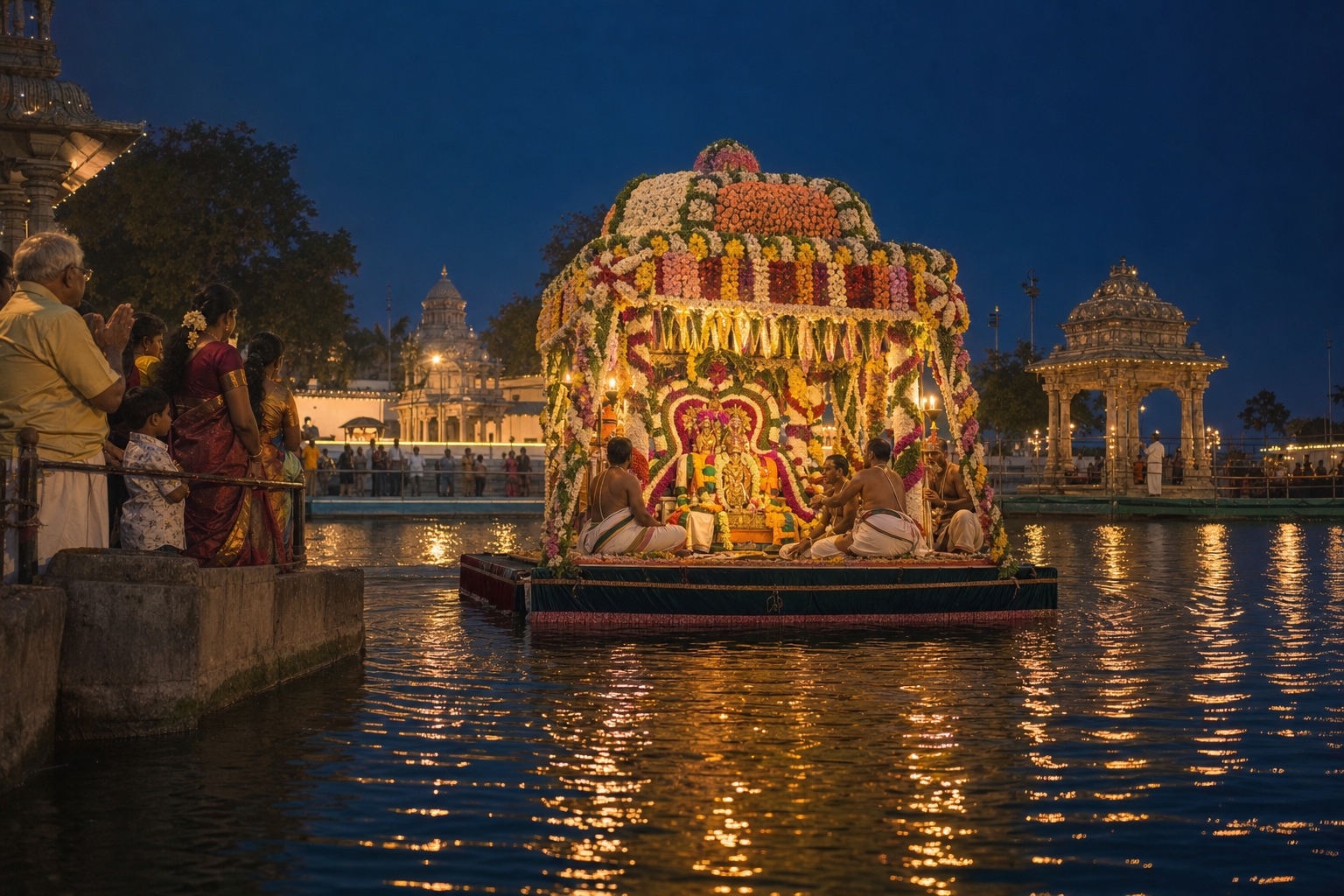
Teppotsavam is a water procession. The processional deities are carried on a decorated teppa across the temple Pushkarini, placing darshan within a setting of water, lamps, devotional music and measured movement. The visual beauty is not separate from worship: it gathers a large congregation around a slow, shared act of attention.
The festival centres on Sri Venkateswara and His consorts, while the first evening is specifically dedicated to Sri Ramachandra with Sita, Lakshmana and Anjaneya. If that Rama-parivara procession is the reason for your visit, choose February 26 rather than assuming the same grouping will appear on every night.
Three circuits of the teppa are specified for the opening evening. Do not automatically apply that count to the other four nights; use the current TTD programme for any night-specific ritual detail that is not included in the announced outline.
Plan for darshan without turning the evening into a rush
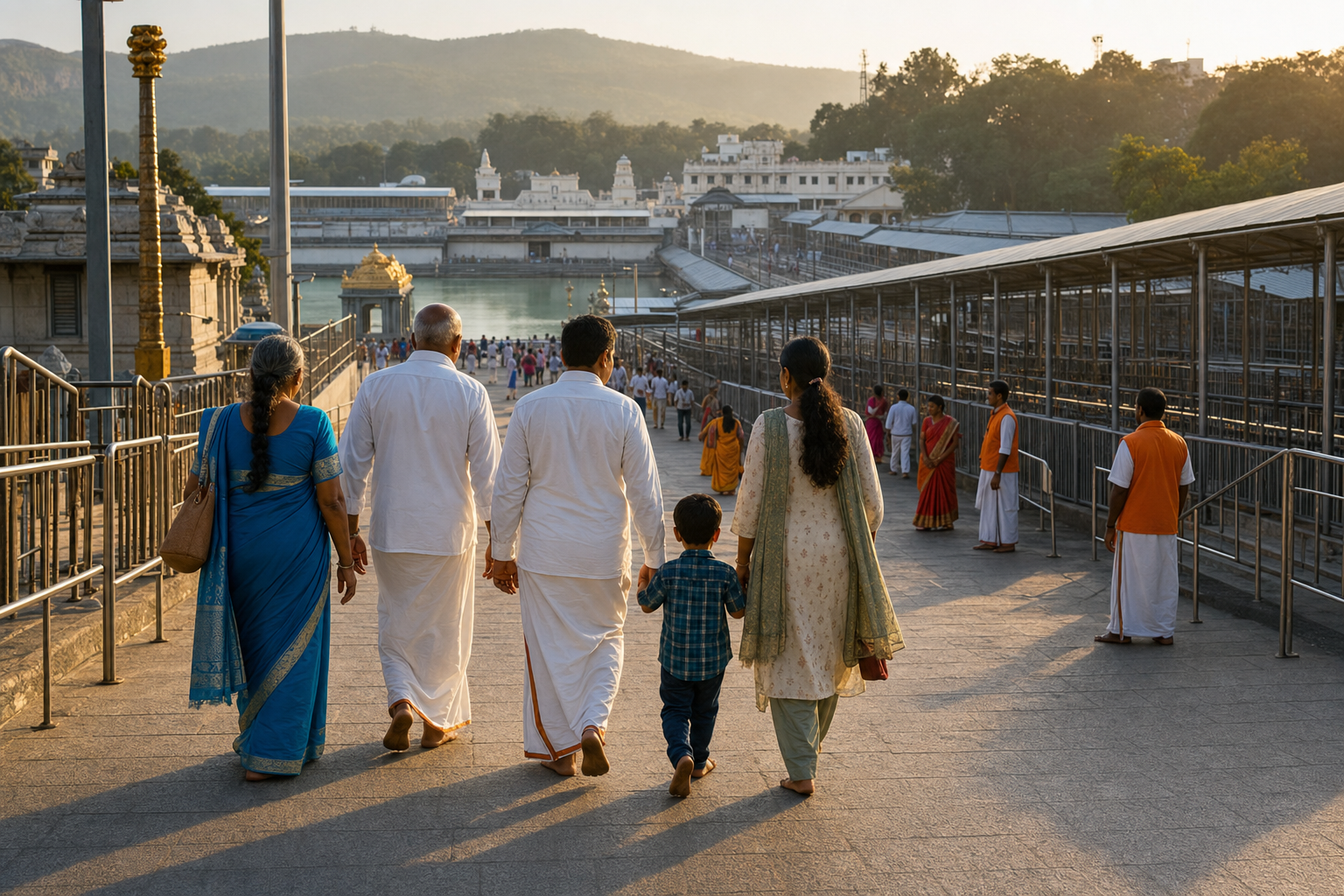
- Select the evening by devotional priority. Choose February 26 if the procession of Sri Ramachandra, Sita, Lakshmana and Anjaneya matters most to you. Otherwise, select the date that lets you arrive with the least pressure.
- Protect more than the advertised hour. Keep 7:00-8:00 pm free, then add time before it for movement, queues and finding the access permitted that evening. No responsible fixed buffer can replace a current crowd advisory.
- Check the latest TTD operational notice. Dates and times were announced for 2026, but crowd-control measures and access around the Pushkarini may be adjusted. Verify those details as close to your visit as reasonably possible.
- Do not make a last-minute arrival part of the plan. Attendance tends to intensify during festival evenings. Arriving early gives you a better chance of settling into the queue and receiving darshan without pushing, bargaining for space or disrupting others.
- Carry the discipline of darshan into the precinct. Follow the queue, keep the surroundings clean and use the waiting period for quiet prayer. These simple actions protect the devotional atmosphere for pilgrims around you as well as for your own family.
If you are coordinating several people, agree on the evening and meeting plan before entering the crowded area. The published information does not provide a detailed access map or a guaranteed viewing position, so avoid building your plan around an assumed spot beside the Pushkarini.
Why the opening procession deserves attentive darshan
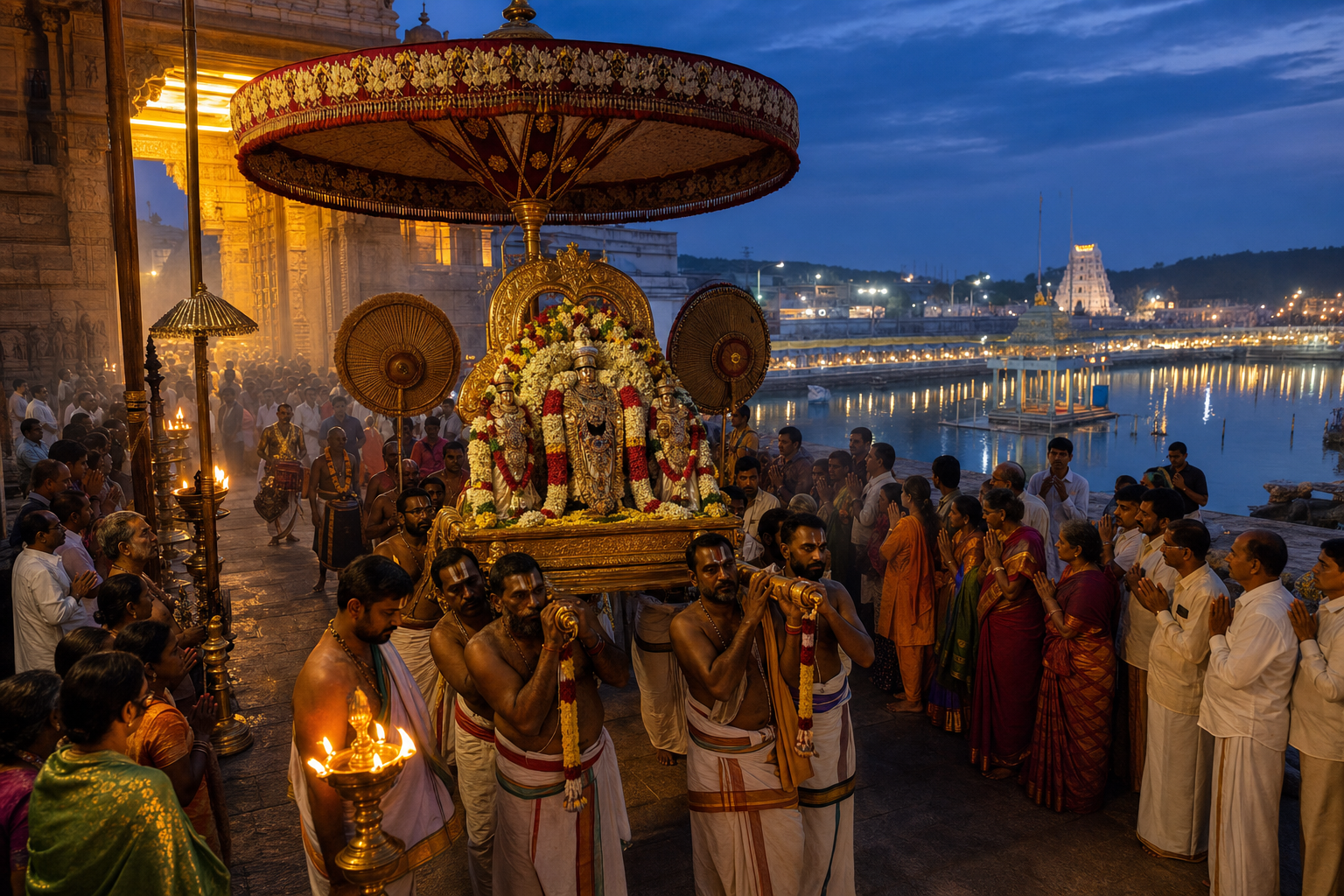
Sri Ramachandra does not appear alone on February 26. Sita, Lakshmana and Anjaneya make the opening tableau relational: dharma is seen through fidelity, disciplined companionship and seva, not merely through an isolated image of authority.
You can use the three rounds as occasions for recollection without presenting your private reflection as a prescribed temple rite. During one round, attend to gratitude; during another, identify a duty you have been avoiding; during the third, resolve on one concrete act of seva. The temple procession remains the ritual centre, while your inward practice helps prevent the evening from becoming only a spectacle.
The gathering also makes several values visible across the wider dharmic family: devotion, self-restraint, compassion and service. Recognising those ethical resonances does not erase the festival’s specifically Hindu and Vaishnava character. It lets visitors from different dharmic traditions approach the occasion respectfully while understanding what Tirumala is actually celebrating.
Key takeaways for your Tirumala plan
- Teppotsavam 2026 is scheduled for five evenings, from February 26 through March 2.
- The announced observance runs from 7:00 pm to 8:00 pm every evening.
- Choose February 26 to witness Sri Ramachandra with Sita, Lakshmana and Anjaneya taking three rounds on the teppa.
- Treat 7:00 pm as the start of worship, not your arrival target; attendance can intensify during the evening.
- Check TTD notifications for operational changes, especially crowd-management directions and access around the Pushkarini.
- Queue discipline, cleanliness and quiet prayer are practical forms of seva during a crowded darshan.
Your next step is simple: place the right evening in your Tirumala itinerary, reserve time on both sides of the 7:00-8:00 pm observance, and confirm the applicable TTD instructions before setting out for the Pushkarini.
References
