
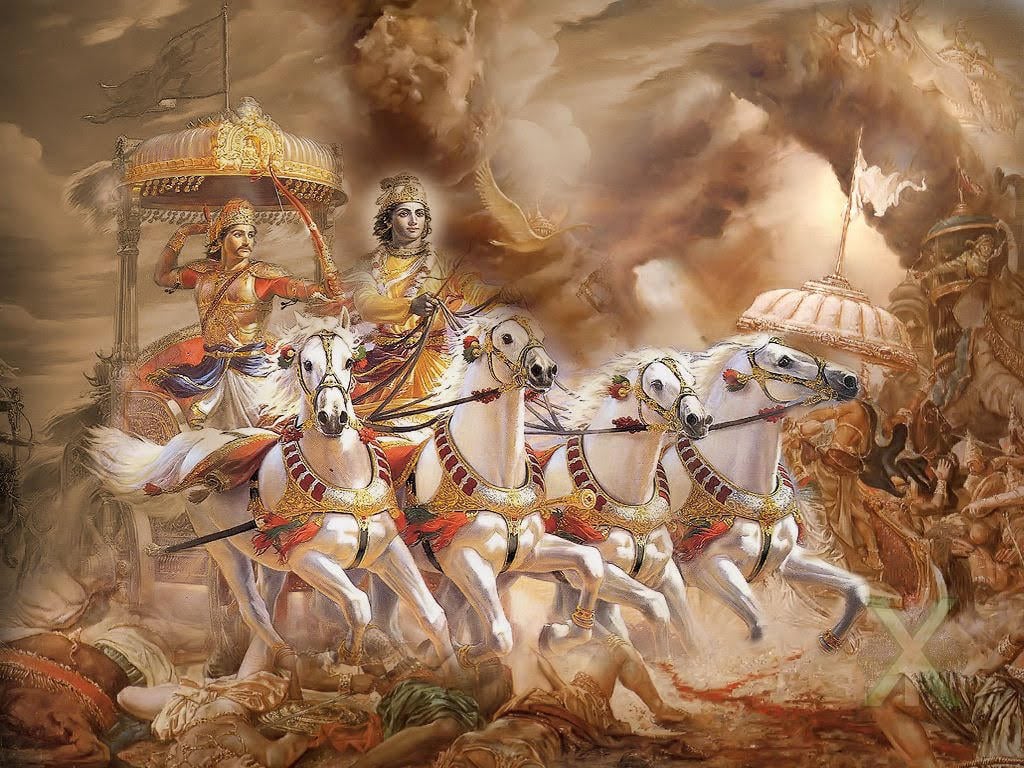
Repeated failures of self-control can make a temporary pattern feel like a permanent identity. The Bhagavad Gita offers a more hopeful diagnosis: impulses belong to the conditioned body-mind, while the deepest self is not reducible to them.
Drawing on an essay by Chaitanya Charan das published by Dandavats, this article examines how knowledge, lived spiritual experience and Krishna’s mercy form a practical framework for inner change.
When a Habit Is Mistaken for the Self
A person may sincerely resolve to speak patiently or resist a harmful impulse, only to abandon that resolve under pressure. When the same pattern returns, discouragement often hardens into a judgment: this is simply who I am.
The Gita’s account of spiritual identity challenges that conclusion. As the Dandavats essay explains, what appears to be an unchangeable nature may instead be conditioning within the body and mind. The atman, or spiritual self, is distinct from that conditioning. This distinction does not deny personal responsibility. It makes responsibility meaningful by refusing to treat present habits as destiny.
Self-mastery therefore begins with a change in identification. An impulse can be observed without being accepted as the final command of the self. That small separation creates room for a dharmic response rather than an automatic reaction.
Key Takeaways: Three Resources for Inner Change
- Knowledge: Understanding that the self is more than bodily and mental conditioning weakens fatalism.
- Experience: Service and remembrance in bhakti-yoga provide a positive spiritual fulfillment, not merely a rule against lower impulses.
- Mercy: Krishna’s help means transformation is not treated as an isolated exercise of willpower.
These resources reinforce one another. Knowledge provides direction, experience gives that knowledge personal weight, and mercy sustains the practitioner when individual capacity appears insufficient.
Knowledge Creates Distance Without Creating Indifference
Spiritual knowledge is useful here because it changes the inner conversation. Instead of saying, “I am anger,” the practitioner can recognize that anger is moving through the mind. Instead of declaring a destructive tendency permanent, the practitioner can regard it as conditioning that can be weakened through disciplined awareness and action.
This perspective should not become an excuse for misconduct. The distinction between self and conditioning does not erase the consequences of speech or action. It supports accountability by making correction possible. A lapse becomes something to learn from, restrain and transcend, rather than evidence that improvement is futile.
In practical terms, the teaching invites a pause before action: identify the impulse, remember the spiritual identity beneath it, and choose conduct aligned with dharma. The source does not present this as instant perfection. It presents freedom from conditioning as a direction in which sincere practice can move.
Bhakti Turns an Idea Into a Lived Alternative
Intellectual understanding alone may not compete successfully with an immediately attractive impulse. The distinctive contribution of bhakti-yoga is to offer a higher engagement. According to the Dandavats account, bhakti combines outward service to Krishna with inward remembrance of him. Together, these practices can provide a fulfillment different from the pleasures promised by the body and mind.
This gives spiritual identity an experiential dimension. The practitioner is not asked only to analyze the self but to live in a way that makes spiritual meaning tangible. Service directs energy outward in a sacred purpose, while remembrance repeatedly returns attention to Krishna. As that engagement deepens, restraint need not feel like mere deprivation; it becomes the protection of something more nourishing.
The essay’s strongest assurance is that this effort does not occur alone. Krishna is described as willing to remove the misconceptions that obscure spiritual identity when a person demonstrates sincere intent through action. Mercy does not replace effort. It changes the character of effort from solitary struggle into responsive participation in divine grace.
Self-Mastery as a Shared Dharmic Aspiration
The Gita speaks in a distinctly Vaishnava language of atman, Krishna, bhakti and grace. Its emphasis on disciplined awareness and transformation also belongs within a wider Dharmic conversation. Hindu sampradayas, Buddhist paths, Jain traditions and Sikh teachings do not express the nature of self or the Divine in identical terms. Yet each, in its own way, refuses to make unexamined impulse the sovereign ruler of human conduct.
That common commitment matters for Dharmic unity. Civilizational confidence is strengthened when differences among traditions are honored without losing sight of their shared cultivation of discipline, service, ethical responsibility and freedom from inner bondage. Unity need not flatten philosophy; it can arise through mutual recognition of sincere sadhana.
Dandavats closes its reflection with Arjuna’s response after hearing the Gita, pointing to Bhagavad Gita 18.73 as his declaration of readiness to act. The forward movement is significant: wisdom becomes complete when it produces courageous, dharmic action. Lasting transformation begins in the same way – not with a claim of perfection, but with a renewed willingness to practice.
Inspired by this post on Dandavats.
