
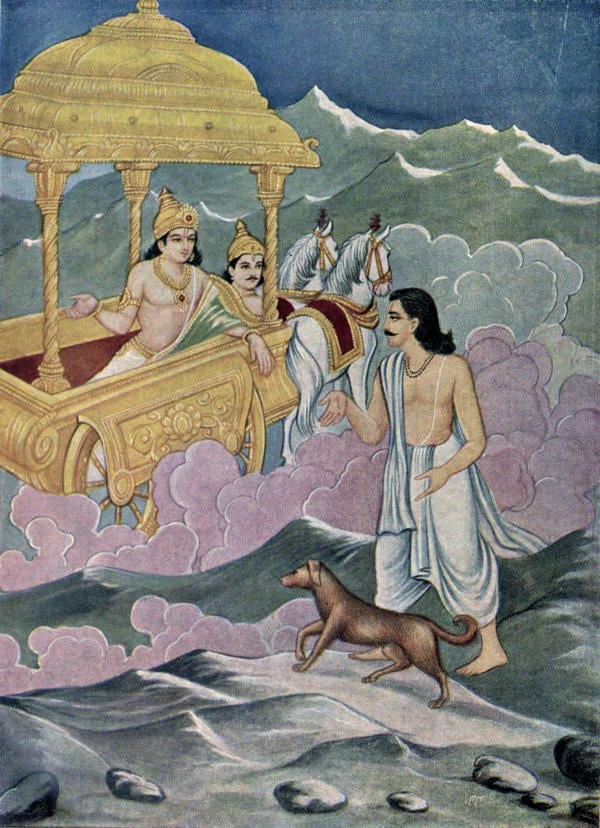
Why would a spiritual teacher compare a devotee to Krishna’s dog? The image can initially sound severe, yet its purpose is not to diminish human worth. It asks whether devotion has become as steady, loyal, and free from self-importance as the devotee claims.
A reflection published by Dandavats uses this unusual metaphor to examine humility, ego, love, and the distance between possessing religious knowledge and living it. Read carefully, it offers a practical test for spiritual maturity.
The loyalty at the heart of the metaphor
In an essay credited by Dandavats to Raveena Emmanuel, the writer recalls wondering why Srila Prabhupada spoke of being Krishna’s dog. A conversation with a family friend prompted her to consider the familiar qualities associated with dogs: dependence, loyalty, eagerness to remain close, and readiness to protect the one they regard as their own.
The comparison therefore works as a devotional mirror. It asks whether allegiance to Krishna survives disappointment, criticism, and wounded pride. Understood constructively, becoming Krishna’s dog does not mean erasing one’s dignity. It means relinquishing the demand to occupy the center of every situation.
Humility is not humiliation
The Dandavats account also presents Radhanath Swami’s teaching that displays of knowledge, wealth, renunciation, beauty, or personal power cannot compel the all-powerful Krishna. Humility attracts divine grace because it makes a person receptive rather than self-satisfied.
This distinction matters. Humility is an honest understanding of one’s place, limitations, and dependence on the Divine. Humiliation is the degrading treatment of a person. The source describes a dog’s continued affection despite harsh treatment, but the spiritual lesson should never be used to excuse cruelty to animals, tolerate abuse, or abandon necessary boundaries. Dharma requires compassion and responsibility alongside surrender.
When knowledge has not yet become realization
The essay turns from theology to a difficult personal question: what happens when a person knows the language of humility but cannot bear an insult? Religious learning may explain devotion, yet resentment can reveal how strongly identity still depends on being admired, obeyed, or proven correct.
The source contrasts learning through reading with understanding through love. That contrast need not dismiss study. Rather, it places study in the service of transformation. Knowledge becomes realization when it changes how a person listens, forgives, serves, and responds under pressure. Hurt and anger may still arise; spiritual discipline is shown in what one does with them.
A discipline shared across dharmic traditions
The metaphor belongs to a Vaishnava devotional setting, but its ethical direction resonates across the wider dharmic family. Hindu bhakti cultivates surrender and seva; Buddhist practice challenges attachment to a fixed ego and nurtures compassion; Jain teachings emphasize ahimsa and aparigraha, or restraint from harm and possessiveness; Sikh tradition joins humility with seva and alignment with hukam.
These traditions remain doctrinally distinct, and unity does not require flattening their differences. Their shared civilizational contribution lies in training human beings to reduce self-centeredness, govern their impulses, and place compassionate action above personal prestige. That common discipline offers firmer ground for dharmic solidarity than slogans alone.
Key takeaways
- The dog metaphor represents loyalty, dependence, and freedom from self-importance.
- Humility means receptivity to truth and grace, not acceptance of degradation or abuse.
- Spiritual knowledge becomes realization when it reshapes conduct, especially during criticism.
- Service, compassion, restraint, and ego-discipline provide common ethical ground across dharmic paths.
A practical test for devotion
The value of the metaphor appears in ordinary moments: receiving correction without immediate retaliation, serving without demanding recognition, admitting incomplete understanding, and remaining devoted when praise disappears. These responses reveal more than an impressive vocabulary of scripture or philosophy.
A dharmic renaissance gains credibility when its inner virtues match its public confidence. Loyalty to Krishna, and commitment to dharma more broadly, must therefore mature into humility that is courageous, discerning, and expressed through service.
Inspired by this post on Dandavats.
