
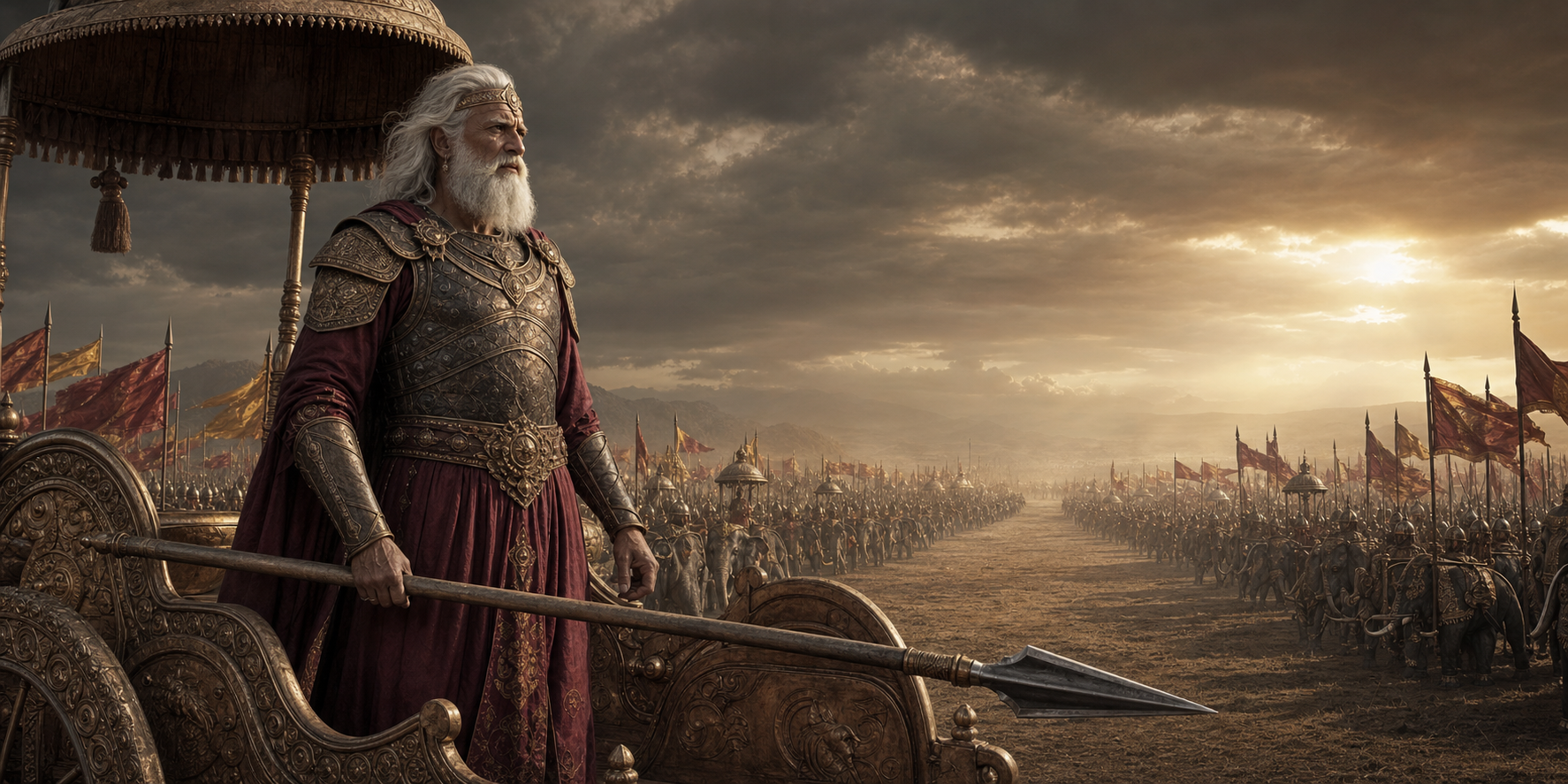
You may have reached Bahlika Raja through a genealogy, a list of warriors, or the question that matters most: why would such an old and respected Kuru fight on the Kaurava side? A one-word answer – loyalty – is accurate but incomplete. It tells you what pulled him into battle, not whether that pull exhausted his dharma.
Bahlika becomes much easier to understand when you keep four things distinct: who he was, why he joined the Kauravas, how he conducted himself, and what later devotional tradition sees in him. That distinction also gives you a practical way to think about your own conflicts between family, institution, conscience, and consequence.
Key takeaways
- Bahlika Raja was an elder of the Kuru lineage and the ruler of Bahlika, a realm often associated with ancient Balkh or Bactria in Central Asia.
- Dynastic loyalty drew him to the Kaurava side. That explains his allegiance, but it does not by itself settle whether the allegiance was morally right.
- His advanced age, discipline, and restraint make him more than another name in a battle list. They place the dignity of an elder inside the tragedy of a destructive family war.
- Genealogical notices connect Bahlika with Somadatta and Bhurishravas, showing how family lines shaped obligation and participation in the conflict.
- In several recensions, Bhima eventually kills Bahlika. A revered devotional tradition also identifies Bahlika as the next birth of Prahlada; that association should be presented as a strand of belief, not as an uncontested claim shared by every telling.
Bahlika’s place in the Kuru world
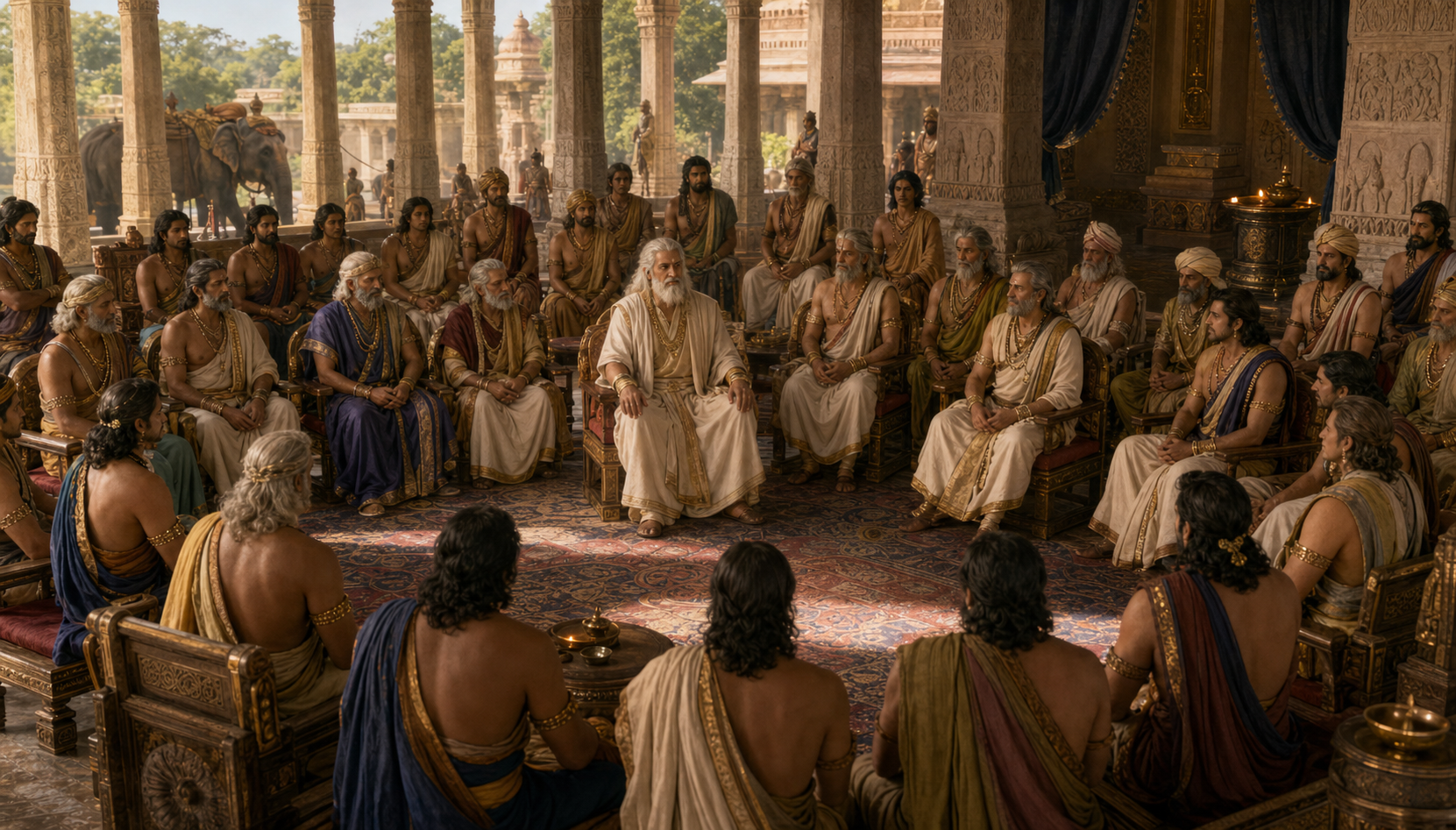
Bahlika was not a young subordinate swept into another man’s quarrel. He occupied three weighty positions at once: Kuru elder, sovereign, and representative of a connected family line. His story therefore belongs as much to the Mahabharata’s exploration of authority and inherited obligation as it does to its account of warfare.
His age is not incidental. An elder carries accumulated honour, relationships, promises, and expectations. Those assets can strengthen judgment, but they can also narrow the range of choices that feels available. Bahlika’s presence asks you to notice that seniority does not dissolve a moral dilemma. It can make the dilemma heavier.
The genealogical connection with Somadatta and Bhurishravas matters for the same reason. A name in the epic rarely stands alone; family affiliation can carry political, military, and personal consequences. If you are preparing a family tree or teaching this character, preserve the wording your chosen recension or translation actually supports. Do not make the relationship more exact merely because a simplified chart looks tidier.
Bahlika’s realm also widens the geographic frame. Scholars often associate Bahlika with ancient Balkh or Bactria in Central Asia. The careful formulation is important: an ancient regional association is not the same thing as a one-to-one identification with a modern nation-state. You can reasonably say that Bahlika points toward the broad cultural and political horizon remembered in the epic. You should not turn that association, by itself, into a precise claim about present borders.
This is the first habit Bahlika teaches a serious reader: retain the complexity that the short summary usually removes. Keep person, lineage, kingdom, and later geographic identification related, but do not collapse them into a single claim.
Why Kaurava allegiance does not settle Bahlika’s character
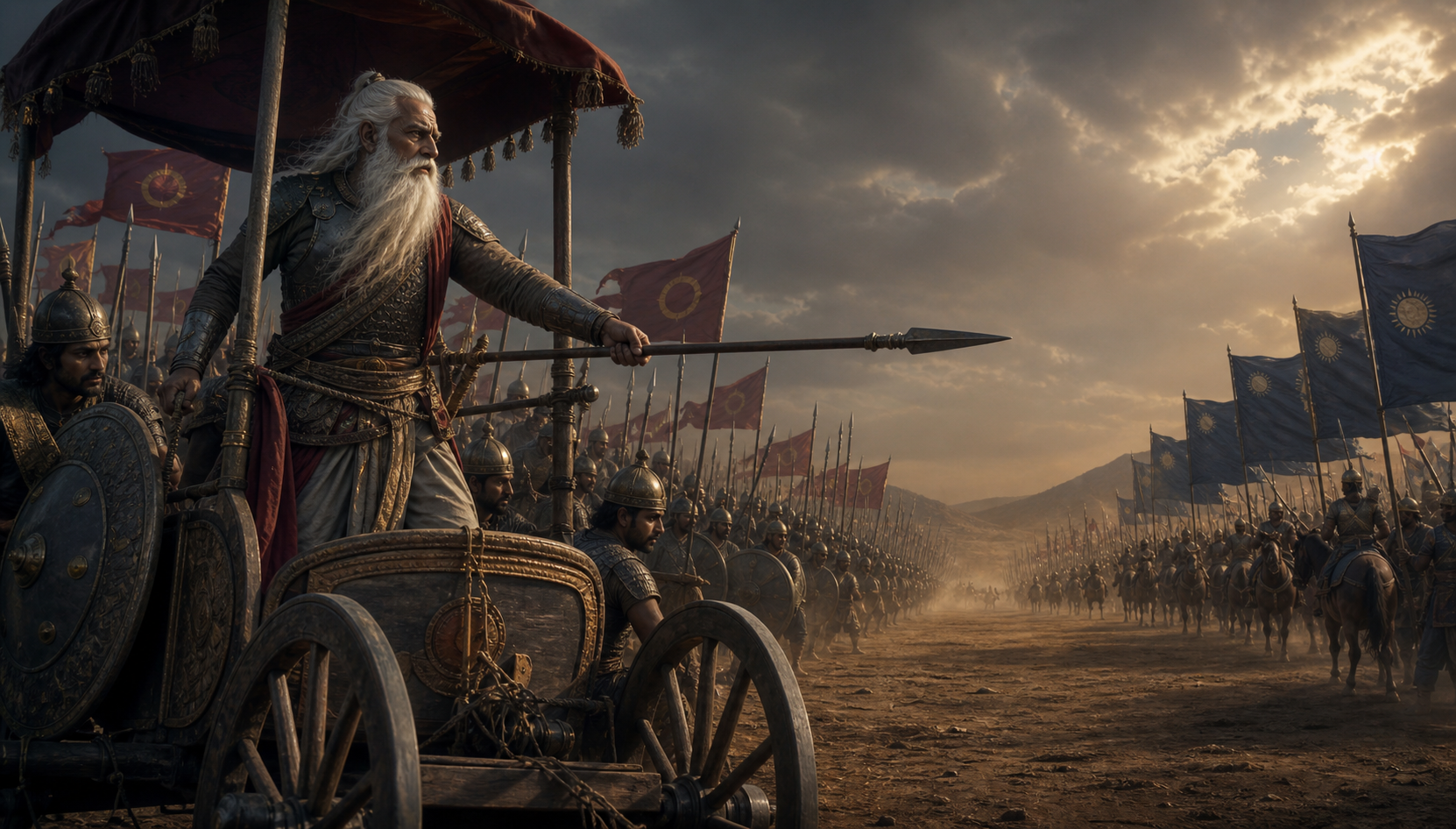
Bahlika fought for the Kauravas because dynastic loyalty drew him to their side. That is the clearest answer to the reader’s immediate question. It is not, however, a complete moral verdict.
Keep three judgments separate when you read his decision:
<!– wp:list {