
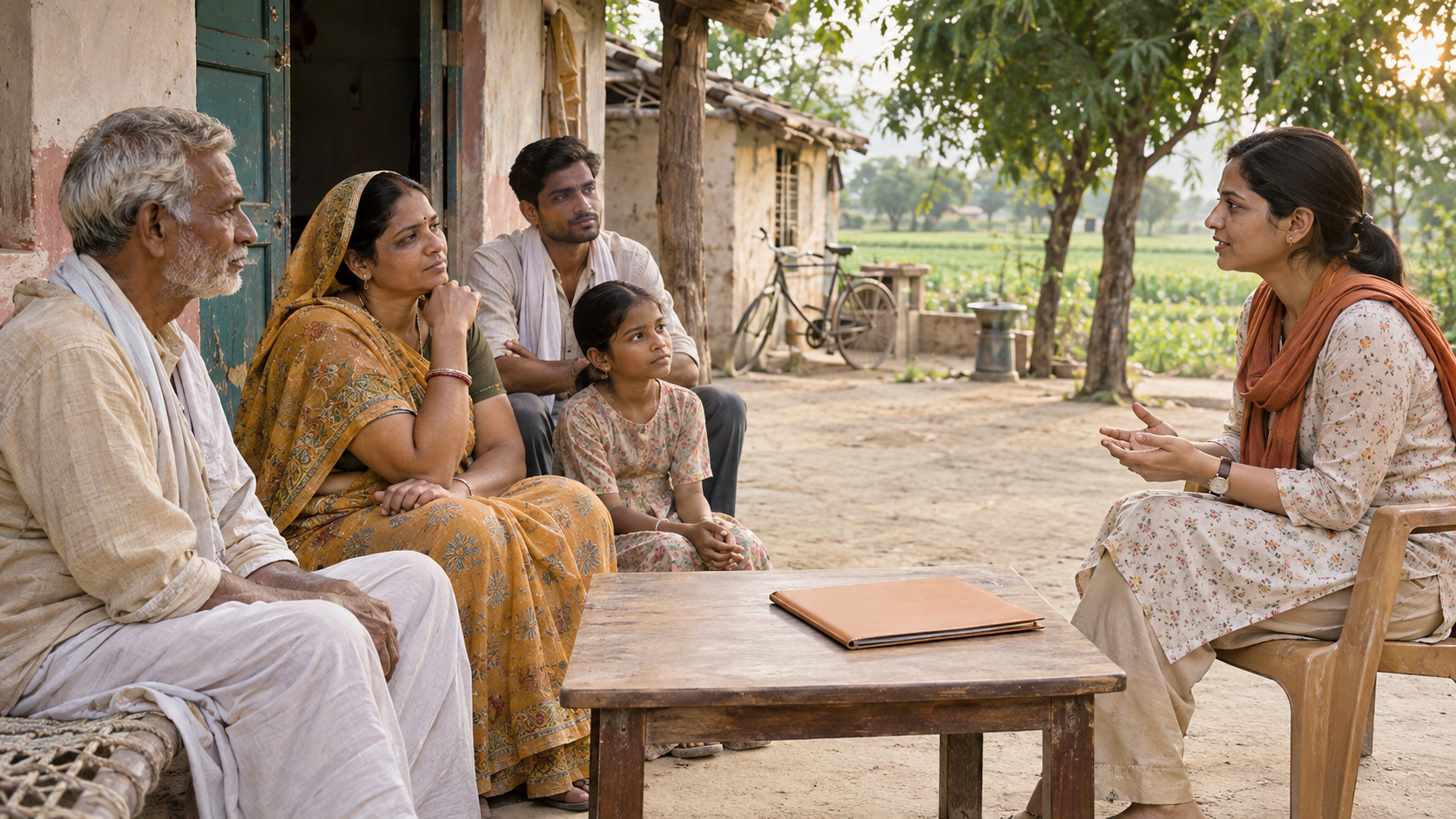
If a VHP volunteer visits your village and asks you to take part in Hitchintak Abhiyan, the useful question is not whether the campaign sounds large. It is what you are being asked to endorse, disclose, and do.
The campaign has been presented as a 15-lakh outreach drive involving village visits, with particular attention around Gujarat’s polls and activity in Uttar Pradesh and West Bengal. That scale and political context can create urgency. You still do not need to agree on the spot. A responsible decision begins with a clear purpose, a defined role, and informed consent.
What is known – and what the 15-lakh label does not tell you
VHP is conducting an outreach effort called Hitchintak Abhiyan. Volunteers are expected to visit villages, and the campaign is being discussed in connection with a 15-lakh drive. Momentum has specifically been reported in Uttar Pradesh and West Bengal, while the timing ahead of Gujarat’s polls has drawn political attention.
Those details establish the campaign’s scale, method, and political setting. They do not establish what every local volunteer will ask, what every registration will mean, or whether every conversation will have the same purpose. The 15-lakh label also should not be silently converted into 15 lakh members, households, or completed visits; the publicly stated description does not define the unit.
This distinction matters. Large numbers create an impression of consensus before you know what has actually been counted. If someone cites the figure while seeking your participation, ask what it measures. A contact, a signed form, an affiliated person, a volunteer, and a household visit are not interchangeable.
Separate the decisions hidden inside one conversation

An outreach visit can contain several different requests. You may be willing to hear the volunteer without giving your details. You may support Hindu community work without accepting an ongoing affiliation. You may join a cultural initiative without endorsing a party or candidate. You may also agree with a campaign’s broad purpose while declining its method.
Do not let those choices collapse into a single yes-or-no test of Hindu commitment. Listening is not registration. Registration is not volunteering. Volunteering is not automatically electoral support. A trustworthy representative should be able to explain each step separately.
Key takeaways
- Ask what the campaign is seeking from you: a conversation, contact details, affiliation, volunteer time, a donation, or something else.
- Verify the volunteer’s identity and local point of contact before sharing personal information.
- Ask whether the activity is cultural, organisational, electoral, or a stated combination of these.
- Share only the information needed for the action you have knowingly accepted.
- Treat pressure, vague answers, incomplete forms, or an inability to explain follow-up as reasons to pause.
Questions to ask before you agree or volunteer
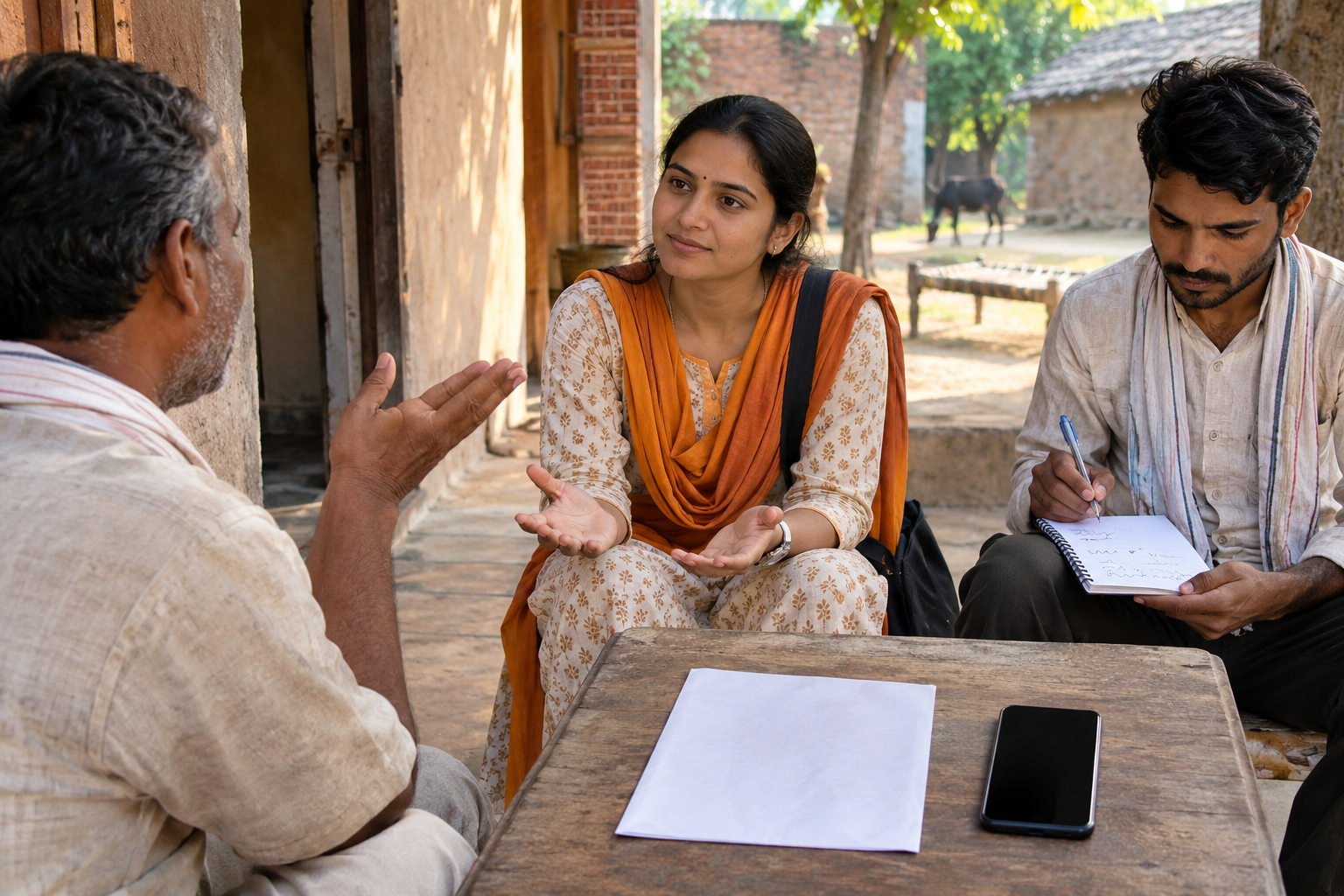
You do not need a hostile interrogation. A calm set of precise questions will tell you whether the local outreach is being conducted responsibly.
- What is the campaign trying to accomplish in this village? Ask for a concrete answer rather than a slogan.
- What does my agreement mean? Find out whether your name will record a visit, an expression of support, an affiliation, a volunteer commitment, or permission for future contact.
- Which details are required, and why? Ask who will hold the information, how it will be used, whether it will be shared, and how you can correct or remove it.
- Is this activity connected to a party, candidate, or election request? The answer should be direct. Cultural outreach and electoral advocacy should not be blurred when your consent is being sought.
- What happens after today? Ask whether you should expect calls, messages, meetings, training, visits, or additional requests.
- Whom can I contact if something is misrepresented? A named local coordinator or verifiable organisational channel gives you somewhere to raise a concern.
Do not sign a blank or incomplete form. Do not disclose a one-time password, bank credential, or identity-document copy merely to demonstrate goodwill. If money is requested, ask what it is for and use a channel that provides a clear receipt. None of these precautions expresses distrust of Hindu organisations; they protect both the participant and the organisation from confusion or misuse.
How supporters can keep the outreach Dharmic and credible
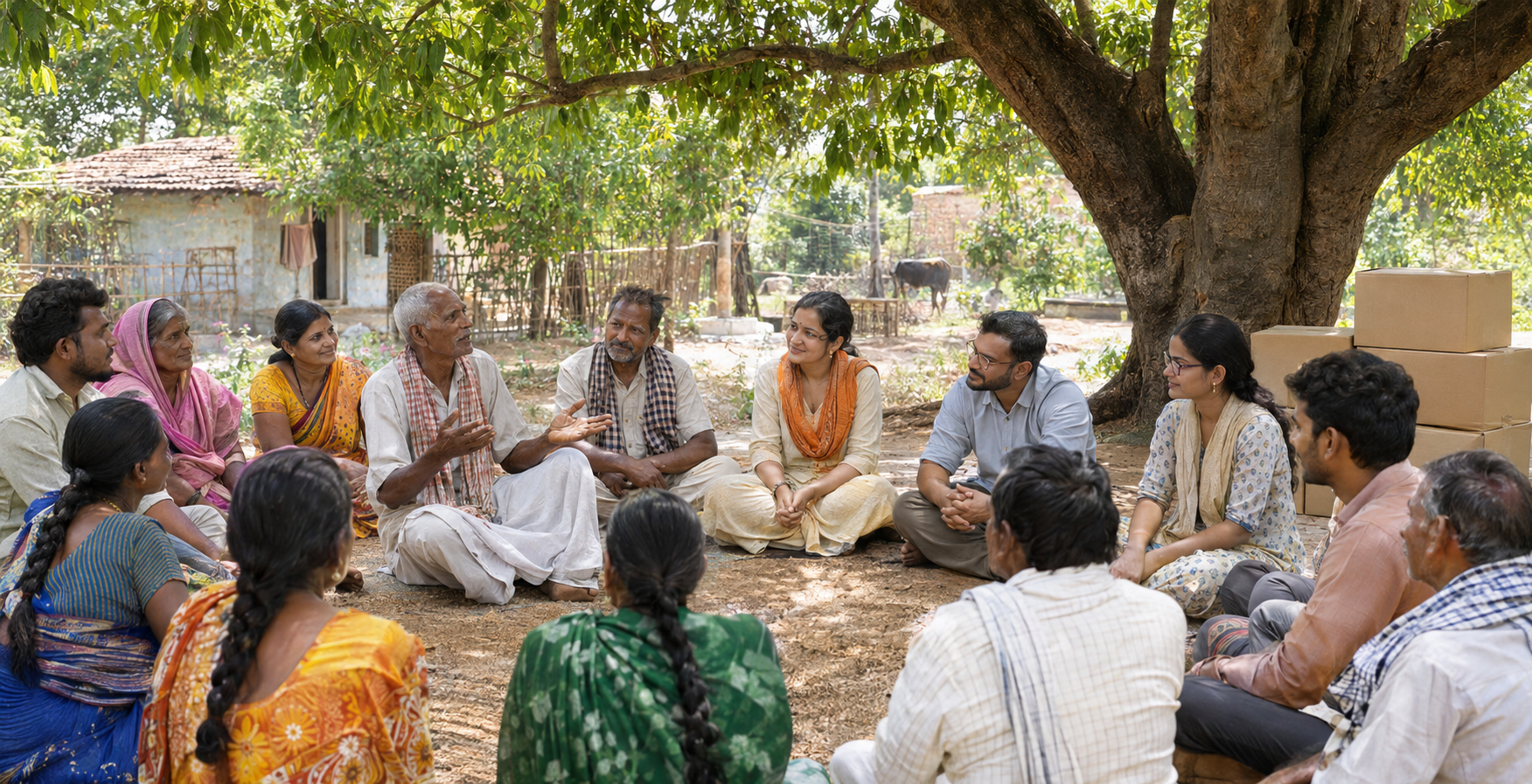
If you support Hitchintak Abhiyan or plan to volunteer, the campaign’s credibility will depend less on its headline number than on the quality of each encounter. Dharmic public work is tested by its means as well as its declared end. Truthfulness, restraint, dignity, and freedom from coercion are practical standards, not decorative language.
- Introduce yourself, identify the organisation, and state the purpose of the visit before asking for information.
- Explain exactly what a name, signature, telephone number, or digital submission will signify.
- Distinguish your personal political opinion from the stated purpose of the campaign.
- Ask permission before adding anyone to a messaging group or follow-up list.
- Do not imply that declining registration makes a person less Hindu or less committed to the community.
- Do not use fear, rumours, social pressure, or religious obligation to secure agreement.
- Record uncertainty honestly. If you do not know an answer, refer the person to a coordinator instead of improvising.
- Provide a way to correct a mistaken entry or withdraw from future contact.
This discipline is not an obstacle to mobilisation. It makes the resulting support more meaningful. A person who understands the request and chooses freely is a more credible participant than someone counted through ambiguity.
Read the election context without jumping to a conclusion

The proximity to Gujarat’s polls and the campaign’s reported momentum in Uttar Pradesh and West Bengal makes political scrutiny reasonable. Timing alone, however, does not prove that every village visit is an election operation. Nor should a cultural label be used to dismiss plainly electoral conduct when it occurs.
Judge the encounter by what happens during it. Does the volunteer ask you to support a named party or candidate? Is voter preference collected? Are election claims repeated? Or is the conversation confined to VHP affiliation and community activity? Does the representative explain the distinction when asked? These observable details are more useful than arguing from labels.
The same standard should apply whether you welcome the campaign or approach it critically. Supporters should not excuse unclear methods merely because they favour the cause. Critics should not convert timing into proof of an unstated purpose. Ask what is being requested, document the answer if necessary, and decide on that basis.
For your next encounter, keep one sentence ready: Please explain what my agreement authorises and how my details will be used. If the answer is specific, voluntary, and consistent with the actual form or process, you can decide with confidence. If the answer remains vague or pressure replaces explanation, pause. A movement grounded in civilisational confidence should have nothing to fear from informed participation.
References

Leave a Reply
You must be logged in to post a comment.