
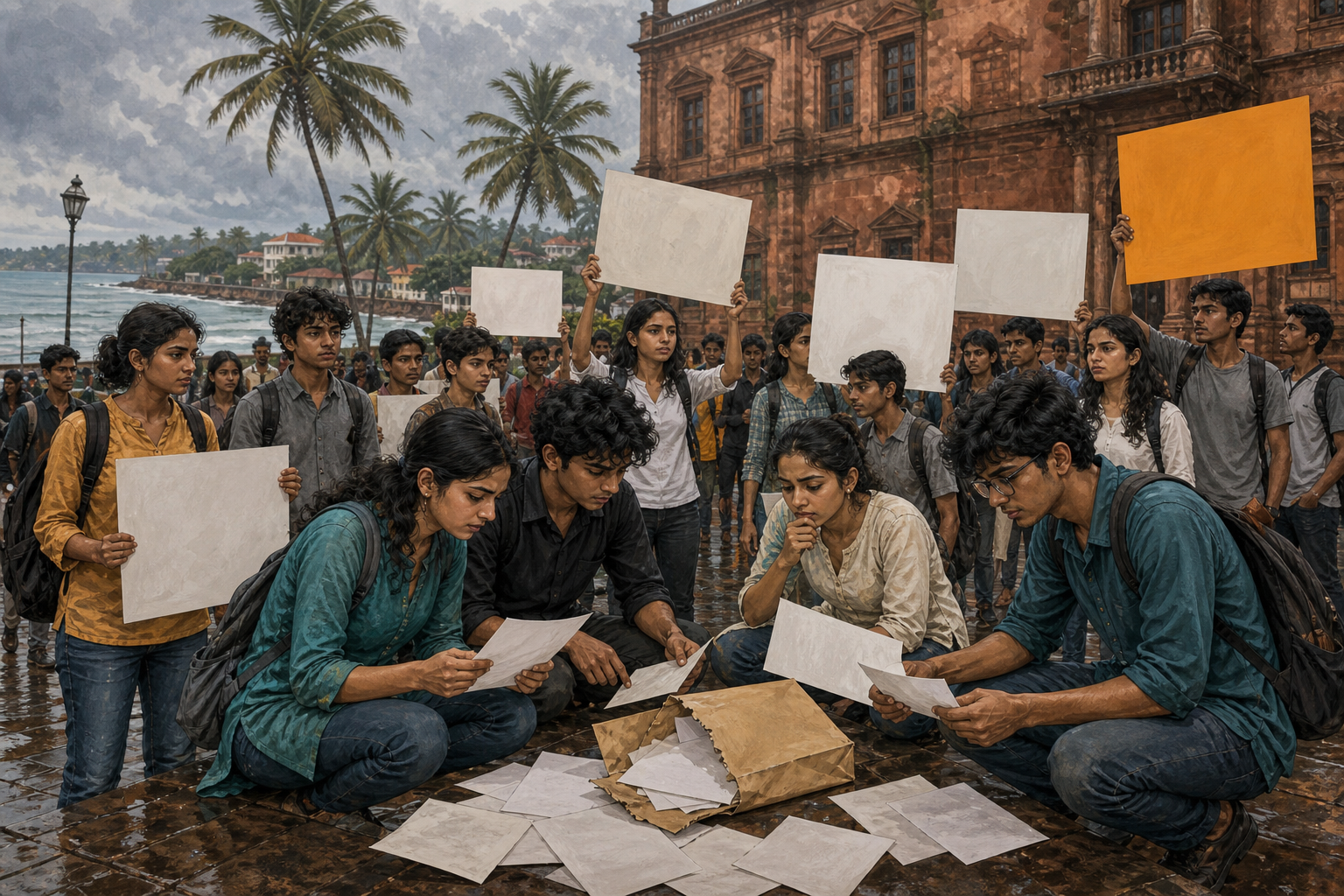
If you saw the Free Umar Khalid placards associated with a Goa NEET protest, the immediate question is straightforward: was a student demonstration turned into a platform for a separate political cause, and what response would be justified?
You don’t have to minimize the diversion or exaggerate what the known facts prove. A careful distinction between the two will help you defend the student cause, demand accountability, and avoid converting a legitimate objection into rumor or collective blame.
What the Goa incident establishes
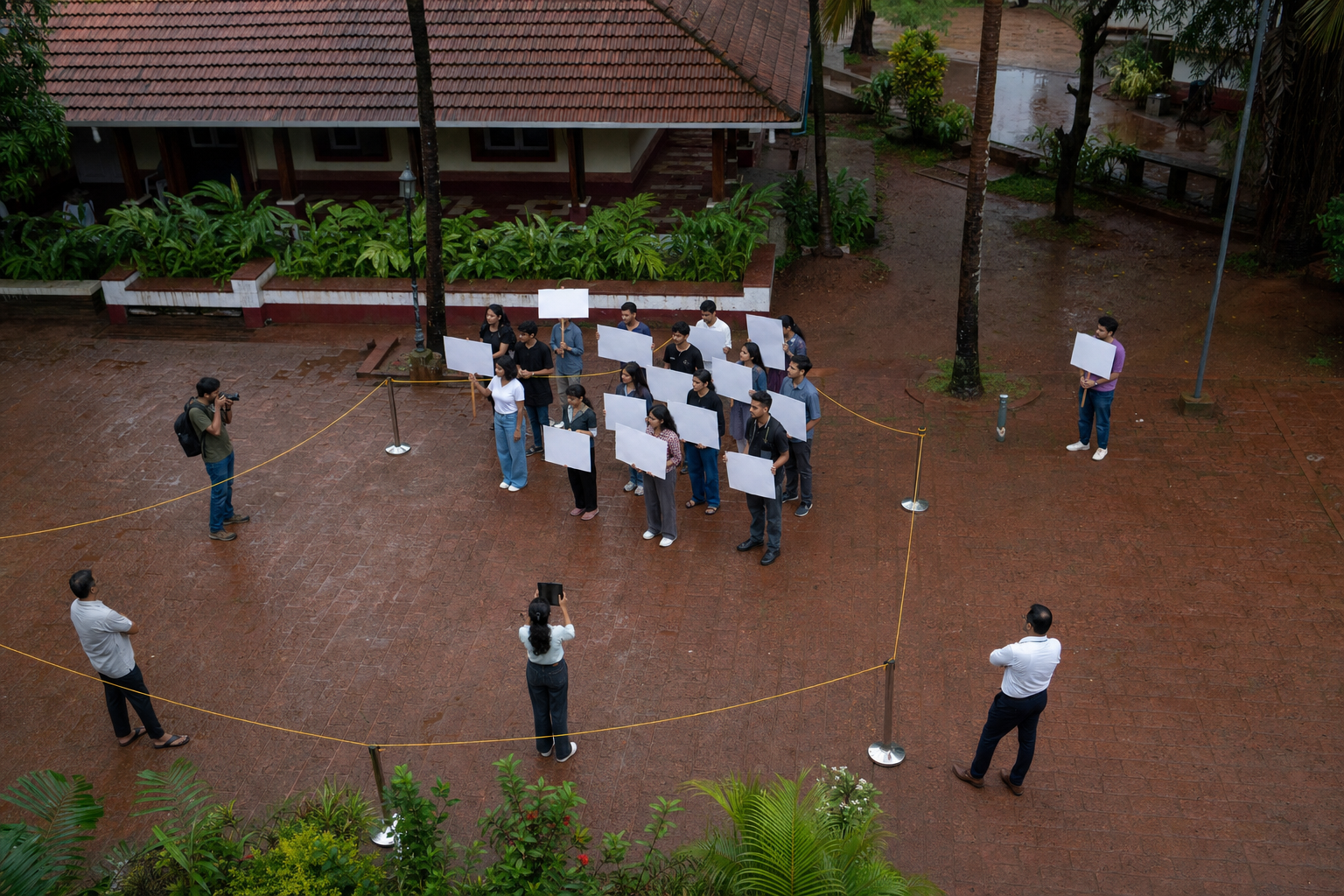
At a Goa demonstration concerning the NEET paper-leak issue, protesters carried placards supporting jailed activist Umar Khalid. The messaging included a call to free him. Hindu Janajagruti Samiti (HJS) objected and asked the authorities to take strict action, arguing that an unrelated political demand had hijacked a student cause.
That establishes the controversy. It does not establish that every participant supported the placards, that the demonstration’s organizers approved them, or that the entire event had been planned around Umar Khalid. It also does not establish that displaying the placards, by itself, crossed a particular legal threshold.
Before you make a broader claim, look for answers to five concrete questions:
- How many people carried the placards, and how large was the wider gathering?
- Were the sign-holders part of the organizing group, invited participants, or individuals who introduced their own message?
- Did the organizers authorize, reject, or remain silent about the placards?
- Was any conduct alleged beyond displaying the message?
- Did the authorities receive a formal complaint or announce any finding?
Unless those questions are answered, the accurate formulation is narrow: protesters at a Goa demonstration about the NEET issue displayed Free Umar Khalid placards, and HJS demanded action. Do not turn that into a claim that all participating students endorsed Umar Khalid, that the event was organized for him, or that the authorities found an offence. Those are separate propositions requiring separate evidence.
Why an unrelated placard can change the meaning of a protest
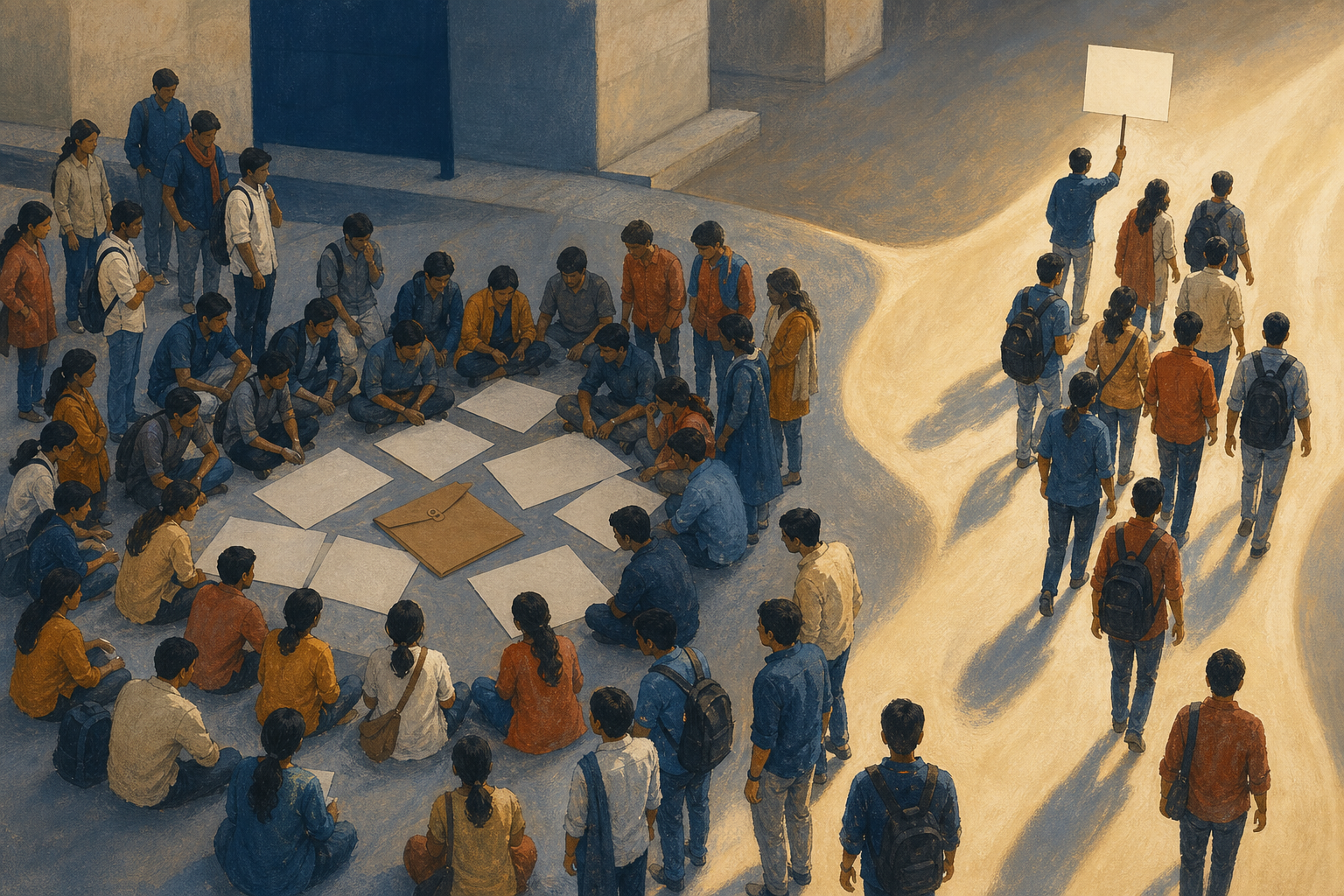
A public demonstration has limited attention to spend. Students gathering around an examination issue need the public to understand one grievance clearly. Introducing a polarizing demand about a jailed activist creates a second dispute, and that dispute can quickly become the only part of the gathering that people remember.
- Message substitution: Discussion moves from the students’ concern to the political identity and legal circumstances of an unrelated person.
- Coalition confusion: Observers may assume that everyone present endorses every visible slogan, even when a crowd contains different groups and intentions.
- Accountability dilution: Institutions facing questions about the original student issue can avoid those questions while the public argues over the placards.
- Reputational spillover: Students who did not choose the secondary message may still be photographed, labelled, or judged as though they supported it.
This is why protest discipline matters. A participant who attaches an unrelated campaign to a student demonstration is not merely adding another opinion. The participant may be changing the demonstration’s public meaning for everyone else who is present.
Calling that change a hijacking remains a political judgment, not an automatic legal finding. The description becomes stronger if evidence shows that people deliberately used the gathering to displace its stated purpose. Without evidence about authorization, scale, and intent, it should not be presented as a settled account of the whole protest.
A Dharmic response benefits from holding satya and viveka together. Satya requires us to state only what can be supported. Viveka requires us to distinguish the students’ grievance, the placard-holders’ political demand, HJS’s objection, and any legal assessment made by competent authorities. Combining all four into one sweeping accusation would sacrifice clarity precisely when clarity is needed most.
How to respond without abandoning the student cause

If you want to challenge the political diversion responsibly, use a sequence that preserves evidence and keeps the original issue visible.
- Verify the original context. Look for an uncropped image, continuous video, the original upload, and information identifying the gathering. A close-up can establish that a placard existed, but it may not show its relationship to the organizers or the wider crowd.
- Separate observation from inference. The observation is that particular people carried particular placards. Organizer approval, majority support, deliberate coordination, and unlawful intent are inferences unless additional evidence establishes them.
- Ask the organizers one precise question. Did they authorize the Free Umar Khalid messaging as part of the demonstration? A direct answer can distinguish the event’s declared position from an individual’s intervention. Silence may justify further inquiry, but it is not automatically an admission.
- Restate the student issue every time you discuss the controversy. Name the NEET concern before addressing the placards. This prevents the secondary dispute from completing the very displacement you object to.
- Use lawful channels for a complaint. If you believe conduct violated the law or an agreed condition of the gathering, preserve the relevant material and submit the specific allegation to the appropriate authorities. Do not replace evidence with threats, doxxing, or online identification campaigns.
- Demand individual and proportionate accountability. Identify the act, the available evidence, and the responsible person before demanding a consequence. Do not assign the placard-holders’ position to every student in the crowd.
Whether a slogan is controversial and whether displaying it is unlawful are different questions. The first is open to public and political judgment. The second depends on applicable law, context, evidence, and due process. Social-media outrage cannot substitute for that assessment.
Protest organizers can reduce this risk before an event begins. They should state the gathering’s purpose, make clear whether unrelated placards are permitted, designate people who can speak for the organizers, and publish a prompt clarification if an unauthorized message appears. These measures protect participants from being made involuntary endorsers of somebody else’s campaign.
Turn demands for strict action into answerable questions
The phrase strict action expresses resolve, but it does not identify a process or a justified outcome. Before endorsing such a demand, translate it into four answerable questions:
- Who is the target? The individual placard-holders, an organizing body, or another identifiable actor?
- What exact conduct is alleged? Carrying a sign, disrupting the event, misrepresenting the organizers, or some other specific act?
- What evidence supports the allegation? A full recording, an organizer’s statement, a witness account, or only a circulating caption?
- What response follows from the established conduct? A public clarification, enforcement of protest rules, fact-finding, a formal complaint, or a legal proceeding?
Those responses are not interchangeable. An organizer’s disavowal, removal of an unauthorized message under stated event rules, an administrative inquiry, and criminal proceedings carry different evidentiary requirements and consequences. The known facts establish the display of the placards and HJS’s demand; they do not, on their own, establish that any particular legal consequence is warranted.
For a pro-Dharma civic voice, this precision is a source of strength. A documented complaint that names the conduct and asks a competent institution to examine it is harder to dismiss than a sweeping demand aimed at an undefined crowd. Firmness is not measured by how many people we condemn. It is measured by whether we can defend a just conclusion with truthful particulars.
Key takeaways
- Protesters at a Goa demonstration concerning the NEET paper-leak issue carried Free Umar Khalid placards, prompting HJS to demand action.
- The placards created a legitimate concern that an unrelated political campaign was displacing a student issue.
- The incident does not, without further evidence, prove organizer approval, majority support, coordinated intent, or an offence.
- You can object to the repurposing of the demonstration without deciding Umar Khalid’s unrelated case or attributing the placards to every student present.
- The responsible response is to preserve context, question the organizers, keep the student grievance visible, and seek individual, lawful, and proportionate accountability.
When a secondary slogan appears at the next student protest, slow the argument down. Secure the full context, ask whether the organizers authorized it, identify the exact conduct at issue, and then speak no further than the evidence permits. That is how you keep both the student cause and your own credibility from being hijacked.