
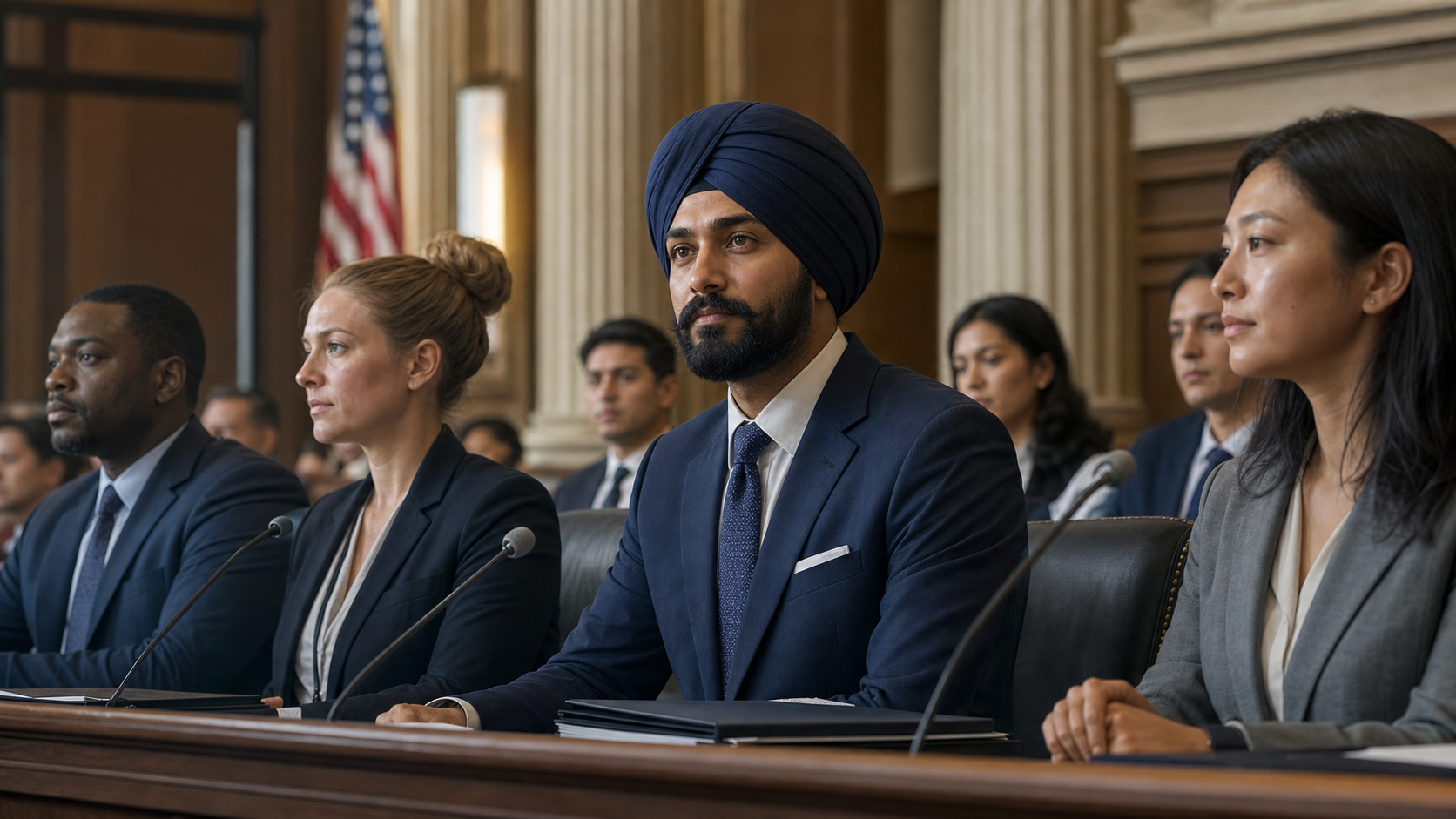
If you saw a historic appointment and wondered whether it will change anything beyond the headline, you are asking the right question. Representation opens a door. Federal outcomes still depend on legal authority, disciplined evidence, public procedure, and follow-through.
Dr. Gunisha Kaur’s appointment as the first Sikh to serve as a U.S. federal commissioner matters because Sikhs are entering a part of government where testimony can become findings and findings can shape policy. But a commissioner is not a symbolic ambassador for a faith, nor does a seat confer unlimited power. If you want this milestone to produce durable change, you need to understand what the office can do, where Sikh experience can improve federal decisions, and how communities can participate without reducing public service to identity politics.
What a federal commission seat can and cannot do
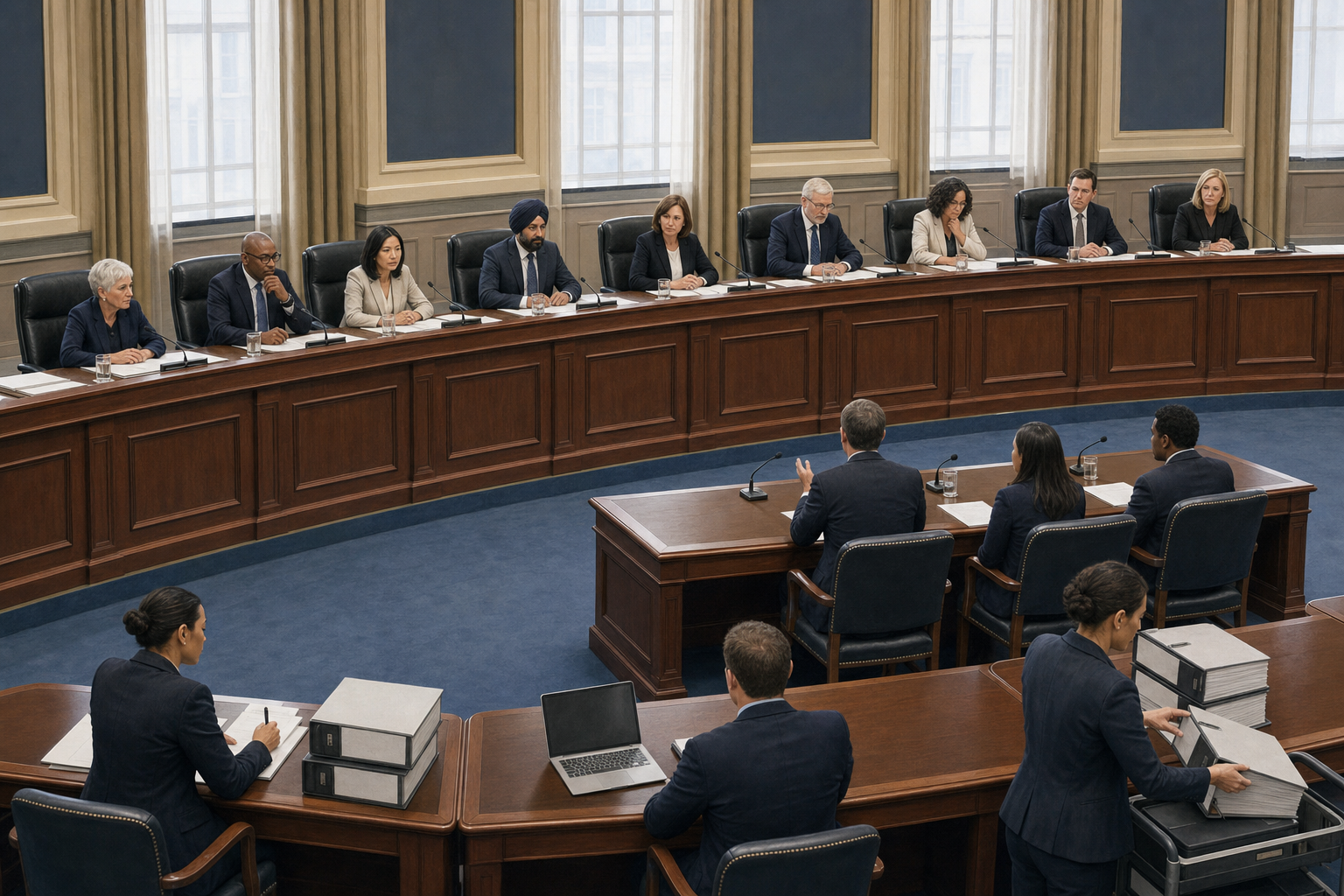
Start by separating a federal commissioner from a career civil servant, an elected official, or an executive with direct control over an agency. A commission receives its powers from its founding law. Some commissions are advisory. Others may exercise regulatory responsibilities. Their appointment methods, terms, voting procedures, quorum rules, and reporting duties are determined by the governing statute.
Many federal commissions investigate persistent or emerging problems, hold hearings, receive testimony, consult specialists, and publish findings for Congress or the Executive Branch. Their reports can influence oversight, guidance, legislation, and program administration. A recommendation, however, is not automatically a binding order. Its effect depends on the commission’s mandate and whether agencies or lawmakers act on it.
That distinction protects the milestone from two opposite errors. The first is tokenism: treating a Sikh face in government as sufficient evidence of institutional change. The second is cynicism: dismissing an advisory office because it cannot act unilaterally. A well-supported recommendation can outlast an election, give agencies a defensible basis for changing practice, and place neglected experiences into the federal record.
Before deciding how much an appointment can accomplish, examine the body itself. Find its legal mandate, identify who appoints its members, determine whether it can vote on formal findings, and look for its reports, public meetings, hearings, or comment opportunities. Where federal openness rules apply, meeting records and published materials also let you judge the work rather than relying on ceremonial photographs or community praise.
Key takeaways
- A historic first establishes presence; it does not establish the commission’s legal power. Read the mandate before making claims about what the commissioner can deliver.
- Judge representation through outputs: hearings convened, evidence gathered, recommendations issued, and responses secured from agencies or lawmakers.
- Bring documented patterns and implementable policy options, not only expressions of pride or isolated complaints.
- Protect nonpartisanship, data integrity, confidentiality, and conflict-of-interest safeguards. These are conditions of credible service, not obstacles to community participation.
- Use the milestone to widen the public-service pipeline so that Sikh representation does not depend on a solitary appointment.
The policy questions Sikh representation can sharpen

Lived experience is most valuable in government when it improves the questions an institution asks. A Sikh commissioner may recognize friction that others overlook: a uniform rule written without considering a dastaar, a security procedure that treats a kirpan only as a prohibited object, a calendar that assumes every important observance belongs to the majority faith, or an incident-reporting system that cannot describe anti-Sikh bias clearly.
Recognition alone is not expertise. The public value comes from combining perspective with professional competence. Dr. Kaur’s work across medicine, research, human rights, and policy translation illustrates the kind of range that a commission needs: the ability to hear a human account, test it against evidence, identify the institutional mechanism, and frame a remedy that can be implemented and evaluated.
Five areas deserve especially careful questions:
- Religious accommodation: Does the institution have a clear process for requesting an accommodation? Are decisions consistent across locations and supervisors? Do uniform, identification, safety, and security rules distinguish genuine operational requirements from habit or unfamiliarity?
- Religious literacy: Does training help personnel understand Sikh articles of faith and practices without turning Sikhs into stereotypes? Can staff apply the policy when no community representative is present to explain it?
- Public-service access: Are schools, healthcare settings, public-safety institutions, and federally supported programs equipped to serve people whose religious lives differ from majority assumptions? Are avoidable barriers recorded, corrected, and checked for recurrence?
- Civil-rights and hate-incident data: Can the reporting system identify what happened, who was affected, and how the institution responded? If Sikh experiences disappear inside an overly broad category, decision-makers cannot see the pattern or evaluate a remedy.
- Security and resilience: Are communities consulted before a security policy is finalized, or only after harm occurs? Does the policy protect the public while avoiding the reflexive treatment of visible faith as a threat marker?
For workplace religious accommodation, Title VII supplies an important federal baseline. It does not make every requested outcome automatic, and it does not replace the need to examine the person’s role, the employer, the policy, and the facts. If you are dealing with an active denial, retaliation concern, or employment claim, preserve relevant records and obtain qualified legal or agency equal-employment guidance before placing private details into a public submission. A public hearing or docket is a policy venue, not a substitute for advice on an individual case.
The aim is not a special rule that exempts Sikhs from neutral public responsibilities. It is a fair process that can tell the difference between a legitimate requirement and an unnecessary barrier. That distinction benefits other minority faiths as well. A system capable of considering a dastaar or kirpan carefully is generally better equipped to handle unfamiliar religious practices without panic, improvisation, or selective enforcement.
How to turn community experience into federal outcomes
A commission cannot build sound policy from applause, social-media visibility, or a stack of unrelated anecdotes. It needs evidence that shows where a process fails, whom the failure affects, why it recurs, and what a responsible institution could change. You do not need to be a lawyer or professional lobbyist to contribute, but you do need to make your information usable.
- Define the outcome gap. Replace a broad claim such as “institutions do not understand Sikhs” with a process problem. For example: an accommodation policy exists, but applicants receive inconsistent instructions; or incident records cannot distinguish anti-Sikh targeting from an undifferentiated category.
- Document the mechanism. Record the type of institution, the rule involved, the stage at which the problem appeared, the explanation given, and the final outcome. Separate direct records from recollection. Remove names and identifying details unless disclosure is necessary, authorized, and safe.
- Find the correct federal venue. Look for an open commission docket, public hearing, briefing, request for information, or relevant agency process. A powerful account sent to a body without jurisdiction may generate sympathy but no institutional response.
- Offer an implementable option. State who should change what. The answer may be clearer guidance, a revised reporting field, scenario-based training, a consistent review process, or consultation before a rule is adopted. Explain how the proposal preserves legitimate safety and administrative needs.
- Name the evidence of success. Ask whether an agency adopted the recommendation, whether Congress cited it in oversight, whether reporting became more complete and timely, and whether the service barrier or incident pattern changed. A recommendation published without an owner or measurement plan is easy to praise and easy to forget.
- Follow the public record. Track the commission’s final report and the responsible institution’s response. If no response appears, ask a narrow question tied to the recommendation. Follow-through converts participation from a community event into accountable civic work.
Community groups should also distinguish an illustrative case from proof of prevalence. A personal account can reveal the mechanism of harm even when it cannot show how widespread the problem is. Administrative records, consistently coded case logs, surveys with a stated method, and corroborating testimony can show whether the mechanism repeats. Label each kind of evidence honestly rather than forcing every submission to sound conclusive.
Interfaith cooperation can make this work stronger when the policy problem genuinely crosses communities. A Sikh organization might identify a failure involving articles of faith; Hindu, Buddhist, Jain, Muslim, Jewish, Christian, or other groups may encounter the same underlying defect in a uniform rule, calendar, or accommodation process. Joint participation can reveal that the remedy is not a private concession but an improvement to institutional capacity.
Academic and professional partners can help with survey design, comparative policy analysis, privacy safeguards, and evaluation. Faith leaders contribute community trust and context. Researchers contribute methodological discipline. Civil-rights practitioners help distinguish a policy pattern from an individual dispute. None should speak over the people affected; each should make their experience harder for an institution to misunderstand or dismiss.
Build a federal-service pipeline rooted in seva

A historic first becomes durable only when qualified successors are no longer surprising. Sikh families and institutions often encourage medicine, science, law, business, and technology. Federal service needs those skills too. Commissions and agencies depend on people who can analyze data, interpret law, understand public health, manage programs, write policy, evaluate evidence, and work under demanding ethics rules.
If you are a student, do not wait for a position carrying a grand title. Learn how a public institution makes decisions. Read a commission charter and a completed report. Practice turning a complex dispute into a concise policy memorandum that identifies the authority, evidence, affected groups, options, tradeoffs, and measure of success. Seek internships and nonpartisan civic education that expose you to the routine work behind public decisions.
If you are an established professional, translate your expertise into public value. A physician may contribute evidence on access to care. A data scientist may improve incident classification and reporting. A lawyer may clarify the boundary between a neutral rule and inconsistent accommodation. An educator may design religious-literacy training. Technical credibility matters because identity can reveal a blind spot, but it cannot by itself solve the institutional problem.
If you lead a gurdwara or community organization, build infrastructure rather than relying on occasional invitations. Maintain a nonpartisan mentorship network. Map internships, fellowships, commission opportunities, and career paths. Teach young applicants how public records, ethics disclosures, confidentiality, and conflicts of interest work. Create a process for responding to hearings and comment opportunities with verified evidence. Keep community fundraising, party politics, and policy analysis clearly separated so that public servants are not pressured to treat an office as a factional asset.
The ethical foundation is already familiar. Seva directs ability toward service rather than status. Sarbat da bhala places the welfare of all above a narrow communal gain. Across the wider Dharmic family, ahimsa and karuna reinforce restraint, dignity, and compassion. These traditions are distinct and should not be flattened into a single theology. They nevertheless meet in a demanding civic principle: use public authority impartially, especially when the people before you do not share your identity.
That principle also sets the correct standard for accountability. A Sikh commissioner should neither be burdened with answering for every Sikh nor shielded from scrutiny by the importance of the milestone. Ask whether the work is rigorous, transparent, independent, and useful to the whole public. Look for recommendations adopted by agencies, findings used in congressional oversight or rulemaking, better data and reporting, and measurable reductions in recurring barriers. Those tests respect the office more than uncritical celebration does.
You can act on this milestone now. Choose the lane that matches your position: examine the commission’s actual mandate, prepare a de-identified evidence brief on a recurring policy failure, respond to an open public process, or mentor someone whose professional skill belongs in federal service. The lasting achievement will not be that a door opened once. It will be that Sikhs pass through it with competence, preserve the integrity of the institution, and widen its capacity to serve everyone.