
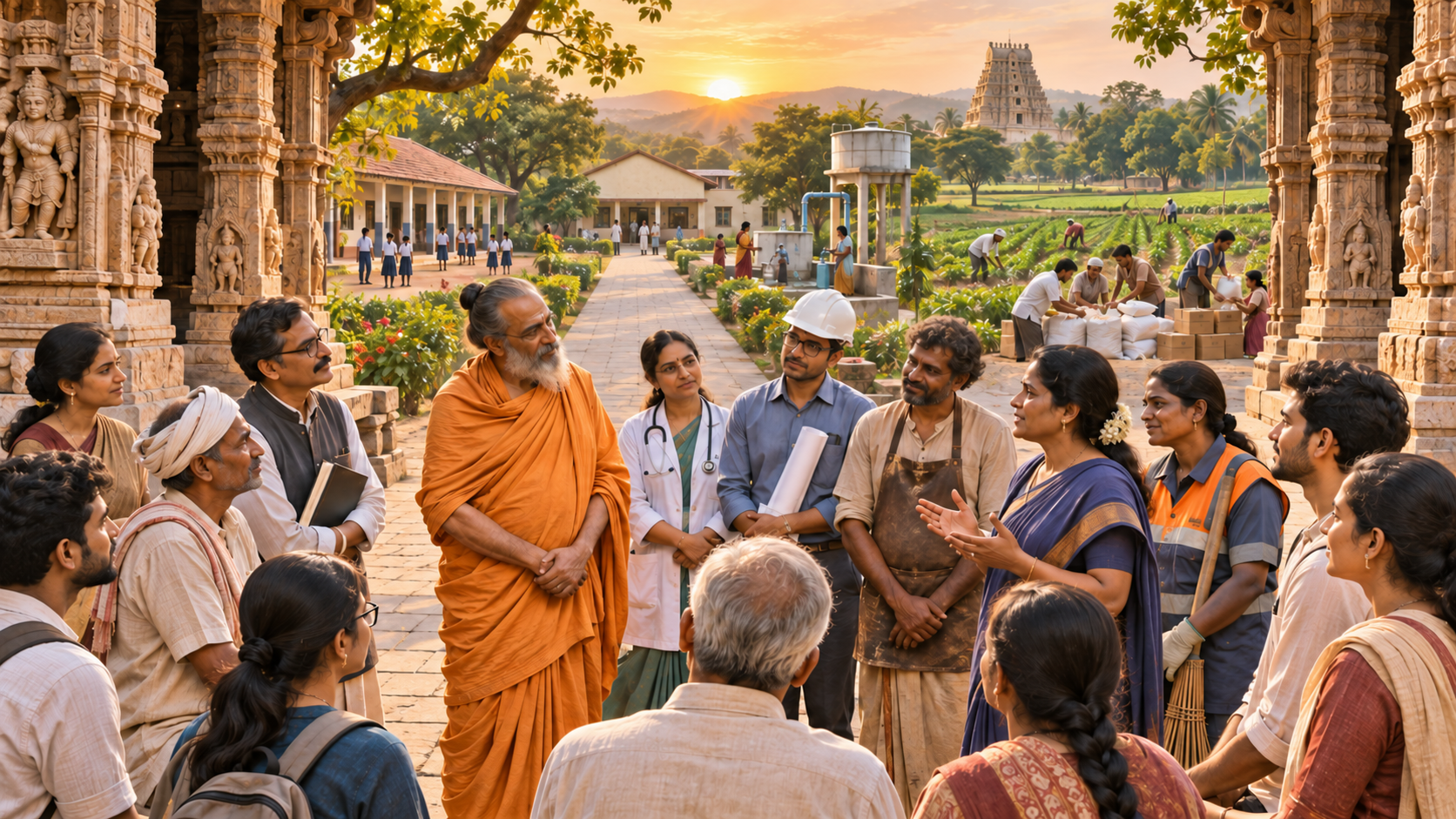
You may want acharyas, sants, mahants and temple institutions to have a stronger public voice, yet still worry about what happens when spiritual authority enters politics. That tension is real. Exclude Hindu leadership from public life and the nation loses institutions that preserve memory, shape character and mobilise service. Give any religious authority unchecked political power and dharma can become a shield for ambition.
The useful question is therefore not whether Hindu religious leaders should participate. It is how they should participate, what work deserves your support and which boundaries protect both dharma and the nation.
Key takeaways
- Religious visibility, civic leadership and control of state power are different things. Judge each by the power being exercised, not by the mere presence of Hindu symbols or language.
- Spiritual authority earns lasting public influence through seva, education, cultural preservation and moral courage – not through proximity to a political party.
- A fair secular standard should reject coercion and unequal treatment without demanding that Hindu leaders conceal their religious identity.
- Before you donate, volunteer or endorse an initiative, test its purpose, governance, finances, treatment of dissent and evidence of public benefit.
- Dharma-based nation-building should strengthen families and institutions without erasing differences among sampradayas or turning another community into a permanent enemy.
Religious visibility is not the same as political control
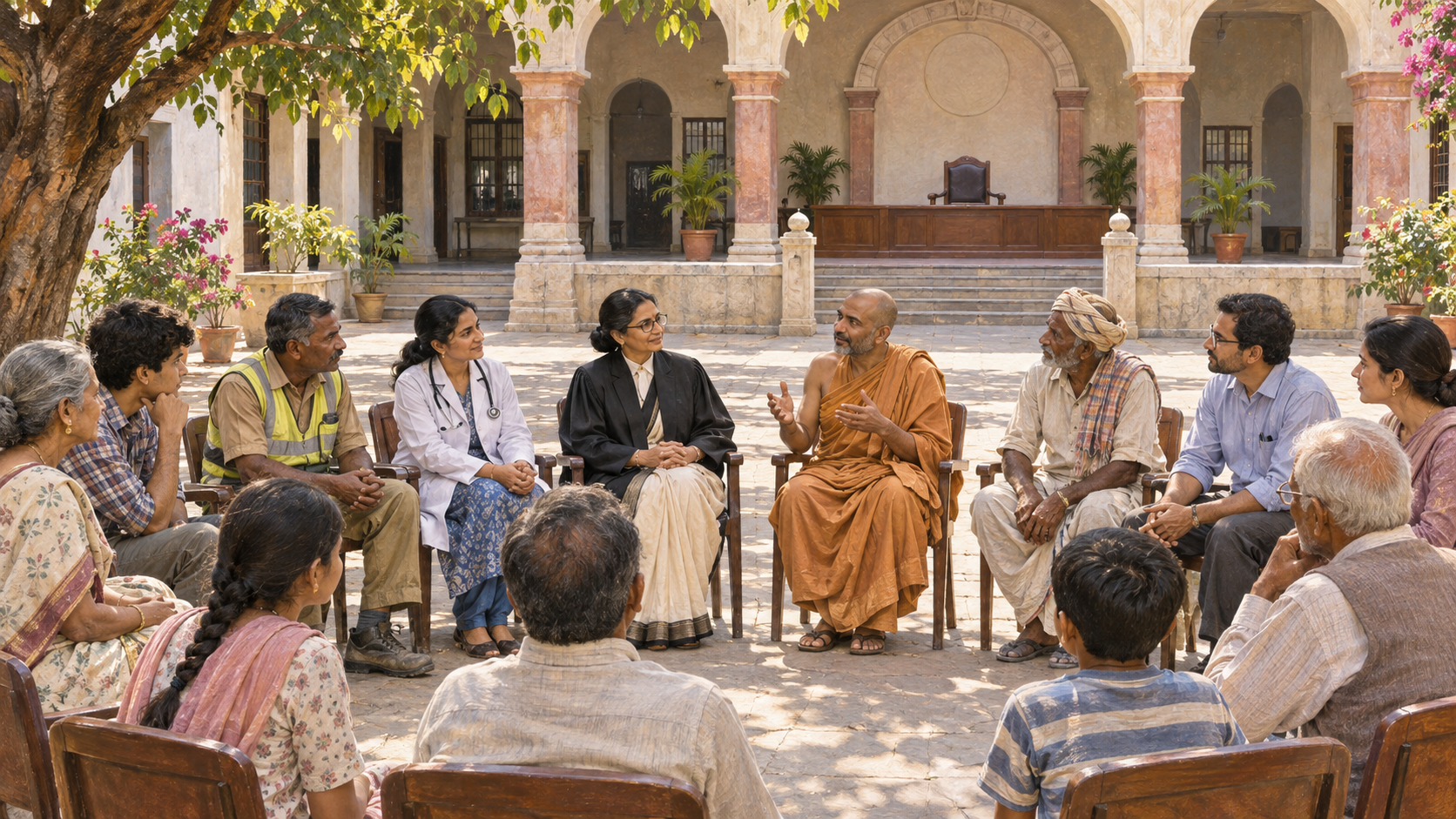
Public arguments about religion often fail because three different activities are treated as one. A leader displaying faith is not necessarily imposing faith. A religious institution advocating a policy is not necessarily controlling the state. A government using coercive power is not equivalent to a sant offering moral counsel.
- Religious visibility includes attending a festival, receiving a blessing, using dharmic language or acknowledging a sacred tradition.
- Civic leadership includes teaching ethical duties, organising service, protecting heritage, petitioning government and mobilising citizens around a public concern.
- State power includes making law, spending public money, policing conduct and imposing penalties.
You should demand the most rigorous safeguards at the third level because the state can compel. At the first two levels, the presumption should favour free and open participation unless there is deception, intimidation or incitement.
This distinction also exposes inconsistent expectations. The White House has placed Christmas imagery, the American flag, partisan language and an appeal to God’s blessing within the same public message. You do not have to imitate American Christian politics to notice the principle: religious expression by a national leader is not treated everywhere as automatically disqualifying.
When someone objects to a Hindu leader’s public faith, ask what precisely is objectionable. Is it the visible Hindu identity, the policy being proposed, the use of public resources or the treatment of citizens who disagree? If the complaint is only that Hindu language has appeared in public, demand a standard that would be applied to every religious tradition. If coercion or preferential treatment is involved, examine that conduct directly.
The existence of a double standard does not excuse bad conduct. It simply establishes the need for a consistent starting point. A defensible public order neither gives one religion ownership of the state nor requires Hindu leaders to behave as if they have no civilisational inheritance.
The work that turns spiritual authority into national capacity
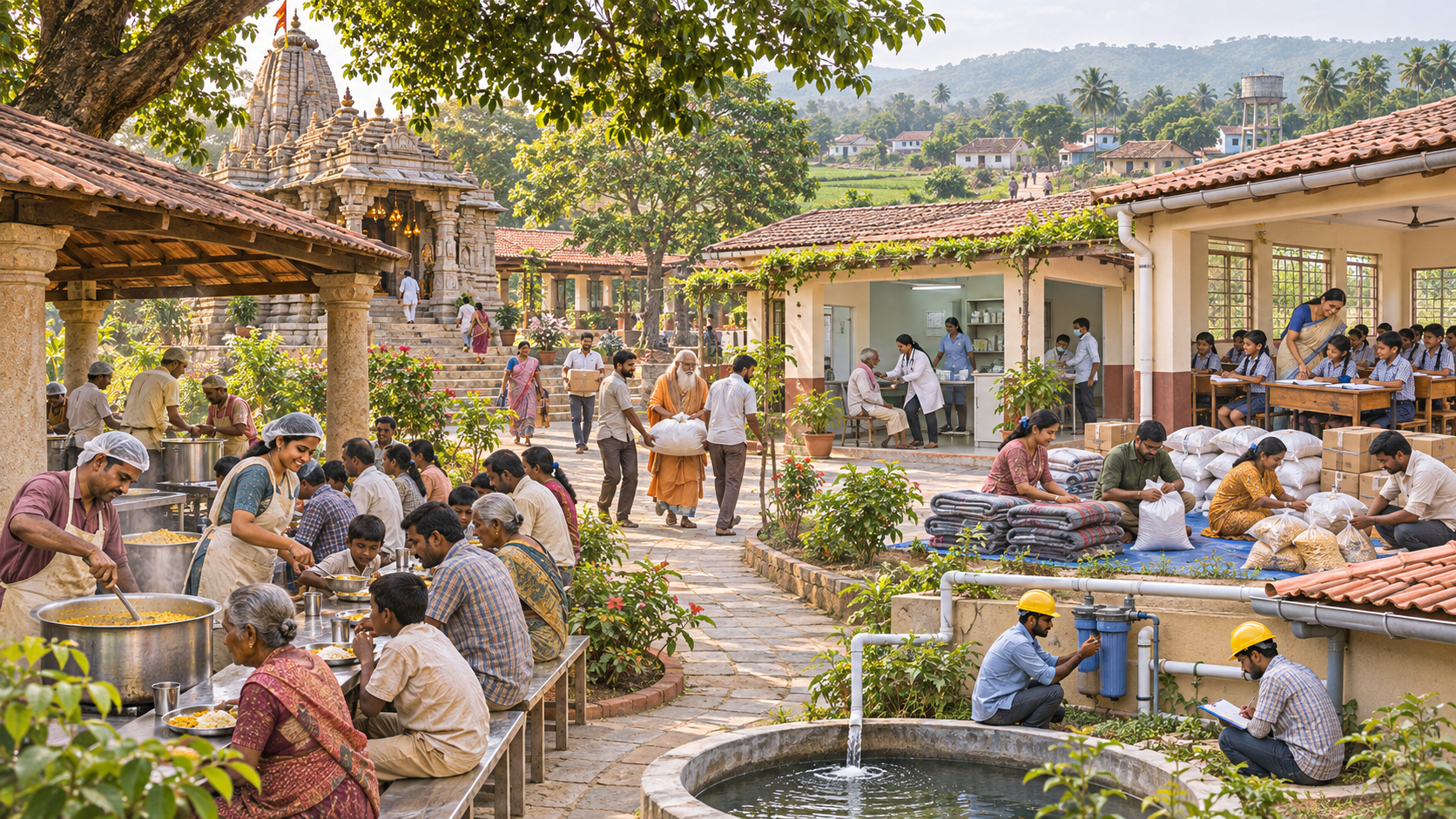
A religious title alone does not build a nation. The decisive question is whether moral authority is converted into stronger people, healthier institutions and a culture capable of transmitting itself.
In Varanasi, Swami Jitendranand Saraswati commended the Hindu Janajagruti Samiti for work involving nation-building, temple protection and dharmajagruti as the organisation entered its Silver Jubilee year. Those three fields identify distinct forms of public contribution, but an endorsement is not by itself proof of impact. If you are considering support, look beyond the blessing to the programme, stewardship and results.
- Cultural continuity: Does the institution help people understand a practice, teaching, sacred site or inherited duty well enough to pass it on? A calendar of ceremonies can sustain participation, but explanation and education are what turn attendance into continuity.
- Temple protection: Is protection being treated as responsible stewardship rather than a slogan? Look for attention to worship, records, physical care, lawful representation, financial integrity and the community that depends on the temple.
- Dharma awareness: Does teaching connect spiritual ideas to conduct – truthfulness, restraint, service, responsibility and care for inherited institutions? Identity without duties produces a crowd, not a durable community.
- Family formation: The RSS centenary emphasis on Kutumb Prabodhan places the family within cultural renewal. The practical test is whether families receive usable habits: regular shared worship, intergenerational conversation, care for elders, transmission of language or tradition, and participation in local service.
- Public conscience: A religious leader should be able to challenge corruption, cruelty, cultural neglect and abuse of authority even when the responsible person is politically convenient. Selective courage quickly becomes party service.
- Solidarity beyond Bharat: Concern for vulnerable Hindus abroad should lead to verified documentation, lawful advocacy, relief and serious diplomatic attention. Inflamed claims without verification may generate anger while doing little for the people supposedly being defended.
The common mechanism is institution-building. A speech may awaken interest, but the nation gains capacity only when that interest becomes a class, a volunteer team, a maintained temple, a family practice, a relief effort or an accountable civic campaign.
Dharma must discipline the leader before it directs the nation

Hindu religious leadership can contribute something politics often lacks: an account of duty that is not reducible to winning. That contribution disappears when religious authority becomes another route to status. The safeguards therefore have to be visible in conduct, not merely invoked in Sanskrit vocabulary.
- No exemption from scrutiny: A robe, lineage or honorific may deserve respect, but it cannot settle questions about money, governance or allegations of misconduct. The higher the moral claim, the clearer the accountability should be.
- Issue-based political engagement: A religious leader may support a policy, criticise a government or urge citizens to vote. Permanent loyalty to a party is different. It makes correction difficult and encourages followers to treat political obedience as a religious duty.
- Voluntary participation: Teaching and persuasion belong in public life. Threats, compelled observance and punishment of peaceful dissent do not become dharmic because a religious institution administers them.
- Respect for internal plurality: Hindu unity need not require uniform ritual, theology or authority. A credible national platform should make room for different sampradayas and regional traditions while cooperating on shared civic work.
- Competence in the right role: Spiritual insight does not automatically confer expertise in administration, security, economics or law. Religious leaders should define moral priorities and represent community concerns while drawing on qualified people for technical decisions.
- Proportionate speech: Before escalating a disputed claim, establish what is known, what remains uncertain and what remedy is lawful. A leader who can calm followers long enough to verify facts protects the community more effectively than one who rewards instant outrage.
- Service across social boundaries: An initiative rooted in Hindu dharma need not hide its identity. Its public credibility grows when its work is fair, its beneficiaries are treated with dignity and assistance is not used as leverage for political submission.
These boundaries are not concessions made to people hostile to Hindu public life. They protect spiritual authority from being consumed by electoral cycles, personality cults and institutional opacity. They also allow you to defend legitimate Hindu participation without having to defend every person who claims to represent it.
Use this seven-question test before offering support
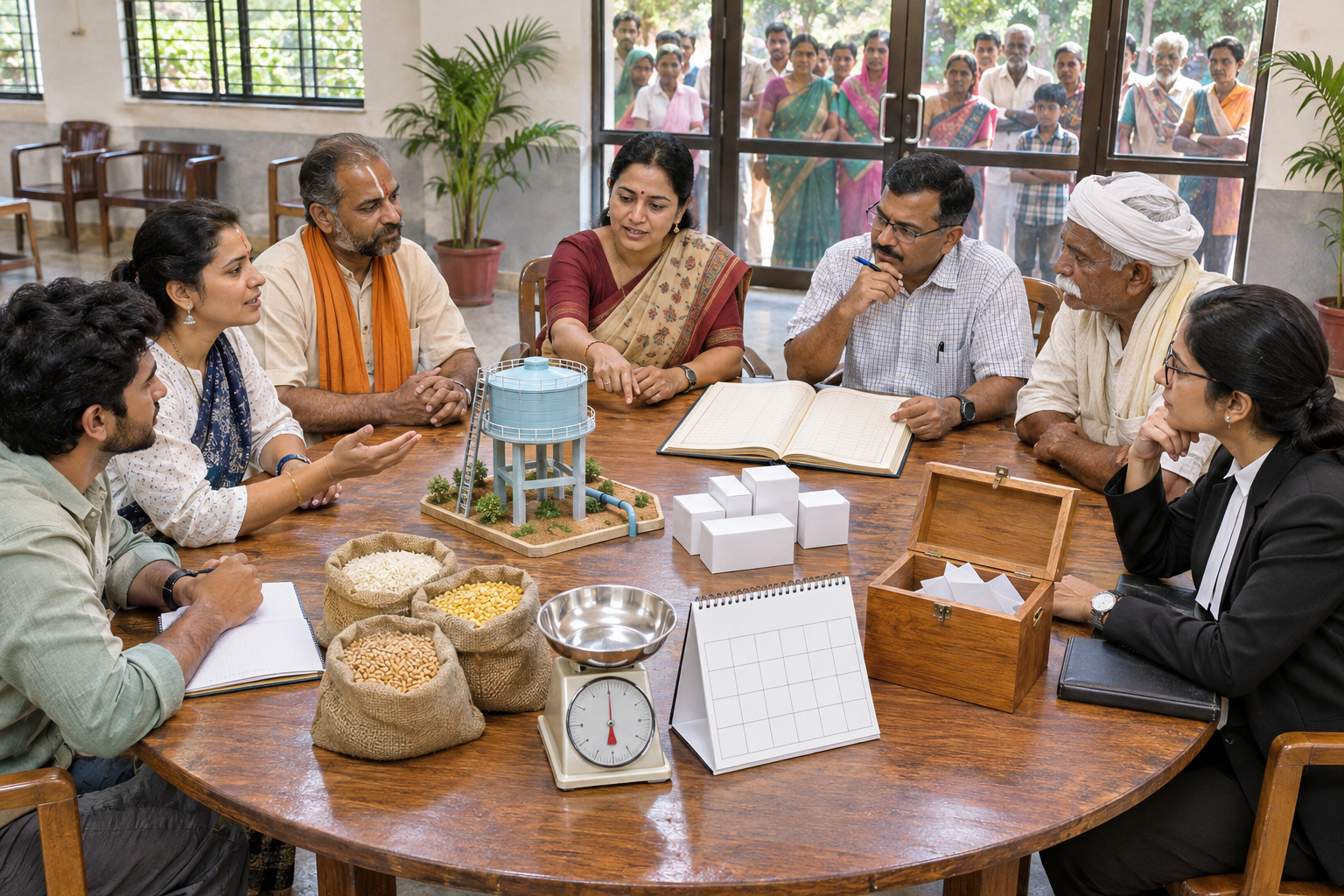
If a religious leader or Hindu organisation asks for your money, time, vote or public endorsement, do not stop at agreement with the stated cause. Ask seven practical questions.
- What exact problem is being addressed? Temple protection, family education, relief and political campaigning require different methods. A vague promise to save dharma is not an operating plan.
- What work will occur after the gathering or speech? Look for a named activity, responsible team, intended beneficiary and a way to follow progress. Mobilisation without follow-through trains people to confuse emotion with achievement.
- Who makes decisions? Determine whether authority rests with one personality, a lineage, a governing body or a transparent institutional process. You should know who can approve spending and who can correct a failed programme.
- How are money and other resources accounted for? Public appeals create a public obligation. Ask how funds are collected, allocated and reported. Devotion is not a substitute for stewardship.
- Can factual claims be checked and corrected? Responsible leadership distinguishes evidence from inference and rumour. A correction mechanism is a sign of strength because it prevents followers from becoming an amplification network for errors.
- Is political support conditional? A healthy relationship allows praise for a sound decision and criticism of a harmful one. If every act of one party is sacred and every act of its opponent is treachery, religious language is being used to close political judgement.
- How are disagreement and difference treated? Notice what happens to a Hindu from another sampradaya, a non-Hindu beneficiary, an internal critic or a volunteer who asks about finances. The response reveals more than the public slogan.
Three warning signs should make you pause: spectacle is the only visible output, criticism of the leader is equated with betrayal of dharma, or another community’s humiliation is treated as the principal measure of Hindu success. None of these builds the disciplined capacity a civilisation needs.
By contrast, a worthy initiative can tell you what it protects, what it teaches, whom it serves, how it is governed and how it will correct mistakes. It does not need to apologise for being Hindu. It does need to show that Hindu conviction is producing responsibility.
Your next step can be small. Choose one local temple, educational effort or dharma organisation you might support and put these seven questions to it. Commit when the answers reveal sustained work rather than borrowed prestige. That is how religious leadership becomes more than public symbolism: it helps form citizens and institutions capable of carrying Bharat’s civilisational responsibilities forward.
References
- Hindu Post – Leaders Worldwide Have Always Embraced Faith and Tradition – Only in Bharat Was It Made Taboo for Hindu Leaders
- Hindu Jagruti Samiti – Hindu Janajagruti Samiti is working for the Nation and Dharma with utmost sincerity and devotion – Swami Jitendranand Saraswati ji Maharaj

Leave a Reply
You must be logged in to post a comment.