
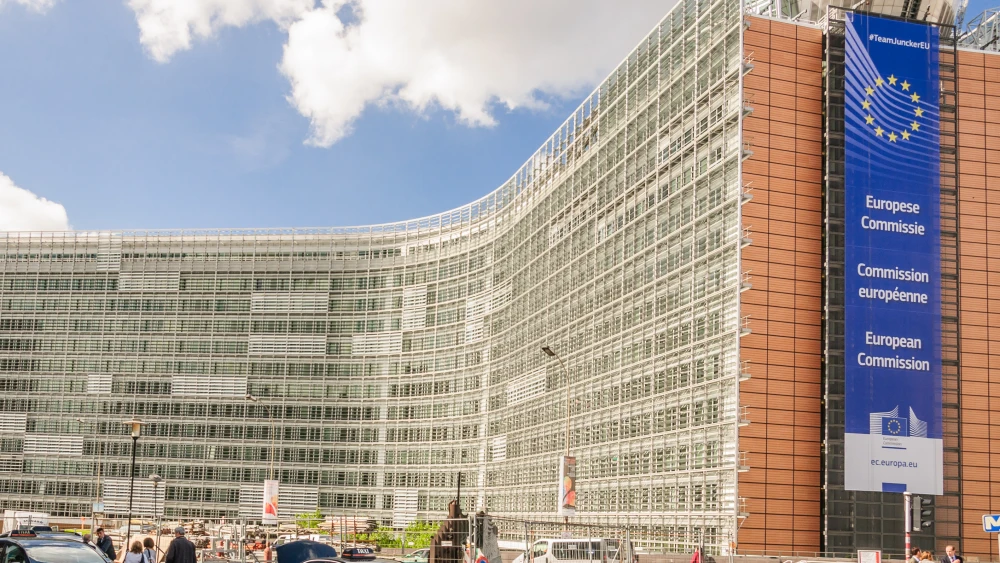
A brief Hindu Post item relays allegations that European Commission funding for projects concerning Islam may have crossed the line from scholarship into ideological advocacy. It reports that critics object not merely to the subjects being studied, but to alleged Islamist involvement and the framing of European history and culture.
The supplied material is too limited to settle those allegations. It does, however, identify a legitimate public question: how should a major grant-making institution support religious research while preserving intellectual independence, equal treatment and public accountability?
What Hindu Post’s source summary actually reports
Hindu Post, citing a Middle East Forum article, says the European Commission directed millions of euros toward projects involving the Qur’an, Sharia, Islamophobia and Islamic charity. The summary presents critics’ contention that some of this work promotes Islamist advocacy or encourages ideological revision of European history.
The one project described with numerical detail is The European Qur’an, also called EuQu. According to the report, it received nearly EUR 10 million for a six-year research period running from 2019 through 2025. Its stated purpose was to examine the Qur’an’s influence on European religion and culture.
The excerpt does not identify the allegedly Islamist participants, name the lawmakers and scholars raising objections, reproduce grant records or describe the project’s completed findings. It also contains no response from the European Commission or the researchers. Readers can therefore identify the criticism and the reported funding figure, but cannot adjudicate the wider accusation from this material alone.
Religious scholarship is not automatically ideological advocacy
Research about Islam should not be conflated with Islamism. Islam is a religious tradition expressed through diverse communities, while Islamism generally refers to programs that seek to organize political life around particular interpretations of Islam. A credible allegation of ideological capture consequently requires evidence about participants, institutional affiliations, research methods and outputs, not suspicion based solely on a project’s subject.
The same care applies to historical revision. Reconsidering an inherited account can be a normal part of scholarship when new evidence or better arguments justify it. The concern arises when research begins with a prescribed political conclusion, excludes inconvenient evidence or treats advocacy as settled history. Public funding should enable inquiry without purchasing a predetermined answer.
Key takeaways
- Hindu Post reports criticism of European Commission grants related to the Qur’an, Sharia, Islamophobia and Islamic charity.
- The most specific claim concerns nearly EUR 10 million reportedly allocated to the 2019-2025 EuQu project.
- The supplied excerpt does not contain enough documentation to prove its allegations of Islamist involvement or ideological revisionism.
- The appropriate response is transparent, even-handed oversight rather than hostility toward religious scholarship or Muslim communities.
A Dharmic standard for genuine pluralism
Hindu, Buddhist, Jain and Sikh traditions are distinct and should never be flattened into one doctrine. Yet they share a civilizational stake in disciplined inquiry, ethical responsibility and the freedom of communities to represent their own inherited categories. That perspective offers a constructive standard for publicly financed religious studies: welcome examination, preserve debate and apply the same evidentiary rules to every tradition.
For Dharmic communities, the deeper policy question is one of symmetry. Are Hindu, Buddhist, Jain and Sikh sources studied with comparable seriousness? Are practitioners allowed to correct misleading external descriptions? Are colonial and missionary assumptions examined as critically as other ideological frameworks? The source provides no comparative evidence on these matters, so they remain questions for scrutiny rather than findings about the European Commission.
What credible public oversight should establish
A sound assessment would examine the grant objectives, recipient affiliations, selection process, conflicts of interest, published outputs, peer-review arrangements and public accessibility of the research. It would also ask whether dissenting scholarship was considered and whether the funder imposed or rewarded a preferred ideological conclusion.
Such oversight must avoid collective suspicion. Muslim scholars and citizens are not interchangeable with Islamist organizations, just as legitimate Dharmic cultural advocacy should not be casually branded as extremism. Consistent rules protect scholarship, taxpayers and religious communities alike.
Publishing grant records, methods and final outputs would allow this controversy to move from competing labels to verifiable evidence. That is the necessary next step if European institutions want both public confidence and authentic religious pluralism.
Inspired by this post on Hindu Post.
