
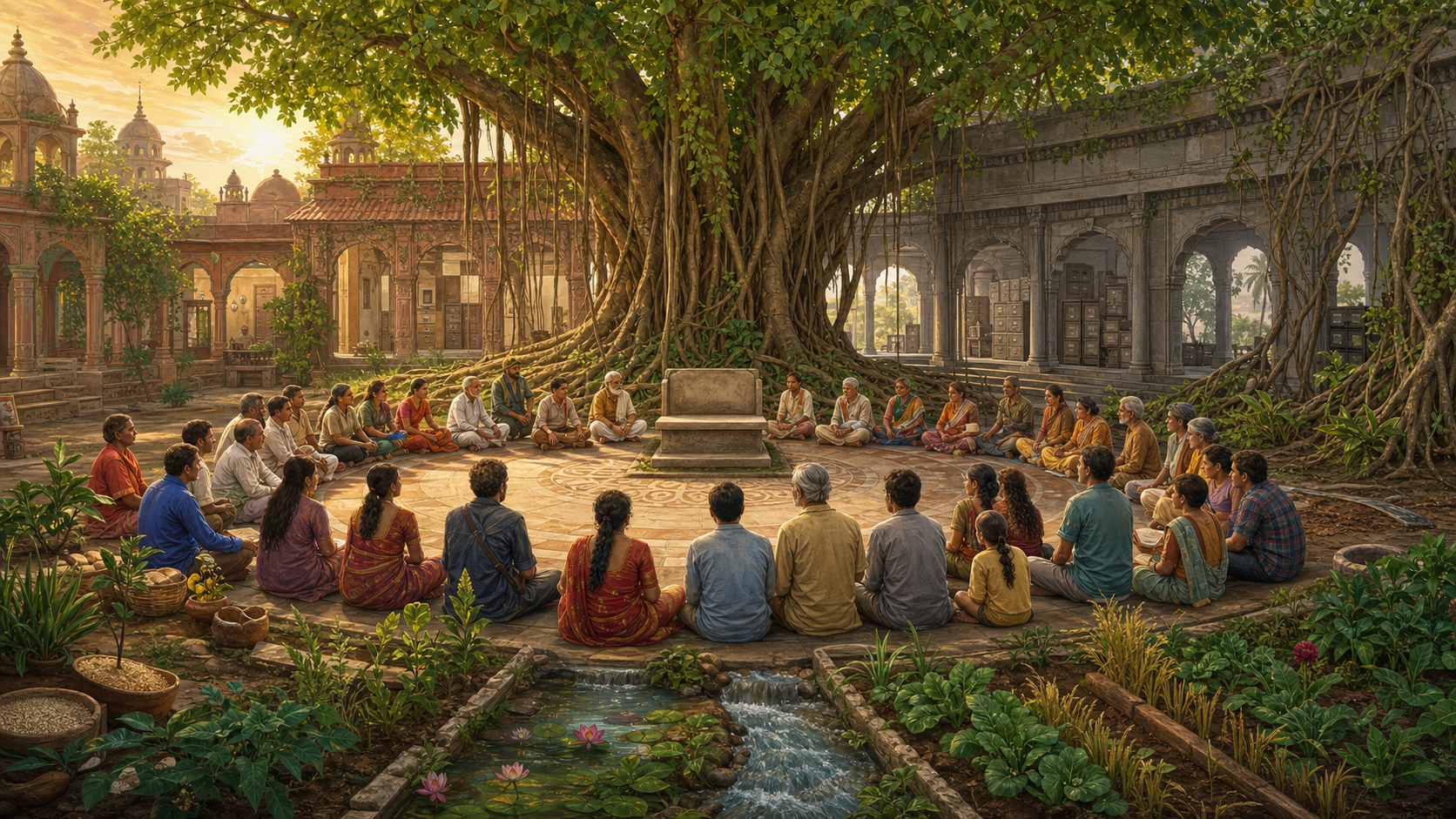
If you are trying to decide what decolonising Bharata should mean in public life, slogans will not take you far. Replacing one name with another, invoking civilisational pride, or criticising the West may signal intent. None of these choices tells you whether a law, institution, or political movement has actually changed its governing assumptions.
Use a harder test: does public power receive its purpose, duties, limits, memory, and relationship with nature from a Bharatiya moral universe? That question helps you distinguish genuine civilisational recovery from inherited machinery painted in indigenous colours.
Key takeaways for a Bharatiya political identity
- Decolonisation is not cultural decoration. It changes the assumptions by which institutions define progress, authority, responsibility, and human flourishing.
- Bharata becomes politically meaningful when it names a civilisational standpoint, not merely an alternative label for the same governing habits.
- Dharma must restrain the people invoking it, especially when they hold power. If it judges only their opponents, it has become partisan language.
- A Hindu civilisational orientation need not erase the distinct identities of Hindu, Buddhist, Jain, Sikh, or non-Dharmic citizens. Confidence does not require compulsory sameness.
- Modernisation should remain an instrument. Bharata must decide the ends it serves, the harms it forbids, and the ecological limits it accepts.
Decolonisation begins with the authority to define
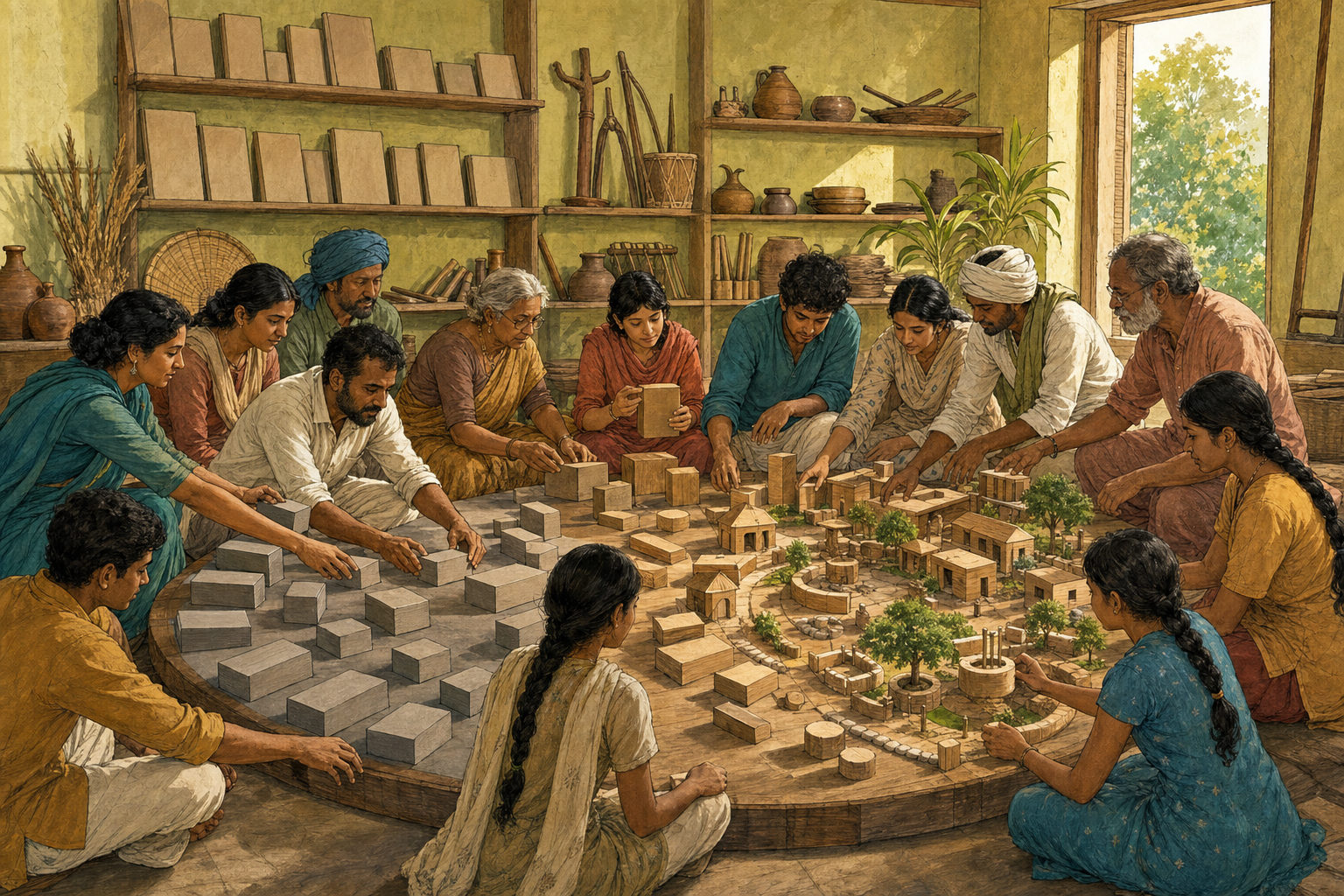
Political independence transfers formal authority. It does not automatically settle who defines a modern society, what counts as progress, which forms of knowledge deserve public respect, or what kind of person an institution assumes you to be.
By coloniality, we mean the survival of a hierarchy of knowledge after foreign rule ends. One civilisational experience continues to function as the unnamed standard, while Bharata must translate and defend itself before it can enter public reasoning. The result may look Indian at the ceremonial level while remaining dependent at the level of first principles.
That is the heart of the call to reconstruct India-Bharata’s political identity through its ancient Hindu framework of thought. The operative word is framework. Ancient civilisation is not a ready-made policy manual, and recovering it does not mean copying an earlier administration into the present.
Instead, examine five decisions hidden beneath every political programme:
- Purpose: Is the state merely managing competing appetites, or does it serve a defensible idea of social order and human flourishing?
- The person: Is a citizen imagined only as an isolated claimant and consumer, or also as someone situated within duties, relationships, communities, and nature?
- Limits: What may a government, majority, market, or movement never do, even when doing it would be convenient?
- Memory: Are Bharata’s traditions treated as living intellectual resources, or only as folklore, private belief, and ceremonial heritage?
- Nature: Is the natural world merely an inventory of inputs, or does political reasoning recognise relationships and obligations that cannot be reduced to price?
A proposal becomes substantively Bharatiya when its answers alter institutional design. If it celebrates inherited wisdom but preserves exactly the same incentives, definitions, and concentrations of power, the change remains symbolic.
This does not require a reverse purity test. An idea is not correct because it originated in Bharata, and it is not corrupt because it arrived from elsewhere. Rejecting everything foreign would leave foreign origin in command of our attention: Europe would still determine the decision, only with the sign reversed. Intellectual freedom means judging any idea from consciously chosen premises rather than accepting an external civilisation as the automatic measure.
The same care is needed within the Dharmic family. Hinduism, Buddhism, Jainism, and Sikhism are not interchangeable doctrines. Their schools also contain real disagreements. A shared civilisational conversation should preserve those differences while allowing concepts such as duty, self-restraint, non-injury, disciplined action, and moral accountability to enter public reasoning in their own terms.
Dharma must judge power before it can guide power
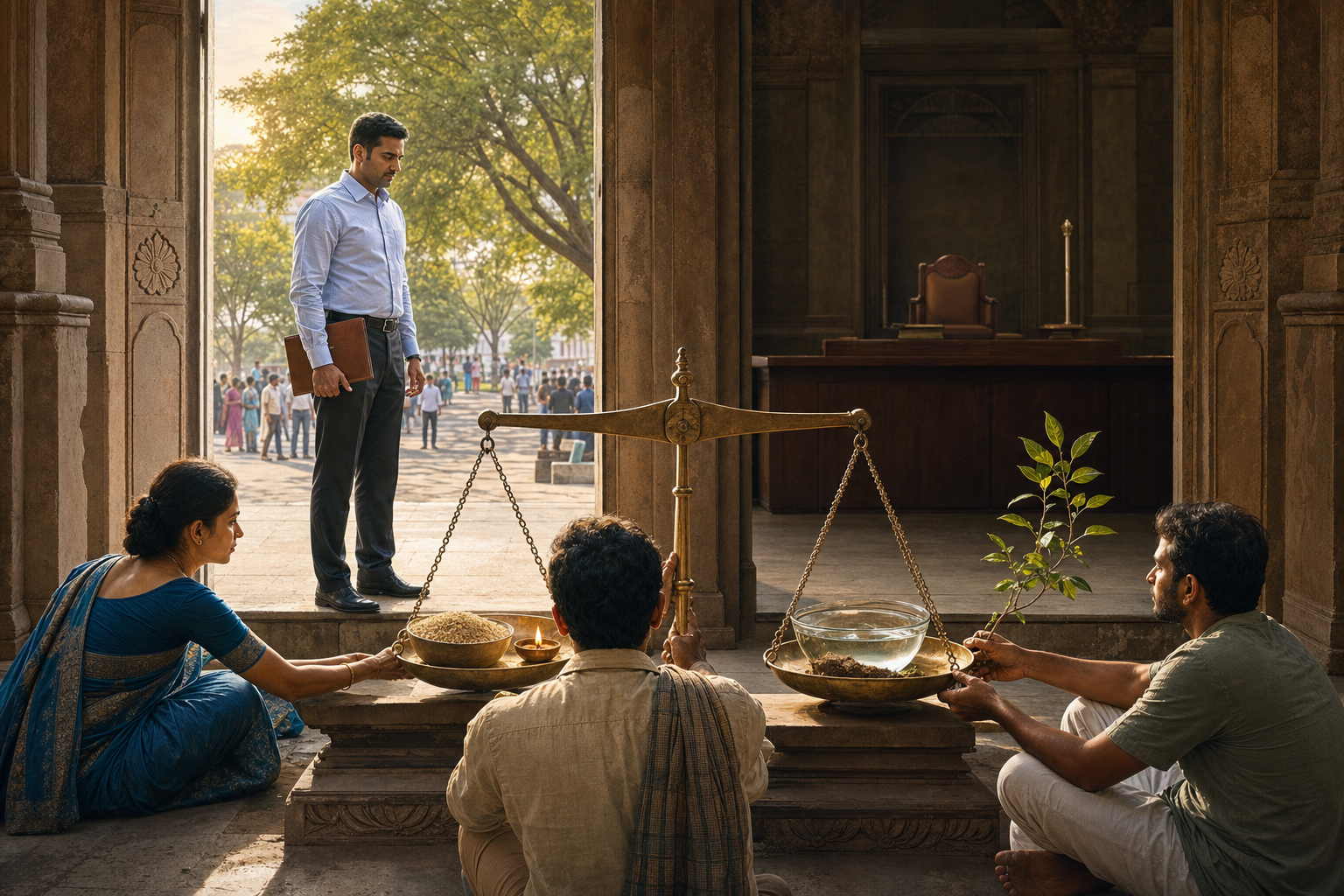
Dharma cannot function as a political password that grants moral immunity to whoever speaks it most loudly. In public life, its first task is to judge power: its purpose, methods, limits, and consequences. No party, government, institution, or community can declare itself dharmic and thereby escape examination.
Run every political claim made in the name of Dharma through five questions:
<!– wp:list {