
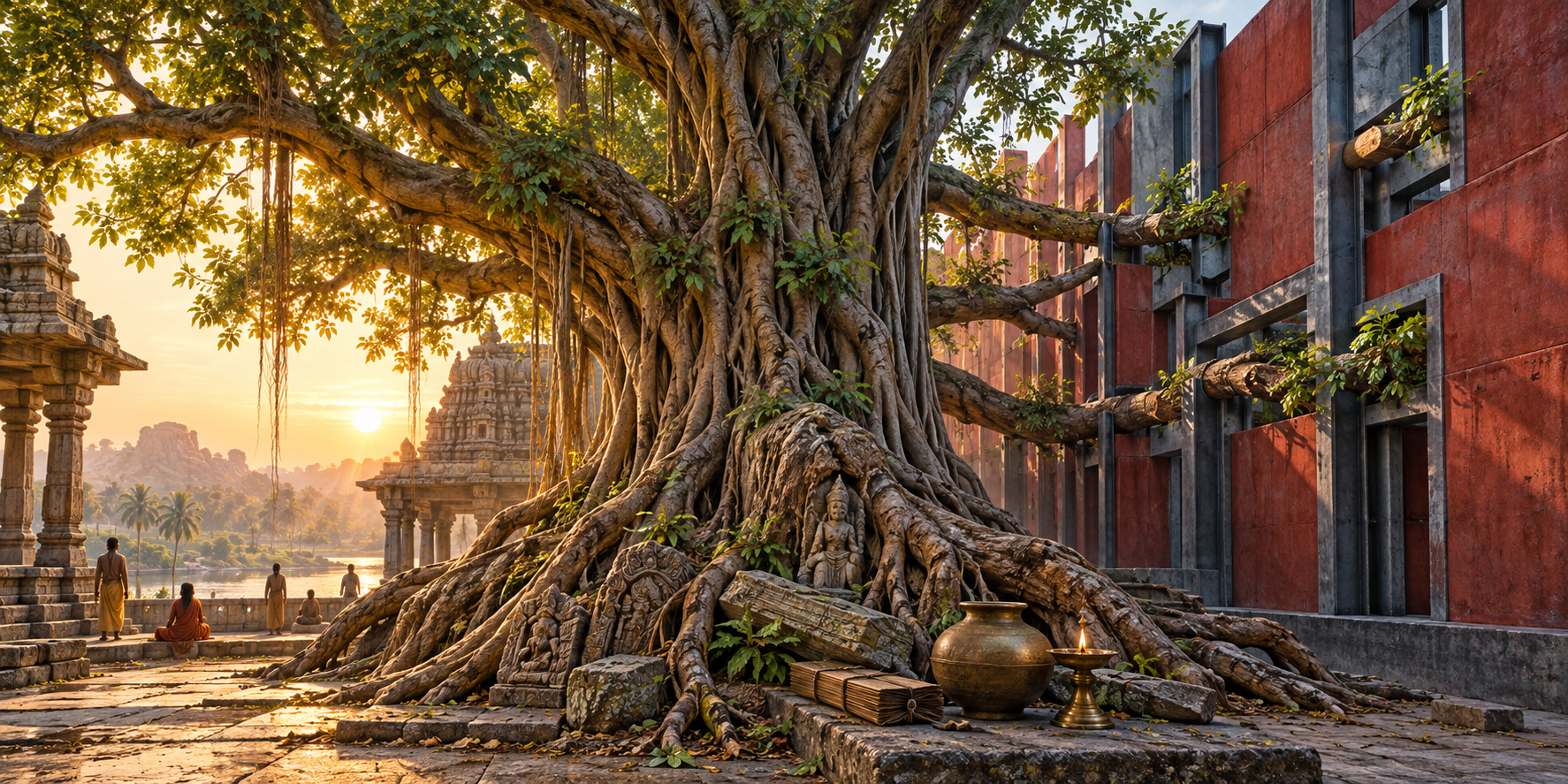
You may be trying to decide whether communism is necessarily hostile to Dharma, or whether a foreign ideology can be adapted without dissolving the civilization it claims to liberate. The histories of China and India make a simple yes-or-no answer impossible.
The better question is practical: after the slogans change, who is allowed to interpret the inherited tradition? Destruction is easy to recognize. Political control can be harder to see because it may restore temples, quote sages, and celebrate antiquity while denying tradition any authority over the state. The tests below help you distinguish reform, erasure, and controlled appropriation.
Start by separating criticism, reform, and erasure
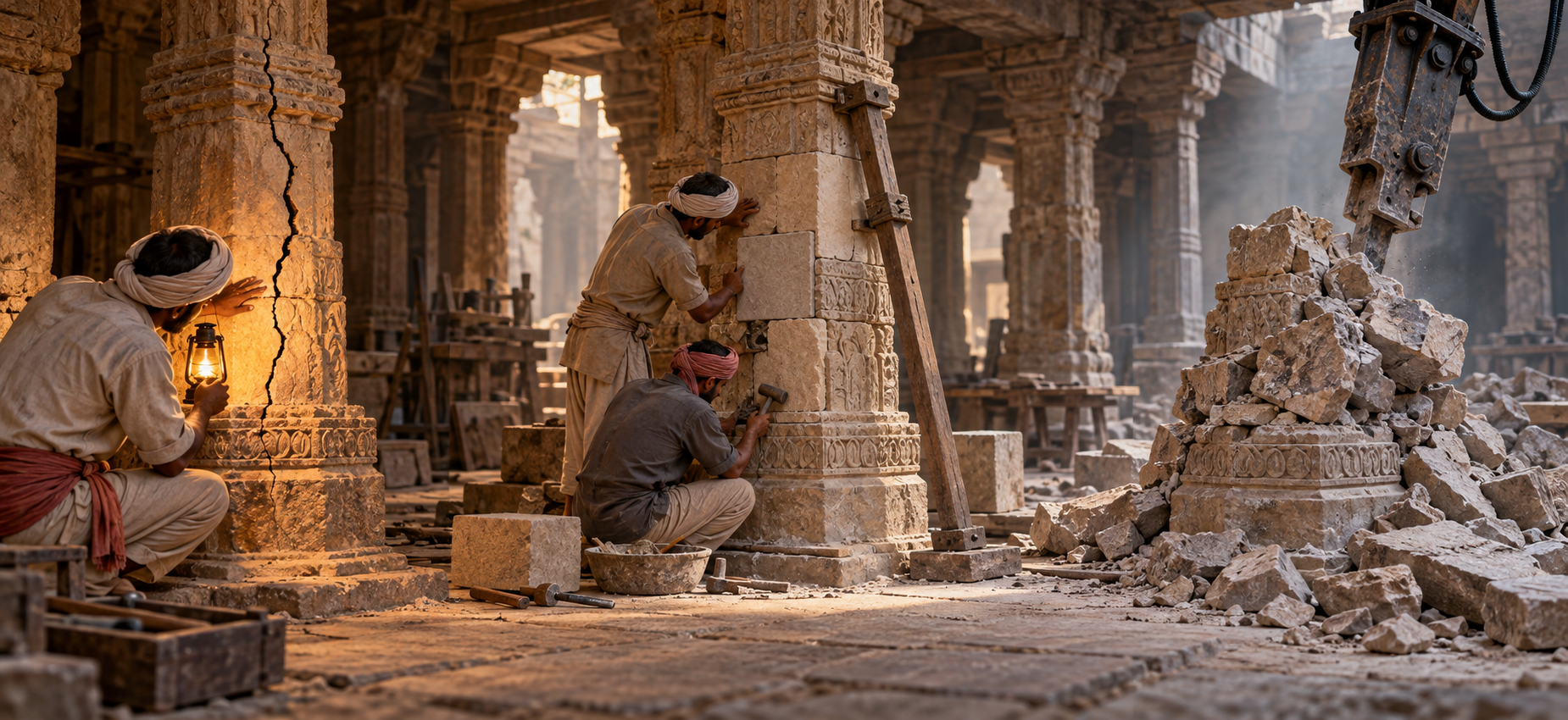
Communist movements in China and India acquired much of their early force from anger at foreign domination, entrenched hierarchy, and the apparent failure of gradual reform. Those grievances were not imaginary. Landlord power, imperial control, and inherited social privilege could not be defended merely by calling them traditional.
But a legitimate grievance does not validate every remedy. Communist theory tends to place class, ownership, and material production at the center of history. An indigenous civilization carries more than an economic arrangement: it transmits moral obligations, metaphysical questions, texts, rituals, sacred geography, artistic forms, family memories, monastic orders, teachers, temples, shrines, and habits of self-restraint. Once all these are reduced to instruments of class power, reform can turn into civilizational demolition.
When you assess a political campaign directed at tradition, sort its claims into three categories:
- Criticism identifies a particular practice, institution, or exercise of power and explains the harm it causes.
- Reform changes that practice while preserving the community’s capacity to transmit its deeper inheritance.
- Erasure treats the inheritance itself as presumptively guilty and demands that its texts, teachers, symbols, or institutions justify their continued existence to the ideology.
This distinction prevents two common mistakes. The first is to defend every historical custom because an ideological opponent attacks it. The second is to accept collective civilizational guilt because a real abuse existed somewhere within the civilization. Ask for the exact practice under dispute, the evidence of harm, the proposed correction, and what will remain afterward. If no one can name what deserves preservation, the project is probably not reform.
China shows both destruction and controlled recovery
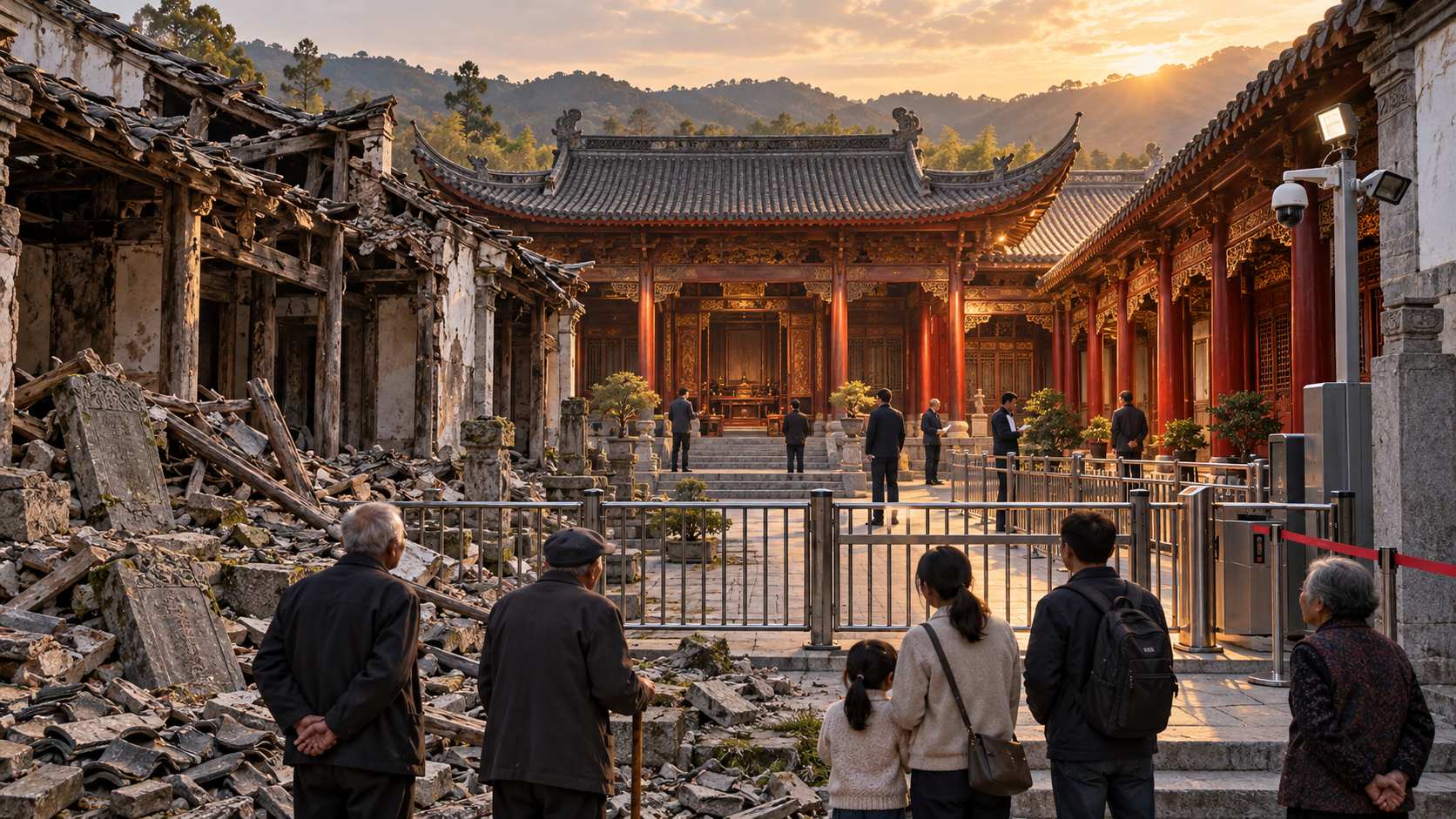
The Chinese Communist Party emerged from the May Fourth ferment of 1919. Revolutionaries including Chen Duxiu, Li Dazhao, and Mao Zedong connected China’s foreign humiliation with landlord domination, clan patriarchy, and a Confucian order they believed had failed to protect the country. Mao then moved revolutionary strategy away from classical Marxism’s industrial-worker emphasis and toward poor and middle peasants as the principal revolutionary force.
That adaptation made communism effective in Chinese conditions, but it did not initially reconcile communism with Chinese civilization. The campaign against the Four Olds classified old ideas, culture, customs, and habits as supports of feudal domination. During the Cultural Revolution of 1966-76, Red Guards attacked Buddhist monasteries, Daoist shrines, Confucian temples, statues, scriptures, clergy, and scholars. In Qufu, the ancestral home of Confucius, thousands of artifacts were destroyed and the sage’s cemetery was desecrated.
The progression matters because political treatment of tradition changed radically without the Party surrendering its monopoly of power.
| Period | Treatment of inherited tradition | What you should notice |
|---|---|---|
| Revolutionary consolidation | Confucian, religious, and clan traditions were associated with feudal power. | A material critique expanded into suspicion of an entire civilizational inheritance. |
| Cultural Revolution, 1966-76 | Sites, objects, scriptures, clergy, and scholars became direct targets. | Once ideology classified memory as an enemy, cultural destruction became a political virtue. |
| Post-1978 reform period | Selected classical ideas and symbols were rehabilitated alongside markets and private enterprise. | Restoration served national rejuvenation without displacing Party supremacy. |
After 1978, Deng Xiaoping’s reforms dismantled communes, permitted markets and private enterprise to expand, and welcomed foreign capital. The formula of socialism with Chinese characteristics did more than justify an economic turn. It placed ideological flexibility inside a national story. The state later funded Confucian studies, rehabilitated classical thinkers, and created Confucius Institutes abroad in the 2000s. Xi Jinping has invoked excellent traditional culture as a moral resource for governance.
Confucian concepts such as ren, or humaneness, and li, the proper ordering of roles and rituals, could now supply a vocabulary of benevolent authority, social harmony, learning, and merit. The Party recast itself as the curator of a long civilization rather than its gravedigger.
That change should neither be dismissed nor romanticized. It demonstrates that a revolutionary state can recognize the political cost of civilizational amnesia and recover useful parts of the inheritance. It also shows that recovery can be selective. The state decides which teachings are excellent, which interpretations are acceptable, and how tradition fits the official national narrative.
When an old symbol returns, therefore, do not stop at the symbol. Ask whether living teachers and communities can interpret it independently. Ask whether the tradition may criticize rulers, place moral restraints on power, or preserve teachings the state finds inconvenient. Civilizational language without independent civilizational authority can become sophisticated political branding.
Indian Marxism’s deeper problem is civilizational translation

The Communist Party of India, formally founded in 1925, was not born as a simple ally of British rule. Its early energies went into textile strikes, peasant struggles, and opposition to an imperial order connected with landlords, princely elites, and comprador interests. Indian communists also showed tactical flexibility by ending the Telangana armed struggle, entering electoral politics, forming Kerala’s communist government in 1957, and later dividing into separate formations, including the CPI(M) after the 1964 split.
Yet tactical adaptation is not the same as civilizational translation. A movement can contest elections and adjust economic policy while continuing to interpret Bharat through categories whose final intellectual authority lies elsewhere.
The clearest historical warning came during the Second World War. Once Nazi Germany invaded the Soviet Union, the CPI adopted Moscow’s People’s War position, opposed the Quit India movement, and supported the Allied war effort. Whatever strategic argument was offered at the time, the episode exposed the danger of an external ideological command overriding the immediate priorities of India’s anti-colonial struggle.
The lasting weakness was not that Indian Marxists criticized caste oppression, landlordism, patriarchy, or economic exploitation. A Dharmic society must be able to examine actual injustice. The weakness was the failure of powerful Marxist currents to develop a convincing language in which reform could arise from within India’s civilizational memory rather than through its wholesale arraignment.
Dharma is especially resistant to being treated as the Indian equivalent of a single centralized church. It encompasses multiple philosophies, sects, disciplines, ritual worlds, teacher lineages, and arguments about the nature of reality and right action. When all of this is flattened into a single ideological superstructure, an attack on a harmful practice easily becomes contempt for the civilization’s entire vocabulary of meaning.
The contrast with China supports a narrow conclusion, not a sweeping endorsement. Chinese communism learned to embed itself in a national-civilizational narrative. Much of Indian Marxism failed to make a comparable translation into Dharmic terms. This does not prove that China’s political order is faithful to Confucius, nor that every Indian communist is hostile to every Dharmic tradition. It shows why political localization must be judged by more than native imagery, electoral participation, or a few translated slogans.
Use five tests when ideology claims to respect tradition
You can use the following tests on a party manifesto, university syllabus, cultural policy, public speech, or activist campaign. Do not rely on self-description. Look at what the movement permits when inherited authority conflicts with political convenience.
- The specificity test. Does the criticism name a particular abuse, institution, historical period, or rule? A serious reformer can identify the mechanism of harm and the standard for correction. A project of erasure moves quickly from a specific wrong to civilizational guilt: one oppressive custom becomes the meaning of Hindu Dharma, Confucianism, Buddhism, Jainism, Sikh tradition, or the inherited order as a whole.
- The reciprocity test. May tradition judge the ideology, or may ideology only judge tradition? Genuine synthesis runs in both directions. If Dharma may decorate a stage but cannot limit state power, challenge political violence, or question the movement’s account of human nature, it has been subordinated rather than reconciled.
- The institutional test. Can temples, monasteries, scholars, teachers, ritual communities, and custodians of texts transmit knowledge with meaningful independence? Funding a carefully selected classical curriculum is not equivalent to allowing a civilization’s living institutions to endure. Material preservation matters, but so do authority and continuity.
- The pluralism test. Does the movement recognize disagreement within the tradition? Indigenous civilizations contain rival schools, commentarial arguments, regional practices, ascetic paths, household disciplines, and reforming voices. An officially approved, uniform version of tradition may be easier to display, but it is no substitute for the living plurality from which the tradition draws resilience.
- The command test. When local civilizational priorities conflict with party doctrine or a foreign ideological center, which one prevails? The CPI’s wartime reversal after Moscow’s strategic position changed is a useful example of why this question cannot be answered by patriotic rhetoric alone. Follow the actual chain of authority.
A movement need not fail every test before you become cautious. One failure may reflect a correctable policy. A repeated pattern tells you something more serious: tradition is being retained only where it legitimizes power, produces social discipline, or supplies attractive cultural symbols.
A Dharmic response must confront abuse without self-erasure
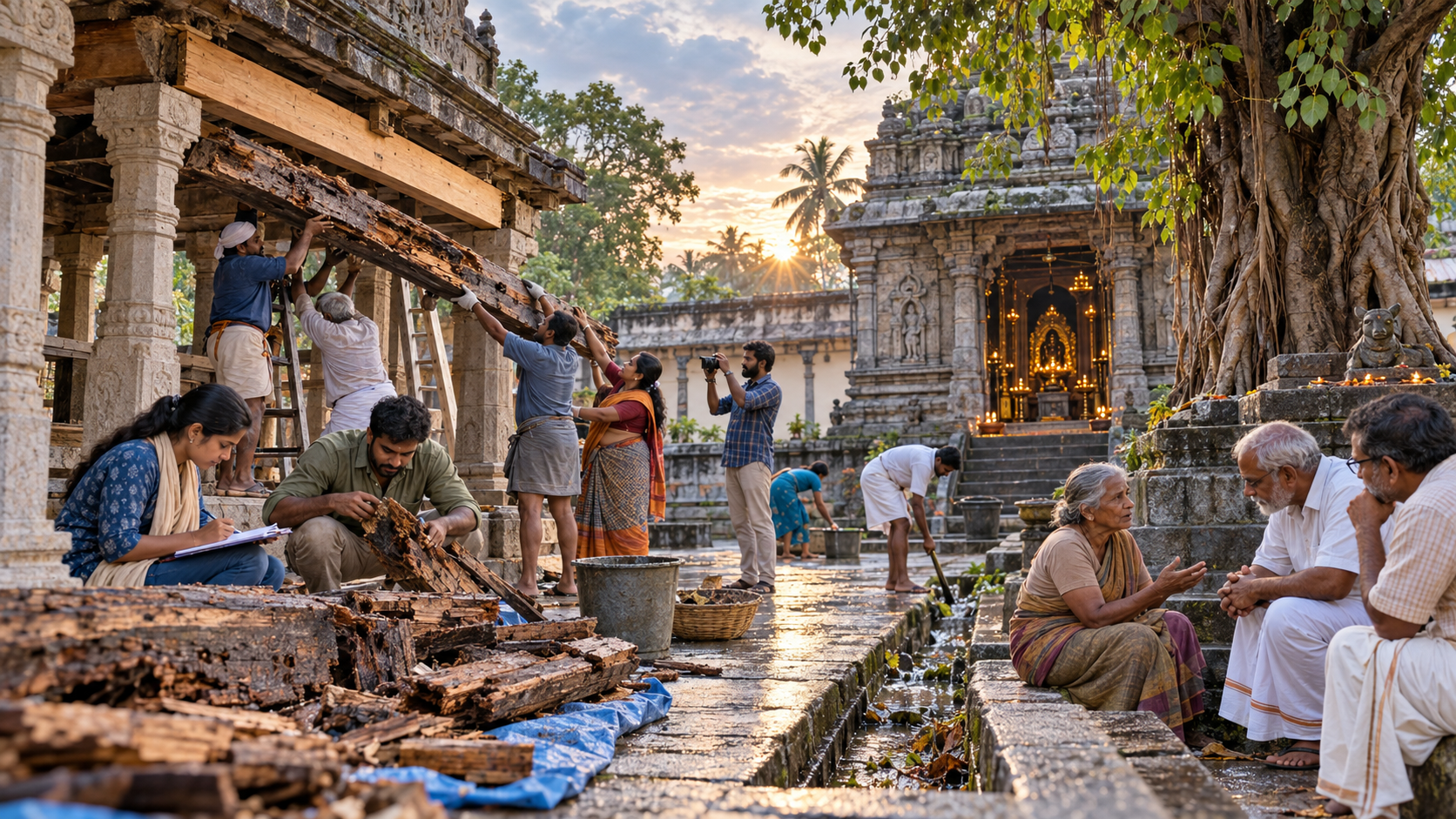
Condemning communism is not enough. Revolutionary movements become persuasive when defenders of an inherited order refuse to distinguish Dharma from abuses committed in its name. If a pro-Dharma politics appears indifferent to exploitation or humiliation, it gives its opponents control of the language of justice.
The stronger response is to make four distinctions in every dispute:
- Separate a Dharmic principle from a social arrangement that claims its protection.
- Separate a living tradition from the conduct of a particular institution or officeholder.
- Separate reform of a harmful practice from contempt for the people, texts, sacred sites, and memories around it.
- Separate respect for heritage from obedience to the state that chooses to sponsor it.
This approach gives you a workable position between two failures. You do not have to defend every custom against change. You also do not have to accept an ideological court in which the civilization itself is permanently accused and only its enemies may act as judges.
Preservation must also be concrete. Scriptures, commentaries, sacred sites, artistic objects, languages, teacher lineages, and monastic institutions can be damaged long before a government announces that a civilization has been abolished. The destruction of Qufu and religious institutions during the Cultural Revolution shows why archives, buildings, and communities of transmission are not ornamental concerns. Once continuity is broken, a later state-sponsored revival may restore the symbol without restoring the lost knowledge or authority.
Key takeaways
- Opposition to exploitation does not require hostility to an entire civilizational inheritance.
- China moved from violent iconoclasm to a selective Confucian rehabilitation without surrendering Party control over interpretation.
- Indian Marxism’s central civilizational failure was not criticism of injustice but its inability to translate reform into a credible Dharmic language.
- Temples, texts, symbols, and slogans do not prove reconciliation if independent teachers and institutions cannot question political power.
- The decisive question is not whether tradition is praised, but whether it remains free to preserve memory, shape conduct, and place moral limits on rulers.
The next time a political movement claims either to liberate tradition or to revive it, ask what exactly may survive, who may interpret it, and whether it can bind the powerful. A tradition permitted to decorate power but forbidden to correct it has not been reconciled with ideology. It has been domesticated.
References

Leave a Reply
You must be logged in to post a comment.