
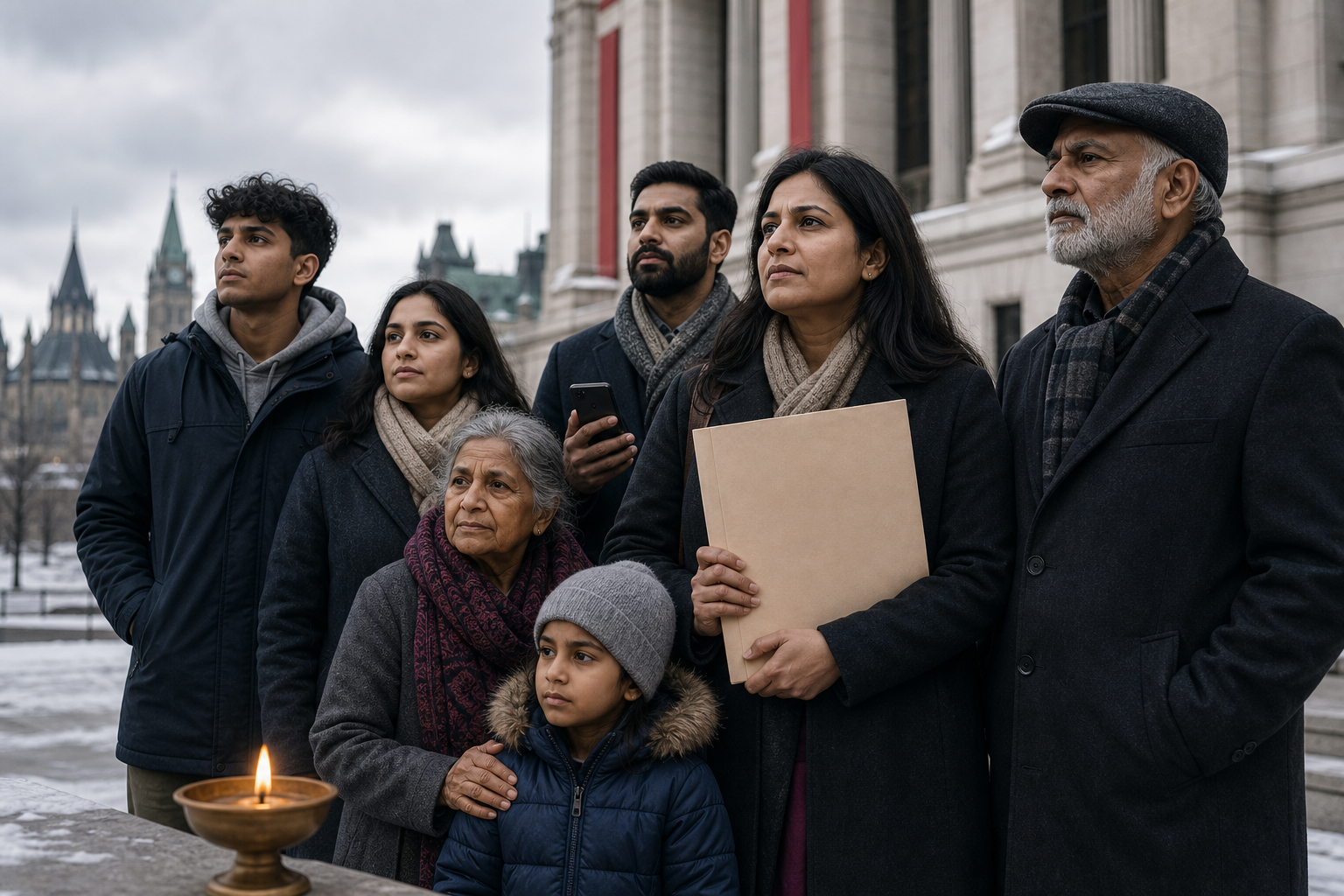
You may be wondering whether Canada’s new hate legislation finally gives Hindu Canadians a practical way to challenge threats, vandalism, intimidation, and other hostility directed at them because they are Hindu. The answer is qualified: Bill C-9 creates a stronger common framework, but it does not make protection automatic.
What matters now is how you describe an incident, preserve evidence, choose the right reporting channel, and press institutions to assess anti-Hindu motive as seriously as hostility toward any other faith. This guide shows you how to do that without exaggerating what the law promises.
Key takeaways
- Canada’s Combating Hate Act, Bill C-9, received Royal Assent on June 18, 2026, and came into force on July 18, 2026.
- The law establishes a common framework for religiously motivated hate crimes. It does not create a separate offence or protection named Hinduphobia.
- Anti-Hindu motive should be established through conduct, words, context, targeting, and evidence. The label alone will not carry a case.
- Criticism of Hinduism or Hindutva is not automatically anti-Hindu hate. Conversely, calling an incident political does not erase a threat or targeted attack on Hindus.
- Preserve original evidence before confronting an offender, reporting a post, or publishing details. Safety comes before documentation when danger is immediate.
- Community organizations should track patterns, assign clear case responsibilities, and ask institutions how anti-Hindu bias is recorded and escalated.
What Bill C-9 changes for Hindu Canadians

Canada’s Parliament passed the Combating Hate Act as Bill C-9. It received Royal Assent on June 18, 2026, and came into force one month later, on July 18, 2026. Those dates matter because an incident must be assessed under the law that applied when the conduct occurred.
The central change is not a Hindu-specific provision. Bill C-9 instead provides a shared legal framework for religiously motivated hate crimes. A Hindu temple, family, student, employee, or community group therefore does not have to wait for Parliament to create a separate statutory category called Hinduphobia before asking authorities to examine religious motive.
That religion-neutral design has a real advantage. It frames protection as an equal right rather than a competition among communities. The relevant question is whether people or property were targeted because of religion, not whether one faith has secured a more prominent political label than another.
There is also an important limit. A common framework does not mean every slur, offensive statement, theological dispute, or political argument meets a criminal threshold. Nor does enactment guarantee that police, prosecutors, schools, employers, or digital platforms will recognize anti-Hindu motive consistently. The law supplies a route; institutions and affected communities still have to use it accurately.
Keep three questions separate whenever an incident occurs: Was the conduct morally hateful? Did it violate the rules of a school, workplace, venue, or platform? Could it meet a criminal standard? The same facts can produce different answers in those three systems. A statement may be reprehensible without being criminal, while conduct falling short of a criminal case may still justify action under an employer’s safety policy or a platform’s rules.
If you need to know whether particular conduct meets a Canadian offence, seek advice from a Canadian lawyer or the appropriate police service. Do not treat a social-media verdict, even one supporting your position, as a substitute for an assessment of the current law and the complete facts.
Recognize anti-Hindu targeting without criminalizing disagreement

A credible report begins with what happened, not with the strongest available label. Start with the act: a threat, assault, damaged murti, defaced temple, disruption of worship, targeted harassment, discriminatory message, or coordinated online abuse. Then explain why you believe Hindu identity, practice, symbols, or association motivated it.
Use four questions to test the strength of that connection:
- What exactly was done or said? Record the words, action, medium, place, and time without paraphrasing more than necessary.
- Who or what was selected? Note whether the target was a Hindu person, temple, festival, organization, sacred image, or identifiable group.
- What indicates motive? Look for references to Hindu identity, repeated selection of Hindu targets, hostility toward Hindu practices, religious slurs, or the deliberate use of sacred occasions and symbols.
- What alternative explanation must be considered? Distinguish a dispute about a policy, organization, political movement, or individual from hostility toward Hindus as people.
The Hindutva label requires particular care. Anti-Hindu concerns have often been dismissed by recasting them as nothing more than arguments about Hindutva. That move can hide the target and the conduct. If a person threatens Hindu worshippers or attacks a temple, an ideological preface does not make the religious targeting irrelevant.
The reverse mistake is equally damaging. Opposition to Hindutva, criticism of an Indian government, disagreement with a Hindu organization, or rejection of a Hindu teaching is not automatically hatred of Hindus. Treating every disagreement as a hate crime weakens serious cases and invites institutions to dismiss the entire category.
A disciplined report can state both propositions: political and theological criticism must remain possible, and Hindu people must not be threatened, intimidated, or attacked under cover of that criticism. Focus on conduct, target, motive, and harm. This keeps the claim narrow enough to be tested and strong enough to survive scrutiny.
Build an incident record that institutions can act on
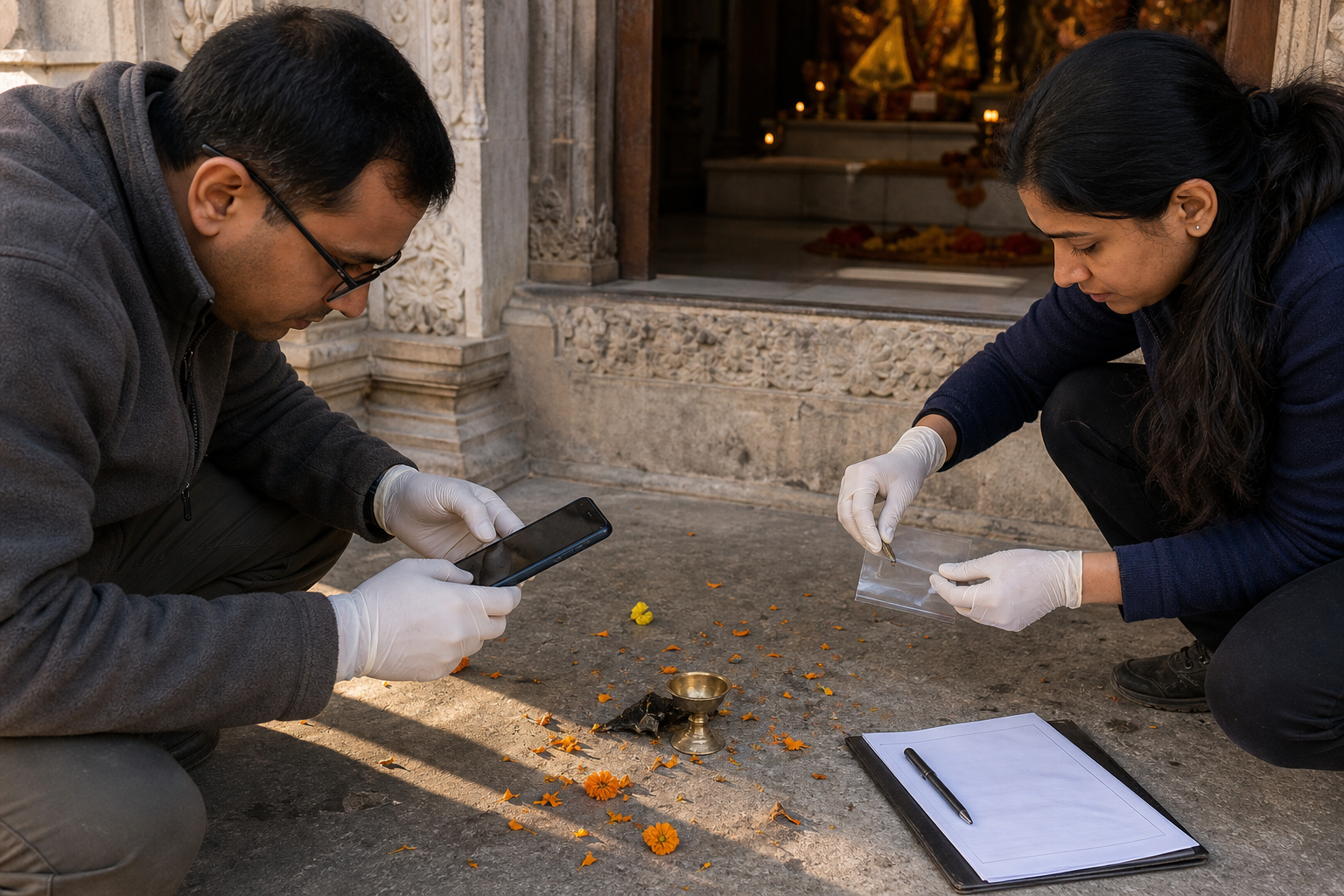
Evidence often disappears at the beginning of a case, not the end. A post is deleted, a wall is cleaned, witnesses leave, or a long online exchange is reduced to one ambiguous screenshot. Preserve the record before debating the offender or launching a public campaign, provided you can do so safely.
- Protect people first. Leave an unsafe location and contact emergency services when there is immediate danger. Do not remain near a threatening person merely to obtain better footage.
- Save the original material. Keep the unedited photograph, video, audio file, email, letter, or direct message. For online content, capture the full screen, account name, date, time, surrounding exchange, and URL. If the platform permits it, preserve a local copy before submitting a report that may remove the content.
- Write a factual chronology. Record when the incident began, what happened in sequence, who was present, what was said, and what followed. Separate what you directly observed from what another person told you.
- Identify witnesses. Ask whether they are willing to provide their own account. Do not coordinate wording. Independent descriptions are more useful than several identical statements drafted by one person.
- Explain the suspected motive. Point to the specific words, symbols, target selection, prior incidents, or surrounding circumstances that connect the conduct to Hindu identity. Avoid filling gaps with assumptions about the offender’s private beliefs.
- Keep a reporting log. Record the institution contacted, date, person or department, reference number, material submitted, promised next step, and follow-up date. Preserve every response, including a refusal to act.
Use a one-page incident summary at the front of the evidence file. It should contain the basic facts, immediate safety concerns, reason anti-Hindu motive is suspected, available evidence, witnesses, previous reports, and the action requested. Attach the detailed chronology and original files behind it. This makes the case easier to understand without stripping away context.
Choose the reporting channel by the conduct and the remedy you need:
- Immediate threat or violence: prioritize safety and contact emergency services or police. Tell them clearly if you believe religion influenced the selection of the target, and identify the evidence supporting that belief.
- Temple or event incident: preserve security footage, access records, photographs, damaged property, witness accounts, and any earlier related messages. Assign one person to liaise with authorities so information does not fragment.
- School or workplace conduct: use the relevant safety, harassment, discrimination, or conduct process. Ask for a reference number or written acknowledgment and retain material outside an account you could lose access to.
- Online abuse: preserve the content before using platform tools. If the material includes a credible threat, location information, or signs of an offline plan, do not assume a platform report is the only necessary step.
- Repeated or coordinated incidents: maintain a pattern log linking dates, targets, language, accounts, locations, and previous reports. Do not claim coordination unless the evidence supports it.
A police report, internal complaint, platform report, insurance claim, and request for legal advice serve different purposes. Filing one does not necessarily start the others. Track each route separately, keep the factual core consistent, and state the remedy you are requesting from that particular institution.
Be cautious about publishing accusations while a case is unresolved. Publicly sharing an unverified identity, home address, private communication, or claim of criminal guilt can expose victims and witnesses to further harm and create legal risk. A public statement should stick to verified facts, immediate safety information, the action already taken, and the institutional response being requested.
Turn a religion-neutral law into equal protection

Bill C-9 can become a useful model for confronting Hinduphobia precisely because it does not require Hindu Canadians to win a contest for exclusive protection. But a neutral rule can still be applied unevenly. Community advocacy should therefore concentrate on implementation that can be observed and tested.
A temple, cultural association, student group, or advocacy organization should put five basic systems in place before the next incident:
- A standard intake form covering conduct, target, suspected motive, safety concerns, evidence, witnesses, prior incidents, and reports already made.
- An evidence custodian responsible for retaining originals, restricting access to sensitive material, and ensuring that public communications use copies rather than altering evidence files.
- A case liaison who communicates with police, schools, employers, venues, insurers, or platforms and maintains the reporting log.
- An escalation map listing which channel handles immediate danger, property damage, workplace or school conduct, online threats, legal review, and public communication.
- An anonymized pattern register that records recurring targets, methods, locations, language, and institutional outcomes without needlessly exposing victims.
When engaging a public institution, ask concrete questions. Was suspected religious motive recorded? Which policy or legal threshold was applied? Was the incident referred to the unit or person responsible for hate-motivated conduct? What additional evidence is needed? When should the complainant expect a response? If no action is taken, record the explanation and the person who provided it.
Advocacy should also demand that anti-Hindu examples appear in staff training, incident classifications, victim-support practices, and public reporting. Hinduphobia does not have to be written into a separate criminal category for an institution to recognize how anti-Hindu hostility presents itself. Temples, murtis, festivals, clothing, names, community events, and public expressions of Hindu identity can all supply context when they are deliberately selected.
Use equal treatment as a diagnostic question, not as a slogan. Would the institution record the same threat if it named another religious community? Would comparable damage to another house of worship trigger the same response? Would officials still call the case merely political if the target were associated with a different faith? These comparisons do not prove a legal violation, but they can expose inconsistent procedures that require correction.
The immediate task is simple. Create the intake form, name the evidence custodian and case liaison, and write down the escalation routes before your organization needs them. Bill C-9 has opened a legal and civic route for challenging religiously motivated hate. Hindu Canadians will make that route meaningful through precise claims, preserved evidence, disciplined follow-up, and an insistence that equal protection include them in practice.
References
