
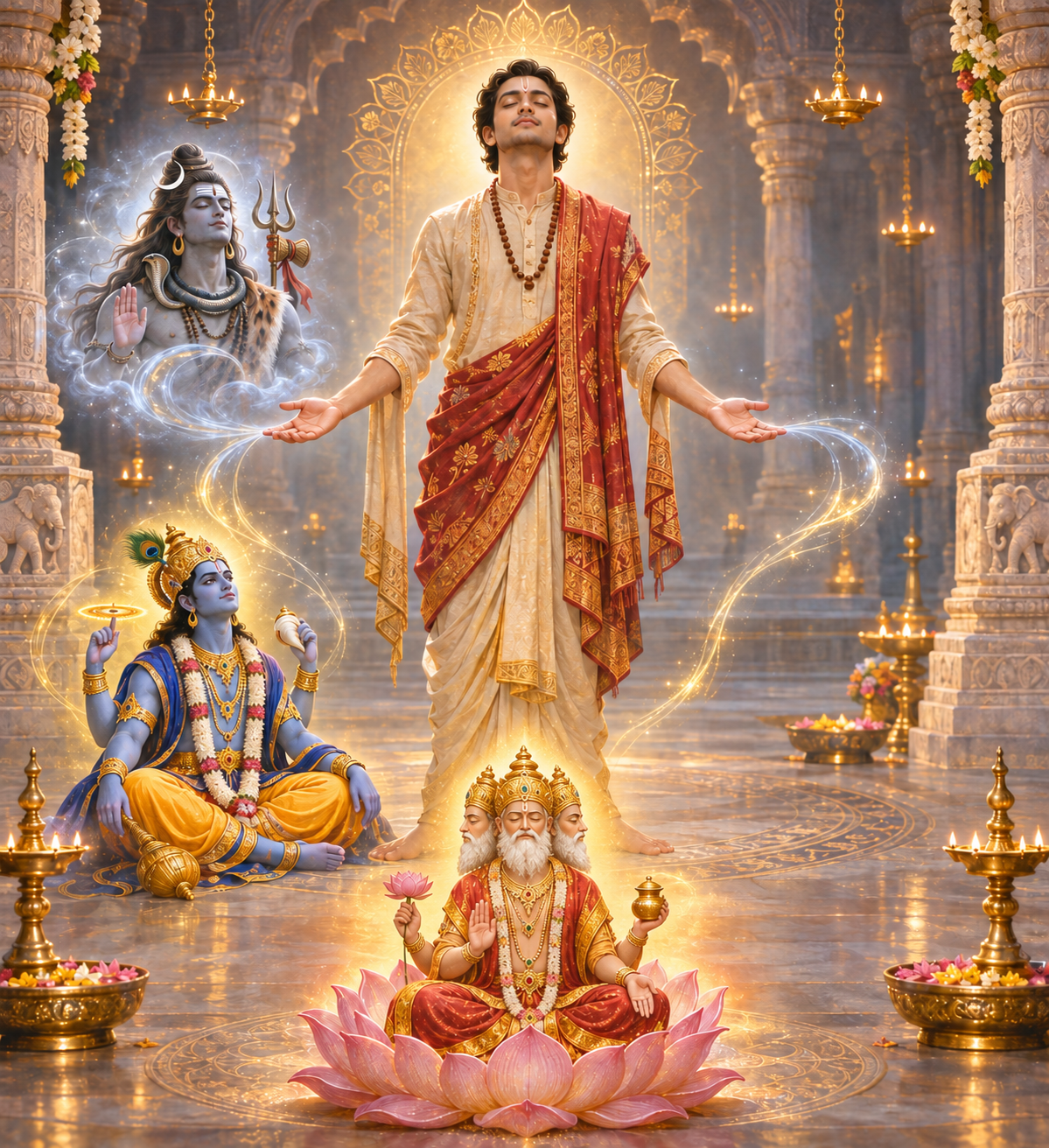
If you have encountered a Sanskrit invocation assigning Brahma to the generative organs, Vishnu to the feet, and Hara to the hands, you may wonder whether Hindu tradition is presenting a literal anatomy of the gods. The more useful reading is subtler: the body is being approached as a sacred field of creation, movement, and action.
This distinction matters when you use such verses in worship or contemplation. The associations are not labels to memorise in isolation. They train you to see ordinary bodily capacities as places where divine order can be remembered and ethical responsibility can begin.
A sacred map, not a claim about physical anatomy
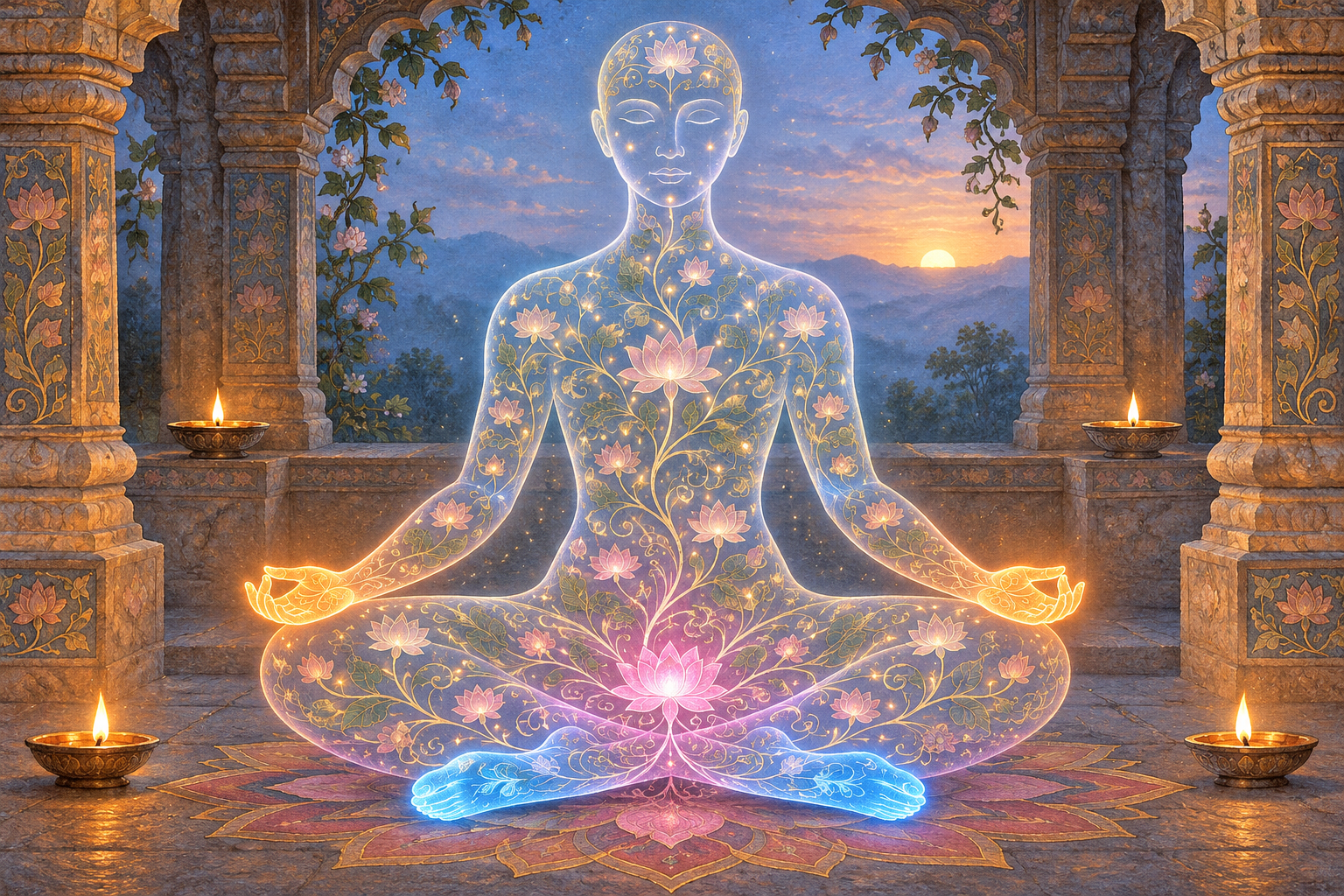
When a Deva is associated with a part of the body, the statement operates in a ritual and contemplative register. It does not mean that a physical examination would discover a deity inside an organ. Nor does it confine an all-pervading divine presence to one location.
The body instead becomes a map of meaningful powers. Generation, locomotion, touch, work, speech, perception, and thought are not treated as spiritually neutral mechanisms. They are capacities to be received with gratitude, governed with discipline, and directed toward dharma.
This is also why the word “associated” is safer than “owned.” Saying that a Deva is present in a bodily location identifies a relationship for contemplation; it need not establish an exclusive jurisdiction. Hindu traditions contain many ritual settings, theological schools, and symbolic systems, so one set of correspondences should not automatically be treated as the only possible map.
If you meet a longer body invocation elsewhere, read it within its own liturgical setting. Do not assemble stray lines from different traditions and present the result as a single universal chart. Begin with the correspondences actually given, then ask what conduct they invite from you.
The three explicit body-deity associations
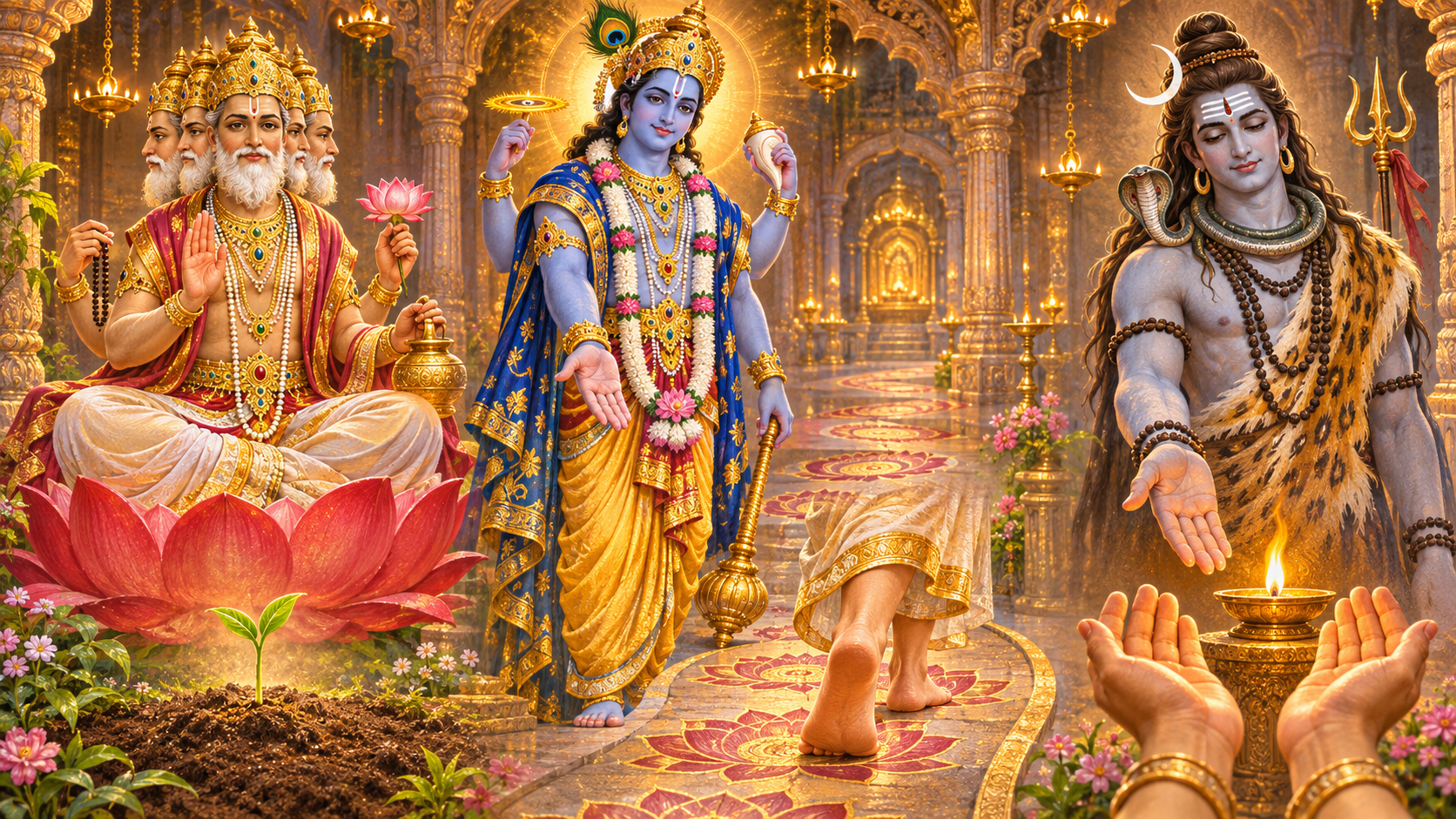
Three concise formulas provide a clear starting point: Brahma is placed at the seat of procreation, Vishnu at the feet, and Hara at the hands. Each line joins a bodily capacity to a divine name.
| Body location | Deity | Formula | Immediate meaning |
|---|---|---|---|
| Generative organs | Brahma | Prajanane Brahma tishtatu | May Brahma be present at the seat of procreation. |
| Feet | Vishnu | Padayo Vishnu tishtatu | May Vishnu be present in the feet. |
| Hands | Hara | Hastayo Hara tishtatu | May Hara be present in the hands. |
Hara here is a form or name of Shiva. The repeated pattern is as important as the individual names: a bodily location is named, a Deva is invoked, and presence is affirmed or requested. The practitioner is therefore not merely being told what the body means. The practitioner is being asked to recollect the divine while inhabiting and using that body.
What the three associations ask you to notice
Brahma and the power of generation
Brahma is associated with creation, so placing Brahma at the seat of procreation makes the generative capacity spiritually significant. The point is not permission to romanticise every impulse. It is almost the reverse: a power connected with creation should not be treated carelessly, coercively, or as a mere instrument of appetite.
For a householder, this association can bring dignity and responsibility into reflection on sexuality, fertility, parenthood, and lineage. For any practitioner, it can also prompt a broader question: what are you bringing into the world through your choices? That broader application is a contemplative extension, not a replacement for the bodily meaning of the line.
Vishnu and the feet
The feet support the body and carry it from one place to another. Remembering Vishnu in the feet can therefore change how you think about movement: where are you going, what path are you following, and what do your journeys sustain?
Use this association before walking into a temple, beginning a pilgrimage, leaving home for work, or entering a situation in which your conduct matters. The practical question is not merely whether your destination is desirable. It is whether the way you travel toward it preserves dignity, duty, and right relationship.
Hara and the hands
Hands turn intention into deed. They can serve, build, give, protect, restrain, injure, or take what has not been given. Invoking Hara in the hands places action under sacred scrutiny before it becomes irreversible.
This makes the association immediately usable. Before beginning work, offering puja, preparing food, caring for another person, handling money, or sending a consequential message, pause at the hands. Ask whether the action is clean in purpose, proportionate in method, and compatible with dharma. The sacred association becomes meaningful when it changes what the hands actually do.
How to practise without claiming more than the formulas say
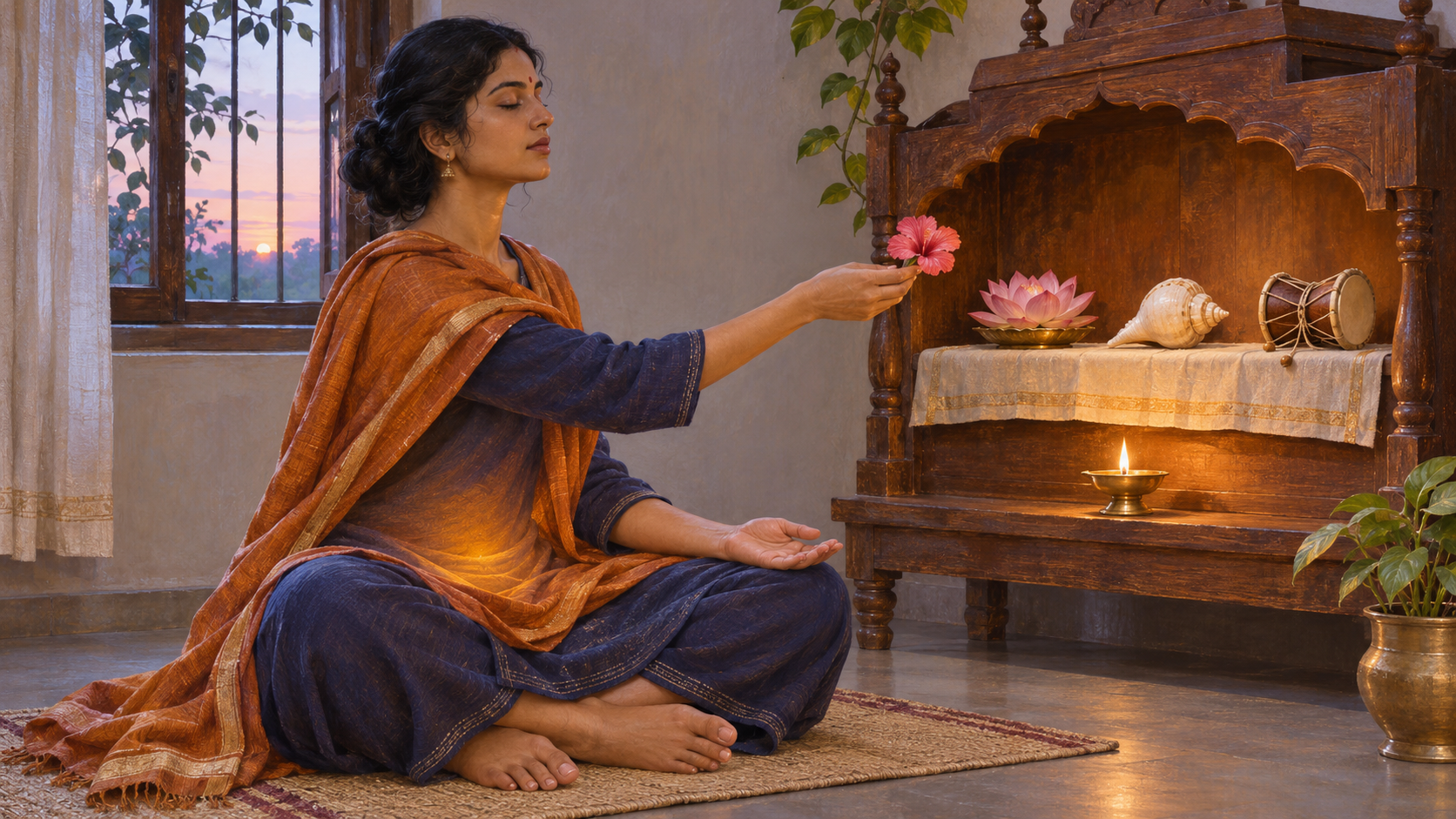
You do not need to construct an elaborate ritual around these lines. A short body recollection can be added to prayer, meditation, or the beginning of daily work. If you belong to a lineage with an established nyasa or body-invocation practice, follow that lineage’s instructions rather than replacing them with an improvised system.
- Become still. Sit or stand with attention on the body as it is. The aim is recollection, not a dramatic sensation.
- Attend to generation. Recite or remember “Prajanane Brahma tishtatu.” Acknowledge the power to generate life and consequences. Resolve not to use that power without responsibility.
- Attend to the feet. Recite or remember “Padayo Vishnu tishtatu.” Consider the path you are taking that day and whether it supports dharmic conduct.
- Attend to the hands. Recite or remember “Hastayo Hara tishtatu.” Bring to mind the work, service, exchange, or difficult action immediately ahead of you.
- End with one concrete restraint or offering. Choose something observable: walk away from a harmful setting, complete a neglected duty, give help, handle another person’s property carefully, or refrain from an action you know is wrong.
Keep the practice anchored to conduct. Chasing unusual bodily feelings can distract from its clearest purpose. A calm recollection followed by one honest action is more useful than an elaborate claim about energies or experiences not contained in the invocation.
Also avoid turning the correspondences into medical claims. These are sacred and symbolic associations, not diagnoses of organs or substitutes for healthcare. Their domain is worship, contemplation, and the moral use of embodied capacities.
Key takeaways
- Body-deity correspondences are best read as ritual and contemplative relationships, not physical anatomy.
- Brahma is associated with the generative organs, Vishnu with the feet, and Hara, a form of Shiva, with the hands.
- The associations direct attention to three powers: bringing forth, following a path, and turning intention into action.
- A Deva’s presence in one bodily location does not necessarily mean exclusive ownership of that location.
- The safest practical use is brief recollection followed by a specific dharmic choice.
- Established lineage practices should be learned in their own context rather than reconstructed from isolated correspondences.
Begin with the part of the body involved in your next consequential act. Remember the corresponding Deva, then let that remembrance govern the choice in front of you. That is where a sacred map of the body stops being information and becomes sadhana.
References

Leave a Reply
You must be logged in to post a comment.