
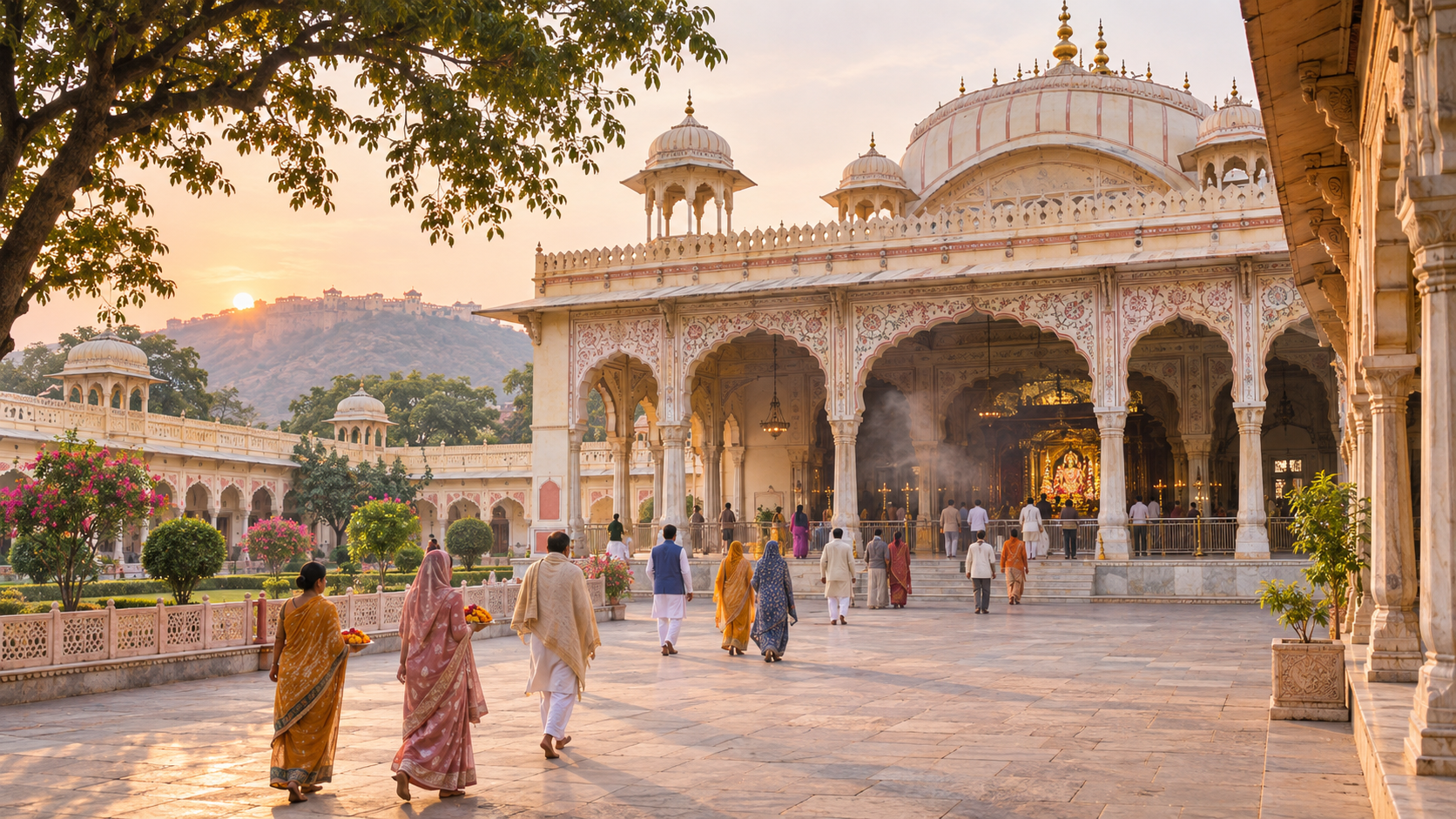
If Govind Dev Ji is on your Jaipur itinerary, decide before you arrive what kind of visit you intend to make. You can pass through as a sightseer, or you can approach the temple as a meeting with Krishna. The second choice does not require expert knowledge, elaborate ritual, or a Hindu upbringing. It requires attention.
That distinction matters because a temple within a palace complex can easily become one more stop on a heritage circuit. Slow down enough to recognise the sacred purpose of the place, and the visit becomes more than architecture, photography, or a name checked off a list.
Know whom you are coming to meet
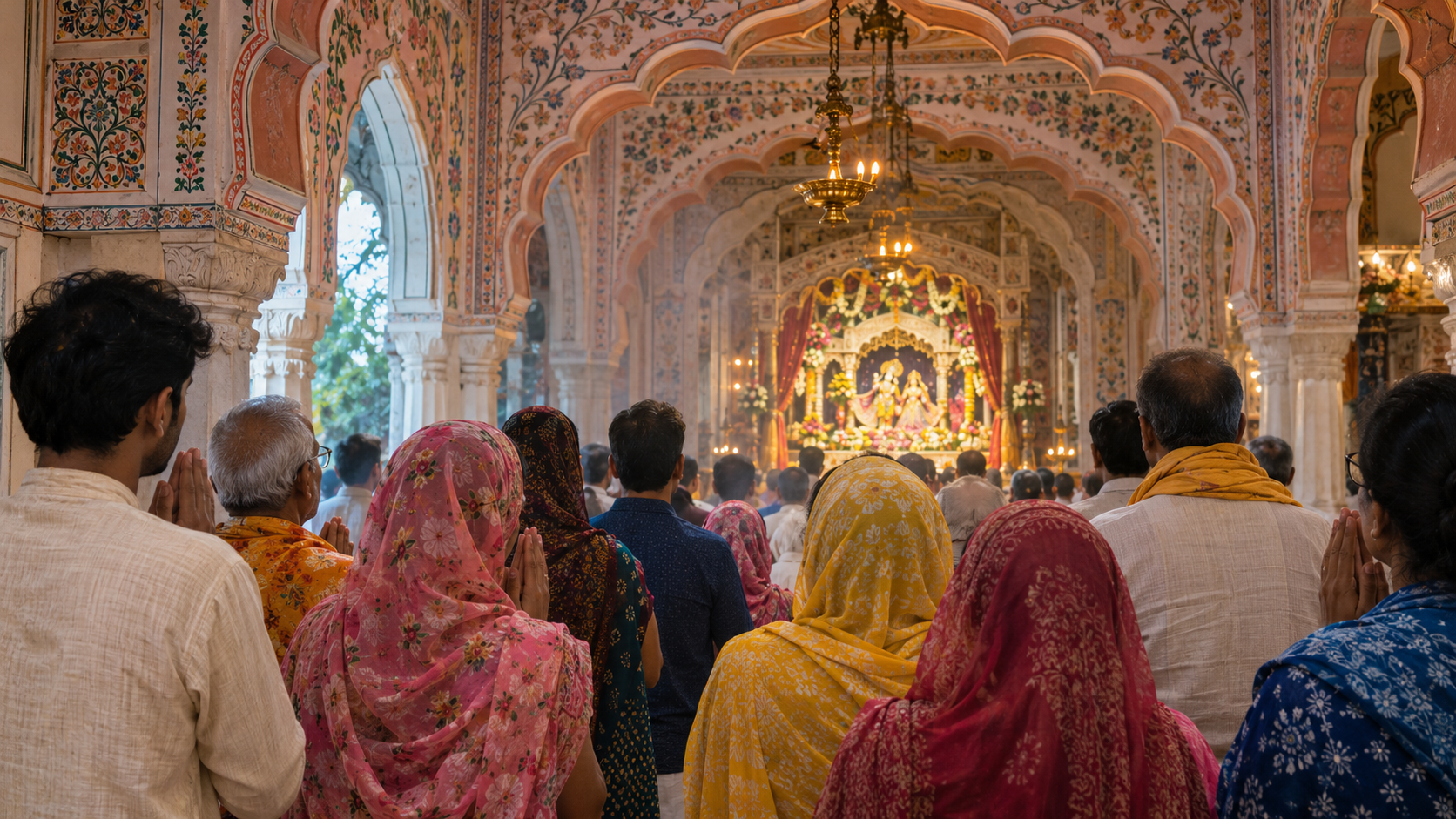
Govind Dev Ji is Lord Krishna. Krishna is remembered through many names, and Govind is one of the names through which devotees address and contemplate him. The honorific “Ji” adds reverence; it is worth retaining when you speak about the deity rather than shortening the name merely for convenience.
This is a simple point, but it prevents a common misunderstanding. Govind is not a different deity competing with Krishna. The temple is dedicated to Lord Krishna in the form and name of Govind Dev Ji. In bhakti, a divine name is more than an identification label. It gives the mind a form of remembrance and the heart a way to address the divine personally.
Before entering, choose one clear intention. You might offer gratitude, place a worry before Krishna, pray for another person, or simply ask for steadiness. If no particular prayer comes to you, silently repeat “Govind” and offer namaskar. A modest, sincere intention is more useful than imitating a ritual you do not understand.
If you are visiting with children or friends who know little about the temple, explain this before reaching the entrance: “We are going to see Krishna as Govind Dev Ji.” That single sentence gives the visit a centre. It also helps everyone understand why the conduct expected inside differs from the behaviour appropriate in a museum or palace gallery.
Read the City Palace setting correctly
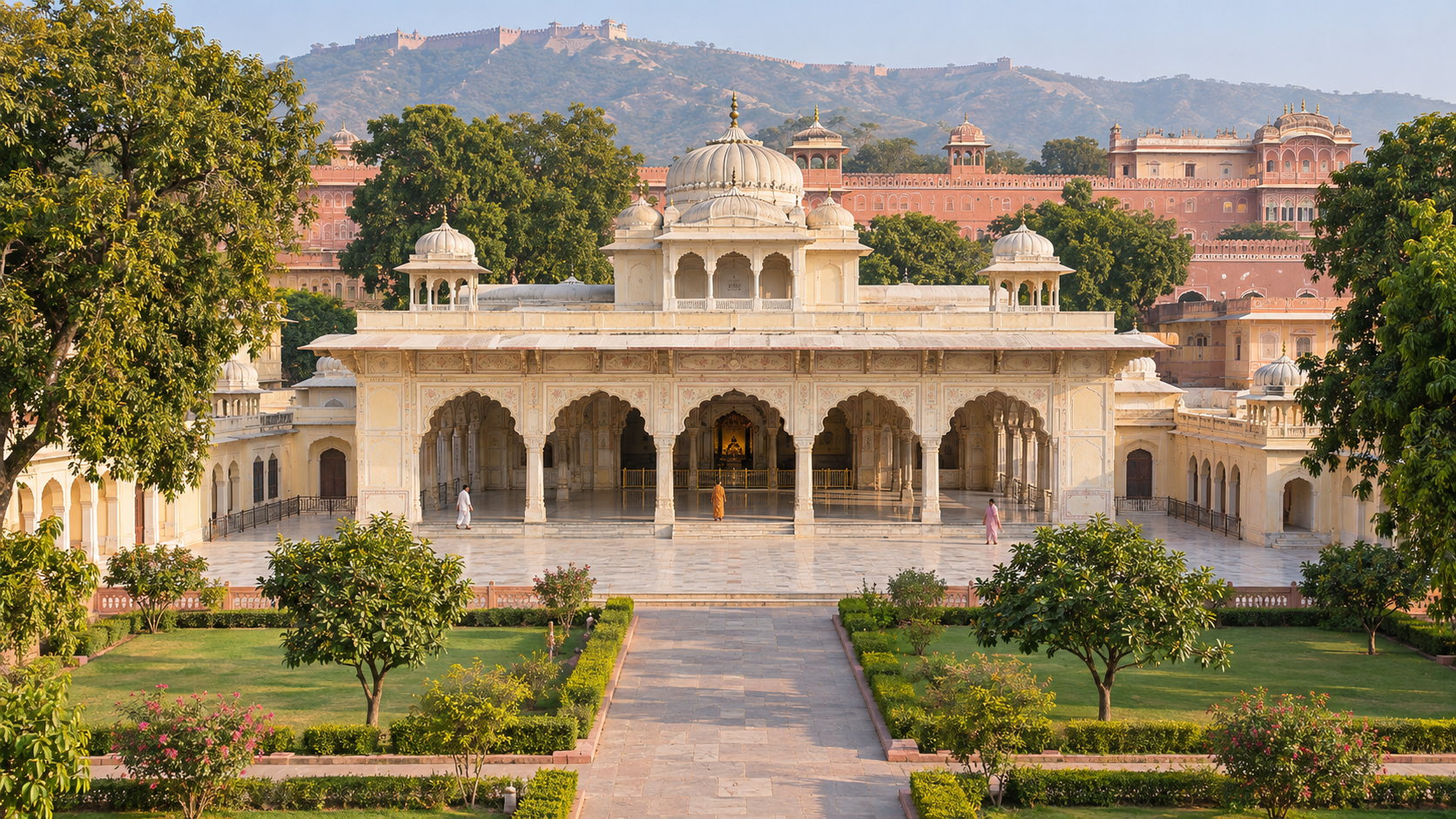
Govind Dev Ji Temple is situated in the City Palace Complex of Jaipur, Rajasthan. Its location brings sacred, royal, architectural, and urban space unusually close together. That setting is part of what makes the temple memorable, but it can also produce a category error: visitors may treat a living place of devotion as though it were merely another historical room.
You do not need to ignore the surroundings. Notice how the temple sits within the larger complex and consider what it means for worship to occupy such a prominent setting. Just keep the order clear. The palace context helps you understand where you are; Krishna explains why the temple is there.
Make a conscious transition at the temple threshold. Finish unrelated conversation, silence your phone, and stop planning the next attraction. Look for the behaviour of regular worshippers and follow the instructions given by temple attendants. These small changes turn physical arrival into devotional arrival.
Avoid making historical claims from the setting alone. A location can show that sacred and royal spaces were closely placed without proving every story told about their relationship. If you want detailed information about rulers, construction, patronage, or the movement of the deity, seek evidence specifically addressing those questions. Reverence does not require repeating an uncertain story as fact.
Make darshan, not documentation, the centre
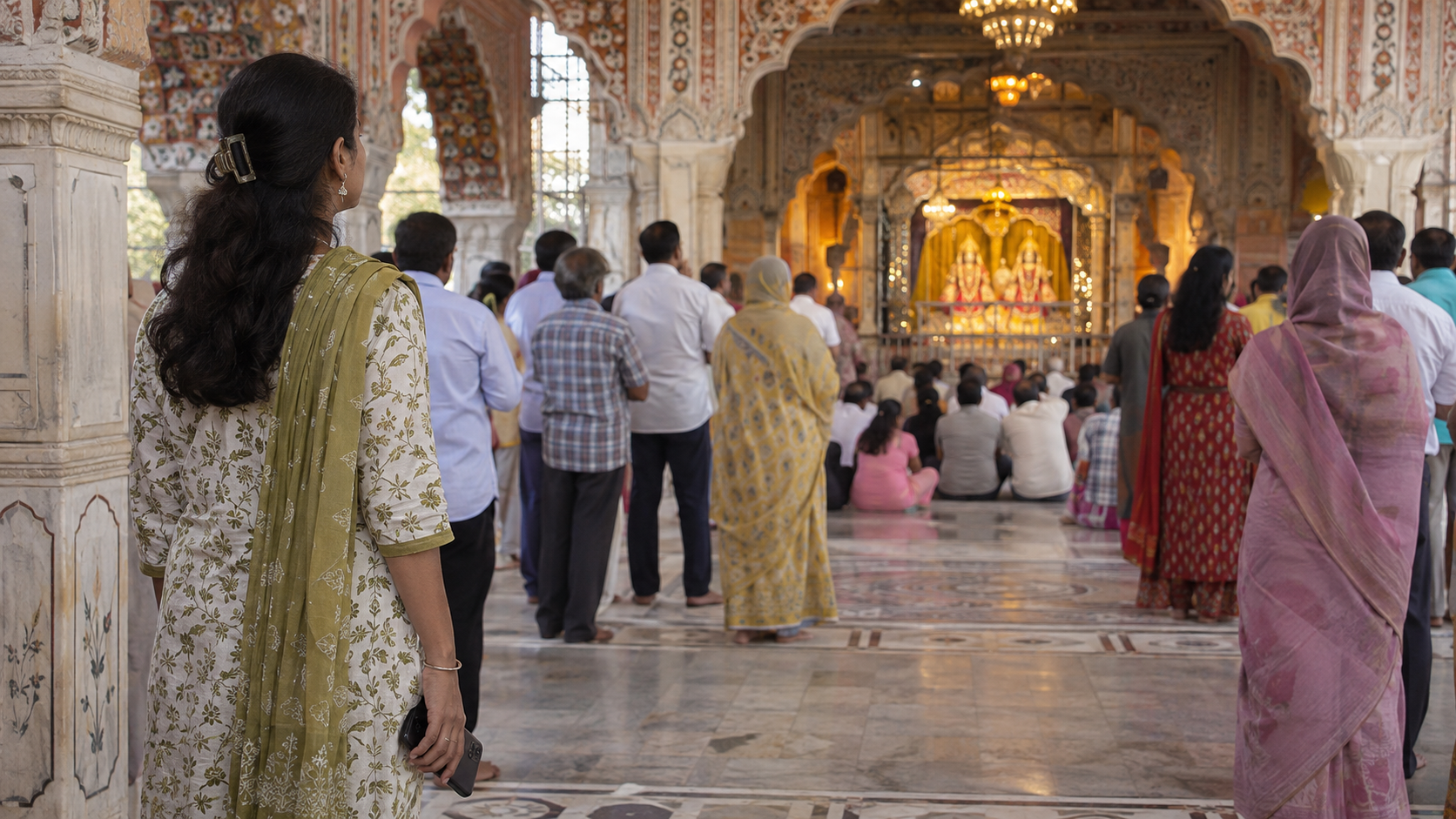
Darshan is often translated as “seeing,” but the English word can sound too passive. In temple practice, darshan is a devotional encounter: you behold the divine and place yourself before the divine gaze. That is why a short, attentive moment can carry more meaning than a long visit spent managing a camera.
Use this sequence when you visit:
- Verify the current darshan, entry, and aarti arrangements shortly before going. Temple routines and access conditions can change, so rely on current notices or people responsible for the premises rather than an undated timetable.
- Prepare before joining the flow of devotees. Silence the phone, secure loose belongings, and remove footwear wherever the local arrangement directs you to do so.
- Follow the queue and the instructions of attendants. Do not push forward or stop in a place that prevents others from receiving darshan.
- When Govind Dev Ji becomes visible, look first without a screen between you and the deity. Recall the intention you chose before entering, repeat the divine name, or offer a silent prayer.
- Move onward when required. Darshan is not diminished because the visible moment is brief; its depth depends on the quality of your attention, not on occupying the front for as long as possible.
- If prasad is offered, receive it respectfully and follow the local practice. Do not assume that every visitor must perform every gesture or make every offering.
If you hope to attend aarti, treat the timing as something to confirm rather than guess. Arriving for a ritual and arriving for ordinary darshan may involve different levels of movement and crowding. Knowing which experience you want allows you to plan your visit around worship instead of trying to squeeze worship into a sightseeing schedule.
You may see devotees who know the prayers, gestures, and rhythm of the temple intimately. There is no need to mimic them. Stand attentively, keep the line moving, and offer a sincere namaskar. Honest simplicity is better than a performance assembled from fragments.
Let your etiquette protect other people’s worship
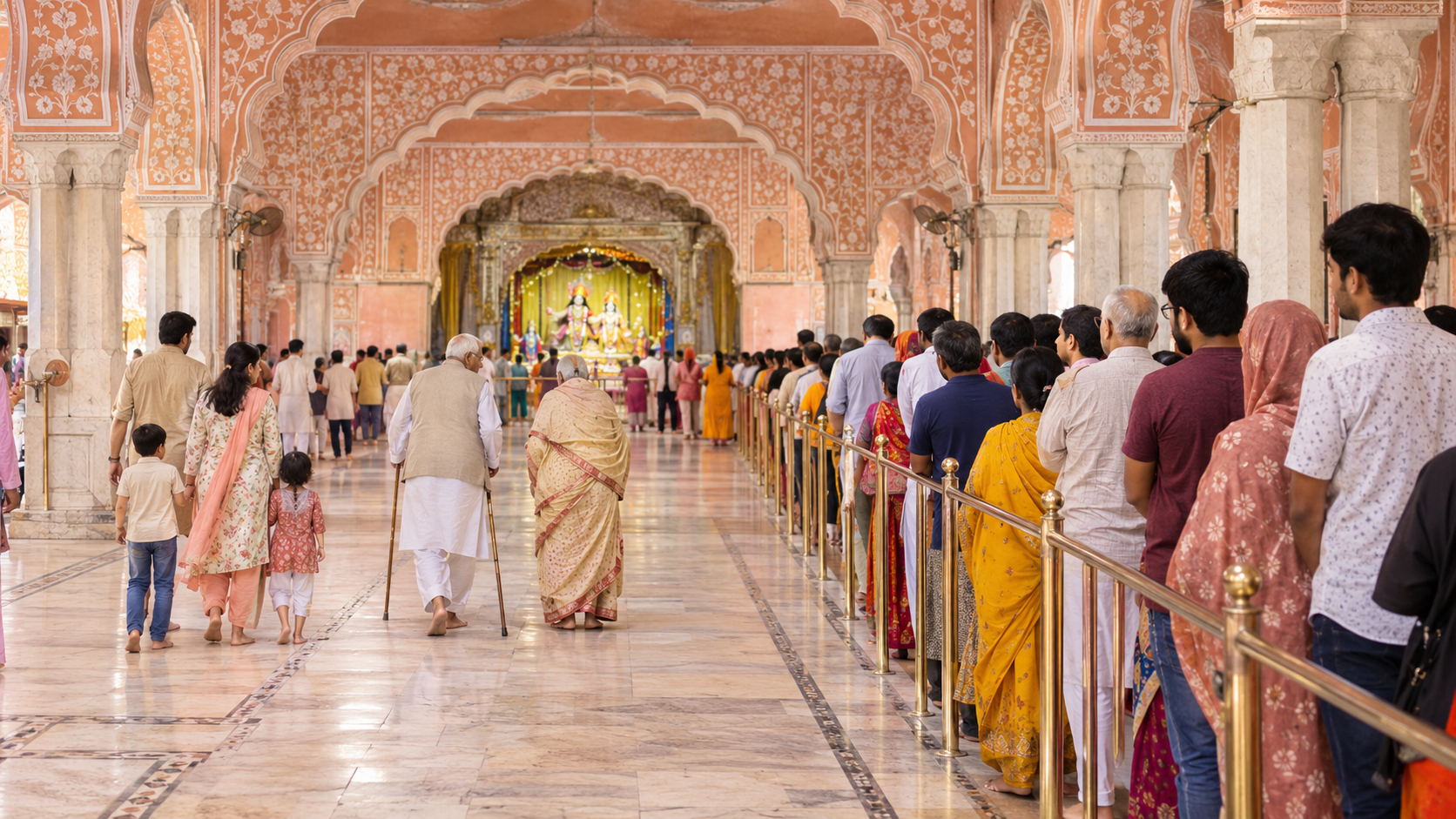
Temple etiquette is not mainly about appearing respectable. Its purpose is to keep your visit from intruding upon someone else’s prayer. The most reliable rule is to observe local directions rather than assuming that a practice seen at another temple applies here.
- Footwear: Remove or deposit it only in the place indicated. Do not leave it where it obstructs an entrance or passage.
- Photography: Treat photographs and video as permissions, not entitlements. Follow signs and staff directions. Even where a device is allowed, do not block the line, photograph worshippers intrusively, or let recording replace darshan.
- Speech: Keep conversations low and relevant. Move social calls and itinerary discussions outside the worship space.
- Offerings: Do not improvise. If you wish to make an offering and do not know the local procedure, ask an attendant before purchasing or presenting anything.
- Queues: Hold your place without crowding the person ahead. Allow elderly devotees, families, and people with mobility needs the room they require.
- Entry questions: If you are uncertain about visitor eligibility, security rules, accessible routes, or where a companion should wait, ask before entering rather than relying on an assumption.
- Dress: Choose clean, modest clothing suitable for worship and comply with any instructions displayed at the temple.
These choices are especially important if you are travelling in a group. Agree beforehand that no one will hold up the queue for a photograph, conduct commentary during prayer, or pressure another person to copy unfamiliar rituals. A group that establishes its expectations outside is far less likely to disrupt the space inside.
Key takeaways for a meaningful visit
- Approach Govind Dev Ji as Krishna, not as an unfamiliar deity whose name merely resembles Krishna’s.
- Let the City Palace location deepen your curiosity, but remember that the temple’s primary purpose is worship.
- Choose a prayer or intention before entering so that the moment of darshan has a clear devotional focus.
- Confirm current entry, darshan, and aarti arrangements instead of building your plans around an undated online schedule.
- Follow local instructions on footwear, photography, offerings, and movement; customs from another temple may not apply.
- Measure the visit by the attention you offer, not by the number of photographs you take or the length of time you remain at the front.
Before setting out, write your intention in one sentence and verify the practical arrangements for the time you plan to go. At the temple, give your first unobstructed sight to Govind Dev Ji rather than to your camera. When you leave, carry the name “Govind” into the rest of your day. That simple continuity can turn a stop in Jaipur into an act of remembrance.
References

Leave a Reply
You must be logged in to post a comment.