

You may have encountered the idea that Shiva prefers raw milk while Krishna delights in butter and wondered why two forms of the divine are associated with foods that come from the same place. The useful question is not which food is holier. It is what each state of the food asks you to notice about your own way of living.
Read carefully, the pairing offers two complementary disciplines. Shiva points you toward reality before you decorate it. Krishna shows you how patient effort can transform that reality into something nourishing, shareable, and delightful. You need both movements, but not always at the same moment.
The decisive difference is transformation
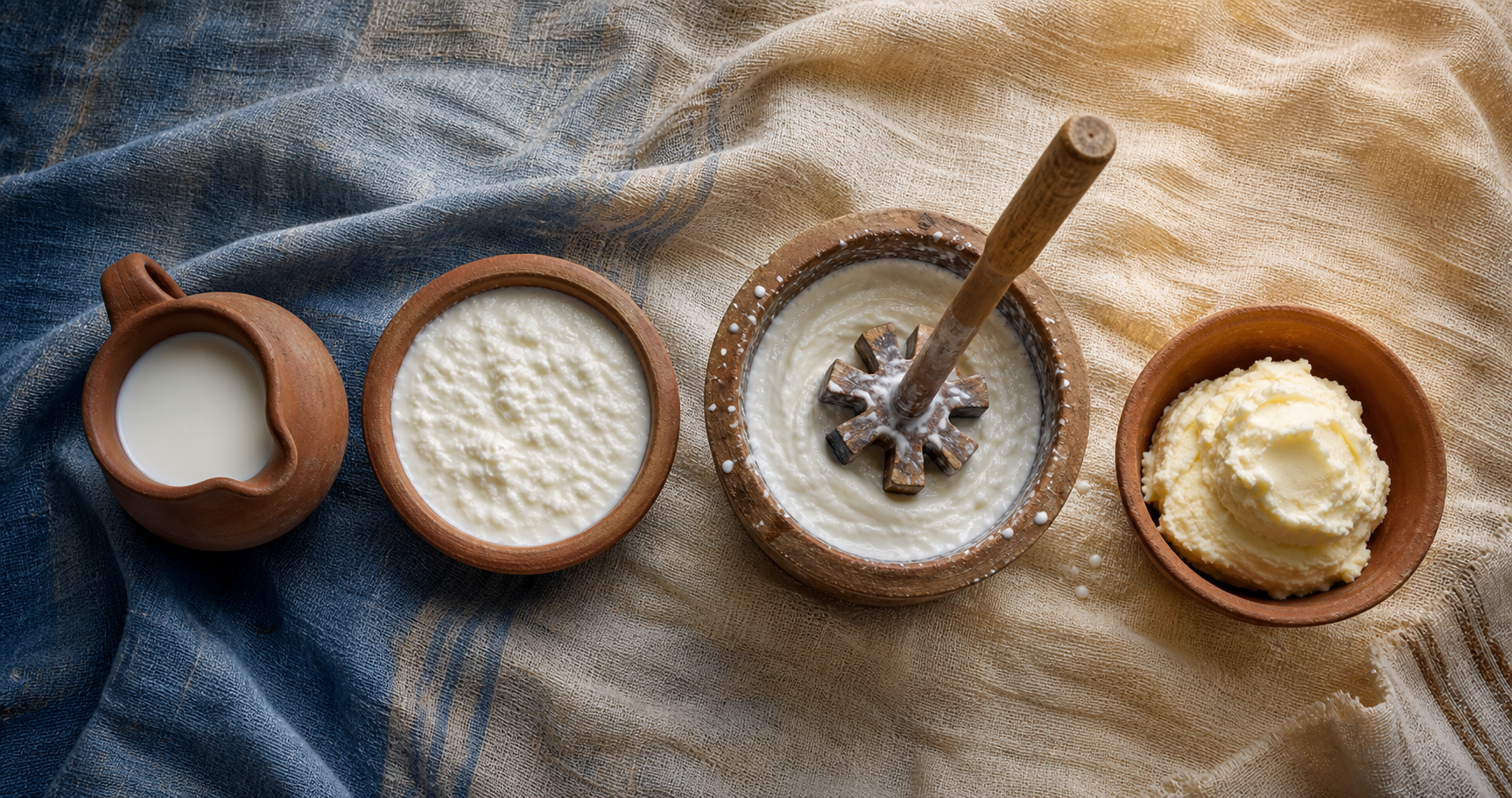
The symbolism begins with one material in two states. Fresh milk is direct and unaltered, while butter has been worked upon through churning and given a different texture, taste, and use. Milk presents itself close to its original condition. Butter carries the history of effort.
That difference gives us a practical spiritual vocabulary. Milk can represent what is present before the mind explains, improves, disguises, or repackages it. Butter can represent what emerges when attention and repeated work draw a new form from the same underlying reality.
Do not turn this contrast into a ranking. Raw does not automatically mean spiritually superior, and transformed does not mean artificial. If unworked simplicity were the only ideal, butter would have nothing to teach. If refinement were always better, milk would merely be unfinished. The pairing matters because directness and transformation correct different human errors.
Raw also has a symbolic meaning here, not a dietary command. You do not need to consume unprocessed milk to understand the image, and the metaphor should not be used to override ordinary food-safety judgment or the practices of your household and tradition.
Shiva’s milk asks you to meet the unedited fact
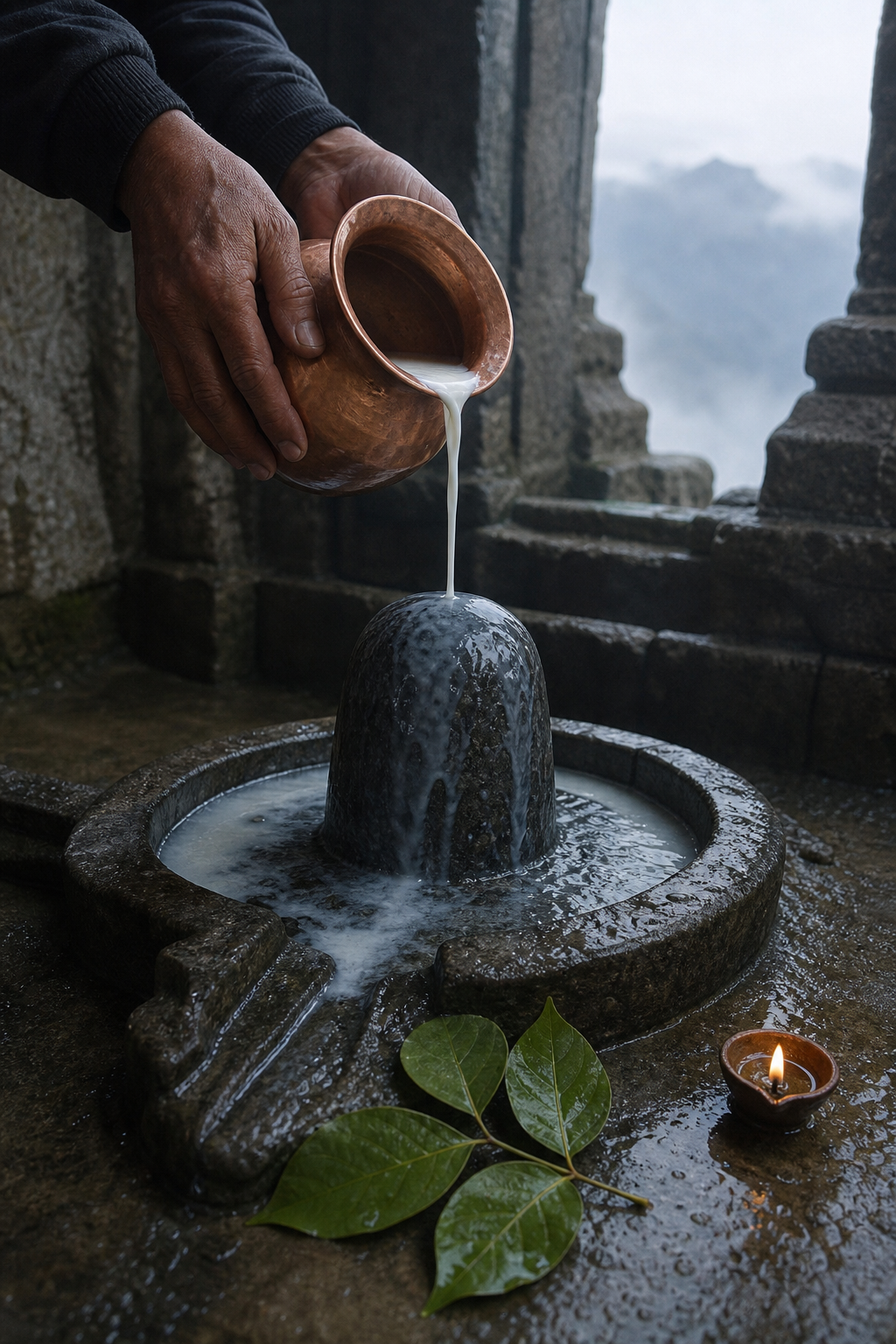
When your mind is crowded, another explanation can become a way of avoiding what is already clear. Shiva’s side of the symbolism calls you back to the condition before that mental churning begins. What happened? What is present? What remains when motive, reputation, preference, and fear are temporarily set aside?
You can use this as a three-part practice. First, describe the situation in one sentence without an adjective or a claim about another person’s motives. Say, for example, that a promise was not kept, a task remains incomplete, or a conversation is being avoided. Second, notice the explanation you immediately add to make that fact easier to bear. Third, choose the smallest honest response that the bare fact requires.
This is not emotional coldness. Direct seeing can prevent emotion from being recruited into a false story. Nor is it passivity. If the unedited fact is that harm was done, simplicity requires acknowledgment rather than a polished excuse. If the fact is that you do not know, it requires inquiry rather than borrowed certainty.
The Shiva movement is especially useful when refinement has become performance. You may be producing graceful language, sophisticated arguments, or elaborate spiritual explanations while concealing a simple attachment or fear. In that moment, remove rather than add. Return to what you can say truthfully without ornament.
Yet simplicity has its own counterfeit. Refusing to learn, repair, communicate, or practise is not purity merely because it involves less effort. When rawness becomes an excuse for inertia, you have reached the limit of the milk symbol. Krishna’s butter supplies the necessary correction.
Krishna’s butter asks what disciplined effort can reveal

Butter does not arrive by leaving milk untouched. Churning changes its form. Within this symbolic reading, Krishna represents an affirmative engagement with life: reality can be worked upon without being betrayed, and disciplined effort can bring out qualities that were present only as possibility.
This matters whenever you are tempted to call your first impulse authentic and therefore sufficient. A sincere intention is still not a completed duty. Affection must be given a dependable form if it is to become care. Understanding must be expressed clearly if it is to become teaching. Ability must undergo practice if it is to become a craft. The churning is not separate from the result; it is what makes the result possible.
To apply the butter symbol, start with one real condition rather than an idealised version of yourself. Name the form it needs to take, then identify the repeated action that could produce that form. If you value a relationship, the action may be an overdue conversation followed by reliable conduct. If you hold a conviction, it may be study followed by service. If you have a skill, it may be regular practice rather than another declaration of potential.
Churning is not the same as decorating. Good transformation remains answerable to its starting material. If your refinement makes something more attractive only by hiding what is true, you have produced a disguise, not butter. Krishna’s sweetness does not require falsification; it requires the patient conversion of possibility into lived form.
This path also has a counterfeit. Endless improvement can become another performance, especially when you postpone honesty until you imagine yourself perfectly prepared. When effort loses contact with the original truth, stop churning and return to Shiva’s directness.
Use the two symbols as a decision test
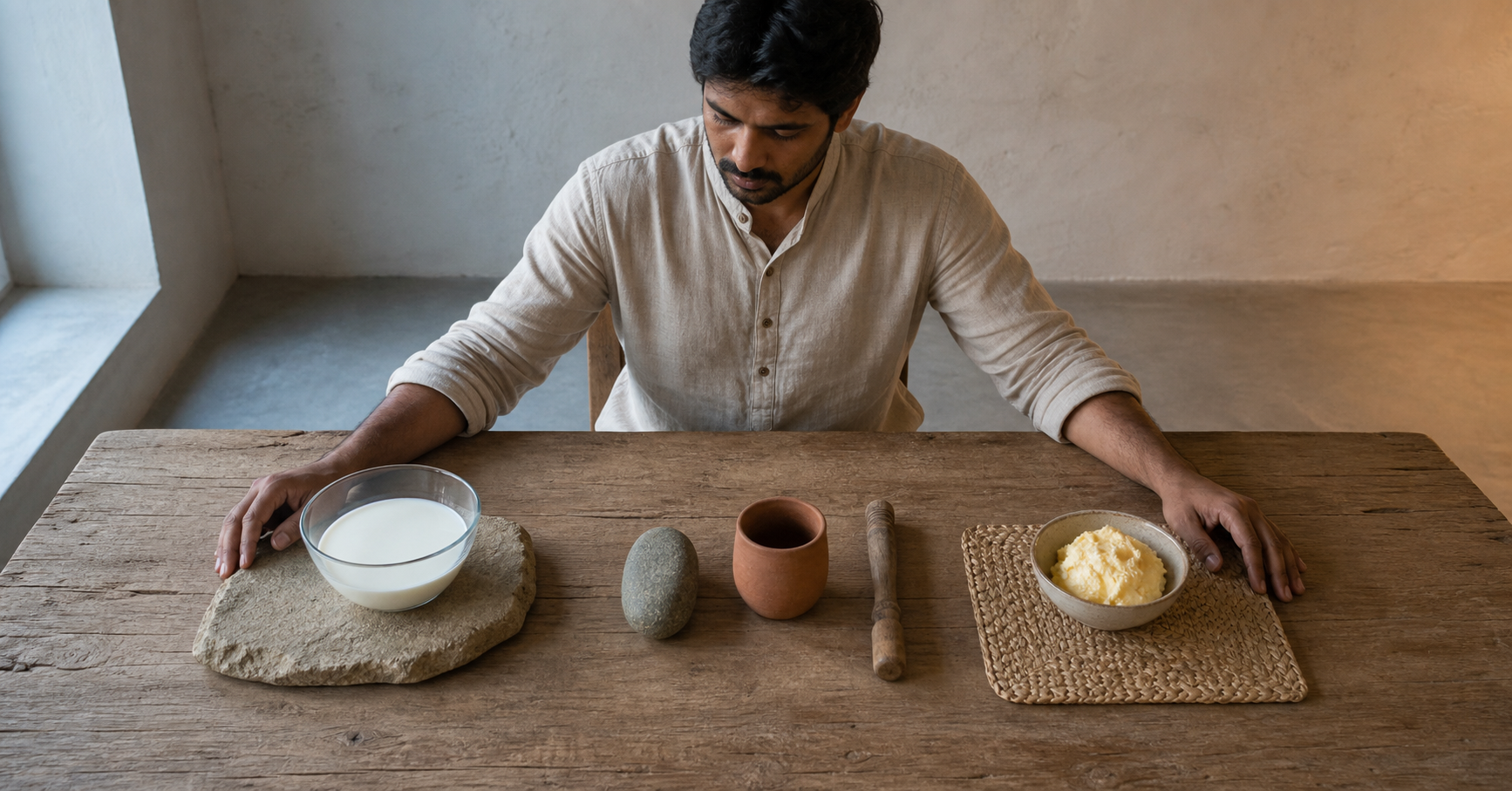
You do not have to label yourself a Shiva-oriented or Krishna-oriented person. The more useful question is which correction the present situation needs. One unresolved matter may require radical simplicity today and sustained cultivation tomorrow.
| Question to ask | Needed movement | Concrete response |
|---|---|---|
| Am I decorating a fact because I do not want to face it? | Shiva: return to the raw | State what happened in one sentence without excuse, diagnosis, or motive-reading. |
| Do I understand the truth but lack a form for living it? | Krishna: begin the churning | Turn the intention into one repeatable act with a clear occasion for doing it. |
| Has refinement become impression management? | Shiva: remove ornament | Delete the claim or gesture that cannot survive plain scrutiny. |
| Has simplicity become withdrawal or laziness? | Krishna: engage and shape | Practise, communicate, repair, or serve instead of praising your untouched potential. |
In many situations, the movements work in sequence. See clearly before shaping. Then, after shaping, compare the result with the original truth. Shiva keeps Krishna’s refinement honest; Krishna keeps Shiva’s simplicity from becoming sterile. This is a practical use of the contrast, not a claim that the full nature of either deity can be reduced to one food.
Key takeaways
- Milk and butter come from the same origin, but one represents immediacy while the other bears the mark of transformation.
- Use the Shiva movement when stories, excuses, or spiritual ornament are preventing you from naming the plain fact.
- Use the Krishna movement when sincerity remains only an intention and needs practice, relationship, skill, or service to become real.
- Raw is not automatically pure, and churned is not automatically false. Each becomes distorted when separated from truth and dharmic responsibility.
- The two movements can form one discipline: meet reality directly, shape it patiently, and test the shaped result against reality again.
The next time this pairing comes to mind, bring it to one unresolved matter in your life. Spend a moment naming the raw fact. Then choose one act of churning that can give that truth a responsible, livable form. That is how food symbolism becomes practice rather than decoration.
References
