

You may use English at work, rely on modern science, want greater prosperity for Bharat, and still sense that being modern is often made to mean being less Indian. That pressure can produce two equally dependent reactions: apologising for your inheritance to appear serious, or rejecting everything Western to prove your loyalty.
Neither reaction gives you a self-possessed identity. The better task is to recover authority over the standard by which you accept, adapt, or refuse an influence. You can then use Western knowledge without allowing Western prestige to decide what a good life is.
The neo-Indian problem is borrowed judgment
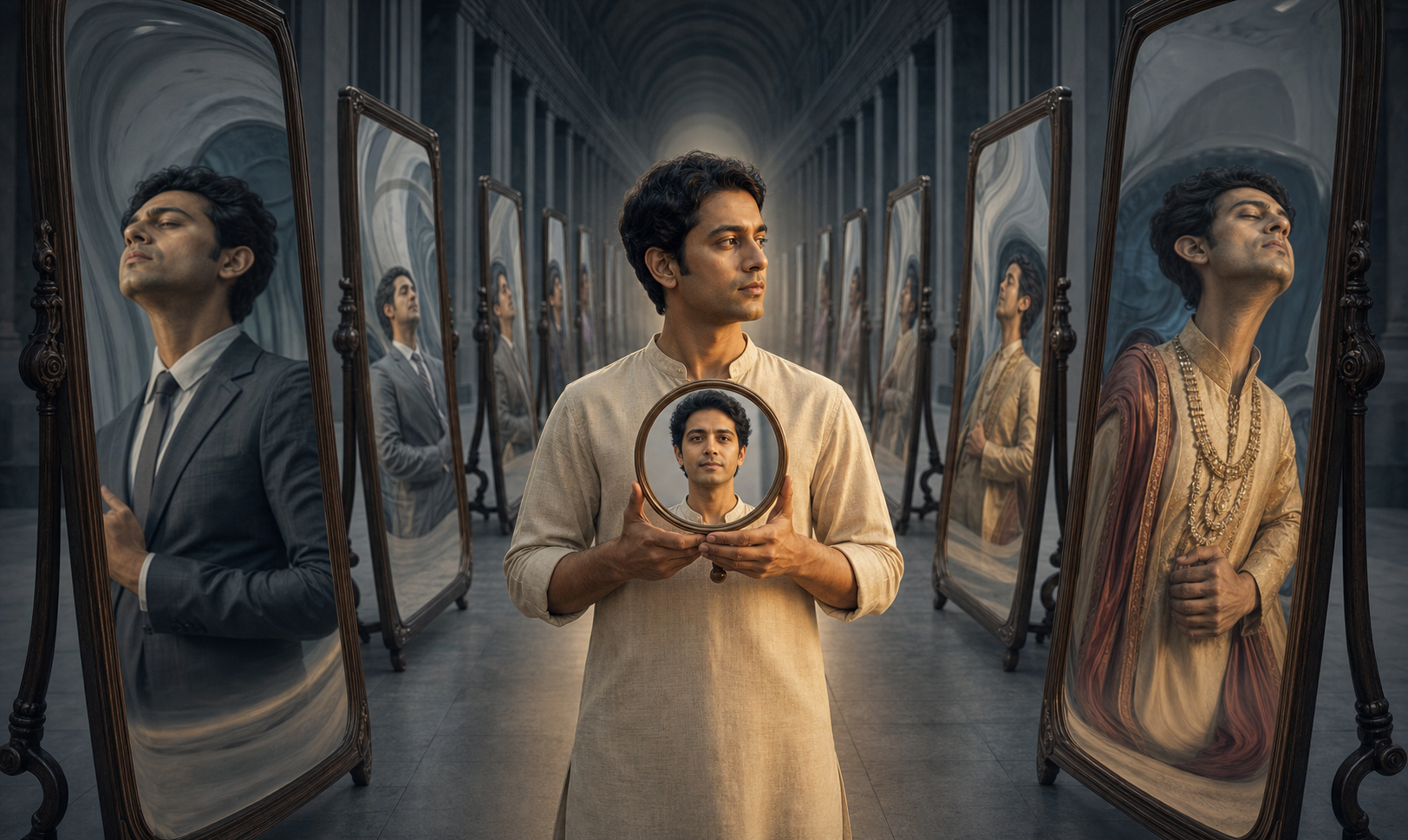
Neo-Indian should not be used as a casual insult for an Indian who speaks English, lives abroad, works in technology, or enjoys a foreign cultural form. It names a more precise condition: Indian identity remains as ancestry or appearance, but another civilisation quietly supplies the scale on which truth, beauty, intelligence and progress are measured.
A habit of treating material achievement, political power and visible prosperity as proof of civilisational superiority makes this dependency difficult to notice. Successful societies deserve serious study. Their success proves that some of their methods work for some purposes. It does not prove that their account of human fulfilment is complete.
That distinction protects you from two errors. Foreign origin does not make an idea false, and Indian origin does not make an idea automatically wise. But prestige is not evidence either. If a belief feels intelligent mainly because a powerful society repeats it, you have not yet examined the belief.
Borrowed judgment often reveals itself through asymmetry. An Indian custom must survive maximum suspicion before it is taken seriously, while a fashionable Western premise is accepted as neutral. A Dharmic term is dismissed until an academic vocabulary translates it. English proficiency is treated not merely as a useful skill but as a certificate of intelligence. A university credential becomes evidence of education in the fullest sense, while disciplined learning outside the credential system is patronised as folklore.
When you feel pressure to call something modern, progressive or backward, pause and ask:
- What specific human problem does this idea or practice solve?
- Would I admire it as readily if it came from a society without global power or glamour?
- What picture of a successful human life does it assume?
- What duties, relationships or forms of knowledge become invisible under that picture?
- Am I applying the same standard of evidence to the imported belief that I apply to my inherited one?
Do not rush to produce patriotic answers. Write down your first honest reasons. Prestige words such as global, advanced, elite and sophisticated may describe social status without explaining human benefit. Once you spot that substitution, you can begin judging the matter itself.
Western civilisation is not one mind, and Bharat is not a sealed museum. These labels are useful when they identify influential institutions, habits and ideals. They become misleading when used to assign virtue or guilt to every individual. Your object is discernment, not a new stereotype.
Borrow selectively by separating the tool from its purpose
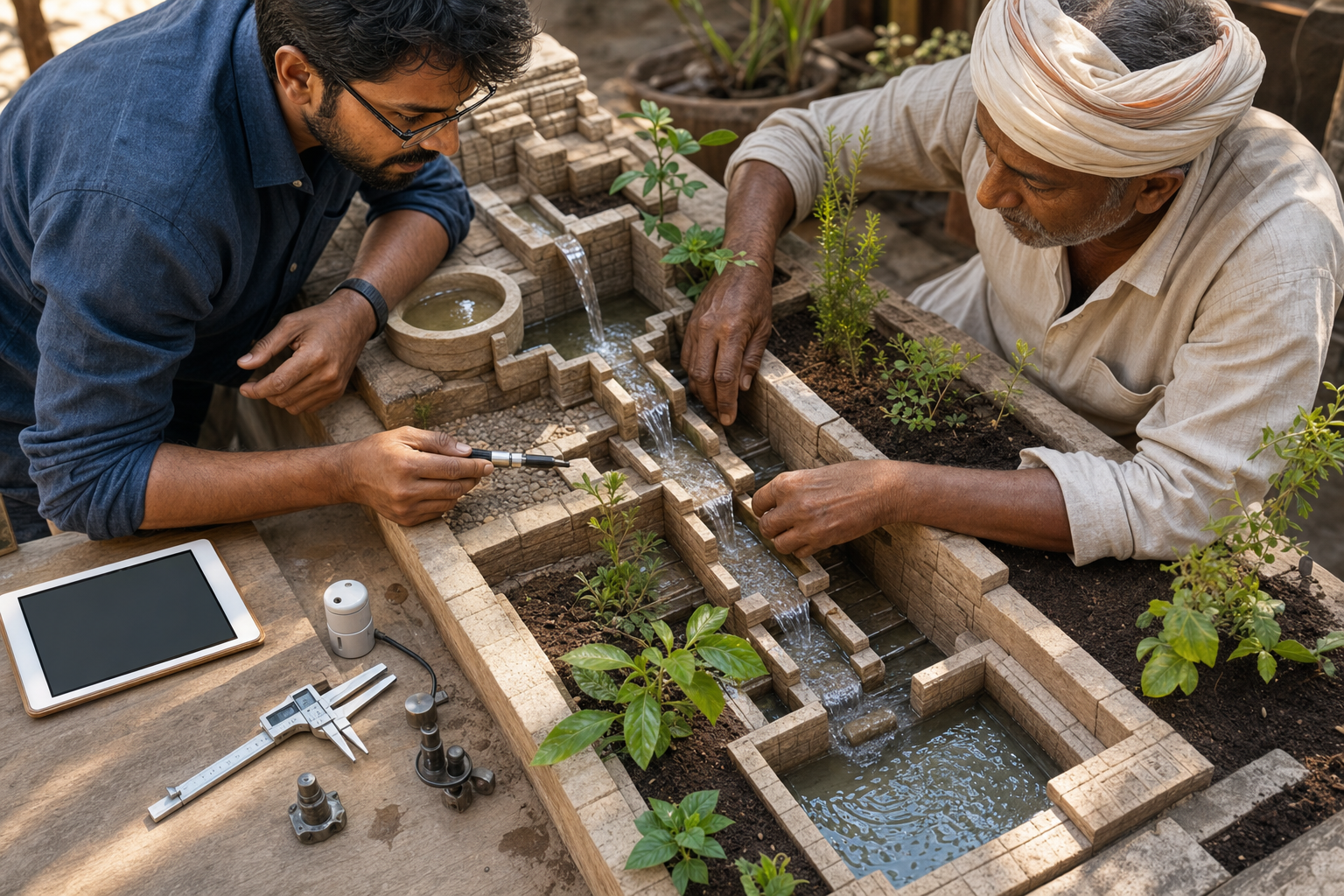
The inventive and material achievements associated with the modern West are real. So is the danger of assuming that technical capacity carries moral authority. The First World War exposed the mismatch with terrible clarity: industrial organisation could manufacture munitions and prepare human beings for mass warfare as efficiently as it could produce comforts. Greater control over matter does not by itself answer what that control should serve.
Power proves power. Wealth proves an ability to produce, accumulate or command resources. Neither settles whether a society forms truthful people, restrains destructive appetite, honours legitimate duties or leads the person towards spiritual freedom. Those are separate questions, and a Dharmic civilisation cannot afford to outsource them.
Before deciding whether an influence is Western or Indian, identify what is actually being borrowed. Most confusion comes from mixing four different layers:
| Layer | What you are evaluating | The useful question |
|---|---|---|
| Technique | A device, process, method or specialised skill | Does it reliably solve the stated problem? |
| Institution | A school, workplace, market or administrative arrangement | Which behaviours and loyalties does it reward? |
| Aesthetic | A standard of dress, architecture, language, entertainment or taste | Why has this form been taught to appear refined or desirable? |
| Human ideal | An assumption about freedom, success, duty, desire or the purpose of life | What kind of person will this assumption train me to become? |
A technique may be excellent while the social ideal packaged with it is poor. English can connect you to work and knowledge; contempt for Indian languages is not part of the skill. Formal schooling can provide rigorous training; the belief that credentialed literacy is the only serious learning is an additional ideology. Professional efficiency can remove waste; treating family, community or sacred obligations as irrational obstructions is a separate moral judgment.
This layered test changes the argument. You no longer have to choose between total Westernisation and total refusal. You can adopt a method, alter an institution’s incentives, decline an aesthetic hierarchy, and reject a diminished account of the human person. Selective borrowing is not compromise when the selection follows a clear standard. It is civilisational intelligence.
Education must recover cultural competence
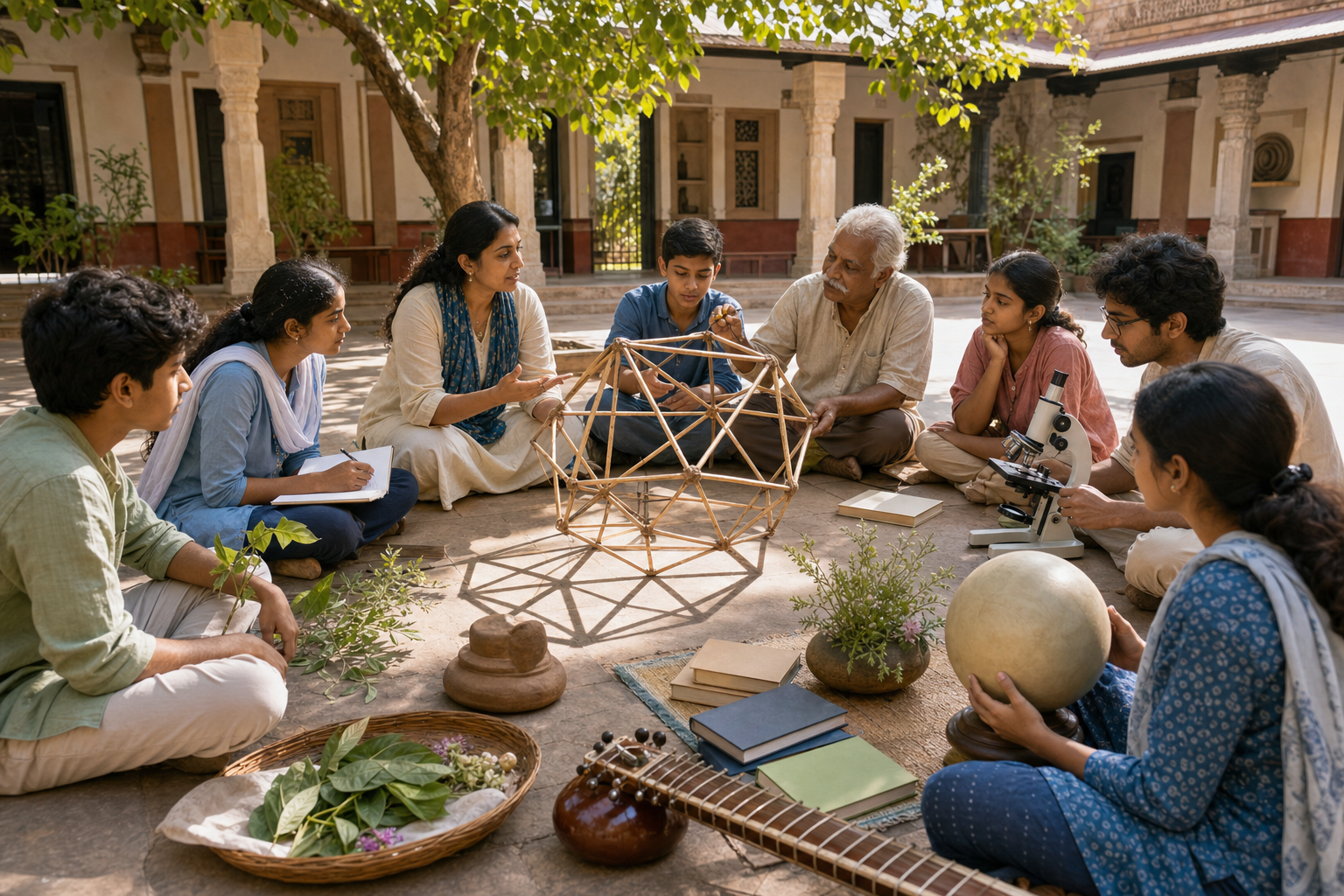
Education is where borrowed judgment becomes self-reproducing. Literacy is a valuable capacity, but it is not the whole of education. A system becomes deracinating when it treats Western-style literacy as the decisive measure of progress while looking down on older Indian learning. A student can become highly employable yet remain unable to explain the most elementary concepts of the tradition whose name the family carries.
The remedy is not intellectual insulation. Refusing to study unfamiliar ideas merely produces a different kind of fragility. You need double competence: the ability to understand an outside system accurately and the ability to encounter your own inheritance without caricature, embarrassment or blind idealisation.
Build a parallel education around a living question rather than around civilisational boasting:
- Choose a question that affects conduct: the limits of desire, the meaning of duty, the sources of suffering, the obligations of household life, the use of wealth, or the relation between self-mastery and freedom.
- Read primary teaching from your own tradition alongside a responsible commentary rooted in that tradition. Do not let short clips, slogans or hostile summaries become your curriculum.
- Learn the key terms before replacing them with convenient English equivalents. Translation can clarify, but it can also erase distinctions and smuggle in foreign assumptions.
- Compare claims at the level of purpose. Ask not merely whether two systems use similar words, but what kind of conduct and character each is trying to produce.
- Connect learning to a living community, teacher, elder or practitioner whose behaviour can be observed. A lineage claim does not remove the need for discernment, but text without practice can become another form of abstraction.
- Explain what you have learned in plain language to someone younger. If you can produce only reverential phrases or academic jargon, return to the material.
This approach gives formal education its proper place. Literacy lets you decode. Learning lets you understand. Judgment ranks competing ends. Character lives by the choice. A serious educational culture needs all four.
If your schooling gives you professional ability but no language for inherited wisdom, you do not need to discard the degree. Add the missing curriculum. If traditional instruction asks for credulity, do not discard the tradition on that account either. Find instruction capable of answering disciplined questions. Cultural confidence that cannot tolerate examination is only insecurity wearing sacred clothes.
Turn identity into disciplined practice

An identity that lives only in opinions will usually be defeated by convenience. Civilisational continuity depends on repeated conduct: how you govern appetite, spend, speak, learn, care for family, honour sacred time and accept responsibility. Cultural symbols can express that life, but they cannot substitute for it.
In the Rewah State in the 1890s, Gond communities were reported to have given up intoxicating drink after a yogi’s instruction travelled from village to village. The claim is anecdotal, and it does not justify blind obedience to anyone who adopts religious marks. Charlatans exist, and discernment remains necessary. Its useful point is narrower: spiritual authority becomes socially consequential when people recognise discipline and character behind it.
Begin where imported status pressure is strongest in your own life. If consumption is the pressure point, distinguish a real need from a purchase meant to signal arrival. If language is the pressure point, stop treating an Indian accent or vocabulary as evidence of lesser intelligence. If work is the pressure point, state which family, ethical and sacred obligations success will not be allowed to erase. If identity exists mainly online, take responsibility in an actual household, temple or community before offering another civilisational verdict.
A practical recovery can include:
- Appetite: practise voluntary restraint in an area where advertising or peer status usually makes the decision for you.
- Language: retain a Dharmic term long enough to understand its range before compressing it into an English label.
- Sacred time: allow a recurring observance to shape the household calendar instead of fitting it in only when nothing else is scheduled.
- Family memory: ask elders how a custom was practised and what they believed it meant. Preserve the testimony, but verify claims of antiquity rather than inventing them.
- Community: contribute labour, attention or resources where a tradition is being lived. Spectatorship does not transmit civilisation.
- Aesthetic judgment: notice when foreign approval is the hidden reason you call one building, name, garment, voice or art form sophisticated and another embarrassing.
The point is not to assemble an Indian-looking lifestyle. It is to rebuild the connection between conviction and conduct. If your public defence of Dharma grows while truthfulness, restraint and responsibility shrink, identity has become performance.
A repeatable rule for civilisational choices
Use the following rule when you face a new educational fashion, workplace norm, cultural habit or technology:
- Name the object precisely. Do not accept or reject the West in the abstract. Identify the particular method, incentive, custom or moral claim.
- State the promised benefit. Replace prestige language with a concrete outcome. Ask who receives the benefit and what it costs.
- Expose the implied human ideal. Does the choice treat you mainly as a consumer, competitor, autonomous chooser, bearer of duties, seeker of truth, or some combination?
- Apply Dharmic constraints. Test the choice against truthfulness, non-harm, restraint, legitimate duty, self-command, responsibility to others and spiritual freedom. Do not invoke Dharma merely as a synonym for personal preference.
- Choose among adoption, adaptation and refusal. Adopt what serves a sound end without hidden conflict. Adapt what is useful but carries distorting incentives. Refuse what depends on compulsion, vanity, dishonesty or contempt for rightful obligations.
- Judge the fruit. After living with the choice, notice what it does to attention, appetite, relationships and character. A method that delivers its narrow result while steadily deforming the person needs revision.
This rule is demanding because it denies you the ease of automatic approval and automatic outrage. It also gives you something better than either: a reasoned choice you can defend without borrowing someone else’s hierarchy.
Watch for reverse imitation
Cultural recovery fails when resentment becomes its organising principle. Rejecting an idea solely because it is Western leaves the West at the centre of your mind. You are still reacting rather than judging.
- Do not replace worship of Western power with hatred of Western people.
- Do not assume that age proves wisdom; inherited practices also require accurate understanding and ethical scrutiny.
- Do not confuse loud civilisational language with spiritual discipline.
- Do not demand a uniform Indian identity that flattens sampradayas, regions, languages and legitimate differences in practice.
- Do not excuse dishonesty, cruelty or incompetence merely because the offender uses Dharmic symbols.
Self-respect does not require a civilisational enemy. It requires a centre. A person with such a centre can learn from another civilisation without kneeling before it and criticise an inherited failure without becoming ashamed of the inheritance itself.
Key takeaways
- The neo-Indian condition is not the use of foreign tools; it is dependence on a foreign civilisation’s prestige for standards of truth, beauty and progress.
- Material power demonstrates capability, not complete moral or spiritual authority.
- Evaluate a borrowing at four levels: technique, institution, aesthetic and human ideal.
- Pair formal schooling with primary teaching, careful language, living practice and the ability to explain inherited ideas without apology or exaggeration.
- For each influence, make a conscious choice to adopt it, adapt it or refuse it, then judge what it does to your conduct.
- A Dharmic identity becomes credible through restraint, duty, truthful inquiry and service, not through symbols or online declarations alone.
The next time a choice arrives wrapped in the label of modernity, do not begin by asking whether it is Western. Ask what it makes you admire, what it trains you to neglect, and what kind of person it asks you to become. Keep what enlarges disciplined freedom and your capacity to fulfil rightful duties. Adapt what helps while distorting. Refuse what requires contempt for your inheritance or surrender of judgment.
A civilisation remains alive when its people can meet the world without either kneeling or closing their eyes. That is the Indian identity worth rebuilding.